Key takeaways
- Select vines like Confederate jasmine or Carolina jessamine for rapid growth, often 10 to 20 feet per year.
- Ensure adequate support structures, such as a sturdy trellis or fence, at least 6 feet high for optimal screening.
- Provide consistent watering, especially during the first two years, aiming for 1 to 2 inches of water per week.
- Prune annually in late winter or early spring to maintain density and control spread, removing up to one-third of the growth.
- Consider USDA hardiness zones; many evergreen vines thrive in zones 7 to 10, with some exceptions for colder regions.
- Amend soil with organic matter to improve drainage and fertility, targeting a pH between 6.0 and 7.0 for most species.
Quick answer: To create a 30-foot privacy screen in USDA Zone 8 within three years, select fast-growing evergreen vines like Confederate Jasmine or Carolina Jessamine. Ensure adequate support, consistent watering, and annual pruning for optimal density and growth.
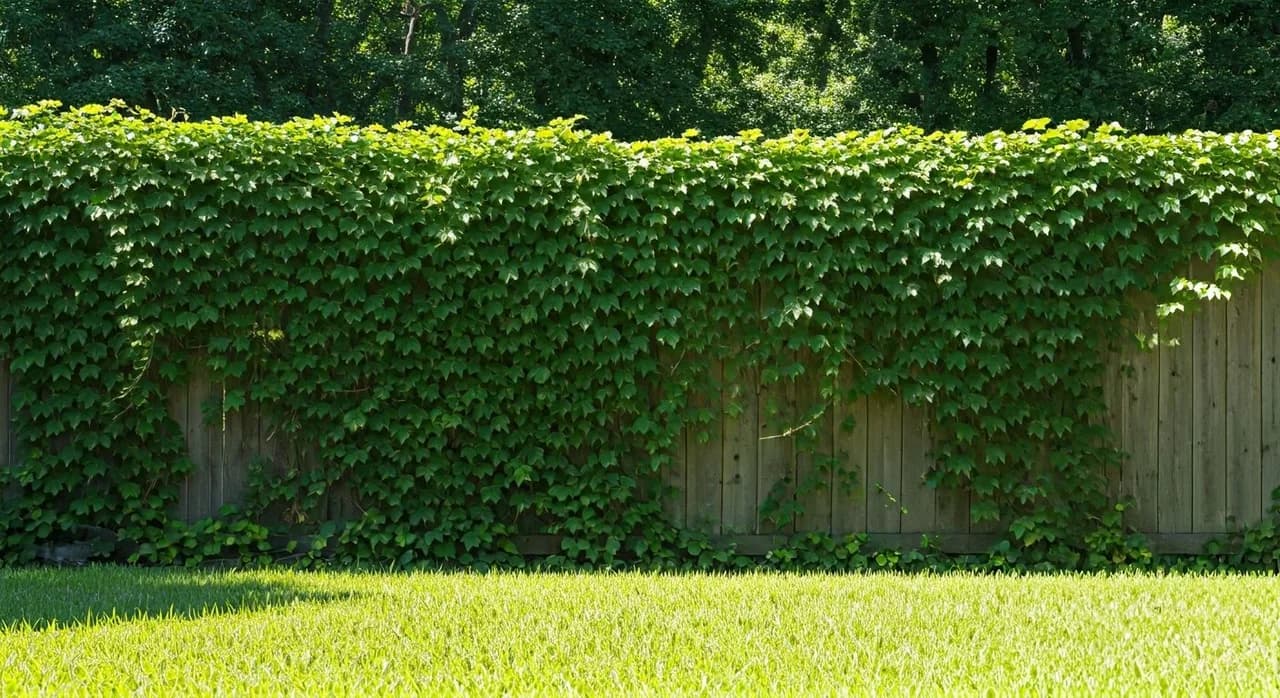
In many parts of the United States, from the humid summers of Florida to the mild winters of California, homeowners often seek quick and effective ways to establish privacy. A solid fence or wall can be expensive and time-consuming, but a living screen gives a natural, often more appealing alternative. Fast-growing evergreen vines can provide a dense, year-round visual barrier, transforming an open space into a secluded retreat in a surprisingly short period. For instance, in USDA zone 8, a well-chosen vine can grow 10 to 20 feet in a single year, creating a substantial screen within two to three growing seasons.
Choosing the right vine is key to success. We are looking for species that maintain their foliage through all four seasons, grow quickly enough to meet urgent privacy needs, and are suitable for your specific climate and soil conditions. This guide focuses on practical choices for US growers, offering specific species recommendations, planting strategies, and maintenance tips to help you achieve a dense, living privacy screen that can reach 15 to 30 feet in height, depending on the species and support structure.
Why choose evergreen vines for privacy?
Evergreen vines offer several distinct advantages over other privacy screening options. Their rapid growth rate is often the primary draw; some species can add substantial length in a single growing season, providing a substantial visual barrier much faster than most shrubs or trees [1]. For example, in the temperate climate of USDA zone 9, a well-established Confederate jasmine can cover a fence in a few years. Unlike deciduous plants, evergreen vines retain their leaves year-round so continuous privacy even through the winter months when other plants are bare [2]. This consistent foliage provides an unbroken screen, which is critical for year-round seclusion.
Vines are space-efficient. They grow vertically, requiring minimal ground space while maximizing screening height. This makes them an excellent choice for smaller yards or properties where horizontal space is limited. A vine planted near a fence can grow to cover a large area, offering significant coverage for a small footprint. They also contribute to the aesthetic appeal of a property, softening hard lines of fences or walls with natural greenery and, in many cases, offering fragrant flowers that attract pollinators like bees and butterflies, enriching the local ecosystem.
The benefits of vertical growth
- Rapid coverage: Many species grow 10 to 20 feet annually.
- Year-round privacy: Foliage remains dense through all seasons, even in winter.
- Space efficiency: Requires minimal ground footprint, growing upwards to 20+ feet.
- Aesthetic appeal: Softens structures and often provides fragrant blooms.
- Sound dampening: A thick vine screen can reduce ambient noise.
Top fast-growing evergreen vine species
Selecting the right vine for your specific USDA hardiness zone is paramount. For many southern and western US regions, several reliable options stand out. Confederate Jasmine (Trachelospermum jasminoides) is a popular choice, thriving in USDA zones 8 to 10. It can grow 10 to 15 feet per year and produces highly fragrant white flowers in late spring [1]. Its dense, dark green foliage provides excellent year-round screening. Another excellent option is Carolina Jessamine (Gelsemium sempervirens), hardy in USDA zones 6 to 9. This vine typically grows 10 to 20 feet per year, offering bright yellow, trumpet-shaped flowers in early spring, and its leaves are generally unappealing to deer, a good trait for areas with wildlife pressure. For more options, consider reviewing deer resistant plants.
For growers in USDA zones 7 to 10, Evergreen Clematis (Clematis armandii) is a sturdy option, growing 10 to 20 feet annually. It features long, leathery leaves and fragrant white or pink flowers in early spring. Its vigorous growth can quickly cover a large area, suitable for substantial privacy needs. Another fast-growing species is Crossvine (Bignonia capreolata), which is hardy in USDA zones 6 to 9 and grows 10 to 15 feet per year. It produces striking orange-red, trumpet-shaped flowers and clings well to surfaces with tendrils, effective for covering fences or walls.
Characteristics of recommended vines
- Confederate Jasmine: USDA zones 8-10, 10-15 ft/year, fragrant white flowers.
- Carolina Jessamine: USDA zones 6-9, 10-20 ft/year, yellow flowers, deer resistant.
- Evergreen Clematis: USDA zones 7-10, 10-20 ft/year, white/pink flowers, dense foliage.
- Crossvine: USDA zones 6-9, 10-15 ft/year, orange-red flowers, good clingability.
- English Ivy (caution): USDA zones 4-9, 6-10 ft/year, but can be invasive in some regions.
Site selection and preparation for success
Proper site selection and preparation are fundamental to the success of your privacy screen. Most fast-growing evergreen vines prefer a location with at least six hours of direct sunlight per day to achieve their maximum growth potential [3]. While some can tolerate partial shade, their growth rate and flowering may be reduced. In regions with intense summer sun, like Arizona or parts of Texas, afternoon shade can be beneficial to prevent leaf scorch, especially for species like Confederate jasmine.
Soil quality is another critical factor. Vines generally thrive in well-draining soil that is rich in organic matter. Before planting, conduct a soil test to determine its pH and nutrient content. Most vines prefer a slightly acidic to neutral pH, typically between 6.0 and 7.0. If your soil is heavy clay, amend it with 3 to 4 inches of compost or other organic material, working it into the top 12 inches of soil to improve drainage and aeration. For sandy soils, organic matter will help retain moisture and nutrients. A sturdy support structure is also non-negotiable; a trellis, arbor, or sturdy fence at least 6 feet tall and 10 feet wide is needed to accommodate the vine’s mature size. Consider your long-term plans before you plant, as outlined in our Pioneer year — twelve weeks before you plant a tree guide.
Key site preparation steps
- Sunlight: Ensure at least six hours of direct sun daily for optimal growth.
- Soil drainage: Amend heavy clay soils with 3-4 inches of compost.
- Soil pH: Aim for a pH between 6.0 and 7.0 for most vine species.
- Support structure: Install a sturdy trellis or fence, minimum 6 feet high and 10 feet wide.
- Weed control: Clear a 2-foot diameter area around each planting site of weeds.
Planting and initial care for rapid establishment
Once your site is prepared, planting your evergreen vines correctly will set them up for rapid establishment. Dig a planting hole that is twice as wide as the root ball and just as deep. Gently remove the vine from its container, loosen any circling roots, and place it in the hole so that the top of the root ball is level with the surrounding soil. For a dense screen, space individual vines 3 to 5 feet apart along your support structure, depending on the species’ mature width. For example, Confederate jasmine can be spaced 4 feet apart for a quick, full screen.
After planting, water thoroughly to settle the soil and eliminate air pockets. Consistent watering is critical during the first two years as the vine establishes its root system [4]. Aim for 1 to 2 inches of water per week, either from rainfall or irrigation. You can monitor soil moisture levels effectively with a soil moisture meter so the soil remains consistently moist but not waterlogged. Apply a 2- to 3-inch layer of organic mulch around the base of the plant, keeping it a few inches away from the stem, to conserve moisture, regulate soil temperature, and suppress weeds. Avoid heavy fertilization in the first year; a balanced, slow-release fertilizer can be applied in the second spring at half the recommended rate.
First-year care essentials
- Planting depth: Top of root ball level with soil.
- Spacing: 3-5 feet apart for a dense screen.
- Initial watering: Water thoroughly immediately after planting.
- Ongoing watering: 1-2 inches of water per week for the first two years.
- Mulching: Apply a 2-3 inch layer of organic mulch.
Ongoing maintenance for a dense, healthy screen
To maintain a dense and healthy privacy screen, ongoing maintenance is necessary. Pruning is perhaps the most critical task. Fast-growing vines can quickly become unruly if left unchecked. Annually, in late winter or early spring before new growth begins, prune to remove dead, damaged, or diseased stems and to shape the plant. You can remove up to one-third of the vine’s total growth to encourage bushier, denser foliage, which is essential for privacy. For example, a Confederate jasmine growing 15 feet in a season might need 5 feet trimmed back to maintain density.
Fertilization should be done sparingly once the vine is established. An annual application of a balanced, slow-release granular fertilizer in early spring is usually sufficient. Alternatively, you can use organic options like fermented soybean meal organic fertilizer. Over-fertilization can lead to excessive leafy growth at the expense of flowering and can make the plant more susceptible to pests. Monitor your vines regularly for signs of pests or diseases. Common issues might include aphids or powdery mildew, which can often be managed with horticultural oil or neem oil applications. A healthy, well-maintained vine is more resilient to these problems. Dense, well-maintained screens can help reduce rainfall impact.
Essential maintenance tasks
- Annual pruning: Late winter/early spring, remove up to one-third of growth.
- Fertilization: Light application of balanced, slow-release fertilizer in early spring.
- Pest monitoring: Inspect regularly for aphids, spider mites, or other common pests.
- Disease prevention: Ensure good air circulation to prevent fungal issues like powdery mildew.
- Support checks: Periodically inspect your trellis or fence for structural integrity, especially after high winds or heavy rain.
Comparison of top fast-growing evergreen privacy vines
Species | Growth Rate (ft/year) | USDA Zone | Light Needs | Flower Color |
|---|---|---|---|---|
Confederate Jasmine | 10-15 | 8-10 | Full Sun to Part Shade | White |
Carolina Jessamine | 10-20 | 6-9 | Full Sun to Part Shade | Yellow |
Evergreen Clematis | 10-20 | 7-10 | Full Sun to Part Shade | White, Pink |
Crossvine | 10-15 | 6-9 | Full Sun to Part Shade | Orange-Red |
Rapid growth: Many evergreen vines can grow 10 to 20 feet in a single year, providing quick privacy.
Year-round screen: Vines like Confederate jasmine retain their foliage through all four seasons, offering 365 days of privacy.
Pruning for density: Annual pruning of up to one-third of the growth encourages a denser screen, reducing visibility.
References
- FLOWERING VINES FOR YEAR-ROUND COLOR (2024).
- III. Flowering Vines for Year-Round Color (1982).
- Growing Shrubs and Vines (2023).
- Maintaining Year-Round Health and Conditioning (2010).
- Assessing Year-Round Capacity of Single-Species and Mixed Hedges to Provide Rainfall Attenuation—Case Study of Containerised Model Hedges (2026).