Key takeaways
- Check your specific Ontario municipal bylaw before purchasing birds, as chicken-keeping regulations vary widely across cities.
- Adhere strictly to urban limits: typically four to six laying hens; roosters are banned under most urban Ontario bylaws that permit hens.
- Build coops with draft-free high-level ventilation to expel moisture and prevent frostbite during freezing Canadian winters.
- Use heated water bases or submersible de-icers to ensure your flock has continuous access to unfrozen drinking water.
- Protect coops against clever urban predators, including raccoons, foxes, and rats, using 1/2-inch welded hardware cloth.
Quick answer: Keeping backyard chickens in Ontario requires complying with municipal bylaws that govern flock size, coop setbacks, and rooster bans, which vary by city. Successful flock management in Ontario demands heavily predator-proofed housing and winter care strategies, including draft-free high-level ventilation to prevent frostbite and heated waterers to keep water unfrozen in sub-zero weather.
Raising a small backyard flock of laying hens has gained immense popularity across Ontario. Families, urban homesteaders, and permaculture enthusiasts are discovering the benefits of keeping chickens: a daily supply of fresh, nutrient-dense eggs, rich manure for garden composting, natural pest control in the veggie patch, and a deeper connection to household food production.
However, keeping backyard chickens in Ontario successfully requires navigating two distinct challenges: municipal regulatory compliance and the harsh realities of Ontario winters. While rural properties zoned agricultural generally enjoy broad freedom to keep livestock, urban and suburban residential properties are strictly regulated by local municipal bylaws.
From understanding local bylaw frameworks to designing predator-resistant housing and keeping hens thriving at -20°C, proper preparation ensures your flock remains healthy, productive, and community-friendly.
Municipal bylaws across Ontario: what is permitted?
Ontario has no single provincial bylaw governing where you may keep hens (that is delegated to municipalities), but province-wide supply-management rules cap how many laying hens you may keep without quota. Check the current Egg Farmers of Ontario small-flock limit before scaling up. As a result, chicken bylaws vary dramatically between neighbouring municipalities:
- Toronto: Toronto runs the UrbanHensTO programme, which began as a pilot limited to specific wards (up to four hens, no roosters, registration required). Confirm current ward coverage and registration rules directly with the City of Toronto before buying birds.
- Brampton and Mississauga: Currently, both cities prohibit the keeping of chickens on standard residential properties under animal care and control bylaws.
- Ottawa: Backyard chickens are generally permitted on properties zoned rural or agricultural, but remain prohibited in urban and suburban residential zones.
- Other municipalities: Permitted flock sizes, registration rules, and property line setbacks vary significantly by municipality (some permit small flocks of four to six hens, while others prohibit urban poultry entirely). Check your specific municipality's current animal control bylaw directly before acquiring birds.
- Rural Townships: Most rural Ontario townships permit poultry, though minimum lot size thresholds (often 0.5 to 1 hectare) and separation distances from neighbouring dwellings frequently apply.
Standard municipal restrictions: Where allowed, bylaws commonly ban roosters in urban residential areas due to noise. They also specify coop setbacks (typically 3 metres from property lines and 5 metres from neighbouring doors or windows), require fully enclosed predator-proof runs, and mandate sanitary waste management. Always consult your municipal animal control department or review local bylaw codes directly before acquiring birds. For general flock startup advice, explore our backyard chickens overview.
Designing a winter-ready, predator-proof coop
Ontario's climate demands poultry housing engineered for two extremes: humid summer heat and severe, sub-zero winter cold.
Key structural requirements for an Ontario chicken coop:
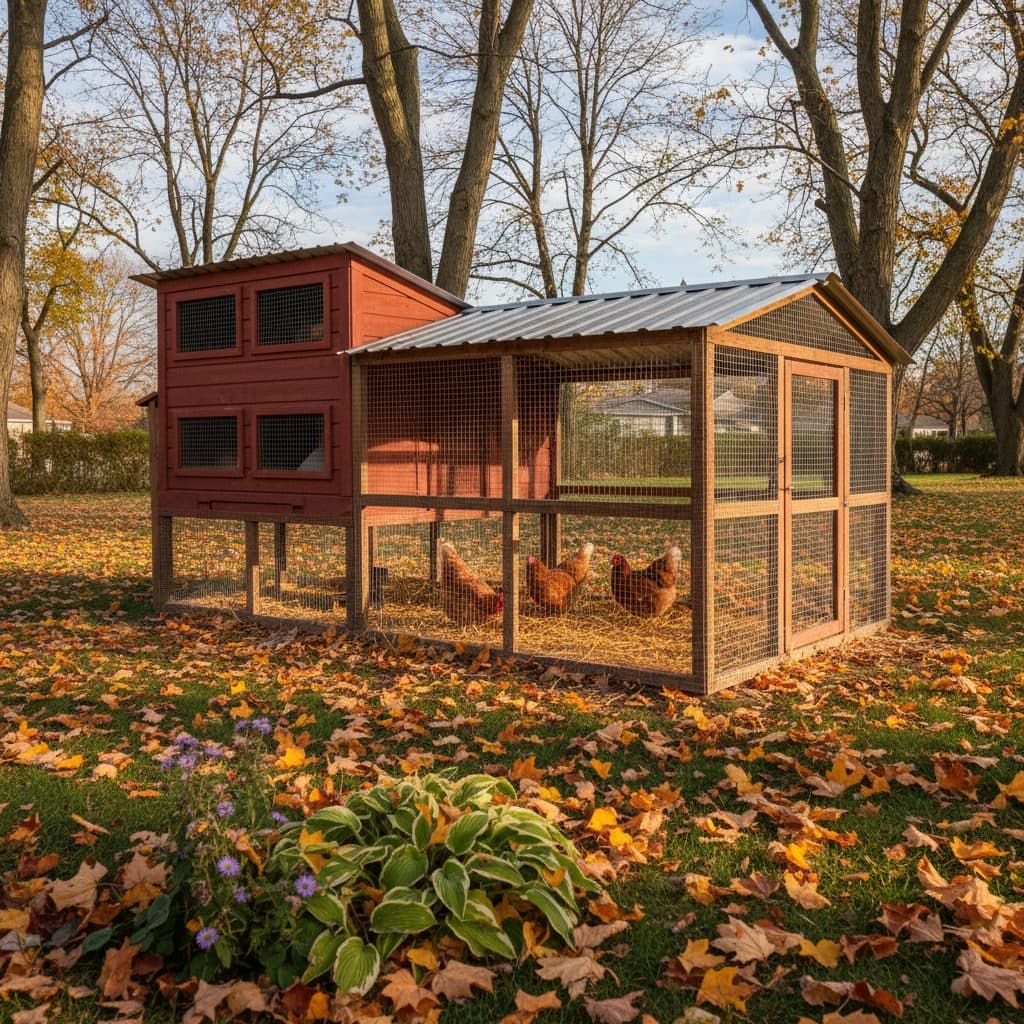
- Space requirements: Provide at least 0.4 square metres (4 square feet) of indoor floor space per bird, plus 1 square metre (10 square feet) of secure outdoor run space per bird. Overcrowding leads to feather picking, stress, and disease.
- Draft-free high-level ventilation: The biggest winter killer of chickens is moisture, not cold. Chickens produce large volumes of water vapour through respiration and droppings. If moisture is trapped inside a sealed coop, it settles on combs and wattles, causing severe frostbite. Install open, mesh-covered vents high near the roofline, well above roosting bars, so humid air exhausts continuously while birds sleep out of direct drafts.
- Predator protection: Ontario is home to highly determined predators, including raccoons, red foxes, coyotes, skunks, weasels, and rats. Standard chicken wire is completely inadequate, as raccoons can reach through the mesh and dogs can tear it apart. Line all run walls, windows, and vents with heavy-gauge 1/2-inch welded hardware cloth. Bury the wire 30 cm into the ground or extend a 45 cm predator apron flat along the ground to stop digging predators.
- Roosting bars and nesting boxes: Provide 30 cm of wooden roosting bar space per hen, using 2x4 timber positioned with the wide 4-inch side facing up so birds can sit on their feet to keep toes warm. Provide one dark, straw-filled nesting box for every three to four hens.
For step-by-step construction guidance, see our guide on how to build a chicken coop.
Winter care strategies for sub-zero temperatures
Ontario winters routinely bring temperatures plunging to -15°C to -25°C with heavy snow. Standard cold-hardy chicken breeds (such as Plymouth Rocks, Rhode Island Reds, Orpingtons, Chanteclers, and Ameraucanas) thrive in cold conditions if basic winter management is maintained:
- Unfrozen water is essential: Hens cannot produce eggs or digest feed without continuous access to fresh water. Never let water freeze. Use an electric heated poultry drinker base, a sub-tank de-icer, or insulated water fonts. If you do not have electricity in the coop, swap rubber water bowls twice daily.
- The deep litter method: Instead of cleaning out bedding weekly in winter, build up a 15 cm to 20 cm bed of pine shavings and clean straw. Turn the top layer lightly with a fork; the lower layers decompose slowly, generating gentle biological heat while absorbing moisture and odour.
- Avoid dangerous heat lamps: Clamp-on infrared heat lamps are a well-documented cause of coop fires, and fire services and poultry extension services routinely advise against them. Cold-hardy adult hens do not need supplementary heat. If heating is required for extreme cold, use safe, radiant flat-panel heaters designed specifically for coops.
- Comb and wattle protection: For breeds with large single combs, apply a light coating of petroleum jelly or coconut oil during extreme cold snaps (note that the protective value of a grease barrier against frostbite is debated; dry, well-ventilated housing matters more).
Nutrition and daily egg production
Winter cold increases a hen's caloric requirements significantly, as birds burn energy to maintain core body temperature (around 41°C to 42°C).
Maintain optimal health and laying performance by following strict nutritional standards:
- High-protein layer feed: Feed a balanced 16% to 18% protein commercial layer pellet as their primary diet.
- Evening cracked corn and grains: Provide a small handful of cracked corn or scratch grains per bird right before dusk. Digesting complex carbohydrates overnight generates metabolic body heat.
- Live insect protein treats: Supplement their diet during autumn molt and winter cold with high-protein treats. Learn how to cultivate your own sustainable feed supplement with our guide on raising mealworms for chickens.
- Free-choice calcium and grit: Provide separate dishes of crushed oyster shell (for strong eggshell synthesis) and insoluble granite grit (for mechanical gizzard digestion).
- Greens and boredom busters: Hang whole heads of cabbage or mangels in the run to keep hens physically active and prevent boredom-induced feather pecking.
For detailed feeding ratios, check our complete reference on what to feed chickens.