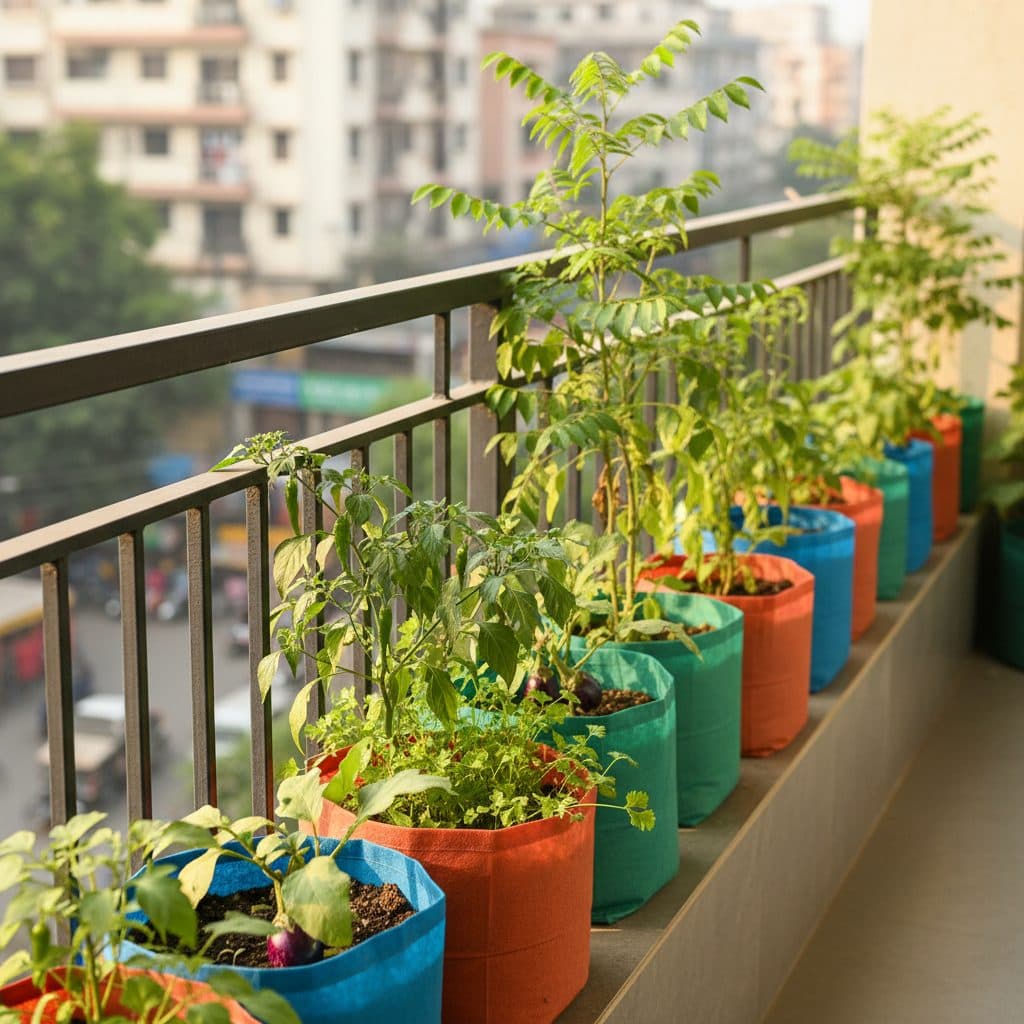
Key takeaways
- Urban apartment balconies in India require lightweight potting media, such as 40% coco peat, 40% vermicompost, 15% perlite or coarse sand, and 5% neem cake, to respect structural slab load limits.
- Breathable fabric or UV-stabilized HDPE grow bags provide superior root aeration and drainage compared to heavy terracotta or heat-absorbing plastic pots.
- Deploy 50% green agro-shade netting during intense summer months (April to June) when concrete balconies heat up past 40°C to 45°C.
- Utilize vertical railing planters and wall-mounted metal trellises to maximize culinary yields within compact 5x10-foot apartment footprints.
- Structure planting around India's distinct seasons: kharif (monsoon), rabi (winter), and zaid (summer) to ensure continuous kitchen harvesting.
Quick answer: To set up an apartment balcony garden in India, use lightweight fabric grow bags filled with a 40:40:15:5 blend of coco peat, vermicompost, perlite, and neem cake powder. Maximize vertical wall and railing space for culinary staples like curry leaf, tulsi, green chilies, coriander, and brinjal, and install 50% green shade netting to protect plants from 40°C+ summer heat.
With millions of families living in high-rise apartments across Bengaluru, Mumbai, Delhi-NCR, Hyderabad, and Pune, private outdoor space is often limited to a compact balcony. However, designing a thoughtful balcony garden ideas india setup allows you to harvest fresh, chemical-free kitchen herbs and vegetables right outside your living room.
Balcony gardening in Indian cities presents specific urban realities: concrete structural weight limits, limited daily direct sunlight, hot dry winds in summer, and intense monsoon downpours. Placing heavy ceramic pots filled with dense garden clay can overload balcony slabs, damage waterproofing, and stain neighbouring apartments below.
Using lightweight potting substrates, modular vertical planters, and climate-tested Indian culinary staples allows you to turn even a small apartment balcony into a productive garden.
+-------------------------------------------------------------+
|              BALCONY GARDEN SUBSTRATE FORMULATION           |
|                                                             |
|   COMPONENT         PROPORTION    PURPOSE                   |
|   ---------         ----------    -------                   |
|   Washed Coco Peat  40%           Lightweight moisture hold |
|   Vermicompost      40%           Organic microbial nutrient|
|   Perlite / Soil    15%           Aeration & mineral anchor |
|   Neem Cake Powder  5%            Natural pest & fungus buff|
+-------------------------------------------------------------+
How do you prepare a lightweight potting mix for apartment balconies?
Never fill balcony pots with unamended field soil or construction red earth. Heavy clay compacts tightly in containers, restricts oxygen to roots, and adds dangerous structural weight to suspended apartment balconies.
A standard lightweight, high-performance container mix consists of:
- 40% Washed coco peat: Made from processed coconut husks, coco peat holds up to eight times its weight in water while remaining exceptionally light. Always soak and rinse compressed coco peat blocks in fresh water to leach out natural sea salts before mixing.
- 40% Aged vermicompost or cow dung manure (gobar khad): Provides balanced slow-release nitrogen, phosphorus, and beneficial microbial enzymes that feed container crops without burning root tips.
- 15% Perlite, rice hulls, or coarse sand: Prevents compaction and ensures rapid drainage during torrential monsoon downpours.
- 5% Crushed neem cake powder (neem khali): Acts as a natural organic soil conditioner that deters root nematodes, soil grubs, and subterranean fungal pathogens.
Mix all ingredients thoroughly and moisten slightly before filling your containers.
Which pots and planters work best in small balcony spaces?
Selecting the right container materials and layouts maximizes your floor space while keeping the balcony clean and safe.
+-------------------------------------------------------------+
|              BALCONY PLANTER COMPARISON                     |
|                                                             |
|   CONTAINER TYPE    WEIGHT      AERATION     SUMMER HEAT    |
|   --------------    ------      --------     -----------    |
|   Fabric Grow Bags  Ultra-light Superior     Stays cool     |
|   HDPE Grow Bags    Very light  Excellent    Moderate       |
|   Terracotta Pots   Heavy       Good porous  Stays cool     |
|   Plastic Pots      Light       Poor         Roots overheat |
+-------------------------------------------------------------+
1. Fabric and HDPE grow bags
Breathable fabric grow bags (200 to 350 GSM) and UV-stabilized green HDPE bags are the gold standard for urban balconies. When roots reach the fabric edge, exposure to air naturally "air-prunes" the root tips, preventing root circling and stimulating a fibrous root ball. Fabric bags also allow heat to dissipate, preventing root boiling during hot weather.
2. Railing planters and vertical wall grids
- Railing planters: Hang metal or UV-stabilized plastic troughs over balcony railings to grow shallow-rooted culinary herbs like coriander, mint (pudina), and fenugreek (methi). Ensure mounting brackets are firmly bolted for safety.
- Vertical wire mesh: Fasten a galvanized wire mesh panel against a blank balcony sidewall to train vining crops upward, leaving floor space clear. For vertical staking methods, explore our guide to vining crops in pots.
3. Drainage trays and elevated stands
Always place grow bags on elevated metal stands or drainage drip trays. This prevents stagnant water from accumulating under bags, protects floor tile grout, and keeps runoff from cascading over balcony edges.
+-------------------------------------------------------------+
|              VERTICAL BALCONY ELEVATION LAYOUT              |
|                                                             |
|   [ Wall Grid: Bitter Gourd / Snake Gourd Vines           ] |
|   --------------------------------------------------------- |
|   [ Railing Troughs: Coriander, Methi, Mint, Spinach      ] |
|   ========================================================= |
|   [ Floor Grow Bags (24-30 cm): Brinjal, Tomato, Chilies  ] |
|   [ Heavy Base Bags (45 cm+): Curry Leaf, Lemon           ] |
+-------------------------------------------------------------+
Which kitchen vegetables and herbs grow best on Indian balconies?
Focus on high-usage kitchen staples that offer continuous harvests and thrive in container environments.
+-------------------------------------------------------------+
|              INDIAN BALCONY EDIBLES DIRECTORY               |
|                                                             |
|   PLANT NAME        POT SIZE      SUNLIGHT    HARVEST TYPE  |
|   ----------        --------      --------    ------------  |
|   Curry Leaf (Kadi) 30 to 40 cm   4-6 Hours   Perennial leaf|
|   Green Chili       20 to 25 cm   5-6 Hours   Continuous pod|
|   Brinjal (Eggplant)25 to 30 cm   5-6 Hours   Continuous fru|
|   Coriander         Shallow 15 cm 3-4 Hours   Cut-and-come  |
|   Methi (Fenugreek) Shallow 15 cm 3-4 Hours   Fast 21 days  |
|   Tulsi             20 to 25 cm   4-5 Hours   Perennial leaf|
|   Ginger (Adrak)    30 cm wide    Partial sun Underground   |
+-------------------------------------------------------------+- Curry leaf (Murraya koenigii / Kadi Patta): An indispensable perennial for Indian cooking. Grow in a 30 to 40 cm pot in a warm, sunny position, feeding monthly with a handful of vermicompost and sour buttermilk diluted in water.
- Green chilies (Capsicum annuum / Hari Mirch): Plant one chili seedling per 20 to 25 cm bag. Pinch the main growing tip when the plant reaches 15 cm tall to encourage bushy lateral branches loaded with spicy chilies.
- Brinjal (Solanum melongena): Compact round green or purple brinjal varieties perform exceptionally well in 25 to 30 cm grow bags, yielding fresh vegetables for curries and sambar for six to eight months.
- Fast greens (Methi, Palak, Coriander): Broadcast seeds across shallow, wide rectangular troughs. Methi is ready for harvest in just 21 to 25 days.
To expand your container garden into root crops and fruiting perennials, learn how to grow ginger at home and explore how to grow papaya at home (papaya needs a 50-100 litre bag and should only go on a balcony whose slab loading you have checked).
How do you manage intense Indian summer heat and monsoon rains?
India's distinct seasonal shifts require proactive balcony management:
Peak summer protection (March to May in peninsular India, April to June in the north: 38°C to 45°C)
- Install 50% green shade net: Concrete walls and tiled floors absorb solar radiation, creating an oven-like microclimate. Suspend green shade netting along outer balcony openings. Shading cuts direct radiant load on pots and leaves noticeably, though how much the air temperature drops depends on how freely air moves behind the net.
- Group containers together: Clustering grow bags together creates a shared microclimate of higher relative humidity, reducing moisture evaporation from pot surfaces.
- Morning watering: Water thoroughly before 7:30 AM so plants enter the hot midday fully hydrated.
Monsoon season management (June to September in the peninsula and west coast, late June to September in Delhi-NCR)
- Check drainage holes: Ensure pot drainage holes remain unobstructed. Waterlogged soil in warm monsoon conditions encourages root and collar rot caused by Pythium and Phytophthora. The same organisms cause damping-off, which kills seedlings at the soil line, so sow fresh batches of coriander and methi into free-draining mix.
- Spray organic neem oil: High humidity prompts mealybug and aphid outbreaks. Spray cold-pressed neem oil (5 ml per litre of water mixed with 2 ml organic liquid soap) on leaf undersides every ten to fourteen days as a preventive buffer.
To cultivate fragrant flowering plants alongside your kitchen vegetables, see our guide to rose plant care in pots.