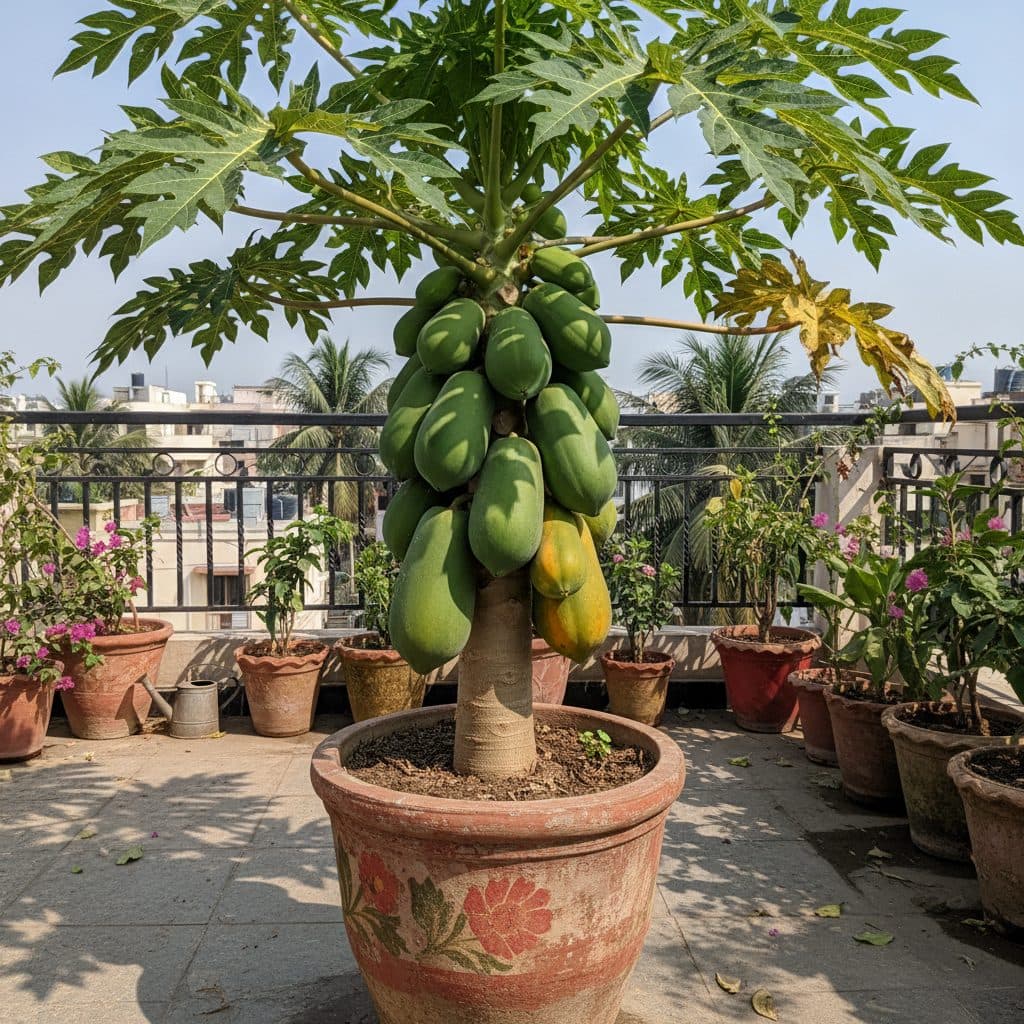
Key takeaways
- Papaya (Carica papaya) is a fast-growing tropical herbaceous tree that produces sweet fruit within 9 to 11 months from seed germination.
- Papaya roots are exceptionally sensitive to waterlogging; excess water during monsoon rains causes rapid fungal root rot and trunk collar rot.
- Remove the gelatinous outer seed coat (sarcotesta) from fresh seeds before planting to eliminate natural biochemical germination inhibitors.
- Papaya trees are dioecious (separate male and female plants) or gynodioecious (hermaphrodite and female); hermaphrodite varieties like 'Red Lady 786' self-pollinate reliably.
- Growing papaya in containers requires large 50 to 100-litre grow bags, full direct sunlight (min 6 hours), and monthly feedings of vermicompost and potassium.
Quick answer: To grow papaya at home, clean fresh seeds to remove the outer gel coat, sow them in well-draining sandy loam enriched with vermicompost, and position the plant in full sun. Plant multiple seedlings together, thinning down to one self-fertile hermaphrodite tree once flowering begins at four to five months, and harvest ripe fruit within nine to eleven months.
Papaya is one of the most productive fruit crops you can establish in a home kitchen garden or terrace setup. Unlike mango or citrus, which take roughly three to five years from a grafted plant and longer from seed, a papaya tree grows quickly, often yielding fruit within its first year.
Learning how to grow papaya at home means understanding its particular botanical vulnerabilities. Papaya is a large semi-woody herbaceous plant with a soft, hollow stem and a delicate root system. In Indian climates, the two biggest hurdles are waterlogged soil during monsoon downpours and identifying male versus female and hermaphrodite flowering types.
Porous soil drainage, self-fertile seeds, and regular organic nutrients help maintain steady fruit production.
+-------------------------------------------------------------+
|              PAPAYA PRODUCTION TIMELINE                     |
|                                                             |
|   STAGE             MONTHS AFTER SOWING CHARACTERISTICS     |
|   -----             ------------------- ---------------     |
|   Germination       2 to 3 Weeks        Seedlings emerge    |
|   Vegetative Growth Months 1 to 4       Rapid trunk height  |
|   First Flowering   Months 4 to 5       Sex identification  |
|   Fruit Set         Months 5 to 7       Green fruit clusters|
|   Harvest Window    Months 9 to 11      Fruit turns yellow  |
+-------------------------------------------------------------+
How do you start papaya plants from fresh seeds?
Starting papaya from the seeds of a sweet, store-bought ripe papaya is easy, but note that most market papaya in India is an F1 hybrid such as Red Lady. Seed saved from an F1 fruit segregates, so seedlings will vary in size, shape and sweetness and will not match the fruit you ate. Buy fresh hybrid seed if you want a predictable crop. When starting from fresh seed:
Step 1: remove the sarcotesta (gel coat)
Cut open a ripe, healthy papaya and scoop out dark, plump black seeds. Discard pale, hollow seeds.
- Place the black seeds in a fine wire kitchen sieve.
- Rub the seeds gently against the mesh under running water to break and wash away the clear, gelatinous sac (the sarcotesta) surrounding each seed. The sarcotesta contains natural growth inhibitors that prevent premature germination inside the fruit.
Step 2: dry and sow
- Spread the cleaned seeds onto a paper towel and allow them to air-dry in a warm, shady spot for two to three days.
- Fill seedling trays or small 10 cm nursery pots with a 50:50 blend of washed coco peat and vermicompost.
- Sow two to three seeds per cell, 1 cm deep. Water gently and place the tray in a warm, sunny location (25°C to 35°C). Seeds will germinate in 14 to 21 days.
+-------------------------------------------------------------+
|              SEED GERMINATION PROTOCOL                      |
|                                                             |
|   1. Scoop plump black seeds from ripe fruit                |
|   2. Wash off gelatinous sarcotesta under running water     |
|   3. Air-dry seeds in shade for 48-72 hours                 |
|   4. Sow 1 cm deep in warm, moist coco peat substrate       |
+-------------------------------------------------------------+
How do you tell the difference between male, female, and hermaphrodite plants?
Papaya plants naturally produce three distinct floral types, which become visible when the plant is roughly 4 to 5 months old:
+-------------------------------------------------------------+
|              PAPAYA FLOWER IDENTIFICATION                   |
|                                                             |
|   FLOWER TYPE       ATTACHMENT STYLE    FRUITING CAPACITY   |
|   -----------       ----------------    -----------------   |
|   Male Plant        Long dangling stalksNon-fruiting        |
|   Female Plant      Single large bloom  Round fruit (needs p|
|   Hermaphrodite     Single medium bloom Self-fertile (Pear) |
+-------------------------------------------------------------+
1. Male papaya plants
Male plants produce long, slender, dangling flower stalks (peduncles) measuring 30 to 90 cm long that hang from the trunk. The small, white-cream tubular flowers produce only pollen. Male plants do not produce commercial edible fruit.
2. Female papaya plants
Female flowers are large, solitary, and attached directly to the main trunk in the leaf axils. The petals surround a prominent, swollen round green ovary with feathery stigmas, but possess no pollen-bearing stamens. Female plants require pollen from a male or hermaphrodite tree to set fruit.
3. Hermaphrodite (bisexual) plants
Hermaphrodite flowers contain both functional male stamens and a female ovary inside a single blossom, attached directly to the trunk. These plants self-pollinate naturally without needing cross-pollination. They produce the coveted elongated, pear-shaped papayas seen in commercial markets.
The home gardener's planting strategy
- Option A (Named hybrid seeds): Purchase certified gynodioecious hybrid seeds such as 'Red Lady 786' or 'Taiwan 786', which produce 66% hermaphrodite and 33% female plants with zero unproductive males.
- Option B (Market seeds): Plant three seedlings in the same garden pit or large grow bag spaced 15 cm apart. When flowers appear at month four, keep the most vigorous hermaphrodite plant and cut the others off at ground level. Keep a female only if you also keep a male or hermaphrodite within pollinating distance, or if a neighbour has one; a lone female sets no fruit. If all three seedlings turn out male, remove them and start again.
To integrate papaya alongside other container crops, explore balcony garden ideas for India and compare tropical tree fruit forms in our guide on soursop vs sugar apple.
What container size and soil drainage does papaya need?
Papaya plants have delicate, fleshy root systems that rot rapidly if submerged in stagnant, waterlogged soil.
Garden bed preparation
If planting in the ground, choose a high-sun location and construct a raised planting mound 30 to 45 cm above ground level. Mix generous quantities of aged cow dung manure (gobar khad), compost, and coarse sand into the native soil to ensure water drains away from the trunk collar during heavy monsoon downpours.
Container and grow bag requirements
- Container volume: Use large 50 to 100-litre HDPE or breathable fabric grow bags (minimum 45 to 60 cm wide and 45 cm deep).
- Potting mix: Combine 40% garden loam, 30% aged vermicompost, 25% coarse sand or perlite, and 5% crushed neem cake powder. Do not exceed 5% neem cake: it is a concentrated nitrogen source and heavier rates burn young roots. Ensure the container has multiple unobstructed drainage holes at the base.
+-------------------------------------------------------------+
|              PAPAYA COLLAR DRAINAGE MOUND                   |
|                                                             |
|                  (Papaya Trunk)                             |
|                       ||                                    |
|                   **_/  _**  <- Raised 30 cm Soil Mound    |
|   ---------------/          ------------------------------ |
|   ................ Free-Draining Root Zone ................ |
+-------------------------------------------------------------+
How do you feed, water, and care for papaya trees?
Papaya is a heavy feeder that requires consistent nutrition to support rapid vertical growth and heavy fruit loads:
- Sunlight: Position the tree in an open location that receives at least six to eight hours of direct, unfiltered sunshine daily.
- Watering protocol: Water deeply when the top 3 cm of soil feels dry. Always apply water in a ring around the drip line of the outer leaves; never pour water directly against the central trunk base, which causes fungal collar rot.
- Organic feeding routine: Apply 1 kg of vermicompost or well-decomposed cow manure around the root zone every four weeks. If you use wood ash for potassium, apply it sparingly, no more than a small handful two or three times a season, and stop if new leaves yellow between the veins, which signals iron lockup from rising pH. In alkaline mixes, sulphate of potash and a chelated micronutrient feed do the job that wood ash and bone meal will not.
- Mulching: Spread a 5 to 7 cm layer of dry leaves or straw over the soil, keeping the mulch 10 cm away from the trunk.
To grow fragrant flowering plants in containers alongside your fruit trees, read our complete guide to rose plant care in pots, and explore kitchen root cultivation in how to grow ginger at home.
How do you manage common pests and harvest ripe fruit?
Pest management
- Mealybugs and aphids: Inspect leaf undersides regularly. Spray cold-pressed neem oil (5 ml per litre of water with 2 ml organic soap) every ten days to deter sap-sucking pests.
- Papaya Ring Spot Virus (PRSV): Transmitted by aphids, PRSV causes yellow mosaic mottling on leaves and dark ring spots on green fruit. There is no cure for PRSV. Remove and destroy a plant as soon as you are confident of the symptoms rather than waiting for severe stunting, because an infected tree is a reservoir that aphids will spread from for months. Do not compost it in an open heap near other papayas. Neem and insecticide sprays do not stop PRSV. Aphids transmit it within seconds of probing a leaf, before any spray can act, so control depends on removing infected plants promptly and starting with tolerant hybrid seed.
Harvesting
Papayas are ready for harvest 9 to 11 months after seed sowing. Harvest fruit when the green skin develops yellow or orange streaks covering at least one-third of the surface. Twist the fruit gently by hand or cut the short stalk with a clean knife. Allow the fruit to finish ripening at room temperature for two to three days until fully golden, aromatic, and slightly yielding to gentle thumb pressure.