Key takeaways
- Satsuma mandarins, kumquats, and yuzu are the most cold-tolerant citrus for USDA zones 7 and 8.
- Poncirus trifoliata rootstock significantly improves cold hardiness for grafted citrus trees.
- Young citrus trees require winter protection when temperatures drop below 20°F, especially in their first three years.
- Proper site selection, including full sun exposure and wind protection, can extend hardiness by several degrees Fahrenheit.
- Container growing allows citrus to be moved indoors when temperatures fall below 15°F, protecting them from severe freezes.
- Mulching around the base of trees with 4 to 6 inches of wood chips helps maintain soil warmth and protects roots from freezing.
Quick answer: Yes, it is possible to grow cold-hardy citrus varieties such as satsumas, kumquats, and yuzu in USDA zones 7 and 8 with proper selection and winter protection. Key strategies include using Poncirus trifoliata rootstock and protecting young trees from temperatures below 20°F.
For many growers in the United States, the idea of harvesting fresh citrus from their own yard seems like a distant dream, reserved for those in USDA zones 9 and warmer. However, with careful selection and protection, citrus cultivation is entirely possible in colder regions like the coastal plains of Georgia and North Florida, extending into USDA zone 7b [2, 3]. These borderline zones, which experience winter lows between 0°F and 15°F, present a unique challenge but also a rewarding opportunity for home growers.
This article focuses on three of the most resilient citrus types—satsuma mandarins, kumquats, and yuzu—that can withstand colder temperatures than their tropical cousins. We will explore their specific hardiness levels, optimal growing conditions, and practical strategies for ensuring their survival and productivity even when winter temperatures dip below 20°F. Success often hinges on understanding the plant’s biology and implementing protective measures during the coldest months, potentially allowing you to enjoy homegrown citrus in areas previously thought too cold.
Understanding cold hardiness in citrus
The ability of certain citrus varieties to tolerate cold is largely due to their genetic makeup, often influenced by species like Poncirus trifoliata. This deciduous citrus relative, native to northern China, is remarkably cold-hardy, capable of surviving temperatures down to -10°F to 0°F [1]. Research indicates that Poncirus trifoliata activates specific genes, such as AP2 domain-containing genes, within 6 hours of cold exposure, helping it adapt to freezing conditions [1, 4]. These genes play a role in developing cold tolerance mechanisms, which can be passed on to grafted citrus varieties.
The role of rootstock and genetics
When citrus varieties like satsumas or kumquats are grafted onto Poncirus trifoliata rootstock, they gain a significant advantage in cold hardiness, often extending their survival range by 5°F to 10°F. This genetic contribution from the rootstock helps the scion tolerate lower temperatures and recover more effectively from cold damage [4]. For instance, a satsuma grafted onto trifoliate rootstock might survive 15°F, while one on a different rootstock might succumb at 20°F. Understanding the specific cold-tolerance mechanisms, such as those related to early cold-induced genes, matters for growers in USDA zone 7 and 8.
- Choose citrus varieties specifically bred for cold tolerance.
- Select trees grafted onto Poncirus trifoliata rootstock for enhanced hardiness.
- Protect young trees from temperatures below 20°F for their first three winters.
- Monitor local weather forecasts for significant temperature drops below 25°F.
- Consider microclimates within your yard that offer 2-5°F of additional warmth.
Satsuma mandarins: a sweet choice for warmer zones
Satsuma mandarins (Citrus unshiu) are a top choice for growers in USDA zones 8a and 8b, and even protected areas of 7b, due to their relatively high cold tolerance and delicious, easy-to-peel fruit. Varieties like ‘Owari’ and ‘Brown Select’ are known to withstand temperatures down to 15°F to 18°F once established, though young trees are more susceptible [3]. In coastal Georgia, satsumas have shown consistent fruit production despite occasional winter freezes, demonstrating their resilience in a real-world setting [3]. For optimal growth, satsumas require at least 6 hours of direct sunlight daily and well-draining soil.
Cultivation and winter protection for satsumas
To maximize success with satsumas in borderline zones, proper site selection is paramount. Planting on the south side of a building or near a heat-retaining wall can provide an additional 3°F to 5°F of warmth during cold snaps. During their first three winters, trees should be protected when temperatures are forecast to drop below 20°F. This can involve covering them with frost cloth or burlap, or wrapping the trunk with insulation. Ensuring good soil drainage is critical, as soggy roots in cold soil can lead to root rot and decrease cold tolerance, potentially killing a tree at 25°F if conditions are poor. Consider planting on a slight mound if your soil tends to retain water.
- Plant satsumas in a location receiving a minimum of 6 hours of direct sun.
- Ensure soil has excellent drainage to prevent root issues in cold weather.
- Cover young trees with frost blankets when temperatures dip below 20°F.
- Maintain a 4 to 6 inch layer of mulch around the base to insulate roots.
- Water thoroughly before a freeze to help insulate the soil and roots.
Kumquats: small fruit, big resilience
Kumquats (Citrus japonica) are another excellent option for growers in USDA zones 8 and 9, with some varieties showing tolerance down to 12°F to 18°F. Their compact size makes them suitable for container growing, which is a significant advantage in areas where winter temperatures frequently drop below 15°F. The ‘Nagami’ kumquat is a popular oblong variety, while ‘Meiwa’ offers a rounder, sweeter fruit. Unlike other citrus, kumquat fruit can be eaten whole, peel and all, offering a unique tart-sweet flavor that is highly prized.
Growing kumquats in containers or ground
For those in USDA zone 7, growing kumquats in large containers (at least 15 to 20 gallons) is often the most reliable method. This allows you to move the plants indoors to a protected garage or sunroom when temperatures are predicted to fall below 18°F. If planting in the ground in zone 8, ensure the location is well-drained and receives full sun for at least 8 hours a day. Kumquats are relatively slow-growing, typically reaching 8 to 10 feet in height, making them manageable for most home gardens. Regular fertilization with a balanced citrus fertilizer during the growing season, from March to September, supports healthy growth and fruit production, aiming for three to four applications per year.
- Choose a container at least 15 gallons in size for mobile kumquat trees.
- Provide 8+ hours of direct sunlight for optimal fruit production.
- Fertilize three to four times annually during the growing season.
- Bring containerized kumquats indoors when temperatures approach 15°F.
- Plant in-ground kumquats on a slight mound to improve drainage in heavy soils.
Yuzu: the ultimate cold-hardy citrus
Yuzu (Citrus junos) stands out as arguably the most cold-hardy edible citrus, with established trees capable of surviving temperatures as low as 8°F to 15°F, and some reports even suggesting survival below 5°F in protected microclimates. This makes it a prime candidate for USDA zones 7 and 8, particularly in regions like North Florida where cold hardiness is a key factor for citrus success [4]. Yuzu fruit, known for its aromatic zest and tart juice, is highly valued in culinary applications, especially in Asian cuisine. The tree itself is vigorous, often growing into a thorny shrub or small tree up to 10 to 15 feet tall.
Site selection and protection for yuzu
For growers aiming to cultivate yuzu in USDA zone 7, strategic planting matters. A south-facing wall or a sheltered spot that blocks prevailing winter winds can significantly improve survival rates, potentially adding 5°F to 7°F of protection. Like other cold-hardy citrus, yuzu benefits from being grafted onto Poncirus trifoliata rootstock, which improves its overall resilience. Young yuzu trees, those under five years old, are more vulnerable and should be protected with frost blankets or temporary shelters when temperatures drop below 15°F. Mulching the root zone with 4 to 6 inches of organic material helps insulate the soil and protect the root system, which is often the most sensitive part of the plant to freezing temperatures.
- Plant yuzu in a sheltered location, ideally against a south-facing wall.
- Ensure the tree is grafted onto Poncirus trifoliata rootstock for maximum hardiness.
- Protect young trees (under five years) from temperatures below 15°F with covers.
- Provide consistent moisture during dry periods, especially in summer, to support vigor.
- Consider a temporary greenhouse or hoop house for long periods below 10°F.
Cultivation strategies for borderline zones
Successful citrus cultivation in borderline USDA zones 7 and 8 requires a proactive approach to site selection, planting, and winter protection. Beyond choosing the right varieties like satsumas, kumquats, or yuzu, growers must consider the specific microclimates within their property. A spot that receives full sun for at least 8 hours a day and is shielded from harsh winter winds can make a critical difference of several degrees Fahrenheit. For instance, planting on a slope or near a south-facing wall can provide 3°F to 5°F of extra warmth, which can be the difference between survival and damage when temperatures drop below 15°F.
Winter protection and long-term care
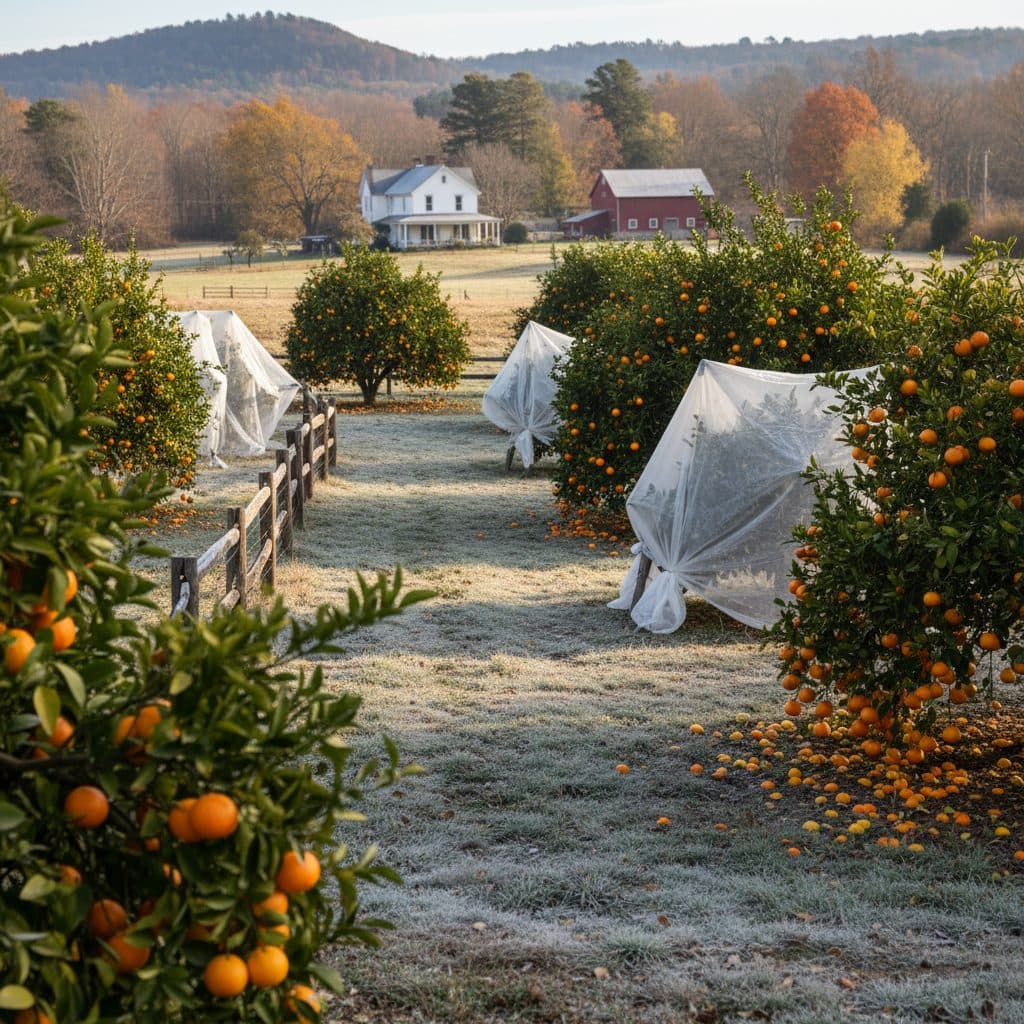
For young trees (under three years old), active winter protection is non-negotiable when temperatures are forecast to drop below 20°F. This can involve covering the entire tree with a heavy frost blanket, or constructing a temporary frame and wrapping it with clear plastic sheeting to create a mini-greenhouse effect. Wrapping the trunk with burlap or cardboard can protect the cambium layer from freezing, which is vital for the tree’s recovery in spring. For established trees, a 4 to 6 inch layer of organic mulch around the base helps insulate the root system, preventing it from freezing down to 10°F. Proper pruning, as outlined in articles like How to prune fruit trees, also contributes to tree health and resilience by removing dead or damaged wood that could harbor disease. Ensuring good soil health through practices like using cover crops for the home garden can also improve overall tree vigor and cold tolerance.
- Select a planting site with maximum sun exposure and wind protection, aiming for 8+ hours of sun.
- Use a thick layer of mulch (4-6 inches) around the tree base to protect roots from freezing.
- Provide active protection for young trees (under three years) when temperatures fall below 20°F.
- Consider container growing for zones 7a and colder, allowing plants to be moved indoors.
- Ensure adequate watering throughout the year, especially before a freeze, to maintain tree health.
Grafting for enhanced cold hardiness
Grafting is a technique where a scion (the desired fruiting variety) is joined to a rootstock (the root system and lower trunk of another plant). For cold-hardy citrus, the choice of rootstock is critical, with Poncirus trifoliata being the gold standard. This rootstock imparts significant cold tolerance to the grafted citrus, allowing varieties like satsumas and kumquats to survive temperatures 5°F to 10°F lower than if grown on less hardy rootstocks [4]. In North Florida, for example, citrus trees on trifoliate rootstock have consistently outperformed others in cold events, demonstrating its value in USDA zone 8a [4].
Benefits and considerations of grafting
Beyond cold hardiness, Poncirus trifoliata rootstock also offers other benefits, including disease resistance and a dwarfing effect, which can be advantageous for home growers with limited space. However, it’s important to ensure the graft union is strong and healthy. When purchasing grafted trees, inspect the graft union for a clean, well-healed connection, typically 4 to 6 inches above the soil line. If you are considering grafting your own trees, resources on cold-hardy fruit and nut trees often include sections on grafting techniques. The rootstock’s ability to regulate water and nutrient uptake also contributes to the overall vigor and stress tolerance of the tree, which indirectly improves its ability to withstand cold temperatures and recover from damage more quickly, potentially reducing recovery time by 20% to 30% after a freeze event.
- Select citrus trees grafted onto Poncirus trifoliata rootstock for superior cold tolerance.
- Inspect the graft union for a strong, healthy connection, typically 4-6 inches above the soil.
- Consider learning grafting techniques to customize your citrus varieties.
- Understand that rootstock can also influence tree size and disease resistance.
- Ensure the rootstock itself is well-suited to your soil type and drainage conditions.
Comparison of cold-hardy citrus varieties for borderline zones
Variety | USDA Hardiness Zone | Cold Tolerance (Established) | Typical Height | Fruit Characteristics |
|---|---|---|---|---|
Satsuma Mandarin | 8a-10 | 15°F to 18°F | 10-15 ft | Sweet, seedless, easy-to-peel, medium size |
Kumquat | 8b-10 | 12°F to 18°F | 8-10 ft | Small, oblong or round, edible rind, tart-sweet |
Yuzu | 7b-10 | 8°F to 15°F | 10-15 ft | Tart, aromatic zest, seedy, medium size, rough skin |
Rootstock Advantage: Grafting citrus onto <em>Poncirus trifoliata</em> rootstock can increase cold tolerance by 5°F to 10°F, essential for USDA zone 7 growers.
Mulch Protection: Applying 4 to 6 inches of mulch around citrus trees helps protect roots from freezing temperatures down to 10°F.
Young Tree Vulnerability: Citrus trees under three years old require protection when temperatures fall below 20°F, as they are more susceptible to cold damage.
Frequently asked questions
What is the most cold-hardy citrus fruit?
Yuzu (<em>Citrus junos</em>) is generally considered the most cold-hardy edible citrus, capable of withstanding temperatures as low as 8°F to 15°F once established. Its resilience makes it a prime choice for growers in USDA zone 7b and 8a.
Can I grow citrus in USDA zone 7?
Yes, it is possible to grow certain cold-hardy citrus varieties like yuzu, kumquats, and satsumas in USDA zone 7, especially in protected microclimates. Young trees will require active winter protection when temperatures drop below 20°F for their first three to five years.
How do I protect young citrus trees from freezing?
Protect young citrus trees by covering them with frost cloth or burlap when temperatures are forecast below 20°F. Also, a 4 to 6 inch layer of mulch around the base insulates roots, and watering deeply before a freeze can help retain soil warmth.
What is the best rootstock for cold-hardy citrus?
<em>Poncirus trifoliata</em> is widely regarded as the best rootstock for imparting cold hardiness to citrus, often extending the scion’s tolerance by 5°F to 10°F. It also offers benefits like disease resistance and a dwarfing effect, making it ideal for many home growers.
How much sun do cold-hardy citrus trees need?
Cold-hardy citrus trees, like most citrus, require at least 6 to 8 hours of direct sunlight per day for optimal growth and fruit production. In borderline zones, a south-facing location that maximizes sun exposure and offers protection from winter winds is ideal.
Are kumquats more cold-hardy than satsumas?
Kumquats are generally slightly more cold-hardy than satsumas, with established trees tolerating temperatures down to 12°F to 18°F, compared to satsumas at 15°F to 20°F. Both are excellent choices for USDA zone 8, but kumquats offer a bit more resilience in colder parts of the zone.
References
- Identification and expression analysis of early cold-induced genes from cold-hardy Citrus relative Poncirus trifoliata (L.) Raf. (2013). Identification and expression analysis of early cold-induced genes from cold-hardy Citrus relative Poncirus trifoliata (L.) Raf..
- Two AP2 domain containing genes isolated from the cold-hardy Citrus relative Poncirus trifoliata are induced in response to cold (2006). Two AP2 domain containing genes isolated from the cold-hardy Citrus relative Poncirus trifoliata are induced in response to cold.
- Field Evaluation of Cold Hardy Citrus in Coastal Georgia (2003). Field Evaluation of Cold Hardy Citrus in Coastal Georgia.
- Cold Hardy Citrus in North Florida: Future Prospects and Challenges (2025). Cold Hardy Citrus in North Florida: Future Prospects and Challenges.
- Identification and expression analysis of cold-regulated genes from the cold-hardy Citrus relative Poncirus trifoliata (L.) Raf. (2006). Identification and expression analysis of cold-regulated genes from the cold-hardy Citrus relative Poncirus trifoliata (L.) Raf..