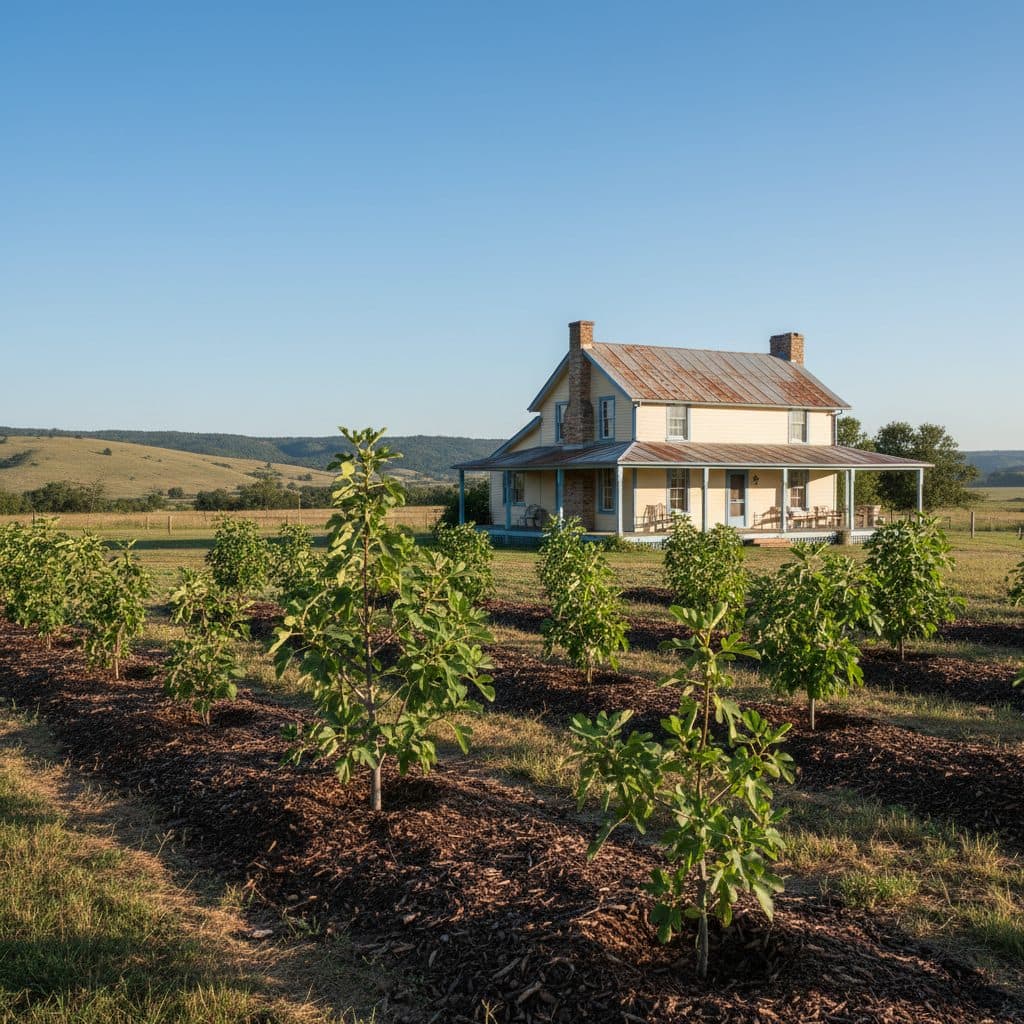
Key takeaways
- Select fig varieties like ‘Chicago Hardy’ or ‘Brown Turkey’ for USDA zones 6-7, as they can tolerate temperatures down to 0°F to 5°F with protection.
- Choose pomegranate varieties such as ‘Salavatski’ or ‘Kazake’ which are hardy to USDA zone 6, enduring winter lows around 5°F to 10°F.
- Proper site selection requires at least eight hours of direct sunlight daily and well-drained soil with a pH between 6.0 and 7.0.
- Implement winter protection strategies, including deep mulching (6-12 inches) and wrapping young tree trunks, especially during the first three years.
- Pruning in late winter or early spring maintains tree structure, promotes fruit production, and removes dead wood.
- Provide consistent watering, about one inch per week during dry periods, and a balanced fertilizer in early spring for optimal growth.
Quick answer: To grow figs and pomegranates in USDA zones 6-7, select cold-hardy varieties like ‘Chicago Hardy’ fig or ‘Salavatski’ pomegranate, ensure proper site selection with ample sunlight and well-drained soil, and implement winter protection strategies such as deep mulching and wrapping young trunks.
For home growers across much of the United States, particularly in USDA zones 6 and 7, the dream of harvesting fresh figs and pomegranates might seem out of reach. While these fruits are often associated with warmer, Mediterranean climates, advances in horticulture and careful selection of specific varieties have made them viable options for many northern gardeners. In regions like the Ohio River Valley, where winter temperatures can dip to 0°F in zone 6 or 10°F in zone 7 and building these trees requires a strategic approach. Winter cold is not the only limit for pomegranates: they need a long, hot, dry summer to ripen, so in cool-summer maritime areas such as western Oregon and Washington a hardy cultivar will survive and flower without ever ripening usable fruit, and autumn rain splits what fruit does set.
Growing cold-hardy fig and pomegranate varieties in cooler regions requires selecting resilient cultivars, using sound planting techniques, and providing winter protection when temperatures drop below freezing.
Understanding cold hardiness in figs and pomegranates
The USDA Plant Hardiness Zone Map is a fundamental tool for growers, dividing North America into 13 zones based on average annual extreme minimum winter temperatures. For those in USDA zones 6 and 7, this means anticipating winter lows ranging from 0°F to -10°F in zone 6, and 0°F to 10°F in zone 7. Figs (Ficus carica) and pomegranates (Punica granatum) are generally considered warm-climate plants, but specific varieties have adapted to tolerate these colder conditions, often surviving down to 5°F or even 0°F with proper care and protection.
Microclimates and their impact
Understanding property microclimates helps site tender trees. A microclimate refers to the local atmospheric conditions differing from those of the surrounding area, often influenced by structures, topography, or bodies of water. A south-facing wall, for instance, can raise ambient temperatures by several degrees, providing a warmer pocket for a sensitive plant. Similarly, planting near a large rock or a paved area can offer additional heat retention, extending the growing season by one to two weeks. These subtle differences, sometimes just a few degrees, can be the deciding factor for whether a fig or pomegranate tree survives a harsh winter in zone 6.
- Proximity to buildings or fences
- Slope and aspect of the land
- Presence of large bodies of water
- Type of surrounding ground cover
- Prevailing wind patterns and shelter
Selecting cold-hardy fig varieties
When choosing figs for USDA zones 6 and 7, the focus shifts to varieties known for their ability to withstand colder temperatures and still produce fruit. Many common fig varieties (Ficus carica) are hardy only to zone 8, but specific cultivars have demonstrated remarkable resilience. For example, ‘Chicago Hardy’ (also known as ‘Bensonhurst Purple’) is a popular choice because of the way it fails: its top growth is usually killed somewhere in the low teens Fahrenheit, but the roots survive well below 0°F and push new shoots in spring, and because figs fruit on new wood you still get a main crop. In mild climates this variety produces two crops: a small breba crop on last year's wood in early summer and a larger main crop on new growth in late summer. In zones 6 and 7, where the top growth is killed back or cut back most winters, expect the main crop only.
Top varieties for zones 6-7
Beyond ‘Chicago Hardy’, other excellent options include ‘Brown Turkey’ and ‘Celeste’. ‘Brown Turkey’ is a widely grown fig that performs well in zone 7, tolerating temperatures around 5°F to 10°F, and can produce 20-40 pounds of fruit annually. ‘Celeste’, often called the ‘Sugar Fig’, is also quite cold-tolerant, hardy to zone 6 with protection, and known for its sweet, small fruits. These varieties typically grow to a mature height of 10-15 feet and spread 10-15 feet wide.
- ‘Chicago Hardy’: Survives to 0°F, produces two crops.
- ‘Brown Turkey’: Hardy to 5°F, medium-sized, sweet fruit.
- ‘Celeste’: Tolerates 5°F, small, very sweet fruit.
- ‘Desert King’ is a San Pedro type that fruits only on the breba crop borne on last year's wood. In zones 6 and 7, where fig top growth is killed back or cut back most winters, it will grow well and never fruit; leave it to zone 8 and milder.
Selecting cold-hardy pomegranate varieties
Pomegranates, like figs, are traditionally associated with warmer climates, but several varieties have proven surprisingly resilient in USDA zones 6 and 7. Success depends on selecting cultivars specifically bred or identified for their cold tolerance. ‘Salavatski’ is one of the most reliable cold-hardy pomegranates, known to survive temperatures down to 5°F to 10°F once established. This variety produces large, flavorful fruits, typically 3-5 inches in diameter, and can yield 15-25 pounds of fruit per mature shrub. Another excellent choice is ‘Kazake’, which shares similar hardiness and fruit characteristics, often maturing in late September in zone 7.
Chilling requirements and fruit quality
Beyond cold hardiness, trees must also meet chilling hour requirements for fruit production. Pomegranates generally need 100-200 chilling hours (hours below 45°F) to set fruit properly, which is easily met in zones 6 and 7. Cold-hardiness ratings for pomegranate cultivars come almost entirely from grower reports and regional trials instead of controlled hardiness studies, so treat any single figure as provisional. For instance, varieties like ‘Parfianka’ can also be grown in zone 7 with protection, offering sweet-tart juice and developing a deep red color.
- ‘Salavatski’: Hardy to 5°F, large fruit, high yield.
- ‘Kazake’: Similar to ‘Salavatski’, good for zone 6.
- ‘Eversweet’: usually rated zone 8-9 and marginal even in a warm zone 7b site; very sweet, soft-seeded fruit.
- ‘Wonderful’ (with protection): Can be grown in zone 7, large, juicy fruit.
- ‘Parfianka’ (with protection): Zone 7 hardy, excellent flavor.
Site preparation and planting for zones 6-7
Successful establishment of fig and pomegranate trees begins with thorough site preparation. Both species thrive in full sun, requiring a minimum of eight hours of direct sunlight daily to produce abundant, high-quality fruit. Well-drained soil is essential; they do not tolerate soggy conditions, which can lead to root rot. A soil pH between 6.0 and 7.0 is ideal for optimal nutrient uptake. Before planting, conduct a soil test to determine pH and nutrient levels, then amend as necessary. Incorporating 2-3 inches of organic matter, such as compost or aged manure, can improve soil structure and fertility.
Planting techniques and initial care
When planting, dig a hole twice as wide as the root ball and just as deep. For bare-root trees, create a small mound of soil in the center of the hole to spread the roots over. Plant at the depth the tree grew in the nursery. In zone 6 and colder, many fig growers deliberately set the plant 2-4 inches deeper so the lowest dormant buds sit below the soil surface and can regrow if the top is killed. Figs and pomegranates are grown from cuttings and are not normally grafted, so there is usually no graft union to worry about. Space fig and pomegranate trees 10-15 feet apart to allow for mature growth and good air circulation. After planting, water thoroughly with 5-10 gallons of water to settle the soil around the roots. Apply a 2-4 inch layer of mulch around the base, keeping it a few inches away from the trunk to prevent pest issues.
- Full sun (eight+ hours daily)
- Well-drained soil (sand or loam preferred)
- Soil pH 6.0-7.0
- Ample organic matter (2-3 inches of compost)
- Good air circulation (10-15 feet spacing)
Winter protection strategies for young trees
Even cold-hardy fig and pomegranate varieties benefit significantly from winter protection, especially during their first two to three years of establishment. Young trees are more vulnerable to extreme cold, which can cause stem dieback or even kill the plant. A simple yet effective method is deep mulching. Apply a 6-12 inch layer of straw, wood chips, or shredded leaves in late fall, extending out to the drip line but pulled back several inches from the stems (deep mulch banked against bark is prime vole habitat, and voles girdle young fig and pomegranate stems under winter cover). This insulates the roots and crown, protecting them from freezing temperatures down to 0°F. In zone 6, where temperatures can reach -10°F, this protection is often necessary for survival.
Wrapping and container growing
For added protection, particularly for fig trees, consider wrapping the trunk and lower branches with burlap or a specialized tree wrap. This can be done after the leaves have fallen, typically in late November or early December. Use two to three layers of burlap, securing it with twine, to create an insulating barrier against freezing winds and temperature fluctuations. For growers at the colder end of zone 6, or those with limited space, growing figs and pomegranates in large containers (20-30 gallon pots) allows them to be moved indoors to an unheated garage or basement when temperatures consistently drop below 20°F. This method offers nearly complete protection from winter damage.
- Deep mulching (6-12 inches)
- Burlap wrapping for trunks and branches
- Using tree shelters or cages
- Container growing for indoor overwintering
- Planting in sheltered microclimates
Ongoing care and pruning for fruit production
Once established, cold-hardy fig and pomegranate trees require consistent care to ensure healthy growth and maximize fruit production. Fertilization is best done in early spring before new growth begins, using a balanced fertilizer like a 5-10-10 or 10-10-10 NPK formulation. For young trees, apply about one cup of granular fertilizer, increasing to two to three cups for mature trees over five years old. Avoid over-fertilizing with nitrogen, which can promote leafy growth at the expense of fruit. Consistent watering is also important, especially during dry spells and fruit development; aim for about one inch of water per week, either from rainfall or irrigation.
Pruning for health and yield
Pruning figs and pomegranates is typically performed in late winter or early spring before bud break. For figs, the goal is to remove dead, damaged, or diseased wood, and to open up the canopy for better air circulation and light penetration. Figs produce fruit on new wood, so a light annual pruning encourages new growth. Pomegranates grow as multi-stemmed shrubs and fruit on short spurs carried on two- to three-year-old wood, so prune lightly: take out the weakest and most crowded stems, keep five or six strong trunks, and rub off basal suckers through the season. Heavy annual removal of older wood pushes vegetative shoots and delays fruiting. Proper pruning, as detailed in guides like How to prune fruit trees, keeps the plant productive and healthy for many years.
- Fertilize in early spring with balanced NPK
- Provide one inch of water per week during dry spells
- Prune in late winter or early spring
- Remove dead, damaged, or crossing branches
- Thin out crowded pomegranate stems lightly and remove basal suckers
Comparison of cold-hardy figs and pomegranates for zones 6-7
Characteristic | Fig (Ficus carica) | Pomegranate (Punica granatum) |
|---|---|---|
Typical Hardiness | USDA Zone 6-7 (with protection, some to zone 5) | USDA Zone 6-7 (with protection, some to zone 5) |
Cold Tolerance | Down to 0°F to 5°F (with protection) | Down to 5°F to 10°F (with protection) |
Growth Habit | Small tree or large shrub, 10-20 ft tall | Multi-stemmed shrub or small tree, 8-15 ft tall |
Sun Needs | Full sun (8+ hours daily) | Full sun (8+ hours daily) |
Soil Preference | Well-drained, pH 6.0-7.0 | Well-drained, pH 6.0-7.0 |
Pruning | Late winter/early spring, for structure and new wood fruit | Late winter/early spring, thinning older stems |
Fruit Production | On new wood; in zones 6-7 expect the main crop only | On old wood (2-3 years old), one main crop |
Fig Hardiness: The ‘Chicago Hardy’ fig variety can reliably survive winter temperatures as low as 0°F to -5°F with adequate mulching.
Pomegranate Resilience: Established ‘Salavatski’ pomegranate trees are known to withstand winter lows down to 5°F to 10°F.
Sunlight Requirement: Both figs and pomegranates need a minimum of eight hours of direct sunlight daily for optimal fruit production.
Frequently asked questions
How long does it take for cold-hardy figs and pomegranates to bear fruit?
Most cold-hardy fig and pomegranate varieties will begin to produce fruit within two to three years after planting. Optimal yields, often 20-40 pounds per tree, typically occur once the trees are five to seven years old and well-established.
Can I grow figs and pomegranates in containers in zones 6-7?
Yes, container growing is an excellent option for zones 6-7, especially for figs. Use large pots, at least 20-30 gallons in size, and move them to an unheated garage or basement when winter temperatures consistently drop below 20°F. This method offers reliable protection.
What kind of soil do these trees prefer?
Both figs and pomegranates thrive in well-drained soil with a slightly acidic to neutral pH, ideally between 6.0 and 7.0. Amending heavy clay soils with 2-3 inches of organic matter, such as compost, will significantly improve drainage and fertility.
How much sun do figs and pomegranates need?
These fruit trees require full sun exposure, meaning at least eight hours of direct sunlight per day, to produce the best quality and quantity of fruit. Planting in a south-facing location can provide several additional hours of sunlight.
What are common pests or diseases for these trees in colder zones?
In zones 6-7, figs and pomegranates are generally quite resilient. Common issues might include fig rust or leaf spot, which can be managed with good air circulation from proper pruning. Pests like fig borers or scale are less common in colder zones but can occur; inspect trees regularly, especially during the growing season, for any signs of damage or infestation.
References
- Diversity among Pomegranate Varieties in Chilling Tolerance and Transcriptome Responses to Cold Storage (2023). Diversity among Pomegranate Varieties in Chilling Tolerance and Transcriptome Responses to Cold Storage.
- Anthocyanins characterization of 15 Iranian pomegranate (Punica granatum L.) varieties and their variation after cold storage and pasteurization (2007). Anthocyanins characterization of 15 Iranian pomegranate (Punica granatum L.) varieties and their variation after cold storage and pasteurization.
- AIDA Granada: A Pomegranate of Arabic Varieties (2024). AIDA Granada: A Pomegranate of Arabic Varieties.