Key takeaways
- Radishes and beets mature quickly, often in 21 to 60 days, making them ideal for impatient gardeners.
- Choose containers at least six inches deep and 8-12 inches wide for optimal root development.
- Provide at least six hours of direct sunlight daily for strong growth and to prevent leggy plants.
- Maintain consistent soil moisture; inconsistent watering can lead to woody or cracked roots.
- Practice succession planting every two to three weeks to ensure a continuous harvest throughout the growing season.
- Protect young plants from common pests like flea beetles and aphids using physical barriers or organic sprays.
Quick answer: Container radishes and beets are ideal for balcony gardeners due to their rapid growth (21-60 days) and compact size, thriving in containers at least six inches deep with consistent moisture and sunlight.
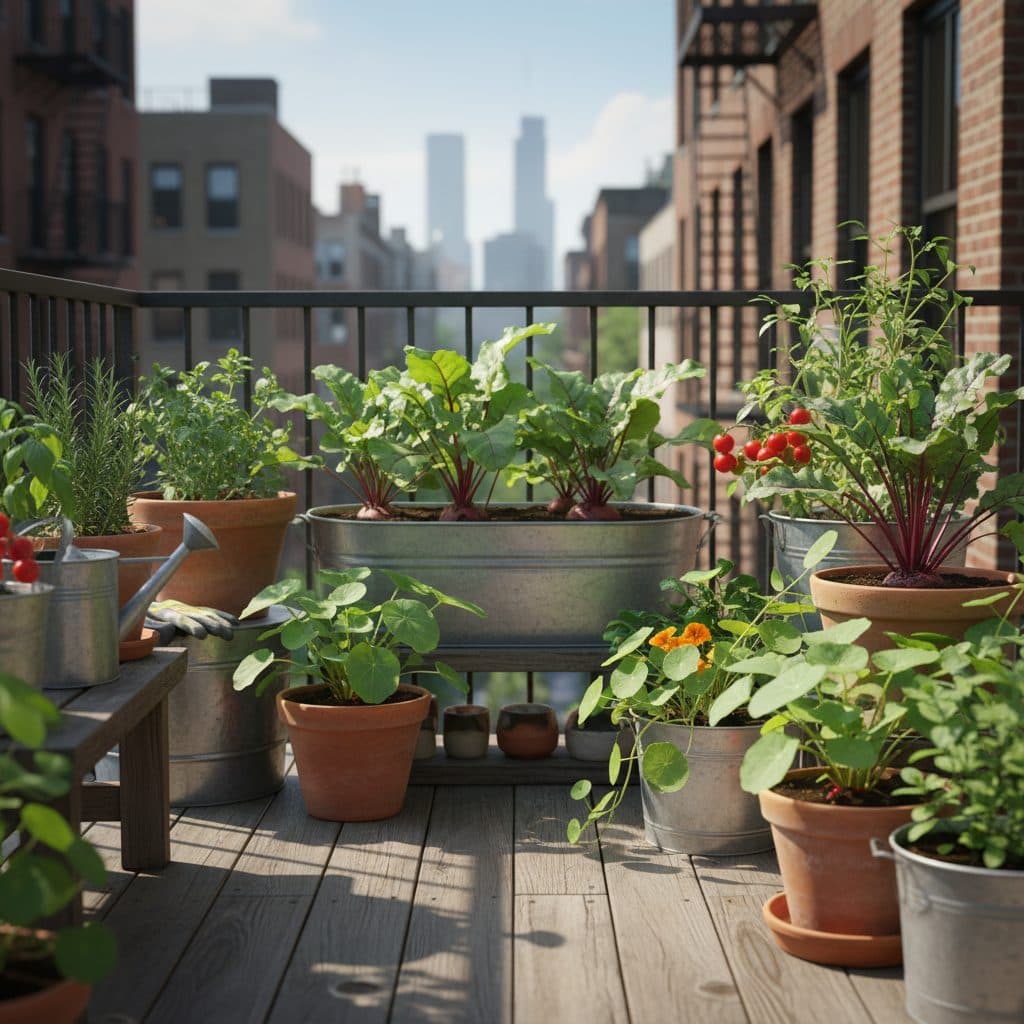
For many growers in urban areas, like those with small balconies in USDA zone 7, space is a limiting factor. Traditional row gardening isn’t an option, but that doesn’t mean you can’t enjoy fresh, homegrown vegetables. Fast-growing root crops like radishes and beets offer a practical solution, maturing quickly and efficiently in containers.
These vegetables are excellent choices for anyone looking to maximize yield from a compact footprint, whether on a sunny balcony, a rooftop patio, or even a small porch. With a little planning and consistent care, you can be harvesting your first crop in as little as three weeks, turning limited space into a productive garden.
Why radishes and beets are ideal for container gardening
Radishes and beets stand out as prime candidates for container cultivation due to their rapid growth cycles and relatively compact root systems. Many radish varieties mature in as little as 21 days from seeding, making them ideal for quick harvests and a favorite among those who appreciate immediate gratification. Garden beets typically require 50 to 60 days to reach maturity, offering a slightly longer but still quick turnaround for a root vegetable that also provides edible greens. This speed means you can plant multiple successions throughout a growing season, yielding more food from the same container space.
fast turnaround and space efficiency
The efficiency of these crops extends beyond their growth rate. Their root structures are generally shallow to moderately deep, fitting well into containers that are six to ten inches deep. This contrasts with larger root vegetables like carrots, which often demand deeper soil. For example, a single 12-inch diameter pot can comfortably host 10 to 12 radish plants or five to seven beet plants, providing a significant harvest from a small area. This makes them perfect for urban settings, from a small apartment balcony in Boston, Massachusetts, to a rooftop garden in Phoenix, Arizona. Both crops also tolerate a range of temperatures, performing well in spring and fall in most USDA zones from 3 to 9.
- Quick maturity: Harvest in 21-60 days.
- Compact size: Fits well in small containers.
- High yield potential: Multiple harvests per season.
- Versatile growth: Thrives in various climates.
- Edible greens: Beet leaves are also a nutritious crop.
Selecting the right containers and soil mix
Choosing the correct container is fundamental for successful container gardening, particularly for root crops. Container radishes and beets perform best in pots that are at least six inches deep to accommodate root growth, but eight to ten inches is even better for beets to allow for larger root development. The container width is also important; a 10-inch diameter pot can hold several plants, while a 24-inch window box can support a small row. Ensure all containers have adequate drainage holes — at least three to five quarter-inch holes per pot — to prevent waterlogging, which can quickly rot roots. Materials like terracotta, plastic, or fabric grow bags all work well, each offering different benefits.
container size and soil composition
The soil you use matters just as much. A high-quality potting mix, not garden soil, is essential for container success. Garden soil is too dense for pots and can compact, restricting root growth and drainage. Look for a lightweight, well-draining potting mix that contains perlite or vermiculite. A good blend might include 30% perlite to ensure aeration and drainage. For an added boost, incorporate one to two tablespoons of a balanced, slow-release organic fertilizer per gallon of potting mix before planting. This provides a steady supply of nutrients for the first four to six weeks of growth, particularly important for fast-growing crops in a limited soil volume.
- Minimum depth: Six inches for radishes, eight inches for beets.
- Drainage holes: Essential to prevent root rot.
- Potting mix: Use lightweight, well-draining commercial mixes.
- Avoid garden soil: Too dense for containers.
- Fertilizer addition: Incorporate slow-release organic granules.
Planting and initial care for strong growth
Once your containers and soil are ready, it’s time to plant. Radish seeds should be sown about one-half inch deep and one inch apart. For beets, plant seeds one-half inch deep and two inches apart, as beet ‘seeds’ are actually clusters of multiple seeds. After germination, thin radish seedlings to two inches apart and beet seedlings to three to four inches apart to give each plant ample space to develop a decent root. Overcrowding is a common issue that leads to small, undeveloped roots. For example, in a 12-inch container, you might aim for five to seven beet plants after thinning.
light, water, and early nutrition
Both radishes and beets thrive in at least six hours of direct sunlight daily for optimal root development. Less sun will result in leggy plants with small roots. Consistent watering is perhaps the most critical factor for these crops. The soil should remain consistently moist but not waterlogged. Use a soil moisture meter to check the soil depth; water when the top one to two inches feel dry. Inconsistent watering, particularly dry spells followed by heavy watering, can lead to woody or cracked roots in both radishes and beets, significantly reducing their quality. For a quick boost, a diluted liquid organic fertilizer (e.g., one-quarter strength fish emulsion) can be applied every two weeks after seedlings emerge, especially if your potting mix didn’t include a slow-release option.
- Seed depth: One-half inch for both crops.
- Initial spacing: One inch for radishes, two inches for beets.
- Thinning: Necessary for root development.
- Sunlight: Minimum of six hours direct sun daily.
- Consistent moisture: Essential to prevent root defects.
Ongoing care and common challenges
Beyond initial planting and watering, ongoing care ensures a healthy, productive harvest. Regularly check for pests and diseases, especially in the close quarters of a balcony garden. Common pests include flea beetles, which can chew small holes in leaves, and aphids, which cluster on new growth. A strong spray of water can dislodge aphids, while row covers can protect young plants from flea beetles. For more persistent issues, an organic neem oil spray applied every five to seven days can be effective.
nutrient management and pest prevention
As your plants grow, they will continue to draw nutrients from the limited soil in their containers. If you didn’t use a slow-release fertilizer at planting, or if your plants show signs of nutrient deficiency (like yellowing leaves), a liquid feed every two to three weeks is beneficial. Use a balanced organic fertilizer diluted to half strength. Keep an eye on the soil surface for weeds, though they are less common in containers than in a traditional garden bed. Any weeds that appear should be pulled promptly to prevent them from competing for water and nutrients. For specific pest identification and organic solutions, resources like the agripure beginner vegetable gardening FAQs can be helpful.
- Monitor pests: Check daily for flea beetles and aphids.
- Organic pest control: Use water sprays or neem oil.
- Fertilize regularly: Liquid feed every 2-3 weeks if needed.
- Weed control: Remove any weeds promptly.
- Protect from elements: Shelter pots from battering rain and wind.
Harvesting and succession planting for continuous yields
Knowing when to harvest is key to enjoying tender, flavorful radishes and beets. Radishes are ready when their roots are about one inch in diameter, typically 21 to 30 days after planting, depending on the variety. Pull one or two to check their size. If left in the ground too long, radishes can become woody, pithy, and overly spicy. Beets are best harvested when their roots are one to three inches in diameter, usually 50 to 60 days from seeding. Smaller beets are more tender, while larger ones can be tougher. You can also harvest beet greens when they are four to six inches tall, taking only a few outer leaves from each plant to allow the root to continue growing. Use a lightweight garden hand trowel for careful harvesting.
maximizing your harvest with succession planting
To ensure a continuous supply of fresh vegetables, practice succession planting. This means sowing a small batch of seeds every two to three weeks through spring, then again from late summer into fall. Pause through the hottest weeks: in high heat radishes turn pithy and sharp and run to seed rather than bulb, and beet seed germinates poorly in warm mix. For example, if you plant five radish seeds today, plant another five in two weeks. This strategy prevents a single large harvest followed by a long wait. In warmer climates, like USDA zone 9, you might be able to get six to eight successions of radishes in a single year. Even in cooler zones, three to four successions are often possible. After harvesting, replenish the container with a fresh layer of potting mix and a sprinkle of organic fertilizer before replanting. This keeps the soil fertile and ready for the next crop cycle, turning your balcony into a highly productive mini-farm.
- Radish harvest: When roots reach one inch diameter.
- Beet harvest: When roots are one to three inches diameter.
- Beet greens: Harvest outer leaves when 4-6 inches tall.
- Succession planting: Sow every 2-3 weeks for continuous yield.
- Replenish soil: Add fresh potting mix and fertilizer after each harvest.
Radishes vs. beets for container growing
Feature | Radishes | Beets |
|---|---|---|
Time to maturity | 21-30 days | 50-60 days |
Minimum container depth | 6 inches | 8 inches |
Ideal root size at harvest | 1 inch diameter | 1-3 inches diameter |
Sunlight requirement | 6+ hours direct sun | 6+ hours direct sun |
Edible greens | Some varieties, mild | Yes, robust flavor |
Typical spacing (after thinning) | 2 inches apart | 3-4 inches apart |
Quickest Harvest: Many radish varieties can be harvested in as little as 21 days, making them one of the fastest root crops for impatient gardeners.
Container Depth: For optimal root development, ensure your containers are at least six inches deep for radishes and eight inches for beets.
Soil Moisture: Inconsistent watering — dry spells followed by heavy soaking — is the main cause of woody or cracked roots in both crops.
Frequently asked questions
What radish varieties are best for containers?
For container growing, compact and fast-maturing radish varieties are ideal. ‘Cherry Belle’ is a classic choice, maturing in about 22 days, while ‘French Breakfast’ offers a slightly elongated root and is ready in 25 days. Both perform well in pots at least six inches deep.
Can I grow beets for greens in containers?
Yes, beets are excellent for growing for their greens in containers. Varieties like ‘Detroit Dark Red’ produce flavorful, nutritious greens within 30 days. You can harvest the outer leaves when they are four to six inches tall, allowing the root to continue developing or harvesting the entire plant for both greens and root.
How often should I water container radishes and beets?
Container radishes and beets require consistent moisture. In warm weather, you might need to water daily, or even twice a day in very hot, dry conditions, especially for smaller pots. Check the top one to two inches of soil; if it feels dry, it’s time to water thoroughly until it drains from the bottom.
Do I need to fertilize my container root crops?
Yes, container plants deplete soil nutrients faster than in-ground gardens. If your potting mix didn’t include a slow-release fertilizer, apply a balanced liquid organic fertilizer at half strength every two to three weeks after seedlings emerge. This ensures adequate nutrition for robust root development.
What are common problems when growing radishes and beets in containers?
Common problems include small or woody roots due to overcrowding or inconsistent watering, and pest damage from flea beetles or aphids. Ensure proper thinning to two inches for radishes and three to four inches for beets, maintain consistent soil moisture, and inspect plants daily for pests, treating with organic methods as needed.
Can I reuse potting soil for new plantings?
It’s generally not recommended to reuse potting soil for successive plantings of the same crop without rejuvenation. After one or two crop cycles, the soil becomes depleted of nutrients and its structure can break down. For best results, replace at least 50% of the old soil with fresh potting mix and add a balanced organic fertilizer for each new planting.
References
- Effects of simulated acidic rain on yields of field-grown radishes and garden beets (1982). Effects of simulated acidic rain on yields of field-grown radishes and garden beets.
- Radishes (2011). Radishes.
- USDA Natural Resources Conservation Service (2024). USDA Natural Resources Conservation Service.