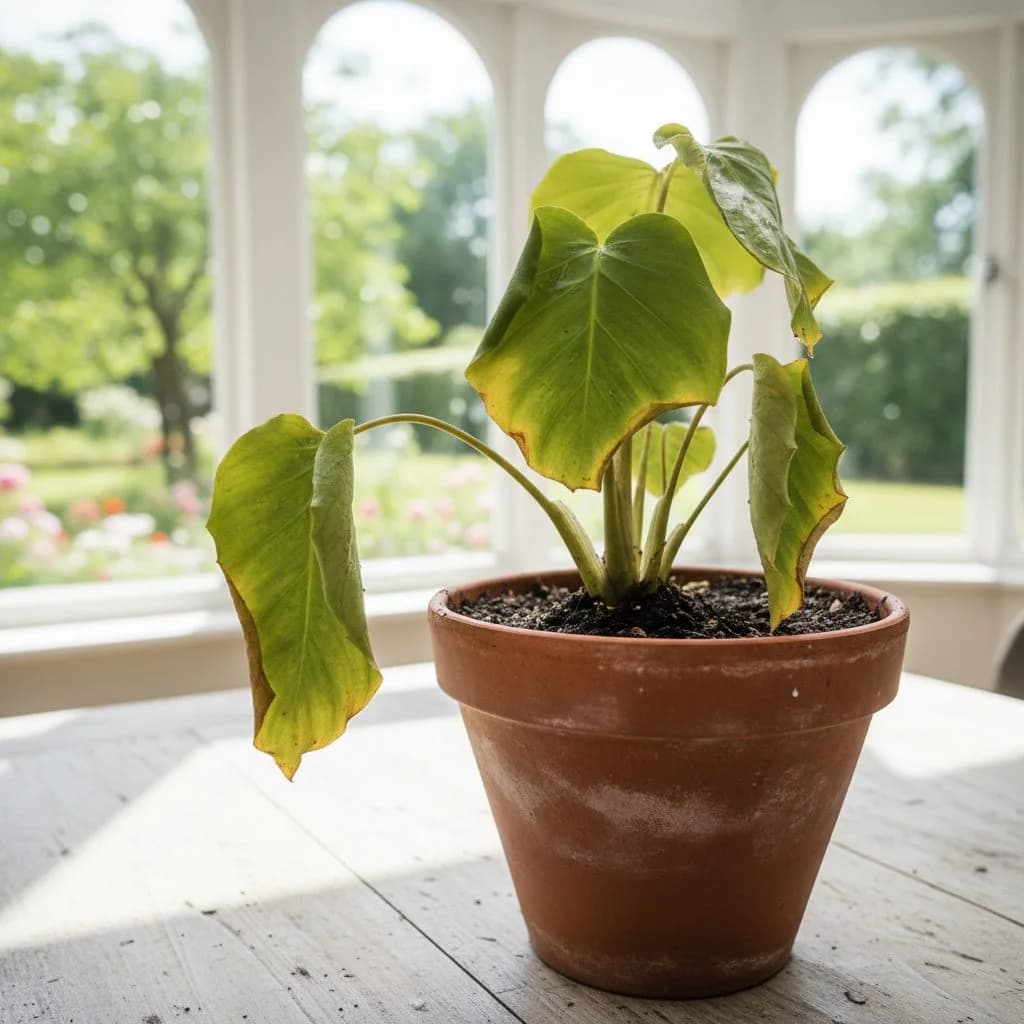
Key takeaways
- Wilting despite moist soil is a primary indicator of root rot, often caused by overwatering or poor drainage.
- Root rot occurs when roots are deprived of oxygen, leading to fungal or bacterial infections that damage the root system.
- Inspect roots for dark, mushy, or foul-smelling signs, and check for stunted growth or yellowing leaves.
- Proper watering, well-draining soil mixes, and pots with drainage holes matter for prevention.
- Repotting with fresh, aerated soil and pruning affected roots can often save a plant if caught early.
- Monitoring soil moisture with a reliable meter helps prevent overwatering, a leading cause of root rot.
Quick answer: Root rot in houseplants is diagnosed by observing wilting leaves despite moist soil, dark and mushy roots, and stunted growth. It’s primarily caused by oxygen deprivation from overwatering, leading to fungal or bacterial infections.
In a typical Florida sunroom, where humidity levels are often high and temperatures can be warm, houseplants thrive — until they don’t. You might notice your beloved peace lily or fiddle-leaf fig starting to droop, its leaves losing their vigor, even though the soil feels damp to the touch. This perplexing paradox is a common concern for many US growers, and it often points to a serious underlying issue: root rot. It’s a frustrating scenario, making many growers question their watering habits and the health of their plants.
Understanding why a plant wilts despite ample soil moisture matters for successful indoor gardening. The issue isn’t a lack of water in the soil, but rather the plant’s inability to absorb it. This problem can affect a wide range of plants, from succulents in USDA zone 10b to tropical foliage in a Minnesota apartment, and it requires a methodical approach to diagnose and resolve before it’s too late for your green companions.
The perplexing paradox of wilting plants in wet soil
It’s a common sight for indoor growers: a plant with limp, drooping leaves, yet the soil in its pot feels undeniably moist, sometimes even saturated. This situation, often seen in plants like African violets or ferns, can be incredibly confusing. You might assume the plant needs more water, but adding more moisture only exacerbates the problem, pushing the plant closer to collapse. The critical factor here is not the presence of water, but the availability of oxygen to the roots, which is severely limited in waterlogged conditions.
When soil remains overly wet for extended periods, the air pockets between soil particles fill with water. Plant roots, much like our own lungs, require oxygen to perform their vital functions, including absorbing water and nutrients. Without this oxygen, root cells begin to suffocate and die. Research from the 1930s and 40s, such as studies on wilting coefficients in forest soils, showed that plants reach a permanent wilting point when soil moisture drops below a certain threshold, but also implied that too much water could be equally detrimental by preventing oxygen uptake [1], [2]. This lack of oxygen is the primary trigger for root rot, even if the soil itself has a high water content, sometimes with a high water content.
Why plants can’t drink in waterlogged soil
The wilting observed in root-rotted plants is effectively a form of dehydration. Damaged roots cannot efficiently transport water to the foliage, even if there’s plenty of it surrounding them. This is similar to how a person might drown in water but still be dehydrated internally. For instance, a typical houseplant in a 6-inch pot might require watering every 7-10 days, but if it’s watered every three days without proper drainage, its roots will struggle. Using a soil moisture meter can provide a precise reading, often showing a ‘wet’ or ‘saturated’ level even as the plant wilts.
- Roots need oxygen for respiration and water absorption.
- Waterlogged soil displaces essential air pockets.
- Damaged roots lose their ability to transport water.
- Wilting is a symptom of internal dehydration, not lack of external water.
- Overwatering is the number one cause of oxygen deprivation in roots.
Understanding the enemy: what is root rot?
Root rot isn’t a single disease but rather a condition caused by various fungal and bacterial pathogens that thrive in anaerobic, waterlogged soil. These microscopic organisms, such as Pythium, Phytophthora, and Fusarium species, attack and destroy root tissue, turning healthy, firm roots into a mushy, decaying mess. For example, Pythium can infect a plant’s root system quickly after exposure to standing water, especially in warmer temperatures.
The process begins when roots are deprived of oxygen for an extended period, weakening them and making them susceptible to opportunistic pathogens. Once infected, the roots can no longer effectively absorb water or nutrients, regardless of how much is present in the soil. This leads to the classic symptoms of wilting, yellowing leaves, and stunted growth. In a study on maize, specific genetic factors like ‘drooping leaf1’ and ‘drooping leaf2’ were identified, showing how even at a genetic level, plants have mechanisms that respond to stress, including water-related issues [3]. This shows the complex biological responses plants have to environmental stressors like root rot.
Common culprits and their effects
While many types of fungi and bacteria can cause root rot, they all share a common preference for consistently wet conditions. These pathogens are often present in potting mixes but remain dormant until conditions become favorable for their growth. A soil pH outside the optimal range for a plant can also weaken roots and make them more vulnerable. For instance, many common houseplants prefer a slightly acidic to neutral pH, around 6.0 to 6.8.
- Pythium: A common water mold that causes rapid root decay.
- Phytophthora: Known for causing ‘damping-off’ in seedlings and root rot in mature plants.
- Fusarium: Can cause root rot and vascular wilts, blocking water transport.
- Bacteria: Certain anaerobic bacteria can also contribute to root decay in oxygen-deprived soil.
- Overwatering: The primary environmental trigger for pathogen activation in susceptible plants.
Visual and olfactory clues: spotting the signs
Diagnosing root rot often requires a keen eye and a willingness to get a little dirty. The earliest signs are usually visible above ground, mimicking other issues like underwatering or nutrient deficiencies. You might notice leaves turning yellow, often starting from the lower ones, or developing brown, crispy edges, even though the soil is moist. The plant’s growth may become stunted, with new leaves appearing smaller and duller. For example, a healthy pothos might put out new leaves regularly, while an affected one can produce none for a period.
However, the most definitive diagnosis comes from inspecting the roots themselves. Carefully remove the plant from its pot, gently shaking off some of the soil. Healthy roots are typically firm, white or tan, and have a fresh, earthy smell. Roots affected by rot, however, will appear dark brown or black, feel mushy or slimy to the touch, and often emit a distinctly foul, sulfurous odor, similar to rotting eggs. This smell is a strong indicator of anaerobic conditions and bacterial activity, often detectable within a few days of severe root damage.
Above and below ground indicators
Beyond the primary symptoms, there are other subtle clues. If your plant, such as a peace lily, normally stands upright, but its flower stems are suddenly flopping over, that’s a sign of distress. In some cases, you might even see fungus gnats flying around the plant, as their larvae thrive in consistently damp soil and feed on decaying organic matter, including rotting roots. A sudden increase from zero to 10-20 gnats can be a red flag. Pay attention to the overall vigor of the plant; a healthy plant in a 6-inch pot should show consistent growth over a month, while a sick one will stagnate.
- Yellowing or browning leaves, especially lower ones.
- Drooping or wilting foliage despite moist soil.
- Stunted growth and smaller new leaves.
- Mushy, dark brown or black roots.
- Foul, decaying odor emanating from the roots or soil.
- Presence of fungus gnats.
The soil equation: moisture, drainage, and aeration
The foundation of preventing root rot lies in understanding and managing your soil. Not all potting mixes are created equal, and what works for a succulent in a desert climate (USDA zone 9b) will not suit a tropical plant in a humid apartment. A good potting mix for most houseplants should be light, airy, and drain freely, preventing water from lingering around the roots. For instance, a mix for a philodendron might include coco coir, perlite, and orchid bark to ensure excellent drainage and aeration.
Poor drainage is a primary culprit. If your pot lacks drainage holes, or if the holes are blocked, excess water has nowhere to go. This creates a stagnant, anaerobic environment perfect for root rot pathogens. Even with drainage holes, if the potting mix is too dense (for example, a heavy garden soil with less than 10% perlite), it will retain too much moisture. Studies on soil water retention curves, such as those using the dewpoint method, stress the importance of understanding how different soil compositions hold water around the wilting point [6]. This research helps growers choose mixes that support healthy root function.
Optimizing your potting environment
Beyond the soil mix, the pot itself plays a significant role. Terracotta pots, for example, are porous and allow some moisture to evaporate through their sides, which can be beneficial for plants prone to overwatering. Plastic pots, while retaining moisture longer, require more careful watering practices. The size of the pot also matters; a small plant in a disproportionately large pot will have its roots surrounded by a vast volume of soil that stays wet for too long, potentially for 10-14 days after watering. Aim for a pot that is only slightly larger in diameter than the root ball.
- Choose a well-draining potting mix with components like perlite, orchid bark, or pumice.
- Always use pots with adequate drainage holes, with several drainage holes.
- Avoid heavy garden soil for houseplants; it compacts and holds too much water.
- Consider porous pots like terracotta for plants sensitive to overwatering.
- Match pot size to the plant’s root ball; avoid oversizing by more than 2 inches.
Remediation and recovery: saving your affected plants
If you’ve diagnosed root rot, prompt action can often save your plant, especially if the damage isn’t too extensive. The first step is to carefully remove the plant from its pot. Gently brush away as much of the old, soggy soil as possible, being careful not to damage any healthy roots. You might find that a significant portion of the root ball is affected. Rinse the roots under lukewarm running water to remove remaining contaminated soil and get a clearer view of the damage.
Next, use clean, sharp scissors or pruning shears to cut away all affected roots. Healthy roots are firm and pliable, while rotten roots will be mushy, black, or brown. Make sure to cut back to healthy tissue. For example, if a root is black for 2 inches, cut it back by 2.5 inches. After pruning, you can dip the remaining healthy roots in a dilute solution of hydrogen peroxide for a short period. This can help kill remaining pathogens and provide a temporary oxygen boost to the roots.
Repotting for a fresh start
Once the roots are trimmed and treated, repot the plant into a clean pot with fresh, well-draining potting mix. If using the same pot, sterilize it first with a dilute bleach solution to kill any lingering pathogens. Choose a pot that is appropriately sized for the remaining root system, often a smaller one than the original. For a plant that previously filled a 6-inch pot but now has a much smaller root ball, a 4-inch pot might be more suitable.
- Gently remove the plant and brush off old soil.
- Inspect roots for dark, mushy, or foul-smelling sections.
- Prune away all rotten roots using sterilized tools.
- Consider a hydrogen peroxide dip for remaining roots.
- Repot into a clean pot with fresh, well-draining soil.
Prevention is paramount: long-term strategies
The best way to deal with root rot is to prevent it from happening in the first place. This involves a combination of mindful watering practices, appropriate soil, and suitable containers. For instance, in a humid climate like the Pacific Northwest (USDA zone 8b), plants might need less frequent watering than in a drier Arizona home (USDA zone 9a), even for the same species. Always check the soil moisture before watering; sticking your finger 1-2 inches into the soil is a good starting point, or use a reliable moisture meter.
Overwatering is the single most common cause of root rot. Instead of watering on a fixed schedule, water only when the top layer of soil feels dry to the touch for most houseplants. For succulents, allow the soil to dry out completely, often for 7-14 days between waterings. When you do water, do so thoroughly until water drains from the bottom of the pot so all roots receive moisture. Then, empty any standing water from the saucer promptly.
Smart watering and environmental controls
Consider the environment your plant is in. Plants in brighter light or warmer temperatures (above 75°F) will generally use water faster than those in lower light or cooler conditions (below 65°F). Air circulation also plays a role; a small fan can help dry out the top layer of soil and prevent fungal growth. Using a reflective indoor grow tent can help control environmental factors like humidity and temperature, optimizing conditions for plant health. Even salinity in the soil can affect a plant’s wilting point, as higher salt concentrations make water less available to roots, even if the soil is moist [5].
- Always check soil moisture before watering, typically by inserting a finger 1-2 inches deep.
- Water thoroughly until drainage occurs, then empty excess water from the saucer.
- Use a well-draining potting mix appropriate for your specific plant, often with significant drainage material.
- Ensure all pots have adequate drainage holes, usually at least three 0.5-inch holes.
- Adjust watering frequency based on light, temperature, and humidity levels in your home.
Healthy Roots vs. Root Rot
Characteristic | Healthy Roots | Root Rot |
|---|---|---|
Appearance | Firm, white or tan, often branched | Mushy, dark brown or black, slimy |
Smell | Fresh, earthy scent | Foul, sulfurous, rotten egg odor |
Texture | Firm, slightly flexible | Soft, easily falls apart when touched |
Function | Efficiently absorbs water and nutrients | Unable to absorb water, leads to wilting |
Growth Impact | Supports vigorous plant growth | Causes stunted growth, leaf yellowing, plant decline |
Survival Rate | 100% chance of survival with proper care | Below 50% if not treated promptly |
Soil Moisture Threshold: Plants reach a permanent wilting point when soil moisture drops below their specific wilting coefficient [1].
Pathogen Growth: Anaerobic conditions in waterlogged soil can significantly increase the proliferation of root rot pathogens like Pythium quickly.
Salinity Impact: High soil salinity can reduce the available water to plants, effectively raising the wilting percentage even in moist soil [5].
References
- WILTING COEFFICIENT AND WILTING PERCENTAGE OF THREE FOREST SOILS OF THE DUKE FOREST (1939).
- Wilting and Soil Moisture Depletion by Tree Seedlings and Grass (1948).
- Functional and genomic analyses of the maize yabby transcription factors drooping leaf1 and drooping leaf2 (2023).
- A NEW TECHNIC FOR DETERMINING WILTING PERCENTAGE OF SOIL (1949).
- EFFECT OF SALINITY ON THE WILTING PERCENTAGE OF SOIL (1955).
- Determination of the Soil Water Retention Curve around the Wilting Point: Optimized Protocol for the Dewpoint Method (2019).