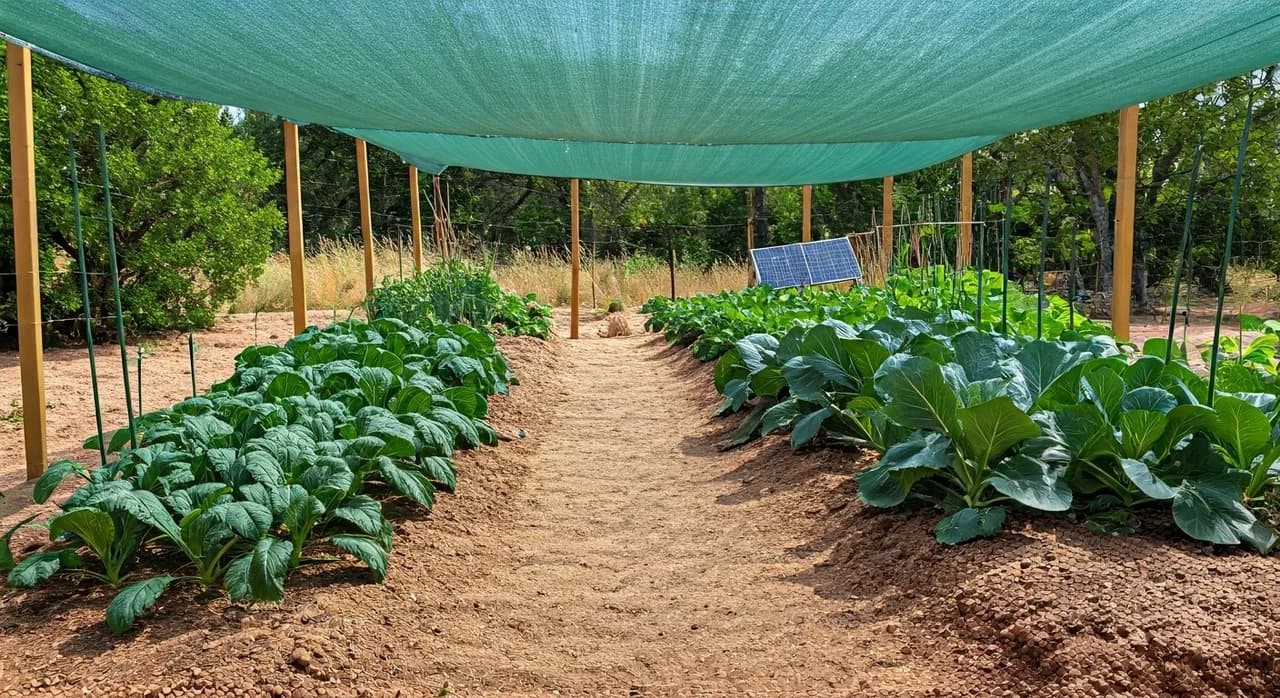
Key takeaways
- Match shade cloth density to crop light requirements, from 30% for sun-lovers to 70% for shade-preferring plants.
- Consider your regional climate, including USDA zone, average summer temperatures, and daily sun hours.
- Higher density shade cloth can reduce ambient temperatures, benefiting heat-sensitive crops.
- Proper installation, including allowing for airflow, supports effective temperature moderation and plant health.
- Monitor plant response closely and adjust shade cloth use based on growth, leaf color, and yield.
- Shade cloth can extend growing seasons in hot climates and protect plants from intense UV radiation.
Quick answer: Selecting shade cloth density involves matching it to crop light requirements (30% for sun-lovers, 70% for shade-preferring plants) and considering your regional climate, including USDA zone and summer temperatures. Proper installation with adequate airflow ensures effective temperature moderation.
In many parts of the United States, from the arid Southwest to the humid Southeast, homestead growers face the challenge of intense summer sun. High temperatures and excessive solar radiation can stress plants, reduce yields, and even cause sunburn on sensitive crops. For instance, in USDA zone 9, summer temperatures can regularly exceed 95°F, making direct, unfiltered sunlight detrimental to many vegetables. Shade cloth gives a practical solution, moderating light intensity and temperature to create a more favorable microclimate for your garden.
Choosing the right shade cloth density is not a one-size-fits-all decision; it depends heavily on the specific crops you are growing and the unique climate of your region. A 30% shade cloth suits established tomatoes in a northern climate, while a 70% density helps delicate lettuce varieties in an Arizona summer. Understanding the science behind light, plant physiology, and regional weather patterns allows growers to make informed choices so healthier plants and more abundant harvests on their off-grid homesteads.
Understanding shade cloth basics
Shade cloth is a woven or knitted material designed to block a percentage of sunlight, reducing both light intensity and heat. These materials are typically made from high-density polyethylene (HDPE), a durable plastic that resists UV degradation for many years. The density, expressed as a percentage, indicates how much sunlight is blocked. For example, a 30% shade cloth allows 70% of sunlight to pass through, while a 70% cloth blocks 70% and allows 30% through. This percentage refers specifically to the Photosynthetically Active Radiation (PAR), the spectrum of light plants use for photosynthesis [1]. Different weaving patterns, like those found in Austrian or Holland shade cloths, can also affect durability and airflow [2, 3]. In a hot climate like central Texas, USDA zone 8b, reducing solar radiation by 50% can lower ambient temperatures within a structure by 10-15°F, significantly improving growing conditions for crops like peppers.
Types and materials for homestead use
Homesteaders often choose between knitted and woven shade cloths. Knitted shade cloth is generally more flexible, resists unraveling if cut, and comes in various densities, typically from 30% to 90%. Woven shade cloth is heavier, offers more uniform shade, and is often used for more permanent structures. Both types are UV-stabilized to ensure a lifespan of several years, even under intense sun in places like southern California, USDA zone 10. The color of the cloth also plays a role; black shade cloth absorbs heat, while white or silver cloths reflect it, potentially offering a few degrees more cooling. For smaller structures, like those used for solar power for a shed, a lighter 30% cloth might be easier to manage and install, weighing only a few ounces per square yard.
- Knitted HDPE: Flexible, won’t unravel when cut, common for temporary setups.
- Woven HDPE: Heavier, more rigid, offers uniform shade, suitable for permanent installations.
- UV Stabilization: Needed for longevity, extending material life to 5-10 years.
- Density: Percentage of light blocked, ranging from 30% to 90% for various applications.
- Color: Black absorbs heat, white/silver reflects it, influencing temperature reduction.
The science of light and plants
Plants require light for photosynthesis, but too much can be detrimental. The primary measurement is Photosynthetically Active Radiation (PAR), which spans wavelengths from 400 to 700 nanometers [1]. Different plants have varying optimal PAR levels. For example, a sun-loving corn plant in Iowa thrives with high PAR, requiring up to 30 mol·m⁻²·d⁻¹, while a shade-loving hosta in a Pacific Northwest garden prefers much lower levels, perhaps 5-10 mol·m⁻²·d⁻¹. Excessive light can lead to photoinhibition, where the photosynthetic machinery is damaged, reducing growth and yield. This is particularly relevant in high-altitude regions, such as parts of Colorado above 5,000 feet, where UV radiation is significantly higher, significantly more intense than at sea level. Shade cloth helps to filter out some of this excess radiation, protecting plant cells from damage.
Understanding dli and plant needs
Daily Light Integral (DLI) measures the total amount of PAR received by a plant over a 24-hour period, expressed in moles per square meter per day (mol·m⁻²·d⁻¹). For instance, a tomato plant typically requires a DLI of 20-30 mol·m⁻²·d⁻¹, while lettuce might only need 12-17 mol·m⁻²·d⁻¹. In sunny regions like central Florida, a summer day can easily provide 40-50 mol·m⁻²·d⁻¹ of DLI, far exceeding the needs of many crops and necessitating shade for 4-6 hours daily. Shade cloth effectively reduces the DLI, bringing it into an optimal range. Without proper light management, plants can suffer from heat stress, showing symptoms like wilting, stunted growth, and reduced fruit set, especially when temperatures exceed 90°F for extended periods, impacting yields.
- Photosynthetically Active Radiation (PAR): Light spectrum (400-700 nm) essential for plant growth.
- Daily Light Integral (DLI): Total PAR received over 24 hours, critical for optimizing plant health.
- Photoinhibition: Damage to plant cells from excessive light, reducing photosynthetic efficiency.
- Heat Stress: Plant damage from high temperatures, often exacerbated by intense sun.
- UV Protection: Shade cloth can filter harmful UV radiation, especially at higher altitudes.
Choosing density by crop type
The ideal shade cloth density is primarily dictated by the specific light requirements of your crops. Sun-loving plants like tomatoes, peppers, corn, and squash generally thrive in full sun, meaning 6 to 8 hours of direct sunlight daily. However, even these plants can benefit from light shade (30-40%) during the hottest parts of the day in regions where summer temperatures consistently exceed 90°F, such as the Central Valley of California, USDA zone 9. This partial shading can prevent sunscald on fruits and reduce overall plant stress, leading to better yields and fruit quality. For example, maize kernel number can be affected by intercepted radiation, with studies showing a 10-15% reduction in yield under excessive shade [5].
Shade requirements for different vegetables
Moderate light-loving crops such as beans, carrots, and many herbs (like basil and cilantro) often perform best with 4 to 6 hours of direct sun, benefiting from 40-50% shade cloth in hot climates. In USDA zone 7, where summer highs might reach 85-90°F, a 40% cloth can prevent bolting in cilantro and keep basil leaves from scorching. Shade-preferring crops like lettuce, spinach, Swiss chard, and many Asian greens require less intense light, often thriving with only 3 to 5 hours of direct sun or filtered light throughout the day. For these, a 50-70% shade cloth is often appropriate, especially in regions with intense summer sun, like the desert Southwest, USDA zone 10, where daily highs can reach 110°F. This higher density ensures cooler leaf temperatures and prevents rapid wilting and premature bolting, extending the harvest season by several weeks. Consider how you manage your overall greenhouse climate control to integrate shade cloth effectively.
- 30-40% Shade: Ideal for sun-loving plants (tomatoes, peppers) in hot regions (90°F+).
- 40-50% Shade: Suitable for moderate light plants (beans, carrots, many herbs) in warm climates (85-90°F).
- 50-70% Shade: Best for shade-preferring crops (lettuce, spinach, Asian greens) in intense sun (USDA zone 10).
- Prevent Sunscald: Protects fruit-bearing plants in high light conditions.
- Reduce Bolting: Helps leafy greens maintain quality in warmer temperatures.
Regional considerations and climate factors
Your geographical location and local climate are paramount in determining the appropriate shade cloth density. Regions with high solar intensity, such as the American Southwest (e.g., Phoenix, Arizona, USDA zone 9b), often require higher shade percentages, perhaps 50-70%, even for sun-loving plants during peak summer months, when daily highs can exceed 105°F. Conversely, in northern states like Michigan (USDA zone 5a), where summer sun is less intense and temperatures are milder, a 30% shade cloth might only be necessary for heat-sensitive crops or during unusually hot spells exceeding 85°F for more than 3 consecutive days. The duration of intense sunlight also matters; a region with 10-12 hours of direct sun daily will stress plants more than one with 6-8 hours, even at similar peak intensities, potentially reducing growth.
Adapting to local weather and altitude
Altitude plays a significant role, as UV radiation increases with elevation gain [6]. A homestead in the Rocky Mountains at 7,000 feet, for instance, will experience much stronger UV light than one at sea level, even in the same USDA zone. This higher UV intensity can necessitate a 40-50% shade cloth for crops that might only need 30% at lower elevations, effectively reducing UV exposure. Humidity also affects plant water loss; in dry climates like eastern Washington, USDA zone 6b, plants transpire more rapidly, losing significant amounts of water per day per plant, making shade helpful for moisture retention and preventing wilting. Managing these environmental factors supports reliable harvests, and integrating shade cloth with greenhouse ventilation helps keep conditions stable. Consider how solar panels for off-grid living can power automated ventilation systems to work alongside your shade cloth, maintaining optimal temperatures below 85°F.
- High Solar Intensity: Regions like the Southwest (USDA zone 9b) may need 50-70% shade cloth.
- Milder Climates: Northern states (USDA zone 5a) might only require 30% shade for sensitive plants.
- Altitude Impact: UV radiation increases by 10-12% per 3,300 feet, requiring higher shade density.
- Humidity Levels: Dry climates (e.g., eastern Washington) benefit from shade to reduce plant water loss.
- Duration of Sun: Longer periods of direct sun (10-12 hours) necessitate more shade.
Installation and maintenance for longevity
Proper installation is just as important as choosing the correct density. Shade cloth should be installed with sufficient airflow between the cloth and the plant canopy, typically 12 to 24 inches. This air gap allows heat to escape, preventing a buildup of hot, stagnant air that can negate some of the cooling benefits. Securely fastening the cloth is essential, especially in windy regions like the Great Plains, where strong gusts can tear unsecured cloth within a single season. Using grommets, clips, and sturdy support structures like PVC pipe (1.5-2 inch diameter) or metal conduit ensures the cloth stays in place and prevents tearing. For larger homestead operations, consider a system that allows for easy deployment and retraction, such as a pulley system, which can be particularly useful for seasonal adjustments, saving labor.
Seasonal adjustments and storage
Regular maintenance extends the lifespan of your shade cloth, which can be 5 to 10 years for quality HDPE materials. Inspect the cloth annually for any tears or damage, especially after strong storms. Small holes (under 6 inches) can be repaired with shade cloth repair tape to prevent them from enlarging, at a low cost. At the end of the growing season, particularly in regions with heavy snowfall like the Northeast, USDA zone 6a, it is advisable to remove the shade cloth to prevent snow accumulation (which can be heavy) from damaging the structure or the cloth itself. Clean the cloth with a mild soap solution and store it in a dry, protected area. This practice ensures that your investment continues to protect your crops for many seasons, potentially for 8-10 years while aiding the self-sufficiency of your off-grid homestead. For more permanent structures, such as a greenhouse, integrating shade cloth into a comprehensive greenhouse climate control system is essential to maintain internal temperatures below 85°F.
- Airflow Gap: Maintain 12-24 inches between cloth and plants for heat dissipation.
- Secure Fastening: Use grommets, clips, and sturdy supports to withstand winds up to 50 mph.
- Seasonal Removal: Take down cloth in winter to prevent snow damage, especially in USDA zone 6a.
- Regular Inspection: Check annually for tears; repair small holes with specialized tape.
- Clean Storage: Wash with mild soap and store dry to extend lifespan to 5-10 years.
Shade Cloth Density Recommendations by Crop and Climate
Crop Type | Typical Density Range | Regional Consideration (Example) |
|---|---|---|
Tomatoes, Peppers, Corn | 30-40% | USDA Zone 9 (California Central Valley) in summer |
Beans, Carrots, Basil | 40-50% | USDA Zone 7 (Mid-Atlantic) during peak heat |
Lettuce, Spinach, Swiss Chard | 50-70% | USDA Zone 10 (Arizona Desert) in summer |
Delicate Seedlings, Orchids | 70-80% | Any region for extreme heat protection or specific plant needs |
Cucumbers, Melons | 30-50% | USDA Zone 8 (Texas) to prevent sunscald on fruits |
Temperature Drop: A 50% shade cloth can reduce ambient temperatures within a growing area by 10-15°F in regions with intense sun.
UV Protection: Shade cloth can filter out a significant portion of harmful UV radiation, which increases by 10-12% for every 3,300 feet of elevation.
Lifespan: Quality HDPE shade cloth is UV-stabilized and typically lasts 5 to 10 years, even in harsh climates.
References
- Growth responses of sun and shade plants in simulated vegetation shade and neutral shade. (1987).
- shade cloth (2021).
- holland shade cloth (2021).
- austrian shade cloth (2021).
- Intercepted Radiation at Flowering and Kernel Number in Maize: Shade versus Plant Density Effects (1993).
- USDA Natural Resources Conservation Service (2024).