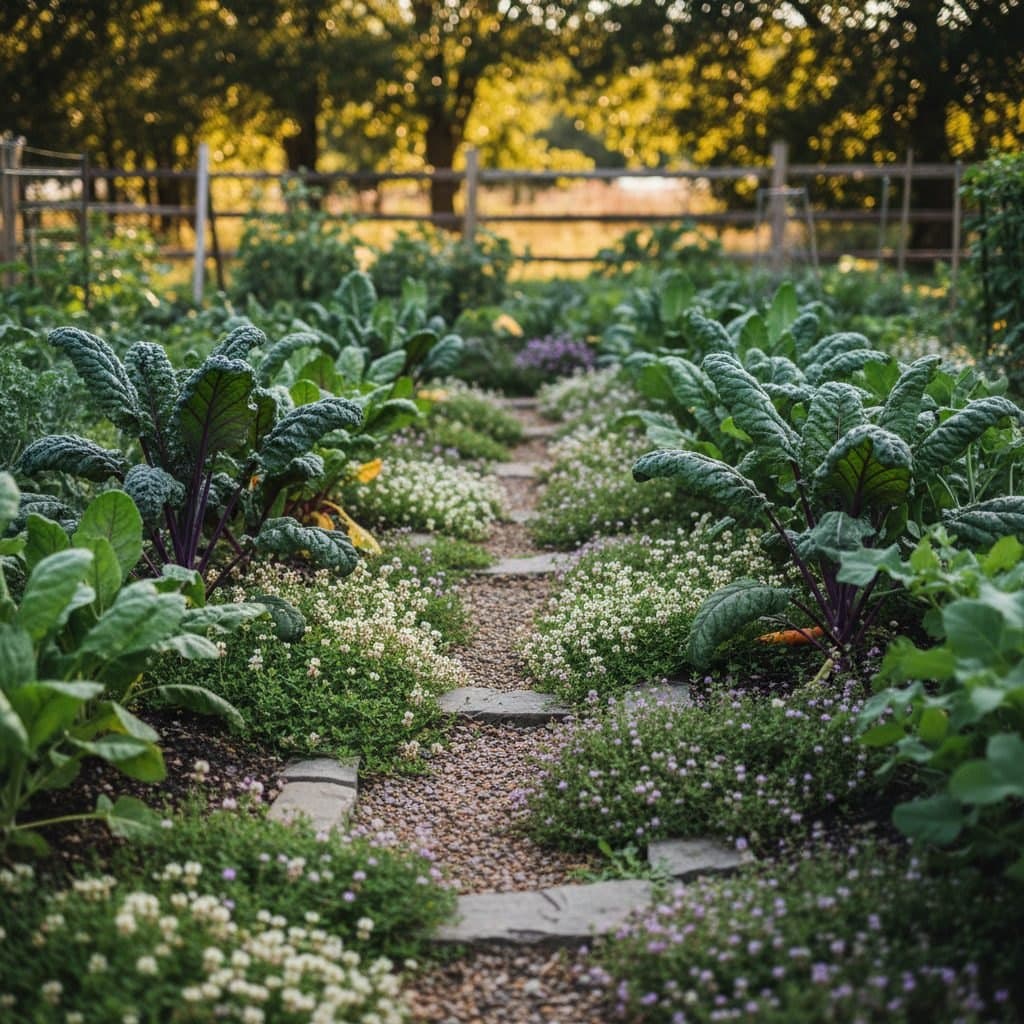
Key takeaways
- Low-growing clovers and creeping thyme reduce weed pressure by 60-80% in vegetable beds.
- White clover can fix 50-100 pounds of nitrogen per acre annually, benefiting nearby vegetables.
- Creeping thyme tolerates light foot traffic and thrives in dry conditions, reducing watering needs by 30%.
- Both plant types attract beneficial pollinators like bees, with thyme showing high visitation rates [3].
- Proper establishment involves seeding at 1/4 lb per 100 sq ft and maintaining a 3-4 inch height.
- Living mulches can increase vegetable yields by 10-15% and improve soil health over time [4].
Quick answer: Clovers and creeping thyme boost vegetable yields by acting as living mulches, which reduce weed pressure, fix nitrogen, improve soil health, and attract beneficial pollinators. These benefits can lead to a 10-15% increase in crop yields while also reducing watering needs.
In many US vegetable gardens, from the fertile soils of Iowa to the sandy beds of Florida, managing weeds and maintaining soil health are constant tasks. Traditional mulches like wood chips or straw certainly help, but they don’t actively contribute to soil fertility or pollinator support. Living mulches, specifically low-growing clovers and creeping thyme, offer a dynamic solution, working around the clock to improve your garden environment. These plants can reduce weed growth by 60% to 80% and improve soil structure, all while requiring minimal intervention after establishment [5].
Integrating these plants into your vegetable beds and pathways means less time spent weeding and more time enjoying a productive garden. For instance, in a trial in the Czech Republic, living mulch systems increased cherry fruit yields by 10-15% compared to conventionally mulched plots [4]. This article explores the specific benefits, varieties, and practical steps for successfully incorporating clovers and creeping thyme into your US garden, helping you cultivate healthier vegetables with less effort.
The functional benefits of living mulches in US gardens
Living mulches are plants grown between or alongside vegetable crops to provide a range of ecosystem services. Unlike inert mulches, these active plant layers contribute to soil health and pest management. For example, in organic vegetable systems, living mulches can suppress weed emergence by up to 80%, significantly reducing labor for weed control [5]. This is particularly valuable in regions like the Pacific Northwest, where consistent rainfall encourages vigorous weed growth through the growing season.
soil health and nutrient cycling
A primary benefit of living mulches is their contribution to soil health. Their root systems improve soil structure, increasing water infiltration and reducing compaction. Leguminous living mulches, such as various clovers, also fix atmospheric nitrogen, making it available to companion vegetable crops. White clover, for instance, can fix between 50 and 100 pounds of nitrogen per acre annually in USDA zones 3-9, substantially cutting down on external fertilizer needs [6]. This natural nutrient cycling supports vigorous plant growth and can lead to a 10-15% increase in crop yields, as observed in some fruit crops [4].
- Weed suppression: Reduces weed competition by 60-80%.
- Nitrogen fixation: Legumes add 50-100 lbs/acre of nitrogen.
- Soil structure improvement: Enhances water infiltration and aeration.
- Erosion control: Protects bare soil from wind and rain.
- Pollinator attraction: Provides nectar for bees and other beneficial insects.
Clovers: nitrogen-fixing workhorses for vegetable beds
Clovers (Trifolium spp.) are among the most popular choices for living mulches in vegetable gardens across the US, from the humid Southeast to the cooler Midwest. Their ability to fix atmospheric nitrogen is a significant advantage, providing a steady supply of this essential nutrient to neighboring crops. White clover (Trifolium repens), a perennial, is particularly well-suited for this role, thriving in USDA zones 3-9 and forming a dense mat that suppresses weeds effectively. It typically grows 4-8 inches tall and can be mowed to maintain a lower profile during the growing season.
selecting the right clover species
When choosing clover, consider your climate and specific garden needs. For perennial applications in established beds, white clover is excellent due to its low growth habit and persistence. It establishes well in many soil types and can fix 50-100 pounds of nitrogen per acre annually [6]. For a quick-growing annual option, especially in cooler regions like New England, crimson clover (Trifolium incarnatum) provides a burst of nitrogen and beautiful red blooms in spring before dying back in summer heat. It reaches 12-24 inches tall if left unmowed. For more details on regional suitability, you can consult resources like Best Living-Mulch and Cover-Crop Legumes by USDA Zone for No-Dig Beds. Seeding rates generally range from 1/4 to 1/2 pound per 100 square feet for a dense stand.
- White clover (Trifolium repens): Perennial, 4-8 inches tall, USDA zones 3-9, fixes 50-100 lbs N/acre.
- Crimson clover (Trifolium incarnatum): Annual, 12-24 inches tall, good for spring nitrogen boost.
- Dutch white clover: A cultivar of white clover, very low growing, good for pathways.
- Alsike clover (Trifolium hybridum): Tolerates wet soils, grows 12-30 inches, good for heavier clay. Note that alsike clover can be toxic to horses and other livestock, causing photosensitization and liver disease.
Creeping thyme: drought-tolerant groundcover for pathways and beds
Creeping thyme (Thymus serpyllum), also known as wild thyme, offers a distinct set of benefits as a living mulch, particularly for pathways or areas where light foot traffic is expected. This low-growing perennial forms a dense mat, typically reaching only 1-6 inches in height, making it an excellent weed suppressor in USDA zones 4-9. Its drought tolerance is a significant advantage, particularly in arid regions like the Southwest or during dry spells in the Midwest, potentially reducing the need for irrigation compared to bare soil [2]. The essential oil composition of creeping thyme, studied in places like Lithuania, contributes to its aromatic qualities and potential pest deterrence [1].
thyme varieties and their uses
While many thyme varieties exist, creeping thyme (Thymus serpyllum) is generally preferred for living mulch due to its spreading habit and ability to withstand light foot traffic. Other varieties like Thyme (Thymus vulgaris) or Himalayan Thyme (Thymus linearis) are more upright and better suited as culinary herbs or rock garden specimens. Creeping thyme’s dense growth can suppress weeds, and its small, abundant flowers are highly attractive to pollinators, including various bee species, as observed in studies in the US and Europe [3]. This makes it a valuable addition for enhancing biodiversity in your garden, especially in areas like California where pollinator populations are crucial for crop success.
- Thymus serpyllum (Creeping Thyme): Low-growing (1-6 in), spreads vigorously, tolerates light foot traffic.
- Thymus praecox (Creeping Thyme cultivars): Many ornamental varieties, similar benefits, often more colorful.
- Thymus pseudolanuginosus (Woolly Thyme): Soft, fuzzy texture, very low growing, less tolerant of foot traffic.
- Thymus citriodorus (Lemon Thyme): Upright, lemon-scented, better for culinary use than living mulch.
Integrating and managing living mulches with vegetables
Successful integration of living mulches like clover and creeping thyme requires careful planning to ensure they benefit, rather than compete with, your vegetable crops. In regions with long growing seasons, such as the Carolinas, establishing your living mulch 4-6 weeks before planting vegetables gives it a head start. For clovers, a seeding rate of 1/4 pound per 100 square feet is often sufficient to create a dense stand. For thyme, starting with plugs or small plants can be more reliable than seed, especially in drier climates like Arizona, where consistent moisture for germination can be a challenge [2].
maintenance and competition management
The key to managing living mulches is to prevent them from outcompeting your vegetables for water, nutrients, or light. This often means regular mowing or trimming. For clovers, keeping them at a height of 3-4 inches is usually effective. This can be done with a lawnmower on a high setting or a string trimmer. For thyme, occasional trimming to maintain its low profile is sufficient, especially before it flowers heavily, which can draw pollinators away from early vegetable blossoms. In areas with limited rainfall, such as parts of Texas, ensure your vegetables receive sufficient water, as the living mulch will also draw moisture. Consider creating a 6-12 inch weed-free zone around young vegetable plants to give them a strong start. For more general advice on maintaining perennial groundcovers, refer to Low maintenance perennials.
- Establish early: Plant living mulch 4-6 weeks before vegetables.
- Seeding rate: Use 1/4 lb of clover seed per 100 sq ft for good coverage.
- Mowing height: Keep clover at 3-4 inches to reduce competition.
- Water management: Monitor soil moisture for vegetables, especially in dry periods.
- Weed-free zone: Maintain a 6-12 inch clear area around new vegetable transplants.
Clover vs. Creeping Thyme as Living Mulch
Feature | Clover (e.g., White Clover) | Creeping Thyme (e.g., Thymus serpyllum) |
|---|---|---|
Primary Benefit | Nitrogen fixation, soil improvement | Weed suppression, drought tolerance, aroma |
Growth Height | 4-8 inches (mowed) | 1-6 inches |
Hardiness (USDA Zones) | 3-9 | 4-9 |
Foot Traffic Tolerance | Low to moderate | Moderate to high |
Drought Tolerance | Moderate | High (can reduce water needs) [2] |
Pollinator Attraction | High (especially bees) [3] | High (especially bees) [3] |
Nitrogen Contribution | 50-100 lbs/acre annually [6] | Minimal |
Weed Suppression | Very high (up to 80%) [5] | High |
Nitrogen Boost: White clover can fix 50-100 pounds of atmospheric nitrogen per acre each year, directly benefiting nearby vegetable crops [6].
Water Savings: Creeping thyme’s drought tolerance can reduce irrigation requirements by up to 30% in dry climates compared to bare soil [2].
Weed Reduction: Living mulches like clover can suppress 60-80% of annual weeds, significantly cutting down on manual weeding efforts [5].
Frequently asked questions
Can living mulches really increase my vegetable yields?
Yes, studies have shown that living mulches can increase vegetable yields by 10-15% by improving soil health, suppressing weeds, and providing nitrogen, as observed in cherry orchards in Europe [4].
How much nitrogen does clover add to the soil?
White clover, a common living mulch, can fix between 50 and 100 pounds of atmospheric nitrogen per acre annually, providing a significant nutrient boost to your vegetable crops [6].
Will creeping thyme tolerate walking on it in pathways?
Creeping thyme varieties like Thymus serpyllum are known for their ability to tolerate light to moderate foot traffic, making them excellent choices for garden pathways and stepping stone areas. They typically grow only 1-6 inches tall.
How do I prevent living mulch from competing with my vegetables?
To prevent competition, establish a 6-12 inch weed-free zone around young vegetable plants and regularly trim or mow your living mulch to a height of 3-4 inches. Monitor your vegetables for any signs of stress, especially in drier periods, to ensure they receive enough water.
Are clovers and thyme good for pollinators?
Both clovers and creeping thyme are excellent for attracting pollinators. Research indicates high bee visitation rates to both clover species and creeping thyme, providing good nectar sources for beneficial insects in your garden [3].
References
- Chemical Composition of the Essential Oil of Creeping Thyme (<i>Thymus serpyllum</i>s.l.) Growing Wild in Lithuania (1998). Chemical Composition of the Essential Oil of Creeping Thyme (<i>Thymus serpyllum</i>s.l.) Growing Wild in Lithuania.
- Effects of Climate and Weeds on the Establishment of Thyme-Based Living Mulch Systems in Drylands of Cyprus (2024). Effects of Climate and Weeds on the Establishment of Thyme-Based Living Mulch Systems in Drylands of Cyprus.
- BEE VISITATION TO THREE CLOVER SPECIES (TRIFOLIUM SPP.), COMMON SELFHEAL (PRUNELLA VULGARIS) AND CREEPING THYME (THYMUS SERPYLLUM) (2023). BEE VISITATION TO THREE CLOVER SPECIES (TRIFOLIUM SPP.), COMMON SELFHEAL (PRUNELLA VULGARIS) AND CREEPING THYME (THYMUS SERPYLLUM).
- Effect of living mulch on physiological and biochemical parameters of cherry leaves and fruits with organic growing technology (2020). Effect of living mulch on physiological and biochemical parameters of cherry leaves and fruits with organic growing technology.
- THE USE OF LIVING OR SURFACE MULCH TO SUPPLY NUTRIENTS AND CONTROL WEEDS IN ORGANIC VEGETABLE GROWING (2001). THE USE OF LIVING OR SURFACE MULCH TO SUPPLY NUTRIENTS AND CONTROL WEEDS IN ORGANIC VEGETABLE GROWING.
- USDA Natural Resources Conservation Service (2024). USDA Natural Resources Conservation Service.