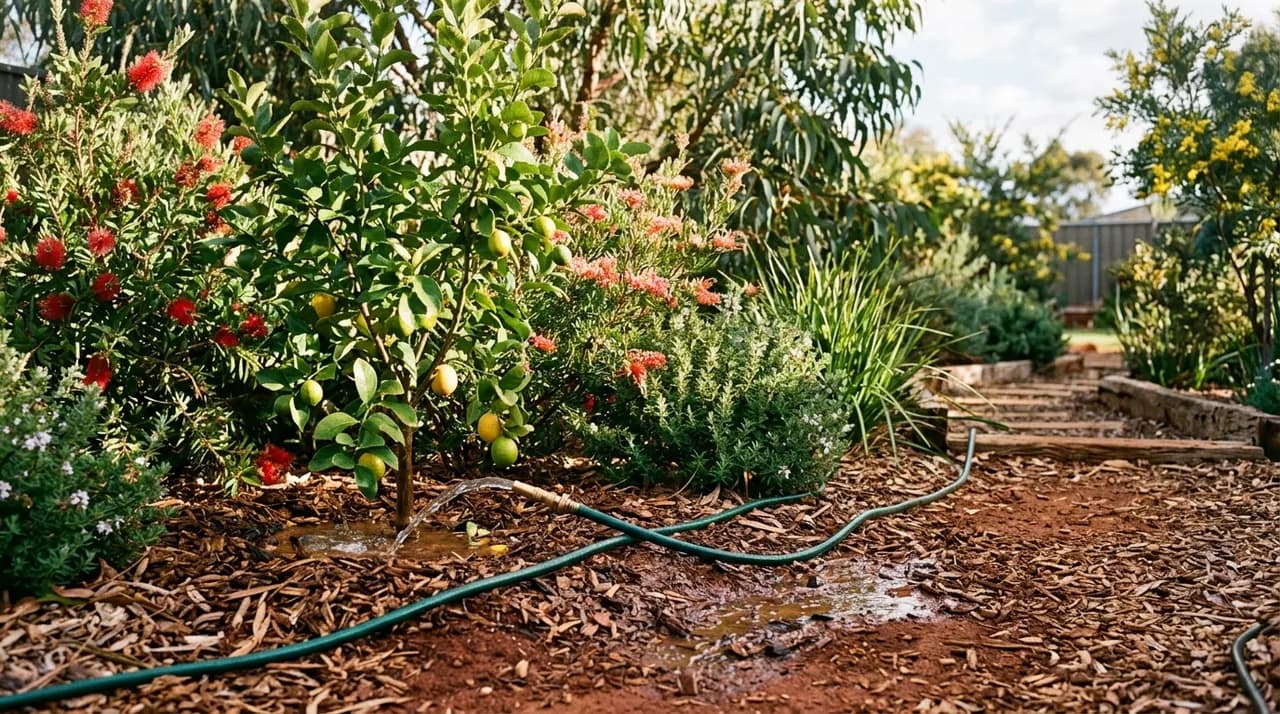
Household greywater recycling offers Australian gardeners a dependable, drought-resilient water source during prolonged dry periods and municipal water restrictions. Across much of the continent, hot summers and variable rainfall patterns place heavy pressure on domestic mains supplies and rainwater tanks. By capturing wastewater from laundry tubs, washing machines, showers, and baths, home growers can maintain soil moisture around deep-rooted fruit trees and landscape plantings without depleting potable reserves.
To see how waterwise design principles fit into broader southern-hemisphere growing strategies, visit the Australian growing hub.
Understanding greywater sources in the home
Greywater refers specifically to untreated domestic wastewater generated from household activities excluding toilet systems. Distinguishing between different domestic water streams is necessary for maintaining hygienic conditions and preventing environmental contamination:
- Shower, bath, and basin water: Bathroom drainage typically contains low concentrations of suspended solids, modest levels of soap residues, and diluted body oils. It is the cleanest and most consistent source of reusable water for home landscapes.
- Washing machine and laundry water: The rinse cycle from top-loading and front-loading washing machines produces substantial volumes of relatively clean water. However, the initial wash cycle frequently carries concentrated laundry detergents, optical brighteners, sodium salts, and fabric softeners that require careful plant selection and soil monitoring.
- Excluded streams (blackwater and kitchen waste): Water from toilets, bidets, and nappies constitutes blackwater and must never be used in home garden recycling due to dangerous bacterial pathogens. Kitchen sink wastewater is also generally excluded from simple direct-diversion systems because fats, cooking oils, grease, and food scraps quickly clog irrigation lines and create unpleasant anaerobic odors.
Understanding these distinctions ensures that domestic diversion systems remain hygienic, low-odor, and safe for both soil biology and household residents.
Which plants can safely receive greywater
The chemical composition of greywater (particularly pH levels, sodium content, and trace soap minerals) means that not all garden plants respond equally to wastewater irrigation:
Suitable and tolerant plants
Established fruit trees with deep root systems are among the best candidates for greywater reuse. Deciduous stone fruits, citrus, olives, figs, and pomegranates can safely utilize subsurface greywater applications, provided the water is discharged around the outer dripline instead of directly against the trunk base. The natural soil biological layer filters out organic residues well before water reaches deep feeder roots.
Hardy ornamental shrubs, non-native shade trees, and established windbreaks also handle untreated greywater with minimal issues. For gardeners designing water-efficient landscapes, combining wastewater diversion with hardy species outlined in our guide to drought-tolerant plants for Australia provides long-term resilience against recurring heatwaves.
Sensitive plants and Australian natives
Many iconic Australian native plants, especially members of the Proteaceae family such as Grevillea, Banksia, Hakea, and Telopea, evolved in ancient, nutrient-leached soils and are exceptionally sensitive to excess phosphorus. Standard household laundry detergents often contain elevated phosphate levels that can cause phosphorus toxicity and rapid decline in these native species. If irrigating native garden beds with greywater, you must switch to certified low-phosphorus or zero-phosphorus laundry detergents.
Acid-loving plants, including camellias, azaleas, gardenias, and blueberries, will also decline if irrigated with typical laundry greywater, which tends to be alkaline due to dissolved sodium and potassium salts.
Edible crops and food safety guidelines
Strict boundaries apply when irrigating edible crops with untreated greywater:
- Avoid root crops: Never apply greywater to crops whose edible portions develop underground and are consumed raw, such as carrots, radishes, beetroot, and salad onions.
- Avoid surface-contact vegetables: Leafy salad greens, strawberries, low-growing herbs, and bush beans that sit close to the soil surface must not receive greywater, as splashing droplets can transfer bacteria onto food that is eaten unpeeled.
- Safe edible applications: Tall, trellised fruiting vegetables, such as climbing tomatoes or sweetcorn, can receive greywater only if water is applied beneath thick mulch using low-pressure weeping hoses so moisture never touches stems, foliage, or fruit.
Detailed planning for structuring domestic vegetable zones is discussed in our guide to setting up a veggie patch under Australian conditions.
Managing soil health: salt, sodium, and rotation
Continuous long-term discharge of laundry greywater onto a single garden bed presents significant risks to soil structure. Many commercial laundry detergents use sodium compounds as bulk fillers and softening agents. Over time, sodium ions replace calcium and magnesium on clay particles, causing soil dispersion (sodicity). Dispersed clay loses its crumbly structure, forms an impenetrable surface crust, and suffers severely impaired water drainage.
To protect garden soil health:
- Select garden-friendly detergents: Choose liquid laundry detergents that are explicitly formulated to be low in sodium, boron, and phosphates. Concentrated powders often contain substantially higher sodium concentrations than liquid alternatives.
- Rotate application zones: Never allow greywater to drain continuously into the exact same garden patch week after week. Divert water between multiple garden zones or switch back to rainwater every few weeks to allow natural rain events to flush accumulated mineral salts below the primary root zone.
- Apply gypsum on heavy soils: On clay soils receiving regular greywater, periodic applications of agricultural gypsum (calcium sulphate) help displace accumulated sodium ions, restoring soil porosity and preventing drainage compaction.
Regulatory frameworks: state and council variations
Household greywater diversion in Australia is governed by public health, plumbing, and environmental protection guidelines that vary significantly by state and local council jurisdiction.
While regulations differ across state boundaries, common principles generally apply to domestic diversion systems:
- Direct bucket collection or gravity-diverter hoses from washing machines are widely permitted for immediate surface or subsurface garden discharge without elaborate council approvals in most jurisdictions, provided water does not run off the property boundary.
- Storing untreated greywater in tanks or drums for longer than twenty-four hours is generally prohibited or strongly discouraged, as anaerobic bacteria multiply rapidly in stagnant warm water, creating severe odor nuisances and health risks.
- Permanent plumbing modifications that cut into internal drainage pipes or connect to automated subterranean drip systems typically require licensed plumbing work and local council development approval.
- Overhead spray irrigation using greywater is strictly forbidden under health guidelines, as fine mists can spread airborne pathogens across residential boundaries.
Always consult your local municipal council website or regional water authority to verify the specific diversion guidelines and setback distances applicable to your neighborhood.
Reusing household greywater protects established trees and garden beds through dry summers and reduces municipal water use.