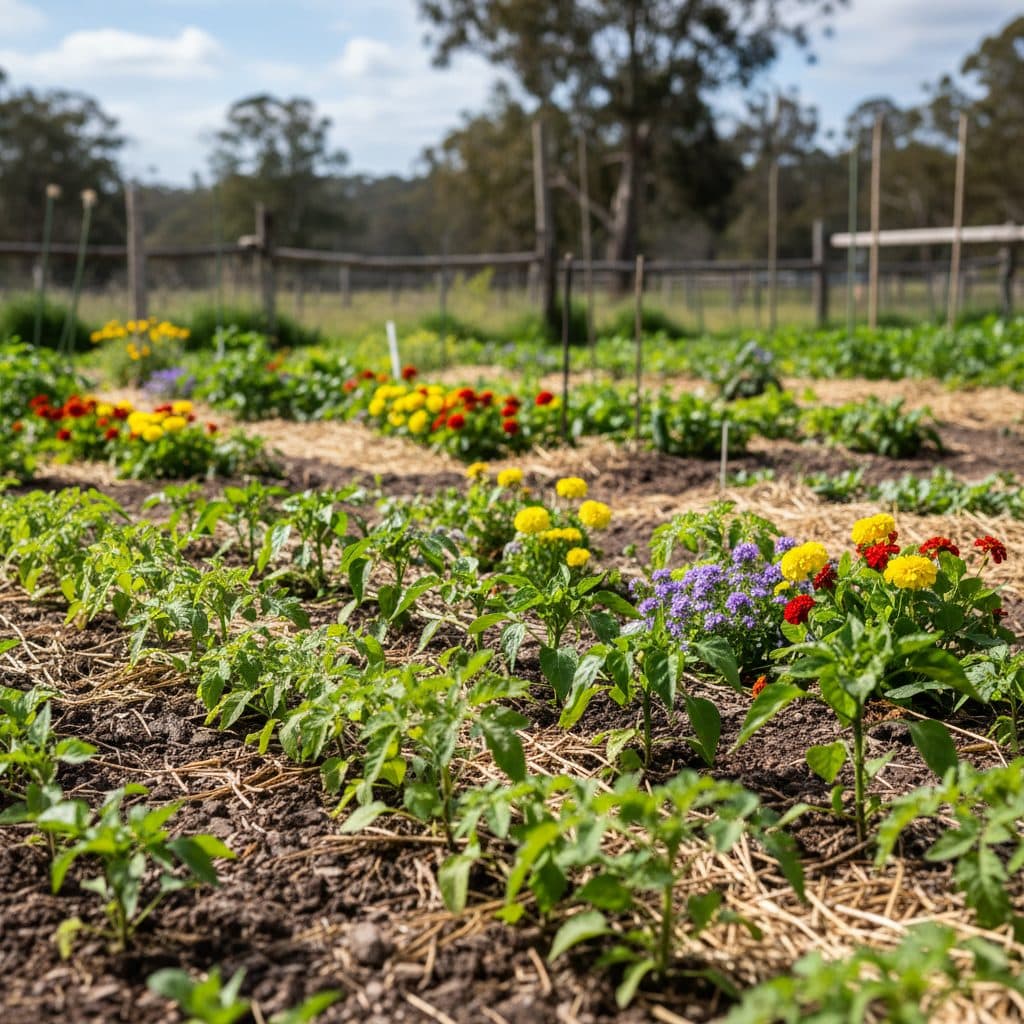
Key takeaways
- October is the peak spring planting month across Southern Hemisphere Australia, as soil temperatures consistently rise above 15°C to 18°C.
- In temperate and cool regions, transplant warm-season staples including tomatoes, capsicums, chillies, eggplants, and sweetcorn.
- Direct sow cucurbits (such as zucchini, cucumbers, pumpkins, and watermelons) into sun-drenched, compost-enriched beds.
- Subtropical and tropical growers should shift focus towards heat-tolerant crops, including sweet potato, snake beans, rosella, and ginger before summer humidity peaks.
- Install drip irrigation and apply a 5 cm organic mulch layer in October to protect shallow roots from early spring heatwaves.
- Protect developing fruit from Queensland fruit fly using physical exclusion bags and adhere to regional biosecurity guidelines.
Quick answer: In Australia, October is the premier mid-spring planting window. In temperate zones (Sydney, Melbourne, Adelaide, Perth), plant tomatoes, capsicums, chillies, eggplants, zucchini, cucumbers, pumpkins, beans, and sweetcorn. In cool zones, plant out warm-season crops once frost danger passes, while subtropical and tropical gardeners focus on heat-hardy crops like snake beans and sweet potatoes.
October brings increasing daylight and warming soils across the Australian continent. For home gardeners, this mid-spring window represents the most active time of the year to establish productive warm-season crops that will feed your household through summer and early autumn.
Knowing what to plant in October in Australia depends on understanding your local climate zone. While southern gardeners in Melbourne and Hobart are celebrating the end of severe winter frosts and getting their first tomatoes into the earth, northern gardeners in Brisbane and Darwin are already preparing for intense tropical heat and monsoonal rains.
Whether you are planting out heirloom tomatoes in a suburban Adelaide backyard, direct sowing pumpkins on a rural block in New South Wales, or maintaining container herbs in Perth, this guide covers what to sow, transplant, and protect in October.
+-------------------------------------------------------------+
|             AUSTRALIAN OCTOBER PLANTING OVERVIEW            |
|                                                             |
|   CLIMATE ZONE          PRIMARY OCTOBER CROPS               |
|   ------------          ---------------------               |
|   Temperate             Tomatoes, capsicums, zucchini, corn |
|   Cool / Cold           Late tomatoes, beans, root crops    |
|   Subtropical           Snake beans, sweet potato, ginger   |
|   Tropical              Cassava, Kang Kong, Ceylon spinach  |
|   Arid / Inland         Melons, pumpkins, beans, sweetcorn  |
+-------------------------------------------------------------+
What should you plant in temperate Australia during October?
Temperate Australia (encompassing Sydney, Melbourne, Adelaide, Perth, and coastal regions) enters its prime warm-season establishment window in October as soil temperatures consistently exceed 16°C.
+-------------------------------------------------------------+
|             TEMPERATE ZONE OCTOBER SOWING GUIDE             |
|                                                             |
|   CROP CATEGORY         POPULAR VARIETIES      METHOD       |
|   -------------         -----------------      ------       |
|   Tomatoes              Grosse Lisse, Roma     Transplants  |
|   Capsicums & Chillies  California Wonder, Jal Potted plants|
|   Cucurbits (Zucchini)  Black Beauty, Lebanese Direct / Pot|
|   Climbing Beans        Blue Lake, Kentucky    Direct seed  |
|   Sweetcorn             Sweet FX, Bantam       Direct blocks|
|   Warm Herbs            Sweet Basil, Thai Basi Potted seed  |
+-------------------------------------------------------------+- Solanaceous crops (Nightshades): Plant advanced seedlings of tomatoes, capsicums, eggplants, and chillies. Bury tomato stems deeply into the soil down to the first set of true leaves to encourage adventitious root formation along the buried stem.
- Cucurbits: Direct sow seeds of zucchini, cucumbers, squash, and pumpkins in circular mounds enriched with aged compost. Sowing in raised mounds improves drainage and warms the root zone quickly.
- Legumes: Direct sow climbing French beans, bush beans, and butter beans against sturdy timber tepees or trellis frames.
- Sweetcorn: Sow sweetcorn in dense rectangular grids (at least 4x4 plants spaced 30 cm apart) rather than long single rows to ensure wind-blown pollen lands effectively on emerging silks.
To see how early autumn transitions mirror spring preparations, review our guide on what to plant in March in Australia.
What can you plant in cool and cold Australian climates?
In cold tablelands, alpine areas, the ACT, and Tasmania, October is the transition month where the threat of late spring frosts gradually subsides.
+-------------------------------------------------------------+
|                 COOL CLIMATE SPRING STRATEGY                |
|                                                             |
|   EARLY OCTOBER (FROST RISK)     LATE OCTOBER (SOIL WARM)   |
|   --------------------------     ------------------------   |
|   - Harden off tomato seedlings  - Transplant warm crops out|
|   - Direct sow carrots, parsnip  - Direct sow dwarf beans   |
|   - Plant maincrop seed potatoes - Sow zucchini under cloche|
|   - Sow beetroot, silverbeet     - Plant sweetcorn blocks   |
+-------------------------------------------------------------+- Post-frost transplants: In cool temperate zones (Tasmania, Ballarat, Canberra, Southern Tablelands), last spring frosts regularly strike through late October and into mid-November; delay planting tender warm-season seedlings until after Melbourne Cup Day (first Tuesday in November) unless cloches or row covers are provided.
- Root vegetables: Direct sow maincrop carrots, parsnips, beetroot, and radishes into stone-free soil.
- Potatoes: Plant certified seed potatoes into trenches 15 cm deep, gradually backfilling with compost and straw as green shoots emerge.
- Strawberries: October is peak flowering and fruit set time for spring berry patches. For care and feeding routines, see our dedicated guide on growing strawberries in Australia.
+-------------------------------------------------------------+
|                 POTATO TRENCH & MOUNDING (AU)               |
|                                                             |
|             \   |   /  (Emerging Green Shoots)              |
|              \  |  /                                        |
|         ~~~~~~~~~ (Soil/Straw Mounded 15 cm)        |
|                | |                                          |
|            [ Seed Tuber ]                                   |
|         =================== (Trench Base: 15 cm Deep)       |
+-------------------------------------------------------------+
How do subtropical and tropical gardens operate in October?
Subtropical and tropical regions follow an entirely different seasonal rhythm. In these zones, October brings intense heat and rising humidity, signaling the close of the winter temperate-growing season.
For detailed subtropical planting schedules, consult the comprehensive Brisbane vegetable planting guide.
Subtropical zones (SE Queensland, Northern NSW, Coastal WA)
- Heat-hardy staples: October brings rising heat and storm activity. Shift towards heat-tolerant summer greens (Ceylon spinach, Kang Kong, Brazilian spinach), sweet potato, rosella (Hibiscus sabdariffa), and snake beans, as traditional temperate lettuce and large slicing tomatoes rapidly succumb to fungal blights and fruit fly.
- Rhizome planting: October is the ideal time to plant root rhizomes of culinary ginger, turmeric, and galangal into rich, semi-shaded, moisture-retentive garden beds.
- Cucurbits: Plant pumpkins, luffa, and gourds, giving them ample vertical climbing space.
Tropical north (Darwin, Cairns, Kimberley)
In the tropical north, October is the "build-up", a period of extreme heat and oppressive humidity prior to the wet season rains. Standard European vegetables will quickly bolt or wither. Focus on tropical greens and perennial root crops:
- Tropical leafy greens: Kang Kong (water spinach), Ceylon spinach (Basella alba), cassava leaves, and sweet potato tips.
- Climbers: Winged beans and yard-long snake beans grow well under strong sunshine.
- Shade protection: Erect 50% shade cloth over raised beds to protect delicate herbs from intense midday sun.
How should you prepare the veggie patch for summer heat?
Spring winds and early October heatwaves can quickly bake exposed soil, stressing shallow-rooted seedlings:
+-------------------------------------------------------------+
|                 OCTOBER SOIL & IRRIGATION PLAN              |
|                                                             |
|   STEP              PRACTICAL IMPLEMENTATION                |
|   ----              ------------------------                |
|   1. Nutrition      Apply blood and bone + compost          |
|   2. Soil Check     Inspect subsoil for destructive grubs   |
|   3. Irrigation     Lay porous soaker hoses or drip lines   |
|   4. Mulch          Apply 5-7 cm organic pea straw / cane   |
+-------------------------------------------------------------+- Boost soil phosphorus and calcium: Dig in well-rotted compost and apply an organic dressing of blood and bone fertiliser to encourage expansive root systems capable of mining moisture during summer dry spells.
- Inspect for curl grubs: When turning over empty beds, inspect the top 10 cm of soil for lawn scarab larvae. Learn how to identify and manage these subterranean pests in our guide to curl grubs in Australian garden beds.
- Install drip irrigation: Lay drip lines or weeping soaker hoses directly across the soil surface before mulching. Drip irrigation delivers water directly to root zones without wetting foliage, significantly reducing fungal diseases like early blight.
- Apply heavy organic mulch: Spread a 5 to 7 cm layer of sugar cane mulch, pea straw, or lucerne across all open soil. Mulching suppresses spring weeds, moderates root temperatures, and reduces evaporative water loss.
For soil health rotations following winter legumes, check our guide on growing broad beans in Australia.
+-------------------------------------------------------------+
|                 MULCH & DRIP LINE CROSS-SECTION             |
|                                                             |
|   ############### 5-7 cm Organic Mulch ##################   |
|   -----[ Drip Line ]------------------[ Drip Line ]------   |
|   =================== Topsoil Level =====================   |
|            \ | /                               \ | /        |
|         [ Root Zone ]                       [ Root Zone ]   |
+-------------------------------------------------------------+
How do you manage spring pests and wildlife in October?
Warming spring weather accelerates insect lifecycles and brings native wildlife into suburban veggie patches.
+-------------------------------------------------------------+
|                 SPRING PEST MANAGEMENT (AU)                 |
|                                                             |
|   PEST / ANIMAL     TARGET CROPS       ORGANIC CONTROL      |
|   -------------     ------------       ---------------      |
|   Fruit Fly         Tomatoes, capsicum Exclusion bags/traps |
|   Aphids            Young bean shoots  Water jet, lacewings |
|   Native Possums    Foliage & flowers  Physical wire cages  |
|   Snails & Slugs    Spring seedlings   Beer traps, barriers |
+-------------------------------------------------------------+
Queensland fruit fly (Bactrocera tryoni)
As tomatoes and capsicums begin flowering and setting fruit, hang male pheromone lure traps to monitor local fruit fly populations. When fruit reaches marble size, enclose developing clusters in fine mesh exclusion bags (under 2 mm mesh). Dispose of any stung fruit by boiling or solarising in sealed black plastic bags, and respect all state biosecurity quarantine regulations when transporting fruit.
Possum exclusion
Brushtail and ringtail possums actively forage on fresh spring blossoms and tender vegetable shoots. Because possums are strictly protected native wildlife in all Australian states, never attempt to trap, relocate, or harm them. Construct rigid timber or PVC netting frames clad in heavy-gauge wire mesh or taut shade cloth around prized garden beds to physically exclude wildlife.