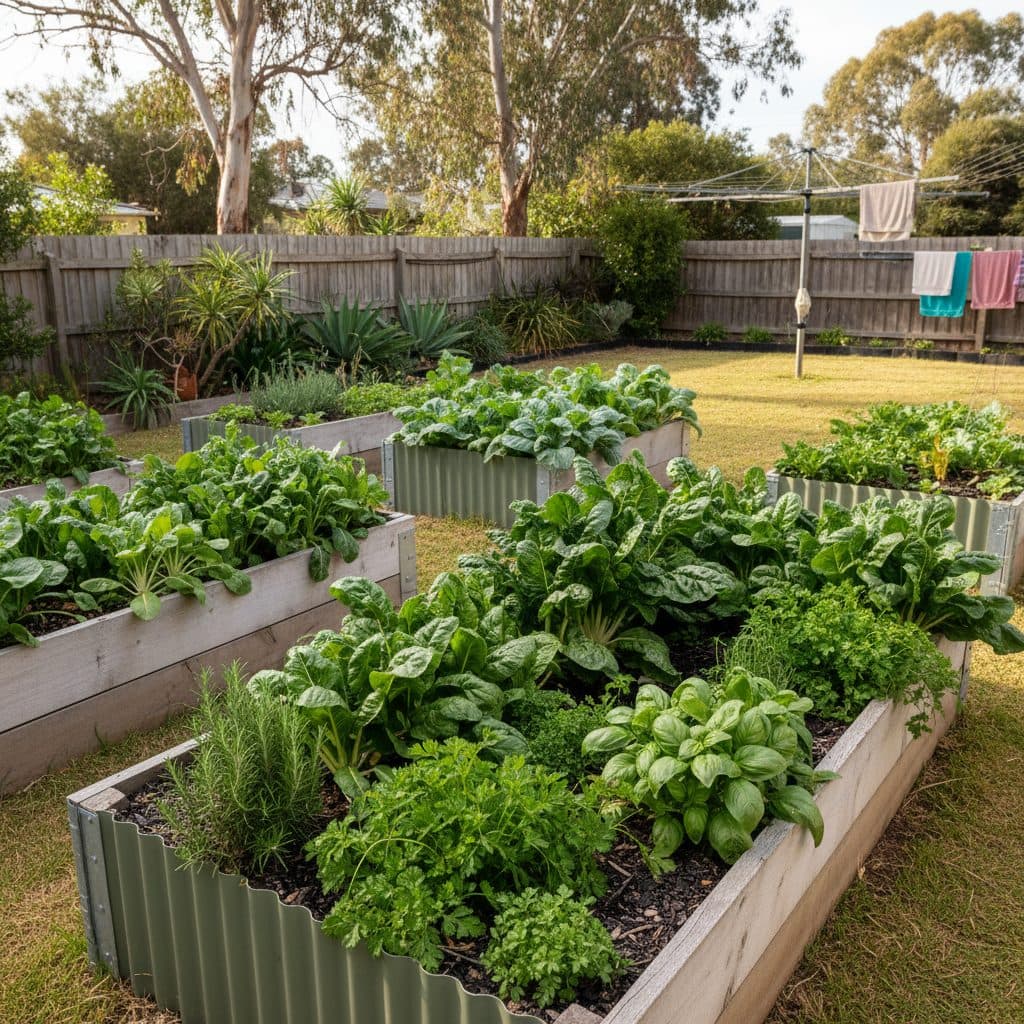
Key takeaways
- Position your veggie patch to receive at least six hours of direct sunlight, orienting beds north-to-south for uniform light.
- Choose non-toxic materials like untreated cypress, ironbark, or corrugated Colorbond steel rather than CCA-treated pine.
- Build soil from scratch using the no-dig lasagna method: thick cardboard base, manure, lucerne hay, compost, and sugarcane mulch.
- Line bed bases with galvanised wire mesh if burrowing pests or invasive tree roots threaten the growing area.
- Time your initial planting according to your regional Australian climate, sowing spring crops in September in temperate zones.
Quick answer: Building a productive veggie patch in Australia involves selecting a sunny north-facing location, erecting raised beds from non-toxic materials like cypress or corrugated steel, and filling them with a no-dig blend of compost, manure, and mineral-rich topsoil beneath sugarcane mulch.
Creating your own backyard veggie patch is one of the most rewarding home improvements you can undertake in Australia. From crisp heads of lettuce and juicy heirloom tomatoes to fresh capsicums, silverbeet, rocket, and fragrant coriander, home-grown produce is picked at its best and takes some regular items off the shopping list.
However, establishing a thriving veggie patch from scratch requires more than simply digging a hole in the lawn and scattering seeds. Australian native soils, often composed of hydrophobic sand, nutrient-poor ironstone, or heavy brick-making clay, require thoughtful soil preparation and structural design to withstand intense summer heatwaves and dry spells.
By choosing safe building materials, mastering the layered no-dig soil building method, and aligning your seasonal planting with Australian climate zones, you can build a productive, drought-resilient garden bed in a single weekend.
Siting and orientation: sun, wind and water access
The location of your veggie patch determines its productivity more than almost any other factor:
+-------------------------------------------------------------------------------+
|                       AUSTRALIAN VEGGIE PATCH SITING                          |
|                                                                               |
|   1. Solar Exposure:    Minimum 6 hours direct sunlight daily (North aspect)  |
|   2. Bed Orientation:   Long axis oriented North-to-South for even lighting   |
|   3. Water Access:      Within easy reach of a garden tap, tank, or timer     |
|   4. Summer Protection: Sheltered from scorching westerly afternoon winds     |
+-------------------------------------------------------------------------------+
In the Southern Hemisphere, a north-facing aspect receives maximum solar radiation throughout winter, spring, and autumn. Orienting long rectangular beds along a north-to-south axis prevents tall trellised climbing beans or tomatoes from casting continuous shadows across smaller companion crops like beetroot and radishes.
To verify whether your site holds stagnant water before building, perform a basic soil drainage percolation test.
Choosing bed materials: timber, corrugated steel and brick
Building raised beds keeps garden soil loose and uncompacted, improves drainage during heavy rain, and makes tending crops much easier on your back.
+-------------------+-------------------+-------------------+-------------------------------------------+
| Material Type     | Estimated Lifespan| Approximate Cost  | Horticultural Considerations              |
+-------------------+-------------------+-------------------+-------------------------------------------+
| Ironbark Sleepers | 25+ years         | High              | Class 1 durability; natural rot resistance|
| Cypress Timber    | 8 to 15 years     | Moderate          | Macrocarpa or white cypress; resin resists|
| (macrocarpa/white)|                   |                   | rot without chemicals; attractive finish  |
| Corrugated Steel  | 15 to 25 years    | Moderate to High  | Extremely durable; easy DIY assembly;     |
| (Colorbond)       |                   |                   | round or oval edges; deep root volume     |
| Recycled Hardwood | 8 to 12 years     | Low to Moderate   | Check for chemical contamination; heavy   |
| Masonry / Brick   | 30+ years         | High (Labour)     | Permanent thermal mass; excellent for     |
|                   |                   |                   | cool nights; cannot be easily relocated   |
+-------------------+-------------------+-------------------+-------------------------------------------+
Important warning on treated pine
Avoid standard Copper Chrome Arsenate (CCA) treated pine sleepers for edible garden beds. CCA contains inorganic arsenic compounds that can leach into surrounding soil. ACQ (Alkaline Copper Quaternary) and copper azole (Tanalith E) contain no arsenic or chromium, so they are the lower-risk treated options — but no treated timber is certified for organic production, and both still leach copper. If you use them, line the inside face with heavy plastic, or choose an untreated durable timber instead.
Step-by-step no-dig soil preparation
The "no-dig" lasagna method is the fastest, most effective way to build fertile, moisture-retentive soil over hard ground without exhausting digging.
+-------------------------------------------------------------------------------+
|                       NO-DIG LASAGNA SOIL LAYERING                            |
|                                                                               |
|   Layer 5 (Top):    5 cm Sugarcane Mulch or Pea Straw (Conserves moisture)    |
|   Layer 4:          10 cm Rich Certified Organic Compost / Vermicompost       |
|   Layer 3:          10 cm Lucerne Hay or Pea Straw (Nitrogen biomass)         |
|   Layer 2:          5 cm Well-Rotted Cow or Sheep Manure                      |
|   Layer 1 (Bottom): 4 Layers Overlapping Corrugated Cardboard (Weed barrier)  |
|   =========================================================================   |
|   [Native Lawn / Uncompacted Ground Level]                                    |
+-------------------------------------------------------------------------------+
For advanced sheet mulching fundamentals and large-scale weed suppression, explore our guide on sheet mulching cardboard weed control.
Step 1: Base weed barrier
Mow or scalp the grass over your footprint. Lay down thick, overlapping layers of plain corrugated cardboard (with all plastic tape removed) directly over the lawn. This blocks sunlight and smothers perennial weeds and turf grasses naturally.
Step 2: Manure layer
Spread a 5 cm layer of well-rotted sheep manure or cow manure over the cardboard. Manure provides a burst of nitrogen and inoculates the cardboard with billions of beneficial soil microbes that accelerate decomposition.
Step 3: High-nitrogen biomass
Add a 10 cm layer of compressed lucerne hay or pea straw. Lucerne contains high protein, trace minerals, and natural plant growth hormones (triacontanol) that stimulate strong root development.
Step 4: Premium organic compost
Top the bed with a 10 cm layer of mature organic compost mixed with 20% coarse sand or loam. This is the root-settling zone where your young vegetable seedlings will establish during their first three weeks.
Compare biological vitality across different compost amendments in our review of vermicompost vs regular compost worms win.
Step 5: Sugarcane mulch
Cap the surface with a 5 cm blanket of clean sugarcane mulch. Mulch is essential under the Australian sun to shade the soil surface, suppress weed germination, and prevent surface crusting.
Irrigation: Setting up drip lines in Australia
Hand-watering with a spray gun in the middle of the day loses much of the water to evaporation and wets foliage, encouraging fungal disease.
- Install Drip Tubing: Run 13 mm poly pipe around the perimeter of the bed and connect 13 mm or 6 mm drip line across the soil surface beneath the sugarcane mulch.
- Connect a Tap Timer: Program your tap timer to run for 20 to 30 minutes in the cool early morning (between 6:00 AM and 7:30 AM). Morning irrigation ensures plants have ample moisture during peak midday heat.
- Summer Heatwave Defence: In peak summer (December–February), when temperatures exceed 35°C, erect temporary 50% white shade cloth over your beds to prevent sunburn on capsicums and tomatoes.
Sowing and planting by Australian climate zone
Once your veggie patch is built, time your planting according to your regional Australian climate (table covers coastal and major growing zones):
+-------------------+-------------------+---------------------------------------------------------------+
| Climate Region    | Key Seasonal Window| Top Crops to Plant                                            |
+-------------------+-------------------+---------------------------------------------------------------+
| Tropical          | Dry Season        | Tomatoes, capsicums, beans, sweet corn, zucchini, leafy greens|
| (Far North QLD/NT)| (April to August) | (Avoid planting delicate temperate crops in wet summer)       |
| Subtropical       | Spring & Autumn   | Silverbeet, bush beans, cucumber, eggplant, Asian greens,     |
| (SE QLD / far     | (Aug–Nov, Feb–May)| sweet potato (see how to grow sweet potatoes)|
| north NSW coast)  |                   |                                                               |
| Temperate         | Spring to Autumn  | Spring: Tomatoes, zucchini, beans; Autumn: Garlic, broccoli,  |
| (Sydney, Perth,   | (Sept to May)     | cabbage, peas, broad beans, kale, winter leeks                |
| Melb coastal)     |                   |                                                               |
| Cool & Cold       | Late Spring/Summer| Fast-maturing heirloom tomatoes, carrots, potatoes, parsnips, |
| (Highlands, Tas)  | (Oct to March)    | brassicas, silverbeet, spinach, winter root crops             |
+-------------------+-------------------+---------------------------------------------------------------+
Water your new seedlings in with a diluted solution of liquid seaweed fertiliser to reduce transplant shock, and maintain your mulch layer as plants expand.