Key takeaways
- Spring in Australia spans September to November, representing the primary planting window for warm-season fruiting vegetables and leafy greens.
- Sow cool-season crops (lettuce, brassicas, peas) when soil reaches 10°C to 15°C; wait until soil temperatures consistently reach 18°C to 20°C before planting warm-season nightshades and cucurbits (tomatoes, capsicums, eggplants, cucumbers, zucchini).
- In cool and cold temperate regions, start tender seeds indoors on heat pads in September and transplant seedlings outdoors in October or November after the last spring frost.
- Direct-sow fast-growing root vegetables and greens including carrots, beetroot, radishes, silverbeet, and rocket directly into prepared garden beds.
- Prepare garden beds two weeks before spring planting by incorporating 2.5 to 5 cm of well-rotted compost, aged cow manure, and blood and bone.
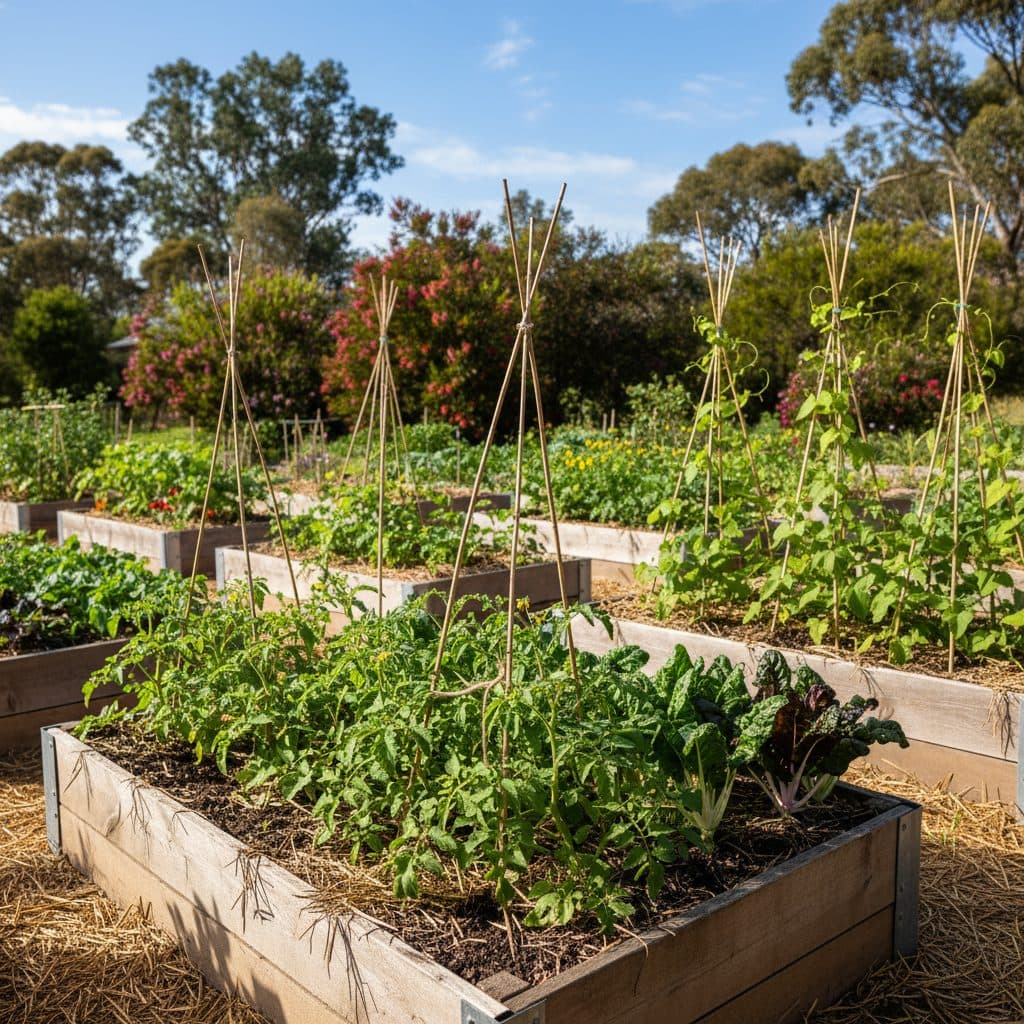
- Install trellises, climbing stakes, and protective exclusion netting early to support vigorous vine growth and shield crops from Queensland fruit fly and possums.
Quick answer: In Australia, spring (September to November) is the ideal season to plant warm-season favourites including tomatoes, capsicums, cucumbers, zucchini, sweetcorn, climbing beans, and pumpkins. In temperate and subtropical areas, sow seeds or plant seedlings directly into warm, compost-rich soil; in cool southern regions, wait until October or November once frost danger has passed.
Spring is the busiest planting season in the Australian gardening calendar. As day lengths increase and Southern Hemisphere sunshine warms the earth after winter dormancy, your backyard veggie patch is ready for a new round of planting.
Knowing what to plant in spring australia requires aligning your crop selections with your regional climate. While gardeners in subtropical Queensland can plant heat-loving melons and snake beans in early September, growers in cool southern Victoria and Tasmania must navigate lingering spring frosts before setting out tender tomato and capsicum seedlings.
+-------------------------------------------------------------+
|              AUSTRALIAN SPRING VEGGIE PATCH TIMELINE        |
|                                                             |
|   EARLY SPRING (September):                                 |
|   - Direct sow root crops: Carrots, Beetroot, Radishes      |
|   - Sow leafy greens: Silverbeet, Rocket, Loose-leaf Lettuce|
|   - Start seeds indoors in cool climates: Tomatoes, Capsicum|
|                                                             |
|   MID-SPRING (October - The Main Planting Rush):            |
|   - Transplant warm-season seedlings: Tomatoes, Eggplants   |
|   - Direct sow warm-season crops: Beans, Corn, Cucumbers    |
|   - Plant summer herbs: Sweet Basil, Parsley                |
|                                                             |
|   LATE SPRING (November - Heat Preparation):                |
|  - Sow fast summer crops: Zucchini, Bush Beans, Asian Greens|
|   - Apply 7.5 cm organic mulch; set up drip irrigation      |
+-------------------------------------------------------------+
Spring planting by Australian climate region
Australia's diverse regional climates dictate when the soil is warm enough for spring sowing.
+-------------------------------------------------------------+
|               SPRING PLANTING DYNAMICS BY REGION            |
|                                                             |
|   COOL / COLD TEMPERATE (Tasmania, Ballarat, Canberra):     |
|   - Frost risk until late October / mid-to-late November    |
|   - Start seeds indoors in September; plant out in November |
|                                                             |
|   TEMPERATE (Sydney, Melbourne, Adelaide, Perth):           |
|   - Mild spring; soil warms steadily through October        |
|   - Plant out main warm-season crops late Sep to mid-Oct    |
|                                                             |
|   SUBTROPICAL (Brisbane, Gold Coast, Northern NSW):         |
|   - Warm early spring; plant early to beat peak summer heat |
|   - Plant tomatoes, beans, and cucurbits in August/September|
|                                                             |
|   TROPICAL (Cairns, Darwin, Townsville):                    |
|   - Spring marks 'build-up' to monsoon; high humidity/heat  |
|   - Shift to hardy tropical greens or wait for dry winter   |
+-------------------------------------------------------------+
Climate Region | Representative Cities | Best Direct-Sow Crops (September) | Best Transplant Crops (October to November) |
|---|---|---|---|
Cool & Cold | Hobart, Ballarat, Orange, Canberra | Peas, broad beans, radishes, spinach, onions | Tomatoes, capsicums, zucchini, pumpkins |
Temperate | Sydney, Melbourne, Adelaide, Perth | Carrots, beetroot, silverbeet, rocket, beans | Tomatoes, capsicums, eggplants, cucumbers, basil |
Subtropical | Brisbane, Sunshine Coast, Byron Bay | Sweetcorn, cucumbers, French beans, melons | Capsicums, chillies, tomatoes, sweet potato |
Tropical | Darwin, Cairns, Broome | Snake beans, Ceylon spinach, okra, sweetcorn | Rosella, winged beans, tropical eggplants |
Arid | Alice Springs, Mildura, Dubbo | Carrots, bush beans, melons, silverbeet | Tomatoes, chillies, pumpkins (mulch heavily) |
In the wet-dry tropics (Darwin, Cairns, North QLD), spring marks the 'build-up' to the monsoon; high heat and intense humidity make growing traditional vegetables difficult — shift to heat-loving tropical greens (kangkong, Ceylon spinach, sweet potato leaves) or wait until the autumn dry season.
To coordinate your fruit trees with seasonal veggie plantings, see our advice in when to plant fruit trees in Australia and seasonal citrus feeding in growing citrus in Australia.
Top warm-season vegetables to plant in spring
These warm-season staples form the core of the Australian spring garden and produce large harvests throughout summer and autumn.
+-------------------------------------------------------------+
|                 HIGH-YIELD SPRING VEGGIES                   |
|                                                             |
|   1. TOMATOES (Determinate & Indeterminate):                |
|- Soil Temp: 18°C+ | Spacing: 50 to 60 cm                 |
|   - Varieties: Apollo, Roma, Sweet Bite, Grosse Lisse       |
|                                                             |
|   2. CAPSICUMS & CHILLIES:                                  |
|- Soil Temp: 20°C+ | Spacing: 45 cm                       |
|   - Varieties: California Wonder, Sweet Banana, Jalapeno    |
|                                                             |
|   3. CLIMBING & DWARF BEANS:                                |
|- Direct sow seed at 2.5 cm depth | Spacing: 10 to 15 cm  |
|   - Varieties: Blue Lake, Kentucky Wonder, Gourmet Delight  |
|                                                             |
|   4. CUCURBITS (Zucchini, Cucumbers, Pumpkins):             |
|- Sow in mounds rich in aged manure | Spacing: 1.0 metre  |
|   - Varieties: Black Beauty Zucchini, Lebanese Cucumber     |
+-------------------------------------------------------------+
Tomatoes (Solanum lycopersicum)
Tomatoes are the most widely grown crop in the spring veggie patch. Choose compact bush (determinate) varieties for containers or vigorous climbing (indeterminate) varieties like 'Grosse Lisse' or 'Sweet Bite' cherry tomatoes for tall stakes. Plant deeply, burying the stem up to the first set of true leaves to stimulate extra adventitious roots.
For stage-by-stage plant care and staking instructions, consult our comprehensive guide on tomato growth stages.
Capsicums and chillies
Capsicums and hot chillies require steady warmth to develop sweet, thick-walled flesh. Plant in the sunniest spot in your garden. Maintain even soil moisture during flowering to prevent blossom drop, and feed with a high-potassium organic fertiliser once fruit begins to swell.
Cucurbits: zucchini, cucumbers, and pumpkins
Cucurbits are fast-growing, heavy-yielding crops that thrive in rich soil. Plant in raised mounds amended with compost. Sow two to three seeds per mound, thinning to the strongest single seedling. To monitor vine health and flower set, review our visual guide on cucumber and zucchini growth stages.
Spring leafy greens and root crops
While warm-season fruiting vegetables dominate spring planting, fast-growing greens and root crops supply continuous kitchen harvests while you wait for tomatoes and pumpkins to ripen.
+-------------------------------------------------------------+
|               GREENS & ROOTS FOR SPRING SOWING              |
|                                                             |
|   Silverbeet (Swiss Chard):                                 |
|   - Extremely resilient; harvest outer stems continuously   |
|   - Tolerates early summer heat without bolting             |
|                                                             |
|   Rocket & Loose-Leaf Lettuces:                             |
|   - Fast cut-and-come-again greens; ready in 25 to 35 days  |
|   - Grow in dappled afternoon shade to prevent flowering    |
|                                                             |
|   Carrots & Beetroot:                                       |
|   - Direct sow in loose, stone-free sandy loam              |
|   - Keep seedbed consistently damp until germination occurs |
+-------------------------------------------------------------+
Carrots and companion planting
Direct sow carrot seeds in fine, friable soil free of fresh manure, which causes root forking. Because carrot seeds take up to two weeks to germinate, sow radish seeds in the same row to mark the line and break the soil crust. To improve pest deterrence and growth vigor, pair root crops using our principles in carrot companion plants.
Silverbeet and rocket
Silverbeet is an Australian backyard classic. Unlike delicate English spinach that bolts to seed at the first sign of warm weather, silverbeet and rainbow chard tolerate rising spring temperatures, providing dark green leaves packed with minerals through to late summer.
Preparing your veggie patch soil in late winter
Successful spring crops depend on soil preparation completed two to three weeks before planting.
+-------------------------------------------------------------+
|                 SPRING SOIL PREPARATION RECIPE              |
|                                                             |
|   Per Square Metre of Veggie Patch:                         |
|   - 1 full bucket (10 litres) well-aged organic compost     |
|   - 1/2 bucket well-rotted cow or sheep manure              |
|   - 100 grams organic blood and bone                        |
|   - 50 grams sulphate of potash (wood ash alternative)      |
|   - Loosen top 20 cm with a garden fork; water thoroughly   |
+-------------------------------------------------------------+- Clear winter weeds: Pull winter weeds thoroughly, extracting taproots of dandelions and thistles before they set seed.
- Incorporate organic matter: Work 2.5 to 5 cm (1 to 2 in) of finished compost or well-rotted manure into the top 10 to 15 cm of soil before planting. Use a garden fork to gently incorporate it without inverting deep subsoil layers.
- Rest the bed: Water the prepared bed thoroughly and allow it to settle for two weeks. This allows soil microbes to process nutrients and prevents young seedling roots from burning.
Spring watering, mulching, and pest management
As spring advances into November, rising temperatures and drying winds increase soil evaporation.
- Install drip irrigation: Lay drip lines or weeping soaker hoses across the soil surface before planting. Drip irrigation delivers water directly to root systems without wetting foliage, significantly reducing fungal diseases like powdery mildew and tomato early blight.
- Mulch generously: Spread a 5 to 7.5 cm layer of sugar cane mulch, pea straw, or lucerne over the soil once seedlings reach 10 cm in height. Mulch suppresses spring weed seeds and preserves precious soil moisture.
- Queensland fruit fly exclusion: In eastern and northern Australia, install fine exclusion netting over tomato and capsicum frames immediately after flowering to protect developing fruit organically without chemical sprays.
- Possum deterrence: Install sturdy mesh netting and tree collars around raised beds to prevent protected native possums from grazing on succulent spring shoots.