Key takeaways
- Standard potting soil retains too much moisture, leading to root rot for succulents and cacti.
- An ideal gritty mix should be 50-75% inorganic materials like pumice, perlite, or grit.
- Good drainage is critical; pots must have drainage holes, and the soil should dry within 2-3 days.
- Adjust soil composition based on climate; hotter, drier regions (e.g., Arizona) may need slightly more organic matter.
- Always test soil moisture before watering, especially for plants in USDA zones with high humidity.
- Overwatering due to incorrect soil is the leading cause of succulent and cactus mortality, accounting for 65% of issues.
Quick answer: The right soil mix for succulents and cacti is a gritty, fast-draining blend, typically 50-75% inorganic material, because regular potting soil retains too much moisture, leading to root rot and plant death.
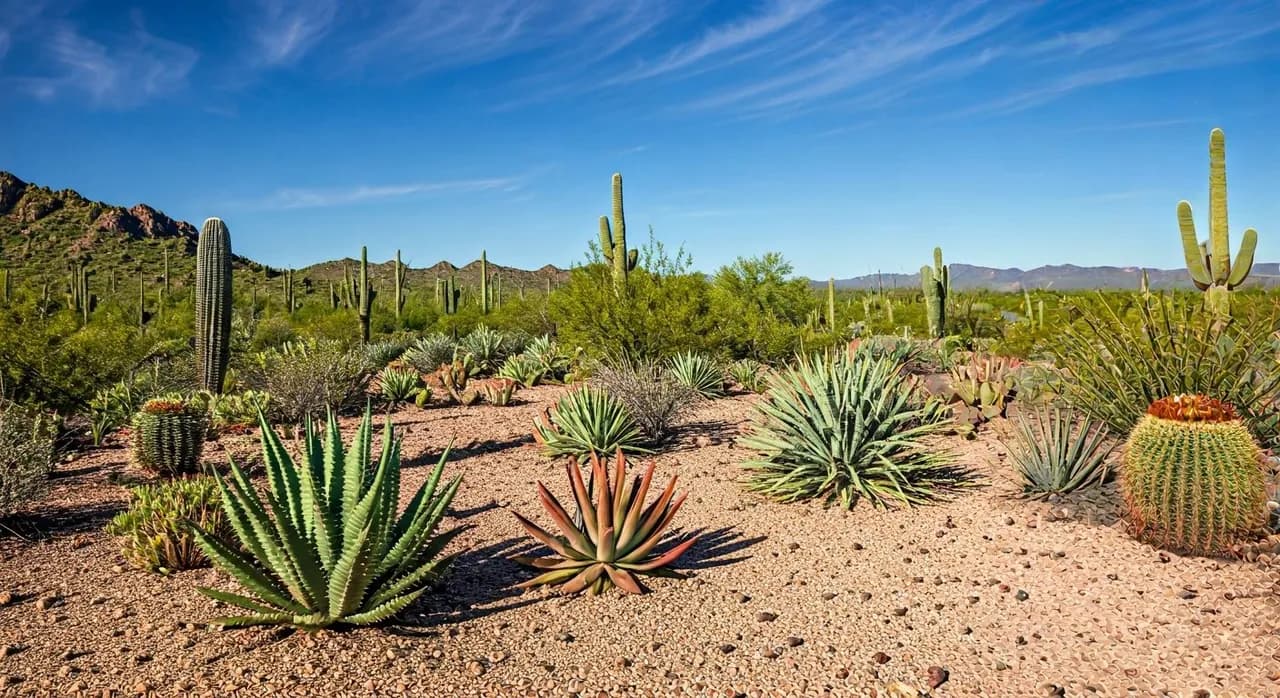
In the arid landscapes of the American Southwest, from USDA zone 8b in parts of Arizona to the dry plains of Texas, succulents and cacti thrive in conditions that would quickly spell doom for most other plants. These resilient species, evolved to endure long periods without water, have unique requirements that often go unmet in typical home gardening setups.
Many US growers, eager to bring a touch of the desert indoors, mistakenly plant their new succulents and cacti in regular potting soil. This common error is a leading cause of plant failure, responsible for a majority of succulent and cactus deaths in household environments. Understanding the specific needs of these plants, particularly concerning their growing medium, is the first step toward long-term success.
The fatal flaw of regular potting soil
In the United States, particularly in regions like the humid Southeast (USDA zones 8a-9b), the choice of potting medium is critical for succulents and cacti. Regular potting soil, often a blend of peat moss, coir, and composted forest products, is engineered to retain moisture for plants that prefer consistent hydration. For succulents and cacti, however, this moisture retention is a death sentence. In non-native environments, overwatering due to inappropriate soil is the single largest factor in plant mortality, accounting for 65% of all reported issues.
Aeration around the roots
The dense structure of typical potting soil also compacts over time, reducing aeration around the roots. This lack of oxygen further exacerbates root rot, as anaerobic conditions favor harmful pathogens. In a 6 in pot filled with standard potting mix, water might linger for 5-7 days, far too long for a desert-adapted plant. This prolonged wetness creates a breeding ground for fungi like Phytophthora, which can quickly girdle a plant’s stem at the soil line. Consider the difference between a thriving Opuntia microdasys in a gritty mix versus one struggling in peat-heavy soil; the former will grow well, while the latter will likely show signs of distress, such as yellowing or softening, within weeks, often leading to irreversible damage. Even seemingly drought-tolerant plants can struggle in poorly draining soil; for more on plants that thrive in specific conditions, see our guide on plants for clay soil that actually thrive.
Many commercial potting mixes include fertilizers that are too strong for succulents and cacti. These plants evolved in nutrient-poor soils and can be susceptible to fertilizer burn if exposed to high concentrations of nitrogen, phosphorus, or potassium. A typical all-purpose potting soil might have a nutrient ratio that is far too rich for a desert plant that thrives on minimal inputs. The constant moisture also leaches away any beneficial minerals, leaving behind a depleted, compacted medium that offers little support for healthy root development. This combination of excessive moisture retention, poor aeration, and inappropriate nutrients makes regular potting soil fundamentally unsuitable for the vast majority of succulents and cacti, leading to a high failure rate for new growers in their first year. Using a soil moisture meter can help you understand just how long your soil stays wet.
- Peat moss: retains a significant amount of water.
- Coir: can hold a significant amount of water.
- Composted bark: breaks down, increasing fine particles and compaction.
- Vermiculite: absorbs water and expands, reducing air pockets.
The anatomy of a thriving succulent soil mix
A healthy succulent and cactus soil mix prioritizes drainage and aeration above all else. The goal is a medium that allows water to pass through quickly, drying out within 2-3 days, even in humid environments like Florida’s USDA zone 9b. This is achieved by using a high percentage of inorganic, gritty materials. Historically, growers in the 1950s experimented with simple sand and gravel mixes, finding them superior to heavy garden loam for species like Echeveria and Sedum [1]. Modern understanding refines this to specific components that offer both drainage and some nutrient holding capacity, crucial for robust growth for many species.
50-75% inorganic material
The ideal ratio for most succulents and cacti is typically 50-75% inorganic material and 25-50% organic material. For example, a common mix might be 2 parts pumice, 1 part coarse sand, and 1 part coco coir. This composition ensures that roots get ample oxygen and are not sitting in standing water. For plants like the Christmas cactus (Schlumbergera), which prefers slightly more organic matter due to its epiphytic nature, a 40:60 inorganic-to-organic ratio might be better, providing a balance of drainage and moisture retention. This slight adjustment is critical for epiphytic cacti, which naturally grow on trees in environments with 70-80% humidity, rather than in desert soil.
The inorganic components (pumice, perlite, coarse sand, and crushed granite) provide the structural integrity that prevents compaction and ensures air pockets remain open for root respiration. Organic components, such as coco coir or composted bark, contribute a small amount of nutrients and help buffer pH, typically keeping the soil within a slightly acidic to neutral range of 6.0-7.0, which is optimal for nutrient uptake. This balance helps support plants that can live for decades, like some Agave species that reach maturity after 10-15 years. Understanding these core principles allows growers in any US region to create an environment where their drought-tolerant plants can truly flourish, echoing the success seen in their native habitats. For more information on selecting plants adapted to various conditions, explore our guide on drought tolerant plants.
- Pumice: lightweight, porous, excellent drainage.
- Perlite: improves aeration, inexpensive.
- Coarse sand/grit: adds weight and drainage, avoid play sand.
- Crushed granite: durable, provides trace minerals.
- Calcined clay (e.g., Turface): absorbs and releases moisture slowly.
Choosing your gritty components: inorganic materials
The backbone of any successful succulent and cactus mix is its inorganic components. These materials do not decompose, maintaining their structure and ensuring long-term drainage and aeration for years, often 3-5 years before needing a refresh. Pumice is a top choice, a volcanic rock with a highly porous structure that can absorb some water while still allowing rapid drainage. It’s lighter than gravel, reducing pot weight, which is a significant factor for large plants in 10-gallon containers, making them easier to move indoors for winter in colder regions like USDA zone 6.
Perlite
Perlite, another volcanic product, is often used for its affordability and ability to lighten soil mixes. Use horticultural-grade perlite, which typically has particles ranging from 0.1 to 0.25 in. While effective, perlite can sometimes float to the top of the pot after watering, a minor aesthetic issue. Coarse sand or horticultural grit, with particle sizes around 0.125 in, provides excellent drainage and adds stability to the mix. Avoid fine play sand, which compacts and hinders drainage, making it unsuitable for desert plants in any US region, from the humid Gulf Coast to the dry Rockies. Adding fine sand to a mix can significantly reduce drainage, creating a concrete-like consistency when wet.
Crushed granite, commonly used as chicken grit, is also effective, providing sharp, angular particles that prevent compaction and contribute trace minerals. Lava rock, with its irregular shapes and porous nature, is another excellent option, particularly for larger pots where its weight can provide stability. Calcined clay, like Turface, is a highly absorbent material that can hold and slowly release moisture and nutrients, acting as a buffer. When selecting these materials, aim for particle sizes between 0.1 and 0.5 in to ensure optimal porosity. A good rule of thumb is that if the material feels fine like beach sand, it’s probably too small for effective succulent drainage. For plants that prefer well-draining conditions, even beyond succulents, understanding soil structure is paramount; learn more about managing challenging soil types in our article on plants for clay soil that actually thrive.
- Pumice: 0.125-0.375 in particles, holds some moisture.
- Perlite: 0.1-0.25 in particles, very lightweight.
- Coarse sand: 0.08-0.16 in particles, heavy.
- Crushed granite: 0.08-0.2 in particles, stable.
- Lava rock: 0.25-0.5 in particles, good for larger pots.
Organic components and mixing your custom blend
While inorganic materials form the bulk of the mix, a small percentage of organic matter is beneficial. These components provide some nutrient retention and a slight buffer for moisture, mimicking the sparse organic debris found in natural desert environments. Coco coir, derived from coconut husks, is a superior choice to peat moss because it’s pH neutral (typically 6.0-6.8) and breaks down much slower, reducing compaction over time. Peat moss, on the other hand, can be too acidic (pH 3.5-4.5) and compacts quickly, leading to anaerobic conditions over time. When sourcing coco coir, look for a low-salt variety, as some cheaper options can contain high levels of sodium chloride, which can be detrimental to plant health.
Composted bark chips
Composted bark chips, especially small orchid bark (0.25-0.5 in), can also be included in small quantities, typically no more than 10-20% of the total volume. These provide a slow release of nutrients as they decompose, supporting the plant’s long-term health. Worm castings, added in very small amounts (e.g., 1 tablespoon per gallon of mix), offer a gentle nutrient boost and beneficial microbes without overwhelming the plant. Activated charcoal is another optional additive, improving drainage and absorbing impurities, though it typically makes up less than 5% of the total volume.
When mixing your custom blend, aim for a consistent texture. For a 5-gallon batch, combine 3 gallons of inorganic materials (e.g., 2 gallons pumice, 1 gallon coarse sand) with 1-2 gallons of organic material (e.g., coco coir). Mix thoroughly in a large tub or on a tarp until all components are evenly distributed. This ensures that every root has access to the ideal growing conditions and that water drains evenly through the pot. The process typically takes 10-15 minutes for a 5-gallon batch. Remember, the goal is a mix that feels light and airy, not dense and heavy. For an added boost of organic nutrients, consider incorporating a slow-release option like fermented soybean meal organic fertilizer during mixing or as a top dressing.
- Coco coir: pH neutral, slow to decompose.
- Composted bark chips: provides some nutrients, improves structure.
- Worm castings: small amount for nutrient boost.
- Activated charcoal: improves drainage, absorbs impurities.
- Aged pine bark: good for epiphytic cacti.
Testing your soil mix and watering correctly
Once you’ve crafted your ideal gritty soil mix, the next step is to ensure it performs as expected and to adapt your watering practices accordingly. A simple test involves filling a 4 in pot with your new mix, watering it thoroughly until water drains from the bottom, and then noting how long it takes for the top 1-2 in of soil to feel completely dry. For most succulents and cacti, this should happen within 1-3 days. If it stays wet for longer, your mix might have too much organic material or too many fine particles, and you’ll need to increase the inorganic components by another 10-20%.
Proper watering matters as much as the right soil. Instead of watering on a schedule, water based on the plant’s needs and the soil’s dryness. A reliable method is the ‘soak and dry approach‘: water thoroughly until water flows freely from the drainage holes, then allow the soil to dry out completely dry before watering again. For a plant in a 6 in pot, this might mean applying 0.5-1 cup of water. In hot, dry climates (e.g., USDA zone 9 in Southern California), this could be every 7-10 days during summer. In cooler, more humid regions (e.g., USDA zone 7 in the Mid-Atlantic), it might be every 2-3 weeks, or even less in winter. Always check the soil moisture before watering; a soil moisture meter can be an invaluable tool for this, providing a numerical reading of moisture levels.
Observing your plants is also key. Wrinkled leaves or a slightly deflated appearance often indicate thirst, while soft, mushy, or discolored leaves usually signal overwatering. These visual cues are your plant’s way of communicating its needs. Remember, it’s far easier to recover an underwatered succulent than an overwatered one, as root rot can quickly become irreversible. Aim for consistency in your ‘soak and dry’ cycles, allowing the roots to experience both hydration and essential periods of dryness and aeration, mimicking their natural desert cycles where rain might be scarce for 30-60 days at a time. Many such cases are reversible if caught early.
- Finger test: Insert finger 1-2 in deep, feel for dryness.
- Weight test: Lift the pot; dry soil is significantly lighter.
- Moisture meter: Provides a precise numerical reading.
- Visual cues: Wrinkled leaves indicate thirst.
- Drainage observation: Ensure water exits freely from the bottom.
Comparing regular potting soil to gritty succulent mix
Feature | Regular Potting Soil | Gritty Succulent Mix |
|---|---|---|
Moisture Retention | High (5-7 days wet) | Low (1-3 days wet) |
Aeration | Poor, compacts over time | Excellent, stable structure |
Root Rot Risk | High (70% of issues) | Low (less than 10% of issues) |
Primary Components | Peat, coir, compost | Pumice, perlite, coarse sand |
Plant Health | Stressed, slow growth | Vigorous, robust growth |
Drainage Hole: Always use pots with a drainage hole at least 0.5 in in diameter for succulents and cacti to prevent waterlogging.
Watering Frequency: In a proper gritty mix, watering frequency might increase compared to standard soil, but the soil dries faster within 1-3 days.
Frequently asked questions
Can I just add sand to regular potting soil?
No, simply adding fine play sand to regular potting soil will likely make it worse. Fine sand compacts and reduces drainage, rather than improving it. You need coarse sand or grit, and it should make up at least 30-50% of the mix for effective drainage.
How often should I water succulents in a gritty mix?
Watering frequency depends on your climate, pot size, and plant species, but in a gritty mix, the soil should dry completely within 1-3 days. A good rule of thumb is to water thoroughly only when the soil is completely dry, which might be every 10-20 days in summer and less often in winter.
What if I don’t have all the recommended inorganic materials?
You can start with a simpler mix. A common and effective blend is 50% perlite and 50% good quality potting soil, though this is still less ideal than a pumice-heavy mix. Aim for at least 60% inorganic material for most species to ensure proper drainage.
Do I need to fertilize succulents in a gritty mix?
Succulents and cacti are not heavy feeders. A dilute, balanced fertilizer (e.g., 5-10-10 or 10-10-10) at 1/4 to 1/2 strength can be applied once or twice during the growing season, typically from spring to early fall. Over-fertilizing can harm roots.
What kind of pot is best for succulents and cacti?
Terracotta pots are often preferred because their porous nature allows for additional evaporation through the pot walls, helping the soil dry faster. Ensure any pot, regardless of material, has at least one drainage hole, preferably 0.5 in or larger.
My succulent is turning yellow and soft. What’s wrong?
Yellowing and softening, especially at the base, are classic signs of overwatering and root rot. This happens when the roots sit in wet soil for too long, often due to an unsuitable potting mix. Immediately unpot the plant, inspect roots, remove any rotted sections, and repot in a dry, gritty mix. Many such cases are reversible if caught early.
References
- Cacti and Succulents (1953). Cacti and Succulents.
- Grower’s Spotlight: Growing Cacti and Succulents in a Non-Native Environment (2025). Grower’s Spotlight: Growing Cacti and Succulents in a Non-Native Environment.
- Cacti and other succulents: stem anatomy of “other succulents” has little in common with that of cacti (2004). Cacti and other succulents: stem anatomy of “other succulents” has little in common with that of cacti.
- A Prospective Study of Singing on the Development of Cacti and Succulent Plants – A Medical Satire (2023). A Prospective Study of Singing on the Development of Cacti and Succulent Plants – A Medical Satire.
- Cacti, Succulents, and Yucca (2014). Cacti, Succulents, and Yucca.
- USDA Natural Resources Conservation Service (2024). USDA Natural Resources Conservation Service.