Key takeaways
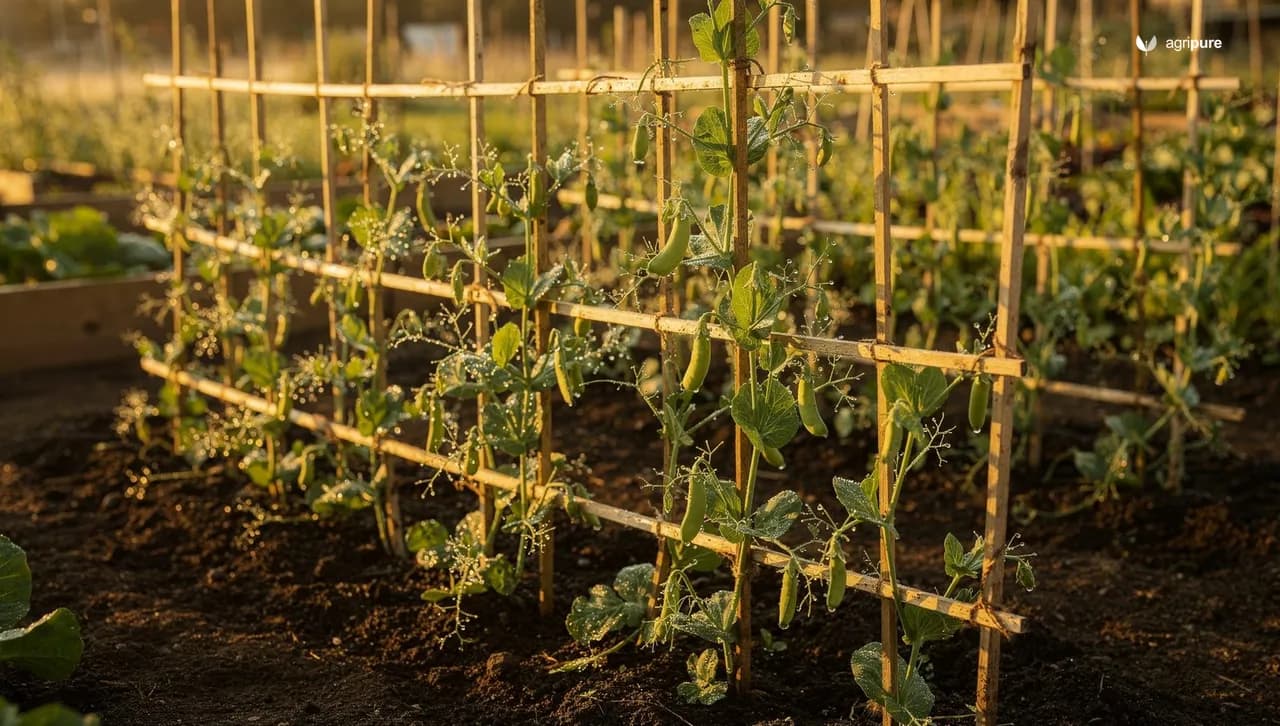
A close-up, photorealistic image of lush green pea plants growing vertically on a rustic wooden trellis in an organic garden. Several mature, plump pea pods hang from the vines, ready for harvest. The scene is illuminated by gentle natural light.
Fresh peas are ready to harvest from vines supported by a simple trellis.
- Peas are a cool-season crop you can sow as soon as the soil is workable; sow once the soil hits 45°F, and the plants grow at any temperature above 40°F.
- There are three types: shelling, snow, and snap. Most reach harvest in 50 to 70 days.
- Give even short “bush” varieties a trellis: stakes set about 3 inches from the seed keep pods clean and picking easy.
- Coat the seed with rhizobium inoculant the first time you grow legumes; it takes roughly 1 million bacteria per seed to fix nitrogen.
- Pick 2 to 3 times a week and sow again in August for a second crop before frost.
Peas are the first thing I sow every year, often while the garlic is still the only green in the beds. You can sow the seed as soon as the soil reaches 45°F, a month before the tomatoes are even a thought, and the vines shrug off a light frost that would flatten a bean.
The trick is timing the early window, picking the right type for your kitchen, and keeping the vines climbing and the pods coming. Here is the full seed-to-harvest sequence in 5 stages — when to sow, how to inoculate and trellis, how often to pick, and how to slot in a second crop for fall.
When to sow: the earliest window in the garden
Peas reward the impatient. University of Illinois Extension notes you can sow whenever the soil temperature is at least 45°F and the ground is dry enough to till without sticking to your tools. University of Minnesota Extension is just as direct — plant the seed as soon as the soil has thawed and is workable, because young plants survive a light frost and grow at any temperature above 40°F, with 55 to 65°F the sweet spot.
That cool-season biology is the whole reason peas go in first. Like carrots and lettuce, they run out of steam once summer heat sets in, so the calendar works backward from your last frost rather than forward from it. Sow about 4 to 6 weeks before that date.
Reading your soil before you sow
Workable means crumbly, not muddy. Squeeze a handful: if it packs into a sticky ball, wait 3 or 4 days, because seed sown into cold, waterlogged ground rots before it sprouts. Building healthy, well-drained soil over winter is what lets you sow a week or two earlier than your neighbors.
- Go now: soil at or above 45°F, crumbles in your hand, drains after rain.
- Wait: soggy clay that sticks to the spade or still has frost a few inches down.
- Hedge it: sow half your seed now and half in two weeks to cover a cold snap.
Soaking is optional: dry seed germinates in 6 to 17 days on its own. An overnight soak can shave a few days off in cold soil, but soaked seed rots faster if a wet spell follows, so I usually sow dry.
Close-up of pea seeds being pressed into dark crumbly garden soil along a shallow furrow in early spring.
Shelling, snow, or snap: pick your type first
Every pea decision starts with which of the 3 types you want, because it sets how you pick and eat them. Penn State Extension lays out the names cleanly: shelling peas are the English or garden peas you pop open for the round seeds inside, snow peas are the flat pods you eat whole in a stir-fry, and snap peas are the plump sugar snaps you eat pod and all.
All three share the same culture and roughly the same calendar, most reach harvest in 50 to 70 days, so you can grow a row of each on one trellis. The difference that matters in the kitchen is the harvest stage: snow and snap peas are picked young and tender, while shelling peas wait until the pods are fully filled.
Match the type to your patience: snap and snow peas are nearly foolproof and need no shelling, which makes them the better first crop. Shelling peas give a lower edible yield per pod but a sweeter, more traditional pea.
How shelling, snow, and snap peas compare
Use this side-by-side to choose before you order seed. It sorts the three types by what you eat, when you pick, and how each one earns or loses its place on the trellis.
Type | What you eat | Pick at | Best for |
|---|---|---|---|
Shelling (English/garden) | Seeds only | Pods fully filled | Classic sweet peas, freezing |
Snow | Whole flat pod | Flat, before seeds swell | Stir-fries, fast harvest |
Snap (sugar snap) | Whole plump pod | Round and crisp | Snacking, highest yield |
All three | Varies | 50 to 70 days from sowing | Trellis, cool spring and fall |
Across all three types, the culture is identical — sow shallow, trellis early, and pick often. Only the harvest stage changes, so a beginner can plant one of each and learn all three in a single 60-day season.
Sowing, inoculant, and trellising even bush peas
Sow the seed 1 to 2 inches deep and about an inch apart, in single or double rows, following Penn State and Illinois Extension spacing. The first time you grow any legume, dust the damp seed with a rhizobium inoculant before it goes in. University of Minnesota’s vegetable IPM team explains that the garden pea partners with the bacterium Rhizobium leguminosarum, and it takes roughly 1 million rhizobia cells per seed for the roots to form the nodules that pull nitrogen from the air.
That partnership is why peas barely need feeding and why they leave the bed richer than they found it. Colorado State University Extension estimates peas fix 53 to 305 pounds of nitrogen per acre, and stresses that each legume needs its specific strain, applied straight to the seed before planting.
Trellis the bush types too
The label “bush pea” oversells how self-supporting these vines are. Even a 24-inch dwarf flops into the mud and rots its lowest pods without something to grab. Penn State recommends setting stakes about 3 inches from the seed, and trellising taller vines like the 30-inch ‘Oregon Giant’ outright.
- Bush/dwarf (under 30 in): a short row of twiggy brush or a 2-foot net keeps pods off the soil.
- Tall/vining (4 to 6 ft): netting, string, or wire fencing — they will climb anything with a tendril-sized grip.
- Spacing: set the support at sowing, not later, so you never disturb the shallow roots.
A trellis also lifts the foliage into the air, and weeding or harvesting at standing height from a raised bed turns a back-aching chore into a 5-minute walk down the row.
Picking often and squeezing in a fall crop
Peas crop hardest when you harvest hardest. UC Integrated Pest Management is blunt: pick 2 to 3 times a week to keep the plant bearing, and remove every pod once it reaches a usable size — for shelling types, that means pulling pods at 3 to 4 inches long. A vine left with mature pods reads the season as over and stops setting new flowers.
For a continuous supply through spring, Penn State suggests sowing fresh seed every two to four weeks, watering at about 1 inch per week when rain falls short. Then, because peas are a cool-season crop, you get a second bite at the season.
Time the fall crop backward: count about 60 days plus a 2-week buffer from your first fall frost. In much of the country that means sowing in August into soil you may need to shade and water to get past the summer heat.
A gardener's hands holding a freshly picked cluster of green snap pea pods over a leafy pea vine in morning light.
Conclusion
Growing peas is mostly about timing and tending rather than coddling. Sow as soon as the soil hits 45°F, inoculate the seed the first year, give even the bush types a trellis, and pick every 2 to 3 days to keep the pods coming. Do that, slip in an August sowing, and a single packet of seed delivers two harvests of the sweetest vegetable in the garden.
Frequently asked questions
When should I plant peas?
As soon as the soil is workable in early spring, once it warms to about 45°F and is dry enough to till without sticking to your tools. That is usually 4 to 6 weeks before your last frost, since young pea plants tolerate a light freeze.
Do bush peas need a trellis?
Yes. Even short bush or dwarf varieties under 30 inches flop over and rot their lowest pods without support. Set a short net or twiggy brush, with stakes about 3 inches from the seed, at sowing time so you do not disturb the shallow roots later.
Do I need rhizobium inoculant for peas?
It is strongly recommended the first time you grow peas or other legumes in a bed. The seed needs roughly 1 million rhizobia cells to form root nodules and fix nitrogen, and dusting inoculant on the damp seed before sowing is the easy way to guarantee it.
How often should I pick peas?
Harvest 2 to 3 times a week and remove every pod that reaches a usable size. Frequent picking keeps the vines setting new flowers, while pods left to mature signal the plant to stop producing.
Can I grow a fall crop of peas?
Yes. Because peas are a cool-season crop, you can sow a second crop in late summer, often in August, counting back about 60 days plus a buffer from your first fall frost so the pods fill before cold weather arrives.
References
- University of Minnesota Extension — Growing peas in home gardens
- University of Illinois Extension — Peas, Home Vegetable Gardening
- Penn State Extension — A Gardener’s Guide to Peas
- University of Minnesota Fruit & Vegetable IPM — Rhizobia Inoculation for Organic Farming Systems
- Colorado State University Extension — Legume Seed Inoculants
- UC Statewide IPM Program — Cultural Tips for Growing Peas