Key takeaways
- In the Indian plains, strawberries are cultivated as a winter annual crop from October to March.
- Planting rooted runner saplings in October or November yields sweet berries from late December through early spring.
- A light, free-draining potting mix adjusted to around pH 6 with leaf mould or sulphur prevents root rot.
- Planting depth matters: cover all roots while keeping the base of the crown level with the soil surface.
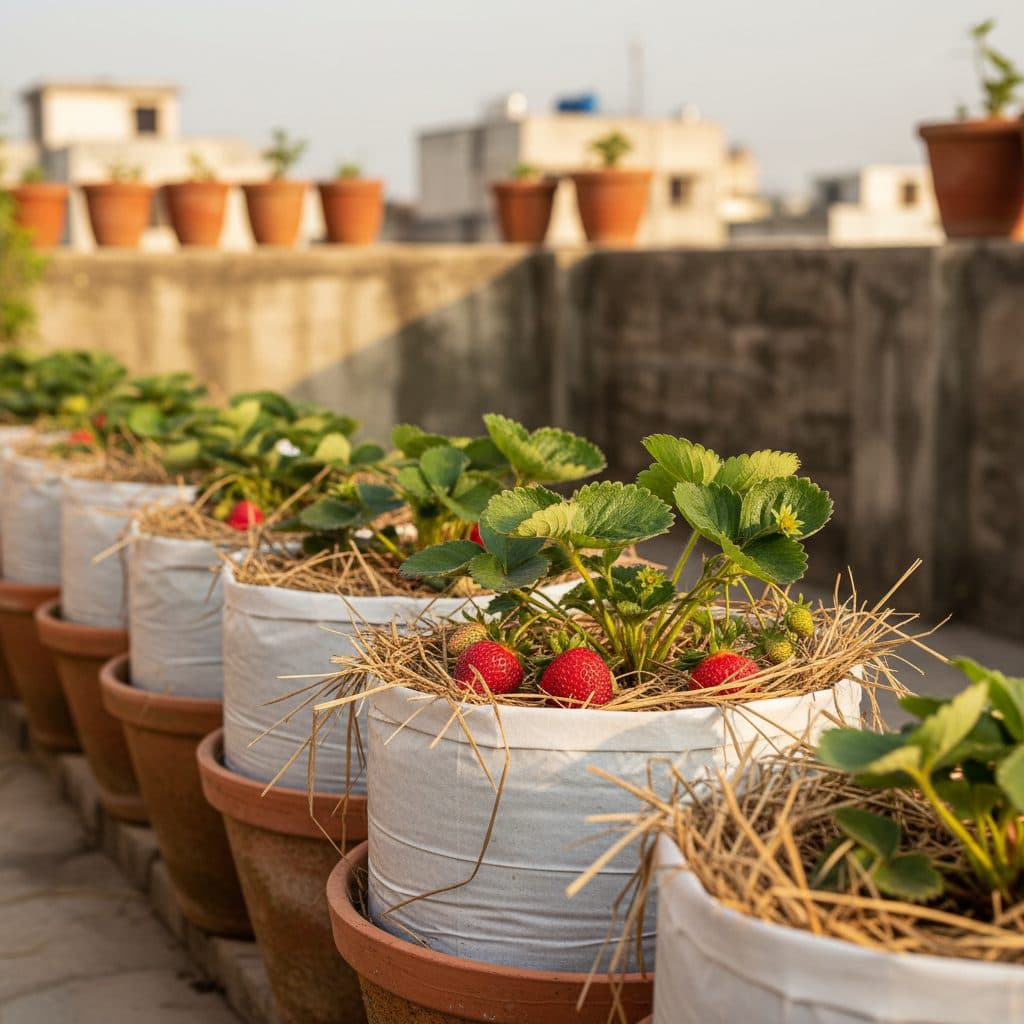
- Mulching beneath fruit with dry straw or sugarcane bagasse keeps developing berries clean and free from soil rot.
Quick answer: To grow strawberries in India, plant bare-root runners or potted saplings in October or November as autumn cooling begins. Use shallow, wide pots or grow bags filled with a well-draining mix of coco peat, vermicompost, and sand, keeping the crown base level with the soil surface. Provide full winter sun, water consistently at the base, and mulch with dry straw for harvests from January to March.
Strawberries (Fragaria × ananassa) grow well in containers on Indian terraces and balconies. While commercial strawberry cultivation was traditionally confined to cool hill stations like Mahabaleshwar in Maharashtra, Kashmir, and Himachal Pradesh, modern cultivars also produce reliable crops across the northern and central Indian plains.
In tropical and subtropical plains, growers treat strawberries as an annual winter (rabi) crop. Planting as night temperatures drop in October gives plants time to fruit through the cooler months before heat arrives in April.
The Indian strawberry calendar: plains vs hills
Strawberry plants are cold-tolerant perennials that demand cool night temperatures (10°C to 15°C) to initiate flower buds and develop sugar-dense fruit.
+---------------------+-----------------------+---------------------------------------+
| Climate Region      | Planting Window       | Fruiting & Harvest Season             |
+---------------------+-----------------------+---------------------------------------+
| Northern Plains     | Mid-October to Nov    | Late December to Late March           |
| Central / South     | October to November   | January to March                      |
| Hill Stations       | February to March     | May to July (Summer crop)             |
| Extreme Heat Plains | Late October          | January to February (Short window)    |
+---------------------+-----------------------+---------------------------------------+
The plains growing cycle
In Delhi, Punjab, Uttar Pradesh, Rajasthan, Maharashtra, and Karnataka, procure healthy rooted saplings or runner plugs in October. Plants establish quickly during November, begin blooming in December, and provide heavy weekly harvests from January through late March. Once April temperatures exceed 35°C, fruit size diminishes and plants naturally decline.
For growers interested in soilless culture, compare this container approach with hydroponic strawberries and our foundational overview on how to grow strawberries.
Runners vs seeds: choosing planting material
Attempting to grow strawberries from tiny seeds in the Indian plains is rarely successful for beginners. Strawberry seeds take several weeks to germinate, grow slowly, and require four to six months of cool weather before flowering.
Instead, always purchase healthy rooted runner plants or tissue-cultured saplings from reliable local nurseries or online suppliers in October. Look for short-day varieties, which are the ones suited to the Indian plains cycle, since they set flower buds under the short days and cool nights of an Indian winter:
- Camarosa: Heavy-yielding variety with large, firm, deep red berries and excellent sweet-tart flavour.
- Chandler: Classic choice for home gardens, producing medium-to-large glossy fruit with rich aroma.
- Sweet Charlie: Early-maturing variety with exceptionally sweet fruit, ideal for southern and central plains.
- Winter Dawn: An early short-day cultivar that starts cropping sooner than Camarosa, useful where the warm season arrives quickly.
Pot selection and potting mix preparation
Strawberry plants have shallow, fibrous root systems that spread mostly in the top layer of soil.
+---------------------+-----------------------+---------------------------------------+
| Soil Ingredient     | Percentage in Mix     | Horticultural Purpose                 |
+---------------------+-----------------------+---------------------------------------+
| Coco Peat           | 45 percent            | Moisture retention, light airy texture|
| Vermicompost        | 35 percent            | Organic nutrition, beneficial biology |
| Coarse River Sand   | 20 percent            | Sharp drainage, root aeration         |
| Neem Cake (Khali)   | 25 to 50 g per pot    | Suppresses soil grubs and nematodes   |
+---------------------+-----------------------+---------------------------------------+
Because vermicompost pushes the mix towards neutral, add well-rotted leaf mould or a small amount of elemental sulphur to bring the mix back to around pH 6, and rinse the coco peat thoroughly before use to wash out its sodium and potassium. Work the neem cake in a week before planting, never against bare roots.
Container specifications
- Choose wide, shallow containers: rectangular plastic troughs, 25 to 30 cm diameter pots, or 20 x 20 cm fabric grow bags.
- Ensure every pot has multiple, free-flowing drainage holes. Waterlogging is the fastest way to kill strawberry roots.
- Space plants 20 to 25 cm apart in larger troughs to allow unhindered air circulation around the spreading foliage.
Enrich the soil with biological nutrients; see our guide on neem cake for plants.
Proper planting technique: the crown rule
When planting strawberry saplings, position the crown (the thick central base where roots meet leaf stems) carefully.
+-----------------------------------------------------------------------------------+
|  [Strawberry Crown Planting Depth]                                                |
|                                                                                   |
|  [ TOO DEEP ]         [ CORRECT DEPTH ]       [ TOO SHALLOW ]                     |
|   Soil Level             Soil Level              Soil Level                       |
|   ~~~~~              ~~~~~               ~~~~~~~~~                        |
|   (Crown Buried)      (Crown Base Level)      (Exposed Roots)                     |
|     => ROTS             => THRIVES               => DRIES OUT                     |
+-----------------------------------------------------------------------------------+- If planted too deep: Soil enters the central growing crown, causing it to rot within days of watering.
- If planted too shallow: Upper roots remain exposed to air and quickly desiccate under the sun.
- Correct depth: Position the plant so the roots are fully covered with soil while the base of the crown sits level with the compost surface. Firm the soil gently around the root ball and water thoroughly to establish root-to-soil contact.
Sunlight, watering, and straw mulching
- Direct sunlight: Place your strawberry pots in the sunniest location on your terrace, receiving at least six to seven hours of direct sunlight daily. Direct sun drives sugar development and fruit color.
- Water at the base: Always water at the base of the plant using a narrow-spouted watering can. Avoid wetting the leaves, blossoms, and developing fruit, as wet foliage encourages grey mould (Botrytis cinerea).
- Mulching with dry straw: As soon as plants begin flowering, spread a 3 cm layer of clean, dry rice straw, wheat straw, or shredded sugarcane bagasse over the soil surface beneath the leaves. Mulch does two things:
- It prevents ripe berries from touching damp soil, which causes immediate fruit rot.
- It keeps the shallow root area cool and moist during bright winter afternoons.
Feeding and flower management for heavy yields
To maximize fruit size and continuous fruiting through winter:
- Pinch early runners: In November and December, plants will send out horizontal runners (stolons). Pinch off all runners immediately so the plant channels 100 percent of its energy into expanding the root crown and producing flower trusses.
- Liquid organic feeding: Every 10 to 14 days, apply a diluted liquid feed such as mustard cake tea (sarson ki khali liquid), fermented fruit peel tea, or seaweed extract. High potassium promotes sweet, firm berries.
- Bird protection: As berries ripen from green to bright crimson, garden birds (such as bulbuls and pigeons) will quickly peck at the fruit. Drape lightweight nylon bird netting over the containers to safeguard your harvest.
- Managing summer survival: If you wish to keep mother plants alive through intense summer heat (May to June), move containers into full shade under a green shade net, keep soil moist, and mist foliage lightly during peak afternoon heat.
For broad terrace fruit planning alongside perennial crops, read how to grow guava tree in pot.