Key takeaways
- Hens provide pest control, weed management, and soil fertilization in a food forest.
- Proper planning for coop placement and ranging areas is critical for hen health and garden protection.
- Diverse perennial plantings offer forage, shelter, and predator protection for free-ranging birds.
- Managing hen access to specific areas protects young plants and allows for crop recovery.
- Keel bone health in free-range hens requires attention to roosting structures and foraging opportunities.
- Consumer preference for pasture-raised eggs supports this integrated approach, with 75% favoring them [2].
Quick answer: Integrating hens into a food forest provides natural pest control, weed management, and soil fertilization through their foraging and droppings, creating a more resilient and productive homestead system.
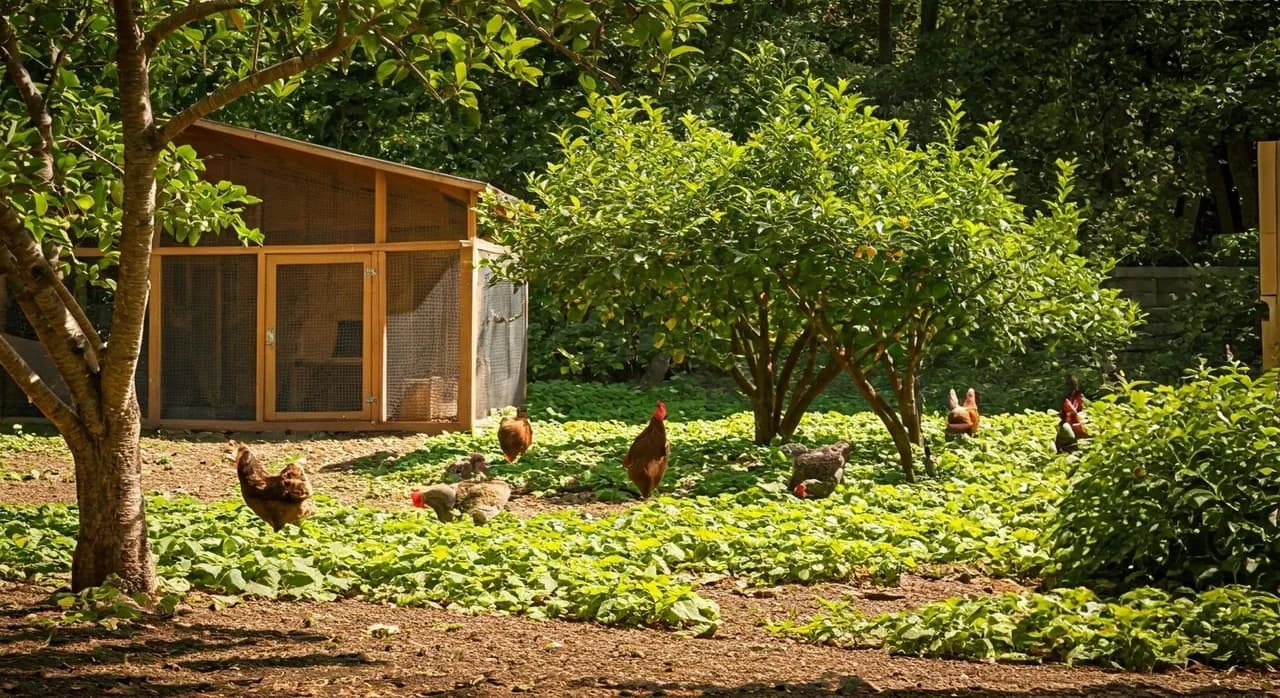
In many parts of the United States, from the humid subtropics of Florida (USDA zone 9) to the colder climates of Michigan (USDA zone 5), growers are seeking ways to build more self-reliance. One effective strategy involves combining perennial food systems with light livestock, specifically integrating hens into a food forest. This approach can boost food production, reduce external inputs, and build a more resilient system for the homestead.
A well-planned food forest can provide a diverse habitat for chickens, offering shade, forage, and protection from predators. Conversely, hens contribute to the food forest by controlling pests, fertilizing the soil, and managing weeds. Studies show that hens integrated into regenerated medic pastures can reduce weed biomass by 30% to 40% [4], a significant benefit for any grower aiming for a productive, low-maintenance system.
The symbiotic relationship: hens as garden partners
Integrating hens into a food forest creates a dynamic, mutually beneficial system for US growers. In this setup, chickens act as active participants in the ecosystem, not just as egg producers. For example, in a food forest designed for chickens, they scratch for insects and grubs, consuming pest populations like grasshoppers and slugs, which can reduce garden damage in some areas. Their constant scratching also helps to aerate the soil, improving water infiltration and root development for your perennial plants.
Putting it into practice
Beyond pest control, hens contribute significantly to soil fertility. Their droppings are rich in nitrogen, phosphorus, and potassium, directly fertilizing the soil as they range. A flock of ten hens can produce a substantial amount of manure annually, which, when spread naturally, reduces the need for external fertilizers by a notable margin. This natural fertilization supports the growth of diverse plant layers in your food forest, from groundcovers to canopy trees, as described in guides like What is a food forest? A beginner’s guide to perennial edible ecosystems. They also help manage weeds; studies show hens can reduce weed biomass by 30% to 40% in regenerated medic pastures [4], a benefit that saves hours of manual labor each week.
For the hens, the food forest gives a superior environment compared to confined spaces. They gain access to a varied diet of insects, seeds, and fallen fruits, which supplements their commercial feed and can improve egg yolk color and flavor. The diverse canopy provides shade from the summer sun, which matters in hot climates like USDA zone 8, and protection from aerial predators such as hawks. The varied terrain and natural foraging opportunities also improve their welfare and let the birds express natural behaviors. This integrated system, often called a food forest for chickens, provides a richer life for the birds and a more productive landscape for the grower.
- Pest control: Hens consume insects and slugs, reducing garden damage.
- Weed management: Chickens scratch and eat weed seeds, decreasing weed pressure.
- Soil fertilization: Droppings enrich soil with essential nutrients.
- Soil aeration: Scratching improves soil structure and water penetration.
- Forage diversity: Hens access a varied diet of insects, seeds, and greens.
Designing the hen-friendly food forest
Successful integration begins with thoughtful design so both the hens and the plants thrive. When planning your food forest, consider the placement of the coop as a central hub. A well-designed coop, like those discussed in Chicken coop guide: sizing for 10 hens, materials, and keeping rats out, should be easily accessible for daily tasks and offer adequate space, typically 4 square feet per bird inside, with 10 square feet per bird in an attached run. Position the coop near the center of the ranging area to encourage hens to spread out, as they typically range up to 100 meters from their coop [3].
Resilient, mature plants
Plant selection matters. Opt for resilient, mature plants in areas where hens will have free access. Young seedlings are vulnerable to scratching and pecking, so consider protecting them with temporary fencing or chicken wire until they are established, usually after one full growing season. Fruit trees like apple (Malus domestica) and pear (Pyrus communis) provide excellent shade and dropped fruit for hens, thriving in USDA zones 4-8. Shrubs such as elderberry (Sambucus canadensis) and currants (Ribes spp.) offer berries and low cover, suitable for zones 3-7.
Create defined ranging zones within your food forest. A rotational grazing system can be highly effective, allowing specific areas to recover from hen activity while others are being worked. This might involve fencing off one-third of the food forest at a time, rotating the hens through the remaining two-thirds for a period of 2-4 weeks. This method helps prevent over-foraging and soil compaction, maintaining plant health and soil structure. Provide multiple water sources, especially in warmer climates like USDA zone 9, to ensure hens stay hydrated, potentially using systems like solar livestock water heaters in colder months.
- Coop placement: Centralize for even ranging, 4 sq ft per hen inside.
- Plant selection: Prioritize mature, resilient fruit trees and shrubs.
- Rotational grazing: Divide areas to allow plant recovery, 2-4 week rotations.
- Water access: Ensure multiple, accessible water sources for hydration.
- Predator protection: Utilize dense plantings and secure coops for safety.
Managing hen impact and protection
While hens offer many benefits, their natural behaviors can sometimes conflict with garden goals if not managed properly. Protecting young plants is paramount. Newly planted trees, shrubs, and vegetable seedlings are particularly vulnerable to scratching and dust bathing. Install temporary barriers like chicken wire cages around sensitive areas for the first 3-6 months of plant establishment. This allows the plants to develop a sturdy root system and grow beyond the hens’ most destructive pecking and scratching range, typically within 12 inches of the ground.
Soil compaction
Soil compaction is another consideration, especially in high-traffic areas or around the coop. Hens repeatedly walking over the same ground can compact the soil, reducing water infiltration and oxygen availability for plant roots. To mitigate this, introduce deep-rooted plants like daikon radish in heavily trafficked zones, which can help break up compacted soil over time. While comfrey can also serve this purpose, ensure chickens do not consume it due to its toxicity. Spreading a 2-inch layer of wood chips or straw in these areas also helps protect the soil surface and provides additional foraging material.
Predator protection is a constant concern for free-ranging hens across all USDA zones, from coyotes in the West to raccoons in the East. A secure coop is the first line of defense, built with sturdy materials and latches that predators cannot open. Consider adding an electric fence around the perimeter of the food forest, set at 6-12 inches high, to deter ground predators. Overhead netting can protect against aerial threats, though this is less practical for large food forest areas. Ensure hens are locked into their coop every night, especially in regions with high predator pressure, such as rural areas of Pennsylvania where fox populations are common.
- Protect young plants: Use temporary fencing for 3-6 months.
- Mitigate compaction: Plant deep-rooted species or add mulch layers.
- Secure coop: Essential for night protection against predators.
- Electric fencing: Deters ground predators, 6-12 inches high.
- Overhead netting: Provides protection from aerial threats in smaller areas.
Feeding and welfare considerations for happy hens
Even with abundant forage in a food forest, hens still require a balanced diet to maintain health and consistent egg production. Commercial layer feed, typically containing 16% to 18% protein, should be offered free-choice. The food forest supplements this, providing additional protein from insects and greens, and various vitamins and minerals from plant matter. This diverse diet can reduce reliance on commercial feed during peak growing seasons, especially in productive areas like the Pacific Northwest (USDA zone 8).
Access to fresh, clean water is non-negotiable. Hens drink approximately 0.5 to 1 pint of water per day, and this amount can double in hot weather above 85°F. Provide multiple water stations throughout the food forest so they are kept clean and refilled daily. In winter months, particularly in USDA zones 3-6, preventing water from freezing is critical; a heated waterer or a solar livestock water heater can ensure continuous access.
Welfare considerations
Welfare considerations are paramount for free-ranging birds. While ranging offers many benefits, it also comes with risks. Studies indicate that 20% to 30% of free-range hens may experience keel bone fractures [4], often due to collisions with structures or hard landings from roosts. Provide ample, sturdy roosting bars inside the coop, positioned at varying heights, to minimize injury risk from hard landings.
Consider supplementing their diet with black soldier fly larvae, which can be produced through composting food waste, as detailed in Black soldier fly composting: turn food waste into protein for your flock. This gives a sustainable, high-protein treat that reduces kitchen waste and provides a natural foraging experience. In colder climates, a Farm Animal Heat Lamp (100–300W) can provide warmth for young chicks or sick birds in a separate brooder area, maintaining temperatures around 90°F.
- Balanced diet: Offer 16-18% protein layer feed free-choice.
- Clean water: Provide 0.5-1 pint per hen daily, more in heat.
- Keel bone health: Sturdy roosts, highest at 24 inches.
- Protein supplements: Black soldier fly larvae reduce waste and provide protein.
- Winter warmth: Use heated waterers and heat lamps for chicks or sick birds.
Economic and environmental benefits of integrated systems
The integration of hens into a food forest offers tangible economic savings for the homestead. By allowing hens to forage for insects and weeds, growers can significantly reduce their spending on commercial pest control and herbicides annually. The natural fertilization provided by chicken manure also lessens the need for purchased fertilizers, potentially saving hundreds of dollars per year for a medium-sized food forest of one acre or more. Furthermore, the eggs produced by pasture-raised hens command a higher market value; approximately 75% of consumers prefer pasture-raised eggs [2], often willing to pay more per dozen.
Environmentally, this system promotes biodiversity and soil health. The varied plant life of a food forest, combined with the hens’ foraging activity, creates a rich habitat for beneficial insects and microorganisms. Hens help cycle nutrients, converting plant and insect matter into readily available fertilizer. This contributes to improved soil structure, increased organic matter content over several years, and better water retention, particularly beneficial in drought-prone regions like parts of California (USDA zone 9). This fits the principles of modern homesteading: resilient, productive systems.
Beyond the immediate farm, the integrated food forest contributes to a more sustainable food system. Producing eggs and some protein on-site reduces reliance on industrial agriculture, which often involves long supply chains and significant resource consumption. The fresh, nutrient-dense eggs and occasional meat from these hens can be a cornerstone of a homesteading kitchen, providing high-quality protein with a reduced carbon footprint compared to conventionally raised poultry, which often involves transportation over hundreds of miles. This approach supports a localized food economy and supports greater self-sufficiency for growers, potentially reducing food miles for these products.
- Reduced input costs: Less spending on pest control, herbicides, and fertilizers.
- Higher egg value: 75% consumer preference for pasture-raised eggs [2].
- Improved biodiversity: Richer habitat for beneficial insects and microbes.
- Improved soil health: Increased organic matter and water retention.
- Sustainable food production: Reduced reliance on industrial agriculture.
Comparison of hen integration methods
Method | Benefits | Considerations |
|---|---|---|
Free-range in food forest | Pest control, fertilization, diverse forage, improved hen welfare | Protection for young plants, predator management, potential for keel bone injuries (20-30% [4]) |
Rotational grazing | Even nutrient distribution, prevents over-foraging, allows plant recovery | Requires fencing infrastructure, more labor for rotation |
Confined run | Easy management, predator protection, minimal plant damage | Limited forage, higher feed costs, reduced hen welfare, less soil benefit |
Weed reduction: Hens can reduce weed biomass by 30% to 40% in regenerated medic pastures [4].
Consumer preference: Approximately 75% of consumers express a preference for pasture-raised eggs [2].
Ranging distance: Free-range hens typically spend 10% to 20% of their time ranging outdoors, covering distances up to 100 meters from their coop [3].
References
- Integrating Free-Range Hens into a Wheat Stubble (2005).
- Cage‐Free, Free‐Range, or Pasture‐Raised? Consumer Preferences for Happy Hens (2024).
- 16. Ranging in free-range laying hens: animal welfare and other considerations (2018).
- Integrating Free-Range Hens into a Regenerated Medic Pasture (2005).
- USDA Natural Resources Conservation Service (2024).