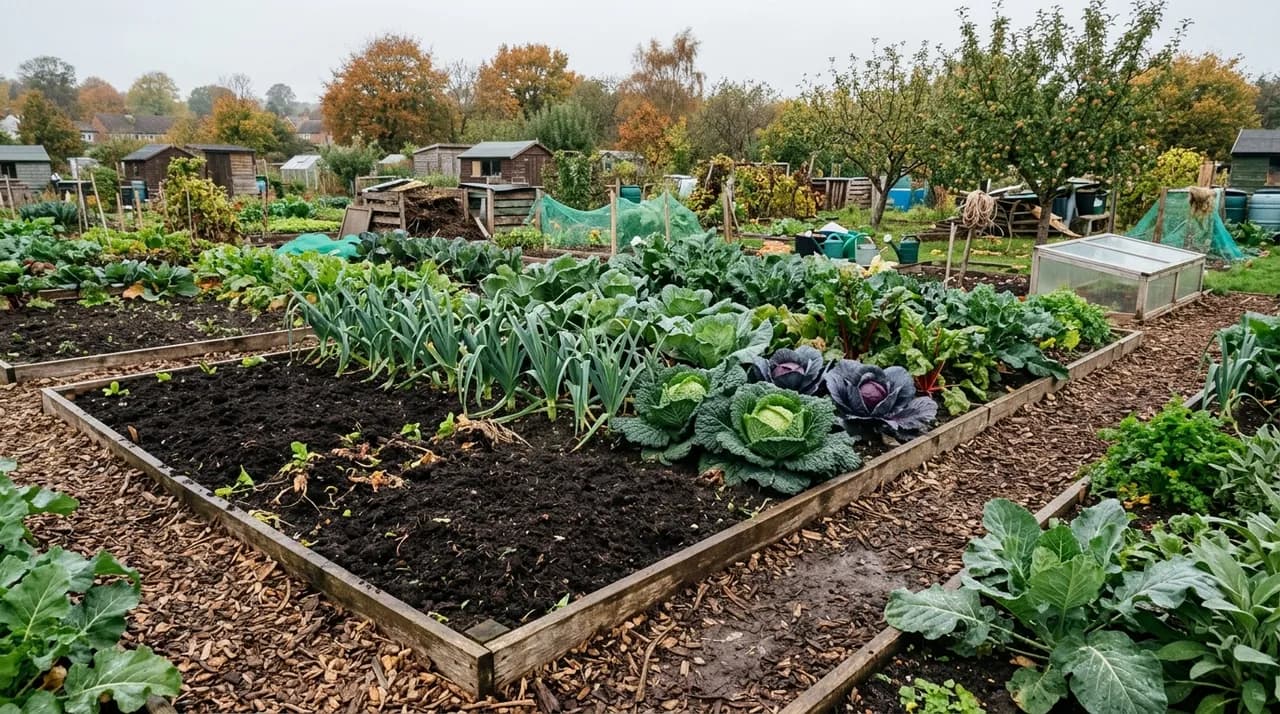
No-dig gardening has become one of the most widely adopted cultivation methods across British allotments and kitchen gardens. Rather than inverting soil horizons each winter with a spade or mechanical tiller, this approach relies on surface applications of well-rotted organic matter to build fertility, preserve delicate fungal networks, and maintain a friable seedbed. For British growers working within maritime weather patterns and persistent weed pressure, avoiding soil disturbance offers a dependable pathway to productive harvests with substantially less physical strain.
To explore how these cultivation practices align with regional planting calendars and weather across the country, visit the UK growing hub.
Why No-Dig Suits the UK's Heavy Clay Soils
A substantial proportion of UK allotment sites and domestic gardens sit on heavy clay subsoils, ranging from London clay across the southeast to dense Keuper marl in the Midlands and heavy glacial tills across northern valleys. Traditional autumn double-digging was historically recommended to break up these dense soils, but in practice, regular spade work often damages clay structure more than it helps.
When wet British autumn rain falls on newly dug clay, the open pore spaces collapse, causing the soil to form a dense, sticky slurry. As winter progresses, the physical action of footsteps and driving rain creates a compacted surface crust or a smeared hardpan beneath spade depth that resists root penetration. Come summer, inverted clay dries into rock-hard blocks that are difficult to cultivate into a fine tilth for direct seed germination.
By leaving the lower soil undisturbed, the natural aggregation of clay particles remains intact. Earthworms, micro-arthropods, and mycorrhizal fungi construct a continuous network of vertical drainage channels and macropores. When you apply a surface mulch of compost, worms gradually carry organic material down into the clay matrix, naturally improving soil porosity, moisture retention, and drainage without bringing dormant weed seeds up to the surface.
The Principles of the Compost-on-Top Method
The core mechanical principle of the no-dig method is simple: treat the soil surface as a forest floor. You feed the biological life residing within the soil from the surface downward rather than forcing organic material into anaerobic subsoil pockets with a spade.
The process functions through distinct structural layers:
- Undisturbed native soil base: The existing topsoil and subsoil remain where nature deposited them. Earthworm burrows, capillary pathways, and established soil microbes stay functional throughout the season.
- Light-excluding barrier for new conversions: When transforming an existing grassy lawn or weedy plot into new beds, an overlapping layer of thick, plain corrugated cardboard is laid directly over the vegetation. This suffocates perennial grass, dandelions, and annual weeds by depriving them of light while remaining entirely permeable to earthworms and moisture.
- Surface compost layer: A generous mulch of well-rotted garden compost, well-rotted farmyard manure, or spent mushroom compost is spread over the cardboard or bare soil surface. This layer serves as both the immediate planting medium and the ongoing food supply for soil organisms.
Over several months, soil microorganisms break down the cardboard layer entirely, while earthworms ingest the surface compost and distribute stable humus throughout the underlying clay. The surface remains crumbly, well-aerated, and remarkably easy to hand-weed because airborne weed seeds that land on loose compost can be hoed or pulled with minimal effort.
A comprehensive walkthrough of starting fresh beds from unworked ground is detailed in our practical guide to no-dig gardening for beginners.
A Realistic Seasonal Timeline for Bed Conversion in the UK
One of the most frequent misconceptions among new UK growers is that converting a garden to no-dig should occur during the frantic planting rush of spring. While spring conversions are possible if generous compost depths are used, the most effective and resource-efficient timeline in the British climate begins in autumn.
Autumn (October to November): The Ideal Preparation Window
Autumn is the optimal season for establishing no-dig beds on UK plots. The soil retains summer warmth, autumn rains provide steady moisture, and soil life remains highly active before hard winter frosts arrive:
- Cut down existing top growth of weeds or summer crop residues to ground level, leaving the root systems in place to decompose naturally.
- Lay plain, unprinted cardboard across the marked bed areas, ensuring seams overlap generously to prevent aggressive couch grass from finding light gaps.
- Spread a thorough layer of organic compost directly over the cardboard. The weight of the compost presses the cardboard firmly against the turf, preventing autumn winds from dislodging it.
- As winter rains commence, moisture softens the cardboard, allowing worms to move upward into the compost layer.
Winter (December to February): Natural Conditioning
Throughout the cold winter months, the newly laid compost sits undisturbed on the beds. Frost action naturally fractures any clods on the surface, creating a fine, loose texture without human intervention. The dense layer of compost buffers the underlying clay from the compacting force of driving winter downpours, preventing surface puddle formation.
Spring (March to May): Immediate Planting and Direct Sowing
When soil temperatures begin to climb in early spring, no-dig beds dry out and warm up several days earlier than dug ground, because the dark surface compost absorbs solar radiation efficiently and drains freely:
- You can transplant greenhouse-raised module plants directly into the surface compost without needing to wait for the clay underneath to reach working consistency.
- For fine seeds like carrots or parsnips, a shallow rake across the surface creates an ideal, lump-free tilth.
- Because no spade has turned up millions of dormant weed seeds from deep soil layers, initial spring weed flushes are minimal compared to dug soil.
To coordinate your seed sowing dates with the warming patterns of your specific region, consult the UK 12-month calendar for guidance on monthly task management.
Practical Adaptation for Allotment Scale
Managing no-dig principles across an entire standard allotment plot requires careful logistical planning, particularly regarding compost acquisition. Sourcing sufficient bulk organic matter to mulch an entire ten-rod plot at once can be costly or logistically challenging if relying solely on bagged retail products.
Experienced allotment holders manage this through systematic phased adoption:
- Focus your available compost on three or four high-priority beds during the first year, establishing clean growing zones for heavy-feeding staples.
- Maintain permanent timber or scraped-earth pathways between the beds so that wheelbarrows and boots never compress the growing soil.
- Establish robust on-site composting bins to generate your own weed-free mulch for subsequent seasons, supplementing with bulk deliveries of local green waste compost or seasoned stable manure where available.
For an extensive analysis of converting larger plot layouts under allotment rules, see our dedicated guide to the no-dig allotment methodology.
Practicing no-dig cultivation in the UK bridges traditional horticultural wisdom with modern soil ecology. By cooperating with natural biological processes, growers can transform difficult, heavy clay into spongy, resilient, and highly productive vegetable beds that improve in fertility year after year.