Key takeaways
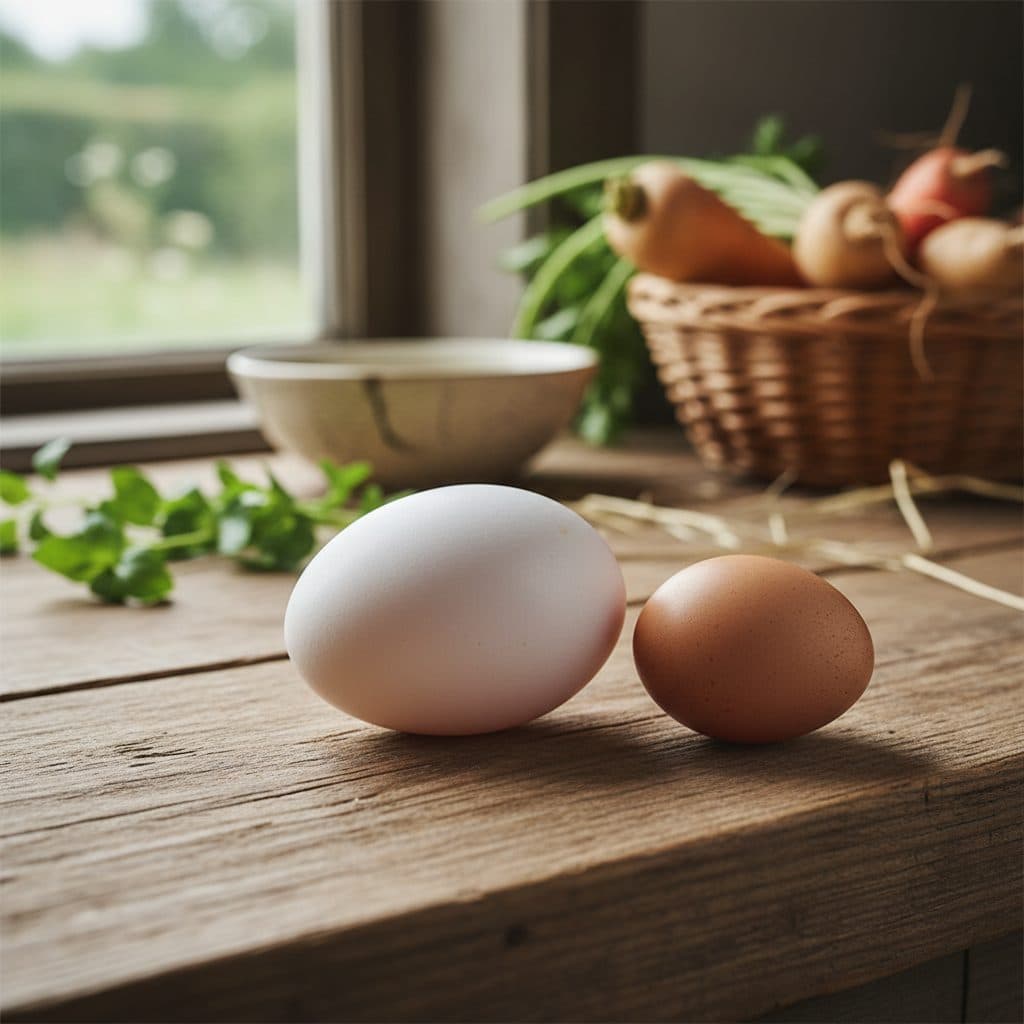
- Duck eggs are 30% larger on average, with a substantially higher yolk-to-white ratio than chicken eggs.
- Duck eggs carry more monounsaturated fat, vitamin B12, and iron, though omega-3 levels depend directly on feed.
- Understand baking differences: dense duck whites take longer to whip and add richness to cakes and custards.
- Store duck eggs for 3 to 5 weeks refrigerated (USDA guidance), the same as chicken eggs, as shells are porous.
- Recognize allergy risks: duck and hen egg proteins cross-react in most people, so duck eggs are not a safe allergy substitute.
Quick answer: Duck eggs are roughly 30% larger than chicken eggs and feature a significantly larger, richer yolk packed with higher fat, protein, and fat-soluble vitamins. While chicken eggs offer a neutral flavor for everyday frying, duck eggs excel in baking and pasta making by creating rich custards and golden doughs due to their higher yolk-to-white ratio.
For centuries, chicken eggs have been the standard culinary default across North American households. However, as more homesteaders and backyard poultry enthusiasts explore diversified flocks, duck eggs have experienced a massive surge in popularity among pastry chefs, bakers, and health-conscious eaters.
When evaluating duck eggs vs chicken eggs, the differences go far beyond shell size and color. Duck eggs possess a distinct biological and structural profile: their massive, deeply pigmented yolks contain a higher concentration of beneficial lipids and fat-soluble vitamins, while their viscous albumen (white) carries specialized proteins that behave differently when whipped or heated.
Whether you are considering adding waterfowl to your backyard flock or simply wondering whether that carton of duck eggs at the farmers' market is worth the premium price, understanding their nutritional differences, baking chemistry, and culinary handling ensures you get the most out of every shell.
Physical size and yolk-to-white proportions
The most immediate difference between duck and chicken eggs is their physical dimensions and internal proportions.
+-------------------------------------------------------------------------------+
|                       INTERNAL PROPORTIONS & DIMENSIONS                       |
|                                                                               |
|   STANDARD LARGE CHICKEN EGG:                                                 |
|   --> Total Weight: ~50 to 55 grams                                           |
|   --> Yolk Fraction: ~30% of total internal mass                              |
|   --> White Fraction: ~70% (Water-rich, lower protein density)                |
|                                                                               |
|   STANDARD DUCK EGG:                                                          |
|   --> Total Weight: ~70 to 85 grams (30% to 50% larger)                       |
|   --> Yolk Fraction: ~35% to 40% of total internal mass                       |
|   --> White Fraction: ~60% to 65% (Denser albumin protein, lower water content)|
+-------------------------------------------------------------------------------+
+-------------------+-----------------------------------+-----------------------------------+
| Metric | Large Chicken Egg (50g) | Average Duck Egg (70g) |
+-------------------+-----------------------------------+-----------------------------------+
| Average Mass | 50 to 55 grams | 70 to 85 grams |
| Yolk Color | Pale yellow to bright orange | Deep amber-orange (High lutein) |
| Shell Thickness | Moderate (Easily cracked by hand) | Thick, porcelain-like, dense bloom|
| Albumen Texture | Clear, fluid, water-rich | Dense, gelatinous, high protein |
| Refrigerated Life | 3 to 5 weeks | 3 to 5 weeks (USDA; porous shell) |
+-------------------+-----------------------------------+-----------------------------------+For practical advice on managing and housing productive laying waterfowl on your property, read our complete guide on raising ducks.
Nutritional breakdown: density and healthy fats
Because duck yolks are proportionately larger and contain less water than chicken yolks, duck eggs deliver significantly higher nutrient density on a gram-for-gram basis:
+-------------------+---------------------------+---------------------------+-----------------------------------+
| Nutrient (Per 100g| Chicken Egg               | Duck Egg                  | Nutritional Significance          |
+-------------------+---------------------------+---------------------------+-----------------------------------+
| Total Calories    | ~143 kcal                 | ~185 kcal                 | Higher energy density from yolk   |
| Protein           | 12.6 grams                | 12.8 grams                | Dense amino acid profile          |
| Total Fat         | 9.5 grams                 | 13.8 grams                | Higher monounsaturated fat        |
| Cholesterol       | 372 mg                    | 884 mg                    | ~620mg per 70g duck vs 186mg hen  |
| Vitamin B12       | 0.9 mcg (38% DV)          | 5.4 mcg (225% DV)         | Nearly 6x higher in duck eggs     |
| Vitamin A         | 160 mcg RAE               | 192 mcg RAE               | Slightly higher preformed retinol |
| Iron              | 1.8 mg (10% DV)           | 3.8 mg (21% DV)           | More than double the iron content |
+-------------------+---------------------------+---------------------------+-----------------------------------+
Duck eggs carry more monounsaturated fat than chicken eggs but slightly less polyunsaturated fat; omega-3 levels in either species depend on what the birds are fed, not on whether they are ducks or hens. Duck eggs also provide substantial amounts of choline—an essential micronutrient critical for liver function and neurological health.
To compare how diet directly influences egg quality across poultry species, explore our breakdown of what to feed chickens.
Baking with duck eggs: the pastry chef's secret
Professional bakers and pastry chefs prize duck eggs for their unique culinary chemistry:
+-------------------------------------------------------------------------------+
|                       BAKING CHEMISTRY WITH DUCK EGGS                         |
|                                                                               |
|   1. HIGHER ALBUMEN PROTEIN:                                                  |
|      --> Takes longer to whip; add cream of tartar for foam stability         |
|      --> Produces rich, moist sponge cakes and structural baked goods         |
|                                                                               |
|   2. HIGHER YOLK FAT RATIO:                                                   |
|      --> Creates velvety, rich custards, ice creams, and pasta dough          |
|                                                                               |
|   3. LOWER WATER CONTENT IN WHITES:                                           |
|      --> CAUTION: Can dry out baked goods if overcooked; reduce bake time 5%  |
+-------------------------------------------------------------------------------+
Tips for substituting duck eggs in standard recipes
Duck whites are thicker and higher in protein. They take noticeably longer to whip than hen whites and benefit from a pinch of cream of tartar; results are richer but less predictable, so test a recipe before committing to it.
- Ratio Conversion: Because duck eggs are larger, you generally need fewer eggs. A good rule of thumb is to use two duck eggs for every three chicken eggs in standard baking recipes, or measure your eggs by volume (one large duck egg equals roughly 1/3 cup).
- Watch Baking Times: Because duck egg whites contain less water, baked goods can become slightly rubbery or dry if overbaked. Reduce oven times by two to three minutes and test with a toothpick.
- Pasta Making: Using duck egg yolks creates pasta dough with a silky texture, deep golden color, and good elasticity that rolls out without tearing. Ensure cooked thoroughly.
For homesteaders managing heritage layer hens alongside ducks, explore our flock management guide on raising chickens for eggs.
Taste, texture, cooking and food safety
When cooked, duck eggs offer a richer, fuller flavor:
- Flavor and Texture: The yolk is remarkably creamy, buttery, and decadent. The egg white is firmer and less watery than a chicken egg white.
- Essential Food Safety & Cooking Rules: Cook duck eggs thoroughly — white and yolk both solid, to 71°C (160°F). Do not serve duck eggs runny (avoid runny sunny-side up or soft-boiled styles), and do not use raw duck egg in mousse, mayonnaise, uncooked pasta dough or unbaked meringue, especially for children, older adults, pregnant women or anyone immunocompromised. Duck eggs have a documented link to Salmonella outbreaks because ducks lay in wet conditions and their shells are porous. Collect eggs at least twice daily, discard cracked or heavily soiled eggs, and refrigerate promptly.
To integrate poultry flocks into perennial agroforestry and forage zones, read our instructions on food forest for chickens.
Egg allergies and cross-reactivity
Duck and hen egg-white proteins are closely related and cross-react in most people with hen egg allergy. Duck eggs are not a safe substitute for a diagnosed egg allergy; reports of tolerance are anecdotal and untested.
Allergic reactions to bird eggs are triggered by albumen proteins like ovalbumin and ovomucoid. Because these proteins share high structural homology across avian species (including chicken, duck, goose, and quail), true egg allergies almost always cross-react. Never consume duck eggs as an alternative to chicken eggs if you have an egg allergy.