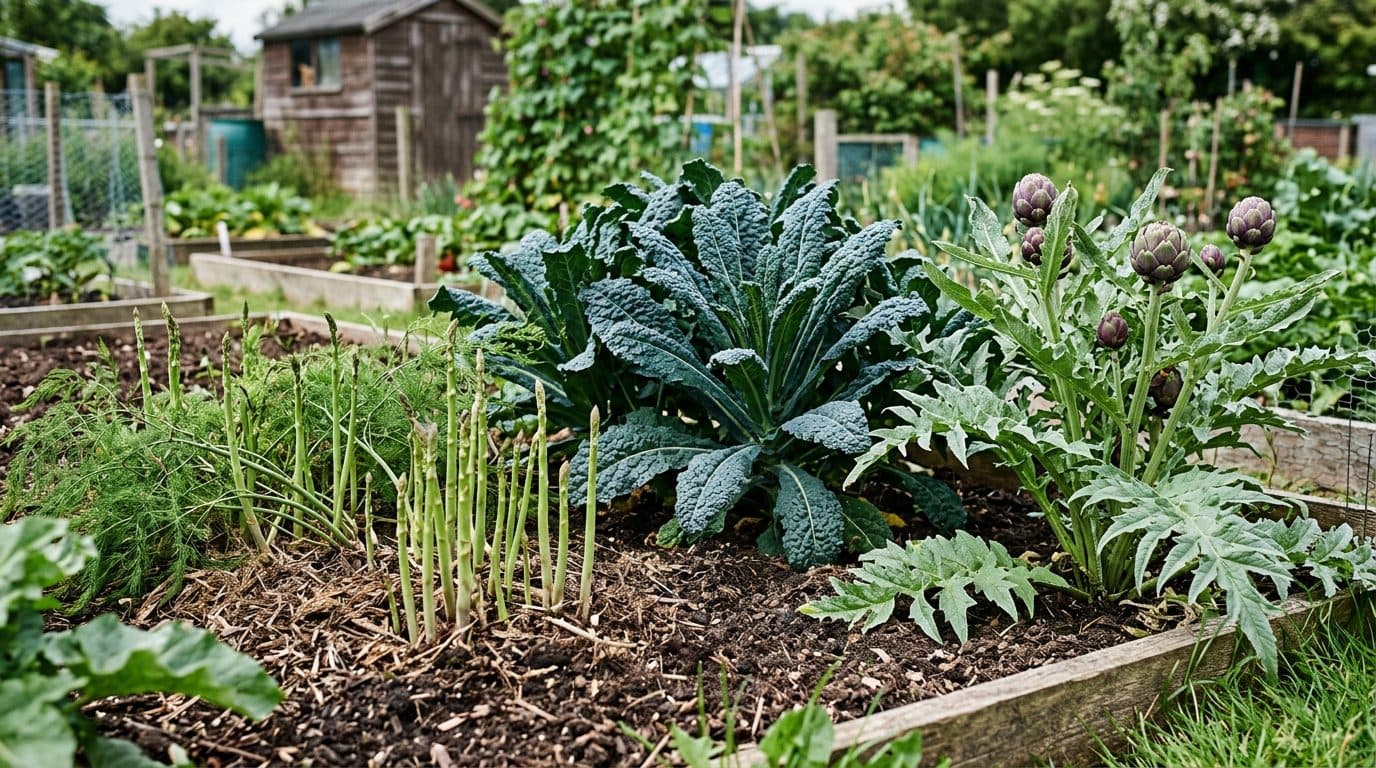
Key takeaways
- Asparagus beds can produce for 20 years or more with proper establishment and care.
- Select a male-dominant variety such as ‘Millennium’ for higher yields, as these plants do not expend energy on seed production.
- Plant one-year-old crowns 6-8 inches deep in well-drained soil, spaced 12-18 inches apart.
- A 3-year establishment period is necessary before the first significant harvest to allow root systems to develop fully.
- Asparagus thrives in USDA zones 4 through 9, requiring a cold dormancy period for optimal spear production.
- Maintain soil pH between 6.5 and 7.0, and ensure consistent moisture, especially during the first two growing seasons.
Quick answer: To grow asparagus for a 20-year harvest, plant one-year-old male-dominant crowns 6-8 inches deep in well-drained soil with a pH of 6.5-7.0 to ensure 6-8 hours of sun. Allow a 3-year establishment period before the first significant harvest.
In the fertile soils of the Midwest, a well-established asparagus bed can yield spears for two decades, providing a reliable early spring harvest for many growers. This long-term productivity makes asparagus an attractive perennial crop, especially for those in USDA zones 4 through 9 who experience adequate winter chill. Starting with one-year-old crowns is the most common and efficient method to establish a productive patch, offering a head start compared to planting from seed.
Establishing an asparagus bed is a significant investment of time and effort, but the payoff — fresh, tender spears year after year — is substantial. A single plant can produce 20-30 spears annually once mature, and a 100 square foot bed can often supply a family of four. Understanding the specific requirements for site selection, soil preparation, and planting techniques helps your asparagus patch reach its full 20-year potential, with a consistent harvest from April through June in many northern regions.
Site selection and soil preparation for a lasting bed
The longevity of an asparagus bed, which can produce for 20 years or more, hinges on its initial placement and soil quality. Asparagus plants require at least six to eight hours of direct sunlight daily to produce thick spears. A site with full sun exposure is critical, especially in northern states like Michigan or Wisconsin, where growing seasons can be shorter. Good drainage is equally important; asparagus crowns are susceptible to root rot in waterlogged conditions. If your soil is heavy clay, consider building raised beds 10-12 inches high to improve drainage and aeration, or amending with 3-4 inches of organic matter.
Optimizing soil pH and nutrients
Asparagus prefers a soil pH between 6.5 and 7.0, which is slightly acidic to neutral [1]. Before planting, conduct a soil test to determine your current pH and nutrient levels. If the pH is below 6.5, incorporate agricultural lime at a rate recommended by your soil test results, typically 5-10 pounds per 100 square feet. Amend the soil with a generous amount of organic material, such as well-rotted compost or aged manure, to a depth of 12-18 inches. This improves soil structure, water retention, and nutrient availability, setting the stage for a productive perennial bed. For more information on long-term perennial crops, see our guide on perennial edible greens by zone.
- Choose a site with 6-8 hours of daily sunlight.
- Ensure excellent soil drainage to prevent root rot.
- Aim for a soil pH between 6.5 and 7.0.
- Incorporate 3-4 inches of organic matter into the top 12-18 inches of soil.
- Avoid areas with perennial weeds like quackgrass, which are difficult to eradicate later.
Choosing and handling asparagus crowns for best yields
When establishing an asparagus patch, selecting the right crowns is paramount for a long and productive life. One-year-old crowns are generally preferred over seeds because they establish faster and begin producing spears sooner. Look for crowns that are firm, plump, and show no signs of mold or disease. Each crown should have 5-9 healthy buds, indicating strong growth potential. Purchasing from a reputable nursery ensures you receive vigorous, disease-free plants, often with specific variety information.
Male-dominant varieties for higher production
Modern asparagus varieties are often male-dominant, meaning they produce fewer or no berries. They direct more energy into spear production. That matters for a second reason: the bright red berries carried by female plants contain saponins and are mildly toxic to people and to pets, so they should never be eaten and are worth clearing from beds used by children or dogs. Male plants can yield 25% to 50% more spears than traditional varieties that produce both male and female plants [1]. The Rutgers ‘Jersey’ series — ‘Jersey Knight’, ‘Jersey Giant’, ‘Jersey Supreme’ — led US catalogs for years and is what most older guides still name, but that seed line has been discontinued and the crowns are increasingly hard to source. ‘Millennium’ is the male-dominant variety most US nurseries now stock, bred for heavy spear production, cold hardiness and good tolerance of the rust and Fusarium problems that trouble older cultivars. For a broader overview of starting asparagus, consult our general guide on how to grow asparagus.
- Select one-year-old crowns for quicker establishment.
- Ensure crowns are firm, plump, and free of mold or damage.
- Look for crowns with 5-9 healthy, visible buds.
- Choose a male-dominant variety such as ‘Millennium’ for increased yields.
- Purchase crowns from a reputable local nursery or supplier.
Planting the crowns for longevity and yield
Proper planting technique is fundamental to establishing an asparagus bed that produces for two decades. Asparagus crowns should be planted in early spring, as soon as the soil can be worked and is no longer frozen, typically March or April in USDA zones 5-7. Dig a trench 8-12 inches deep and about 12 inches wide, so that once you build a low mound in the bottom and set the crown on it, the top of the crown still sits 6-8 inches below the original soil line. Create a small mound of soil at the bottom of the trench every 12-18 inches, which will serve as a base for each crown. This spacing allows ample room for root development and air circulation, reducing disease risk.
The trench method: depth and spacing
Place each crown on top of a mound, spreading its roots evenly over the soil. The top of the crown should be 6-8 inches below the original soil line [1]. Cover the crowns with 2-3 inches of soil, then water thoroughly. As the asparagus shoots grow, gradually fill the trench with more soil, being careful not to bury the emerging spears. Continue this process until the trench is completely filled to the original soil level. This deep planting encourages a strong root system, protecting the crowns from temperature fluctuations and allowing for a deeper, longer-lived bed. A 50-foot row would require approximately 35-50 crowns, depending on spacing.
- Plant crowns in early spring when soil is workable.
- Dig trenches 8-12 inches deep and 12 inches wide.
- Space individual crowns 12-18 inches apart within the trench.
- Spread roots over a soil mound at the bottom of the trench.
- Gradually fill the trench as shoots emerge, covering crowns with 6-8 inches of soil.
First years: establishment and initial harvest
The first two to three years after planting asparagus crowns are critical for establishing a robust, long-lived bed. During the first growing season, allow all spears to grow into ferns. These ferns are essential for photosynthesis, which stores energy in the crown for future spear production. Do not harvest any spears in the first year. Consistent watering is vital, especially during dry spells; asparagus needs about one inch of water per week, either from rain or irrigation. Keep the bed free of weeds, as young asparagus plants cannot compete effectively for nutrients and moisture.
Waiting for the first harvest
In the second year, you may harvest very lightly for 1-2 weeks, taking only the thickest spears. Again, allow most spears to fern out to continue building the crown’s energy reserves. By the third year the bed can carry a four-week cutting, and from the fourth year on you can take the full 6-8 week harvest. Stepping the harvest up in stages rather than going straight to a full season is what keeps a bed productive for decades. A mature asparagus plant can yield 20-30 spears annually [1]. In regions like the Pacific Northwest, where growing conditions are often ideal, this timeline can be quite consistent. After the harvest period, allow all remaining spears to develop into ferns, which will grow 4-6 feet tall before dying back in the fall. This fern growth is essential for the next year’s harvest.
- Do not harvest any spears in the first growing season.
- Harvest lightly for 1-2 weeks in the second year.
- Harvest about four weeks in the third year, then a full 6-8 weeks from the fourth year on.
- Ensure consistent watering, about one inch per week.
- Keep the asparagus bed free of weeds.
Ongoing care and pest management for sustained production
Once established, an asparagus bed requires consistent annual care to maintain its 20-year productivity. In late fall, after the ferns have turned yellow or brown, cut them back to 2-3 inches above the ground. This helps prevent overwintering diseases and pests. Apply a 2-4 inch layer of organic mulch, such as straw or shredded leaves, over the bed. This mulch suppresses weeds, conserves soil moisture, and moderates soil temperature, especially beneficial in colder USDA zones like 4 and 5 where winter protection is important.
Fertilization, pests, and disease
Fertilize the bed in early spring before spear emergence and again after the harvest period. Use a balanced fertilizer, such as a 5-10-10 or 10-10-10, at a rate of 1-2 pounds per 100 square feet, or a generous layer of compost. Asparagus beetles are the most common pest; hand-picking them off plants can be effective for small beds. For larger infestations, consult your local extension office for approved organic pest control options. Fusarium wilt is a significant disease; choosing resistant varieties and ensuring good drainage helps prevent it. Keep fresh, uncomposted manure and concentrated ammonium fertilizers off the crowns themselves — ammonia released as they break down can injure crown tissue [2].
- Cut back dead ferns to 2-3 inches in late fall.
- Apply a 2-4 inch layer of organic mulch annually.
- Fertilize in early spring and after harvest with a balanced fertilizer.
- Monitor for asparagus beetles and hand-pick as needed.
- Ensure good drainage and choose disease-resistant varieties to prevent Fusarium wilt.
Asparagus: Crowns vs. Seeds
Feature | Crowns | Seeds |
|---|---|---|
Time to First Harvest | Year 2 (lightly), year 3 (full) | 3-4 years |
Establishment Rate | Faster, more reliable | Slower, less predictable |
Initial Cost | Higher per plant | Lower per plant |
Variety Selection | Often male-dominant, disease-resistant options | Broader, but less control over sex |
Effort | Less initial care | More initial care (germination, thinning) |
Long-Term Yield: A well-maintained asparagus bed can produce spears for 20 years or more, providing a consistent spring harvest.
Spear Production: Once mature, a single asparagus plant can yield 20-30 spears annually, making it a highly productive perennial vegetable.
Frequently asked questions
When can I start harvesting asparagus after planting crowns?
You should not harvest any spears in the first year after planting crowns. In the second year, you may take a very light harvest for 1-2 weeks. In the third year you can cut for about four weeks, and from the fourth year on take the full 6-8 week harvest, which leaves the crowns with enough energy in reserve.
How deep should I plant asparagus crowns?
Asparagus crowns should be planted in a trench 8-12 inches deep. After placing the crown on a low soil mound, the top of the crown should end up covered by 6-8 inches of soil once the trench is fully filled, which happens gradually as shoots emerge.
What are the best asparagus varieties for high yields?
‘Millennium’ is the male-dominant variety most widely available in US nurseries today and is generally recommended for higher yields; the Rutgers ‘Jersey’ series that older guides name has been discontinued and is hard to source. These varieties set little or no seed, directing more energy into spear production, often resulting in 25-50% more spears.
How much space does an asparagus bed need?
Asparagus crowns should be spaced 12-18 inches apart within the row, with rows typically 3-5 feet apart. A bed of 100 square feet can often provide enough asparagus for a family of four, yielding 20-30 spears per mature plant annually.
Why are my asparagus spears thin?
Thin asparagus spears can be a sign of several issues, including young plants that are not yet mature, overcrowding, insufficient nutrients, or drought stress. Ensure proper spacing of 12-18 inches, adequate fertilization, and consistent watering, especially during dry periods.
How long will an asparagus bed produce?
With proper site selection, soil preparation, and ongoing care, an asparagus bed can remain productive for 20 years or more. Some well-maintained beds have even been known to produce for 30 years, offering decades of spring harvests.
References
- Growing Asparagus in Home Gardens (2018). Growing Asparagus in Home Gardens.
- Ammonia Gas Injury to Asparagus Crowns (1994). Ammonia Gas Injury to Asparagus Crowns.
- Response of Asparagus Crowns to Ethephon and Gibberellic Acid1 (1976). Response of Asparagus Crowns to Ethephon and Gibberellic Acid1.
- Aerial Crowns in Asparagus officinalis L.1 (1973). Aerial Crowns in Asparagus officinalis L.1.