Key takeaways
- Ericaceous compost is an acidic, lime-free growing medium formulated with a low pH between 4.5 and 5.5.
- Acid-loving species like blueberries, rhododendrons, azaleas, camellias, and heathers require low pH to absorb iron and essential micronutrients.
- Standard multi-purpose compost typically carries a pH around 5.5 to 6.5; over time in non-ericaceous media, calcifuges develop iron chlorosis (yellowing foliage).
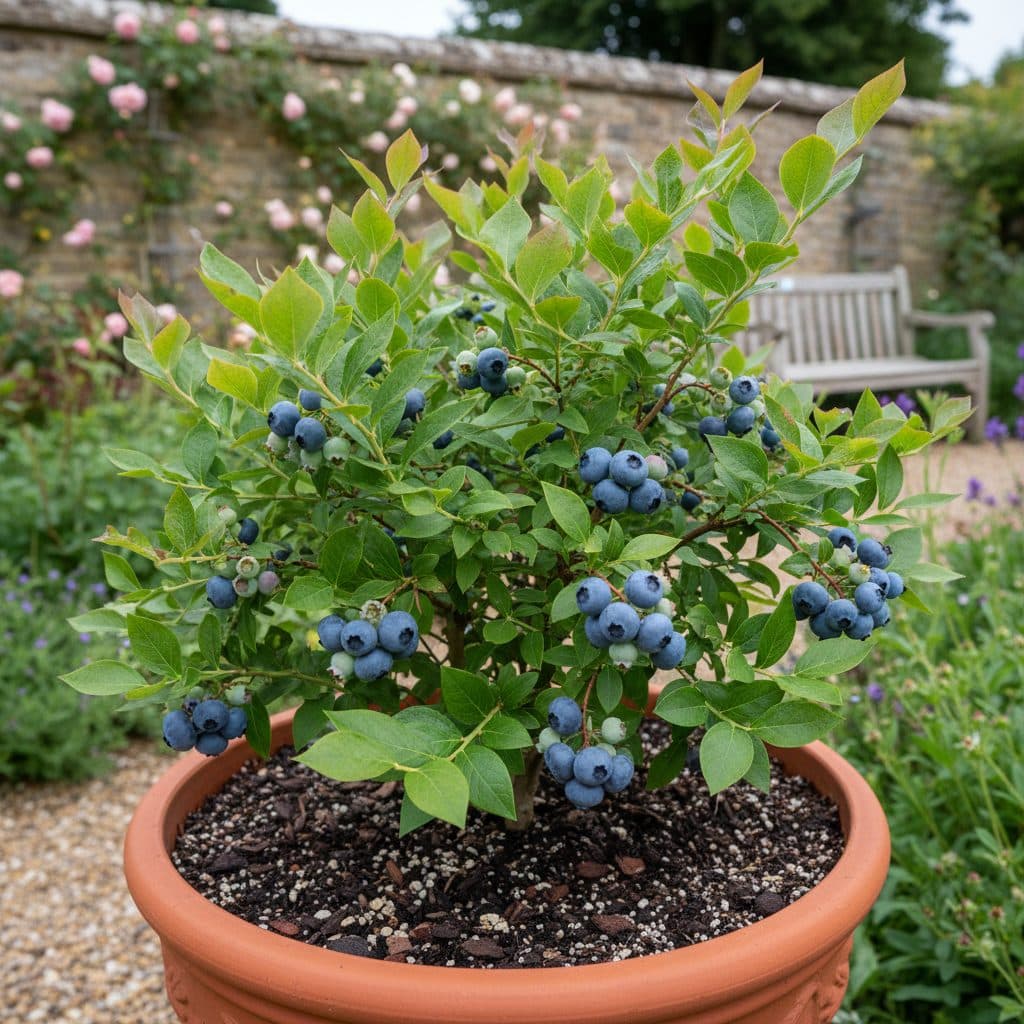
- Growing blueberries in dedicated containers filled with ericaceous compost is the most dependable method for gardens with alkaline native soil.
- In hard-water areas across the UK, irrigate potted acid-loving plants with harvested rainwater to prevent dissolved calcium carbonates from raising the soil pH.
- Modern peat-free ericaceous mixes combine composted pine bark, bracken, aged sawdust, and pine needle leaf mould with horticultural sulphur.
Quick answer: Ericaceous compost is a specially formulated, lime-free growing medium with an acidic pH between 4.5 and 5.5. It is necessary for growing calcifuge (lime-hating) plants such as blueberries, cranberries, rhododendrons, and camellias, which cannot take up iron from standard neutral or alkaline soils.
Most garden plants thrive in neutral to slightly acidic soils with a pH between 6.0 and 7.0. However, a distinct botanical family known as the Ericaceae (along with select other acid-loving species) evolved in acidic moorlands, bogs, and coniferous forest soils where calcium carbonate levels are near zero.
If you attempt to grow highbush blueberries or showy camellias in standard garden soil or ordinary potting mix across much of the UK (especially in chalky regions like southern England and the East Midlands), your plants will quickly stall. The foliage turns pale yellow between the leaf veins, flowering ceases, and the root system slowly declines.
Using ericaceous compost correctly allows you to grow healthy blueberries and acid-loving ornamentals in dedicated garden borders or patio containers.
+-------------------------------------------------------------+
|               SOIL PH SPECTRUM & PLANT TOLERANCE            |
|                                                             |
|   pH 4.0 - 5.0    pH 5.0 - 5.5       pH 6.0 - 7.0    pH 7.5+|
|   [ Very Acidic ] [ Acidic / Lime-Free ] [ Neutral ]  [Alkaline]|
|   Cranberries,    Blueberries,       Vegetables,    Brassicas|
|   Wild Heathers   Camellias, Azaleas Apples, Lawn   Chalk Soil|
|                   ==================                          |
|                 ERICACEOUS COMPOST ZONE                      |
+-------------------------------------------------------------+
What is ericaceous compost and why is it acidic?
The term ericaceous originates from Erica, the botanical genus of heathers. Ericaceous compost refers to any growing medium formulated without added agricultural lime (calcium carbonate), resulting in an acidic pH between 4.5 and 5.5.
In alkaline or neutral soils (pH 6.5 and higher), soil chemistry changes nutrient availability:
- Iron and manganese lockup: As pH rises above about 6.5, and in the presence of bicarbonate from hard water, iron and manganese precipitate into insoluble mineral forms that plant roots cannot absorb.
- Interveinal chlorosis: Without sufficient iron, plants cannot synthesize chlorophyll. The newest leaves turn bleached yellow or cream-coloured while the leaf veins remain green.
- Root structure adaptation: Ericaceous plants produce fine, hairless feeder roots that rely on specific ericoid mycorrhizal fungi. These beneficial fungi only function efficiently in low-pH, organic-rich environments.
+-------------------------------------------------------------+
|             NUTRIENT UPTAKE IN ACID-LOVING PLANTS           |
|                                                             |
|   SOIL PH         IRON MOBILITY          FOLIAGE HEALTH     |
|   -------         -------------          --------------     |
|   4.5 to 5.5      Fully Soluble (Active) Deep Green, Glossy |
|   6.0 to 6.5      Partially Restricted   Mild Stunting      |
|   7.0 and above   Locked / Insoluble     Severe Chlorosis   |
+-------------------------------------------------------------+
Which plants need ericaceous compost?
Before planting fruit bushes or decorative shrubs, verify whether they fall into the acid-loving (calcifuge) category.
Edible fruit crops
- Highbush Blueberries (Vaccinium corymbosum): Blueberries are strict acid-lovers requiring a soil pH between 4.5 and 5.5. In neutral garden soil, they become chlorotic, crop poorly and decline over several seasons.
- Cranberries (Vaccinium macrocarpon): Low-growing, trailing plants that demand moist, acidic peat or bark beds with a pH around 4.0 to 5.0.
- Lingonberries (Vaccinium vitis-idaea): Compact evergreen shrubs bearing tart red berries, highly tolerant of cold northern UK winters when grown in acidic compost.
Ornamental shrubs and trees
- Rhododendrons and Azaleas (Rhododendron spp.): Famous for spectacular spring blooms; highly sensitive to any lime in the soil or irrigation water.
- Camellias (Camellia japonica and C. sasanqua): Glossy-leaved evergreen shrubs requiring acidic root zones for bud formation and glossy winter foliage.
- Heathers (Calluna vulgaris, Erica cinerea, Erica tetralix): Moorland species that need acidic conditions. The winter-flowering Erica carnea and E. × darleyensis tolerate neutral to slightly alkaline soil and do not require ericaceous compost.
- Pieris (Pieris japonica): Grown for its red spring new growth and bell-shaped white flowers.
+-------------------------------------------------------------+
|              POPULAR ERICACEOUS SPECIES & PH TARGETS        |
|                                                             |
|   PLANT SPECIES           IDEAL PH RANGE    GROWTH HABIT    |
|   -------------           --------------    ------------    |
|   Highbush Blueberry      4.5 to 5.5        Deciduous Bush  |
|   Camellia Japonica       5.0 to 5.5        Evergreen Shrub |
|   Hardy Rhododendron      4.5 to 5.5        Woody Shrub     |
|   Lingonberry             4.5 to 5.2        Dwarf Evergreen |
|   Japanese Pieris         4.8 to 5.5        Decorative Shrub|
+-------------------------------------------------------------+
How do you grow blueberries in ericaceous containers?
For most UK gardeners, growing blueberries in large pots filled with fresh ericaceous compost is far more reliable than attempting to acidify an entire garden bed of alkaline clay or chalk. Highbush blueberries crop substantially better when you plant two or more different cultivars together for cross-pollination.
- Choose an adequate pot: Select a container with a minimum diameter and depth of 40 to 50 cm (30 to 45 litres volume). Ensure generous drainage holes at the base.
- Potting medium: Fill the container with fresh, peat-free ericaceous compost. No crocks. Use a free-draining mix with 10% grit and keep the drainage holes clear to prevent root rot during wet winter months. Learn pot water dynamics in our guide to self-watering containers for herbs and vegetables.
- Planting depth: Set the blueberry root ball at the exact depth it was in its nursery pot. Firm the compost gently and water thoroughly with rainwater.
- Top-dress with bark: Apply a 3 cm layer of composted pine bark mulch over the surface. Pine bark retains moisture, cools the root system in summer, and naturally replenishes organic acidity as it breaks down.
- Feed with ericaceous fertiliser: Apply an organic, liquid ericaceous fertiliser or seaweed feed formulated for acid-lovers from April to August. Avoid tomato feeds or general fertilisers that contain calcium or high phosphorus.
- Repotting schedule: Blueberries establish vigorous root balls. Refresh the top 5 cm of compost every spring and pot on into a container one size larger every two to three years.
+-------------------------------------------------------------+
|             POTTED BLUEBERRY CONTAINER STRUCTURE            |
|                                                             |
|   [Top Mulch]    3 cm Composted Pine Bark Layer             |
|   [Root Zone]    Peat-Free Ericaceous Compost + 10% Grit    |
|   [Drainage]     No Crocks; Keep Base Drainage Holes Clear  |
|   [Watering]     Rainwater Only (avoid tap water)           |
+-------------------------------------------------------------+
Why should you water with rainwater instead of tap water?
In many regions of the UK, mains tap water is hard, meaning it contains high levels of dissolved calcium bicarbonate and magnesium salts extracted from underground limestone aquifers.
- The pH creep: Repeated watering with hard tap water raises the pH of the compost over a season or two, which is why rainwater is preferred.
- The rainwater solution: Always collect natural rainwater in garden water butts connected to greenhouse, shed, or house downpipes. Rainwater is naturally soft and slightly acidic (pH 5.5 to 6.0), preserving your compost's acidity indefinitely.
- Emergency watering: If your water butt runs dry during a severe summer drought, tap water can be used temporarily to keep plants from wilting. Correct the rise in pH the following autumn by top-dressing with a dusting of horticultural elemental sulphur.
Monitor pot hydration between waterings using physical checks detailed in our guide on soil moisture finger testing and meters.
Can you make DIY ericaceous compost at home?
With the UK horticultural industry transitioning away from mined peat moss, making homemade acidic compost blends or buying sustainable peat-free mixes has become standard practice.
Sustainable peat-free commercial ingredients
Modern commercial peat-free ericaceous compost relies on renewable forestry by-products:
- Composted pine bark and aged wood fibre
- Composted bracken (Pteridium aquilinum)
- Pine needle leaf mould
- Elemental agricultural sulphur (to maintain stable target pH)
Homemade DIY acidic potting recipe
You can blend your own ericaceous medium by combining naturally acidic organic amendments. Test the finished blend first. Add elemental sulphur only if the pH is above 5.5, at roughly 5 g per 10 litres, and retest after a few weeks:
+-------------------------------------------------------------+
|              HOMEMADE ERICACEOUS MIX RECIPE (BY VOLUME)     |
|                                                             |
|   - 40% Well-rotted pine needle leaf mould or leaf litter   |
|   - 30% Composted fine pine bark (0-10 mm grade)           |
|   - 20% Fully composted home compost (lime-free bin)        |
|   - 10% Horticultural sharp sand or washed grit             |
|   - Test pH: add ~5g sulphur per 10L only if pH > 5.5       |
+-------------------------------------------------------------+
To adjust native garden beds or troubleshoot pH imbalances naturally, see the guides on how to lower soil pH for acid-loving plants and techniques for rebalancing problem compost piles.
Supplying ericaceous compost and watering with clean rainwater keeps foliage green and maintains fruit production over time.