Key takeaways
- Tillandsia are epiphytes, absorbing water and nutrients through specialized leaves, not roots.
- Provide bright, indirect light for 10 to 12 hours daily, avoiding direct sun exposure that can burn leaves.
- Water air plants by soaking them in filtered water for 20 to 30 minutes — two to three times a week for green, smooth mesic species, and about once a week for silvery, fuzzy xeric ones.
- Maintain indoor humidity between 50% and 70% to prevent desiccation, especially in dry US climates.
- Ensure good air circulation, using a small fan for one to two hours daily if necessary, to prevent rot.
- Fertilize sparingly with a bromeliad-specific fertilizer at one-quarter strength once per month during active growth.
Quick answer: To care for air plants (Tillandsia) indoors, provide bright, indirect light for 10-12 hours daily and soak them in filtered water for 20-30 minutes — two to three times a week for green, smooth mesic species, and about once a week for silvery, fuzzy xeric ones — then let them dry completely within four hours. Maintain indoor humidity between 50-70% and ensure good air circulation to prevent rot.
For many US homes, especially in urban apartments across states like New York or California, space for traditional potted plants can be limited. Air plants, or Tillandsia, offer a compelling solution, thriving without soil and requiring minimal footprint. These unique epiphytes, native to environments ranging from the humid southeastern United States to dry scrub and high mountain forest through Mexico and South America, absorb all their water and nutrients through specialized leaves rather than roots, making them adaptable indoor residents [4].
Successfully growing Tillandsia indoors involves understanding their specific needs for light, water, air circulation, and temperature, which often differ significantly from common houseplants. Practical care routines help these plants flourish as attractive display pieces, much like the houseplants that have been a fixture of American homes for generations [1].
Understanding Tillandsia: the basics of air plant care
Tillandsia species are part of the Bromeliaceae family, with over 600 identified varieties, many of which are native to the Americas, including parts of the southern US like Florida and Louisiana where they cling to trees [4]. These plants are epiphytes, meaning they grow on other plants or objects without drawing nourishment from them. Their roots primarily serve as anchors, and their specialized trichomes (tiny, silvery scales on their leaves) absorb moisture and nutrients from the air. This unique physiology means they do not require soil, making them ideal for creative indoor displays.
When selecting air plants, consider their natural habitat. Xeric Tillandsia, often silvery and fuzzy, come from dry, sunny regions and tolerate less frequent watering, perhaps once every five to seven days. Mesic Tillandsia, typically greener and smoother, originate from humid, shady environments and need more frequent hydration, often two to three times per week. Understanding these distinctions is essential for proper care, as a plant from a desert-like region will struggle with the same watering schedule as one from a rainforest-like climate.
Key characteristics of Tillandsia
- Over 600 known species, with diverse forms and sizes, some reaching 12 inches across.
- Epiphytic growth habit, requiring no soil for survival.
- Trichomes on leaves absorb water and nutrients from the air.
- Roots serve primarily for attachment to surfaces.
- Each Tillandsia flowers once, then slowly declines over the following months while producing offsets (pups) around its base — leave the pups in place or separate them and the clump carries on indefinitely.
Providing adequate light for air plants
Light is a critical factor for the health of your Tillandsia, influencing their growth, color, and ability to bloom. Most air plants thrive in bright, indirect light for 10 to 12 hours daily. A north or east-facing window in a US home, offering filtered morning sun, is often ideal. South or west-facing windows can provide too much intense light, especially during summer months in states like Arizona or Texas, leading to scorched leaves if plants are not adequately shaded or placed several feet away from the glass.
If natural light is insufficient, particularly during shorter winter days in northern states like Minnesota or during prolonged cloudy periods, supplemental artificial lighting can be beneficial. Full-spectrum LED grow lights, positioned 12 to 18 inches above the plants, can provide the necessary intensity without excessive heat. Aim for a light intensity between 1,000 and 2,000 foot-candles for optimal growth. Using a 3-in-1 Soil pH, Moisture & Light Meter can help measure light levels, ensuring your plants receive enough light without being overexposed. For dedicated indoor growers, a Reflective Indoor Grow Tent can help maximize light efficiency and maintain stable environmental conditions.
Signs of improper light conditions
- Too much light: Leaves appear bleached, yellow, or have brown, crispy tips.
- Too little light: Plants stretch, lose color, or fail to bloom.
- Optimal light: Leaves maintain their natural color, and the plant exhibits steady growth.
- Light duration: Aim for 10 to 12 hours of light per day for most species.
Watering and humidity: essential for air plant survival
Watering air plants correctly is the most critical aspect of their care. Since they do not grow in soil, traditional watering methods do not apply. The most effective method is soaking: submerge your Tillandsia in a bowl of filtered or rainwater for 20 to 30 minutes, two to three times per week. After soaking, gently shake off excess water and allow the plants to dry completely within four hours to prevent rot, especially in the central cup. In drier climates, such as those found in USDA zones 7 and 8 in the Mountain West, more frequent soaking or misting may be necessary.
Humidity also plays a significant role, particularly for mesic species. Air plants thrive in environments with 50% to 70% relative humidity. In many US homes, especially during winter when heating systems dry out the air, humidity levels can drop to 30% or lower. To combat this, consider placing plants near a humidifier or grouping them with other plants to create a microclimate. Misting can provide a temporary boost, but it is not a substitute for regular soaking or adequate ambient humidity. Consistent watering helps avoid desiccation, a common issue for indoor air plants.
Effective watering methods
- Soaking: Submerge plants in water for 20 to 30 minutes, 2-3 times weekly.
- Misting: Use a fine mist sprayer between soakings, especially in dry environments.
- Rainwater: Ideal water source, free of chlorine and minerals.
- Drying: Ensure plants dry completely within four hours after watering to prevent rot.
Air circulation and temperature: maintaining a healthy environment
Good air circulation is just as vital as proper watering for Tillandsia. Stagnant air, especially after watering, can lead to fungal issues and rot, particularly in the plant’s base. After soaking, ensure your air plants are placed in an area with good airflow to dry completely within four hours. In enclosed spaces or humid climates, like those found in the southeastern US, using a small fan on a low setting for one to two hours daily can significantly improve air movement and prevent problems. This practice supports successful indoor plant cultivation, as noted in general guides for foliage plants [2].
Temperature requirements for most Tillandsia are relatively broad, making them well-suited for typical indoor conditions. They generally prefer temperatures between 60°F and 80°F. While they can tolerate brief periods outside this range, consistent exposure to temperatures below 45°F or above 90°F can stress the plants. Avoid placing them near drafty windows in winter or directly above heating vents, which can cause rapid drying. Maintaining a stable indoor temperature within this range, common in many US homes, will contribute to their overall vitality and growth.
Tips for improving air circulation
- Place plants in open areas, away from walls or enclosed shelves.
- Use a small oscillating fan for 1-2 hours daily, set on a low speed.
- Avoid overcrowding plants; ensure there is space around each specimen.
- Ensure plants are completely dry within four hours after watering.
Fertilization and pest management for air plants
Air plants are not heavy feeders, and excessive fertilization can harm them. Use a water-soluble bromeliad-specific fertilizer, which is typically low in copper, diluted to one-quarter strength. Apply this solution once per month during their active growing season (typically spring and summer) by adding it to their soaking water. During fall and winter, when growth slows, reduce fertilization to once every two months or cease altogether. Over-fertilization can lead to nutrient burn, manifesting as brown tips on leaves, a common issue with many indoor plants if not managed carefully.
Pests are generally not a major issue for Tillandsia, but they can occasionally be affected by mealybugs or scale, especially if introduced from other infested houseplants. Inspect your plants regularly, perhaps once every two weeks, for any signs of pests. If you detect an infestation, isolate the affected plant immediately. For minor issues, a cotton swab dipped in rubbing alcohol can effectively remove individual pests. For more widespread problems, dunk the plant in room-temperature water with a little insecticidal soap, then rinse it in clean water and stand it upside down to dry completely. Avoid neem and other oil-based sprays on Tillandsia — an oil film coats the trichomes the plant relies on to take up water. Always test any treatment on a small area first to ensure it does not harm the plant.
Common air plant pests and solutions
- Mealybugs: White, cottony masses; remove with alcohol-dipped cotton swab.
- Scale: Small, brown bumps; scrape off gently or dab with rubbing alcohol on a cotton swab.
- Fungus Gnats: Indicate overly wet conditions; improve air circulation and reduce watering frequency.
- Prevention: Inspect new plants before introducing them to your collection.
Creative ways to display your air plants indoors
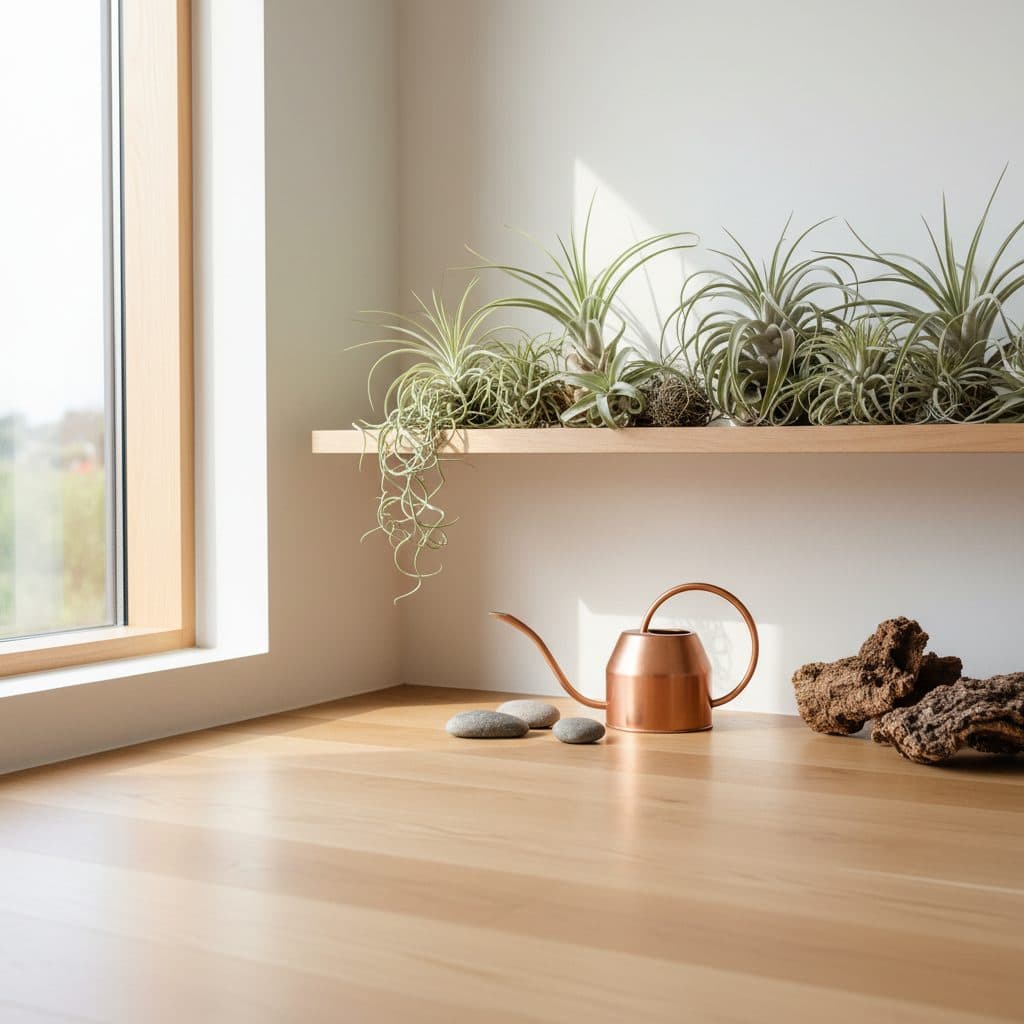
One of the most appealing aspects of Tillandsia is their versatility in display, offering numerous creative options for US homes and apartments. Since they do not require soil, air plants can be mounted on almost any non-toxic surface. Driftwood, cork bark, seashells, and decorative stones are popular choices. Use a plant-safe adhesive, such as E6000 or a clear silicone-based glue, to attach the plant’s base firmly to the chosen object. Avoid using copper wire or containers, as copper is toxic to air plants and can cause damage over time.
Consider creating a vertical garden on a wall or arranging several plants in a glass terrarium (without a lid to ensure adequate airflow). Hanging displays using macramé hangers or wire cages can add a unique visual element to a room, especially in spaces with high ceilings. When arranging, ensure each plant still receives sufficient light and air circulation, maintaining a minimum of 2 inches of space around each specimen for optimal health.
Popular air plant display ideas
- Driftwood mounts: Attach plants to natural wood pieces using plant-safe glue.
- Terrariums: Create open-top glass displays with decorative elements like pebbles or moss.
- Hanging displays: Use macramé, wire, or string to suspend plants.
- Magnetic mounts: Attach small plants to metallic surfaces like refrigerators.
- Shells and stones: Place smaller Tillandsia into decorative shells or rocks.
Humidity target: Maintain indoor humidity between 50% and 70% to prevent Tillandsia from drying out, especially in arid US regions.
Light duration: Provide 10 to 12 hours of bright, indirect light daily for optimal Tillandsia growth and blooming.
Frequently asked questions
How often should I water my air plant?
Most Tillandsia benefit from soaking in filtered water for 20 to 30 minutes, two to three times per week. After soaking, ensure the plant dries completely within four hours to prevent rot.
What kind of light do air plants need indoors?
Air plants require bright, indirect light for 10 to 12 hours daily. An east or north-facing window is often ideal, or use a full-spectrum LED grow light positioned 12 to 18 inches away from the plants.
Can I use tap water to water my Tillandsia?
While some tap water is acceptable, filtered water or rainwater is preferred. Tap water, especially in regions with high chlorine or mineral content, can leave residues that block the plant’s trichomes over time, reducing its ability to absorb moisture.
Why are my air plant’s leaves turning brown?
Browning leaves can indicate several issues. Brown, crispy tips often suggest insufficient watering or low humidity, especially if indoor humidity is consistently below 50%. Bleached or yellowing leaves can mean too much direct sunlight, while a mushy brown base usually points to rot from overwatering or poor air circulation after watering.
Do air plants need fertilizer?
Air plants are light feeders. Use a bromeliad-specific fertilizer diluted to one-quarter strength, applied once per month during the active growing season (spring and summer) by adding it to their soaking water. Avoid over-fertilization, which can harm the plant.
How do I display air plants without soil?
Air plants can be displayed creatively on non-toxic materials like driftwood, cork bark, or seashells, using a plant-safe adhesive. Ensure each plant has good air circulation and receives adequate light, maintaining at least 2 inches of space around it.
References
- Some thoughts on growing plants indoors (1962). Some thoughts on growing plants indoors.
- Review: <i>Growing Indoors: A Guide to Flowering and Foliage Plants</i>, by Susan Heller Conder and Edwin F. Steffek (1980). Review: <i>Growing Indoors: A Guide to Flowering and Foliage Plants</i>, by Susan Heller Conder and Edwin F. Steffek.
- GROWING ARTEFACTS, DISPLAYING RELATIONSHIPS (2013). GROWING ARTEFACTS, DISPLAYING RELATIONSHIPS.
- USDA Natural Resources Conservation Service (2024). USDA Natural Resources Conservation Service.