Key takeaways
- Sow bitter gourd during two primary Indian seasons: the summer zaid season (February to March) and the monsoon kharif season (June to July).
- Soak seeds in clean lukewarm water for 12 to 24 hours or gently nick the hard seed coat to accelerate germination.
- Choose grow bags at least 35 cm to 45 cm across and around 40 cm deep filled with a well-draining mix of red soil, cocopeat, and vermicompost.
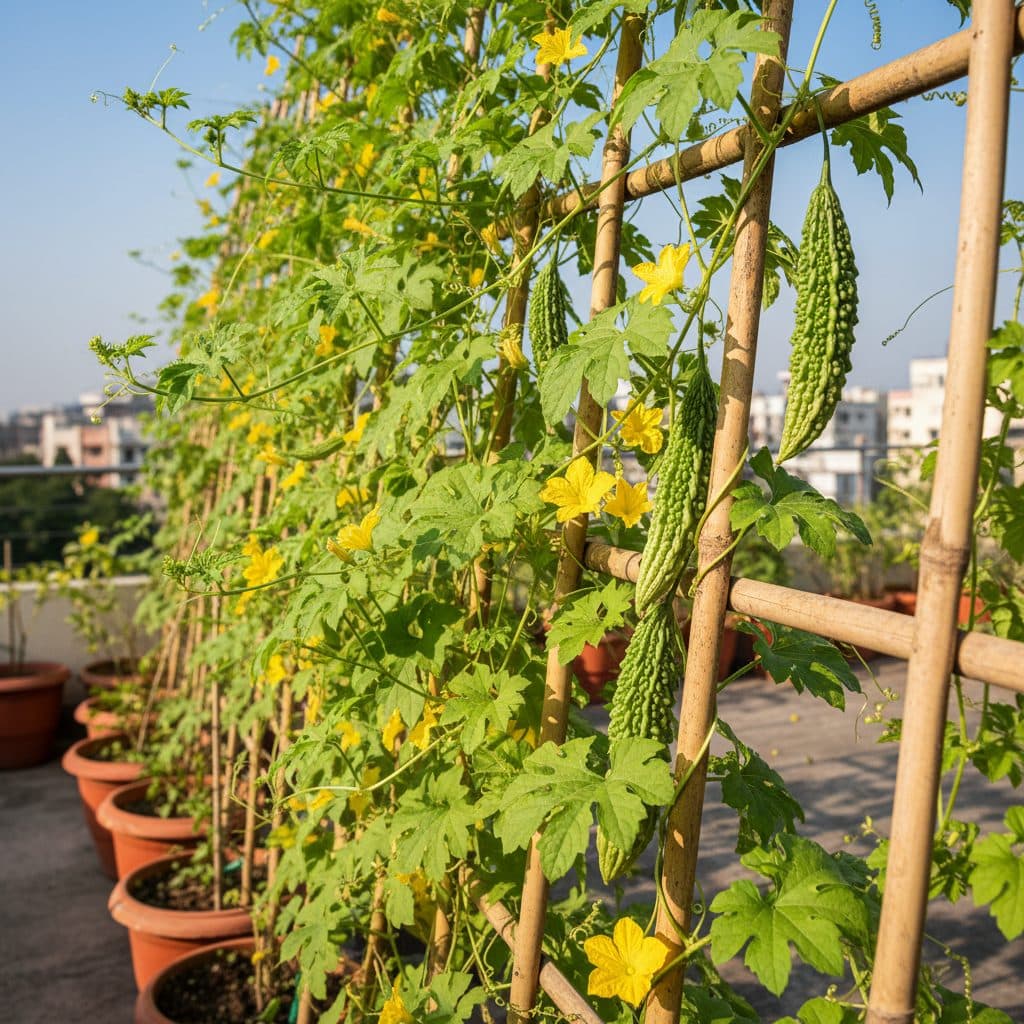
- Install a sturdy vertical trellis or nylon netting to keep climbing vines off hot concrete terrace floors.
- Perform morning hand pollination if fruit set is low due to limited rooftop bee activity.
- Protect young developing karela from melon fruit flies by bagging fruits with breathable paper covers and hanging yellow sticky traps.
Quick answer: To grow bitter gourd at home in India, soak seeds overnight to soften the thick seed coat, sow them 2 cm deep in 40 cm grow bags, and place the container in full sunlight. Provide a vertical bamboo trellis for the climbing vines, water consistently during hot summer spells, and harvest the ridged green gourds in 55 to 65 days.
Bitter gourd (Momordica charantia), widely known across India as karela, is a staple warm-season cucurbit prized for its distinctive bitter flavour and culinary value. Thriving in hot, humid weather, this vigorous climbing vine is suited for kitchen gardens, backyard patches, and urban terrace vegetable garden setups.
Growing karela at home is straightforward when you understand its basic environmental requirements. By providing deep growing containers, a nutritious potting mix, sturdy vertical trellising, and simple organic pest protection, you can harvest fresh, tender bitter gourds throughout the summer and monsoon months.
Sowing seasons and climate requirements in India
Bitter gourd is a tropical vine that requires warm temperatures between 24°C and 35°C for optimal vegetative growth and continuous flowering. In India, planting schedules match the major agricultural cropping seasons.
+-------------------------------------------------------------+
|               BITTER GOURD SEASONS IN INDIA                 |
|                                                             |
|   ZAID (Summer Crop):                                       |
|   - Sowing: February to March                               |
|   - Harvest: April to June                                  |
|   - Key Need: Consistent irrigation & afternoon shade net   |
|                                                             |
|   KHARIF (Monsoon Crop):                                    |
|   - Sowing: June to July                                    |
|   - Harvest: August to October                              |
|   - Key Need: High drainage grow bags & fungal monitoring   |
|                                                             |
|   YEAR-ROUND (South & Coastal India):                       |
|   - Frost-free climates allow sowing almost any month       |
+-------------------------------------------------------------+- Summer Season (Zaid): Sow seeds from February to March across northern and central plains. The plants establish rapidly as temperatures climb, producing harvests before the worst of the summer heat arrives.
- Monsoon Season (Kharif): Sow from June to July with the arrival of the monsoon rains. The warm, humid conditions drive vigorous vegetative growth and high fruit yields.
- Southern and Coastal Regions: In Tamil Nadu, Kerala, Karnataka, and coastal Maharashtra where winters remain mild, karela can be sown year-round, with peak plantings in September and January.
Seed preparation and germination techniques
Bitter gourd seeds possess a tough, woody outer shell that can delay water absorption and lead to sluggish or uneven germination if planted dry.
+-------------------------------------------------------------+
|               SEED SCARIFICATION & GERMINATION              |
|                                                             |
|   1. Nick Seed Coat: Gently file the pointed tip            |
|   2. Soak: 12-24 hours in clean lukewarm water              |
|   3. Sow: 2 cm deep in moist, loose potting mix             |
|   4. Emergence: 6-10 days at 25-30°C                        |
+-------------------------------------------------------------+- Seed Scarification: Gently rub the pointed end or edge of the seed against sandpaper or clip the outer seed coat slightly with nail clippers, taking care not to crush the internal embryo.
- Water Soaking: Place the seeds in a bowl of clean, lukewarm water for 12 to 24 hours. The seeds will swell as moisture penetrates the seed coat.
- Sowing Depth: Plant two seeds per spot at a depth of 2 cm in small seedling cups or directly into your permanent grow bag.
- Moisture and Warmth: Keep the potting mix evenly moist but not waterlogged. Seeds emerge within 6 to 10 days in warm weather. Once true leaves form, thin to the single most vigorous seedling.
To understand early development cycles, explore our guide on vegetable growth stages explained.
Container selection and potting soil mix for terraces
Because bitter gourd develops an extensive fibrous root system, container volume directly influences vine vigor and fruit production.
Grow bag dimensions:
Use heavy-duty HDPE or fabric grow bags measuring at least 35 cm to 45 cm in diameter and 40 cm in depth (standard 15x15 inch or 18x18 inch sizes). Ensure the bag features multiple unobstructed drainage holes around the base.
Ideal terrace potting mix:
Avoid using pure garden soil in containers, as heavy clay compacts, bakes hard in the sun, and retains excess water during heavy monsoon downpours. Combine:
- 40% Cocopeat: Retains moisture while maintaining open aeration.
- 25% to 30% Well-Rotted Vermicompost or Cow Dung Manure: Supplies balanced organic nutrients and beneficial microbes while keeping salts down.
- 30% to 35% Red Soil or River Sand: Provides mineral density, stability against wind, and good drainage.
- Optional Amendments: Mix in 50 grams of neem cake powder and 20 grams of bone meal per bag to suppress root-knot nematodes and promote steady root development.
For broader small-space methods, see our guide on balcony and container vegetable gardening.
Trellising and canopy management
Bitter gourd is an active climber that produces numerous tendrils. Allowing the vines to sprawl across a hot concrete terrace floor scorches foliage, impedes pollination, and causes developing fruits to rot against damp surfaces.
+-------------------------------------------------------------+
|                TERRACE VERTICAL TRELLIS SETUP               |
|                                                             |
|          [ Horizontal Bamboo Pole or Wire Cable ]           |
|            |            |            |            |         |
|            | Nylon      | Netting    | or Coir    | String  |
|            |            |            |            |         |
|            |            |            |            |         |
|     ===================================================     |
|     [ Grow Bag ]  [ Grow Bag ]  [ Grow Bag ]  [ Grow Bag ]  |
+-------------------------------------------------------------+
Trellis options:
- Vertical Bamboo Frame: Construct an A-frame or rectangular frame using 2-metre bamboo poles tied with coir twine.
- Nylon Creeper Netting: Fix nylon climbing netting against terrace boundary walls or parapets, leaving a 10 cm air gap behind the net for ventilation.
- Overhead Mandap (Arbour): On larger terraces, build a horizontal overhead wire grid at a height of 1.8 metres. The vines climb vertical strings and spread horizontally overhead, allowing bitter gourds to hang downward straight and unblemished for easy picking.
Vine pruning (The 2-metre tip pinch):
When the main vine reaches 1.5 to 2 metres in height, pinch off the growing tip. This halts vertical extension and stimulates the production of secondary lateral branches, which carry the majority of female, fruit-bearing flowers.
Flower biology and hand pollination
Bitter gourd plants are monoecious, producing separate male and female flowers on the same vine.
- Male flowers: Appear first on long, slender stalks with yellow petals and pollen-bearing anthers at the centre.
- Female flowers: Emerge later on shorter stalks, easily distinguished by a miniature, swollen baby bitter gourd visible at the base of the petals.
+-------------------------------------------------------------+
|                MALE VS FEMALE FLOWER ANATOMY                |
|                                                             |
|       MALE FLOWER                     FEMALE FLOWER         |
|     (Slender Stalk)              (Miniature Fruit at Base)  |
|                                                             |
|          \ | /                            \ | /             |
|         ( * * )                          ( * * )            |
|          _**/                            _**/             |
|            |                             ( === ) <-- Baby   |
|            |                              ___/      karela |
|            |                                |               |
|       Long Stalk                       Short Stalk          |
+-------------------------------------------------------------+
On high rooftop terraces where bee and pollinator activity can be sparse, female flowers may turn yellow and drop without swelling.
Hand pollination technique:
Between 7:00 AM and 10:00 AM when flowers are fresh:
- Pluck a fully open male flower and gently peel back the yellow petals to expose the central stamen.
- Gently dab the pollen-coated anther directly onto the sticky stigma in the centre of an open female flower.
- A successfully pollinated female flower will begin swelling into a green gourd within 48 to 72 hours.
Managing pests and fungal issues organically
Urban terrace gardens in India face distinct pest challenges across different seasons. Applying principles from our IPM levels explained grower guide helps manage issues early.
Melon fruit fly (Zeugodacus cucurbitae, formerly Bactrocera cucurbitae)
The most destructive pest of bitter gourd. Female flies pierce tender young fruits to lay eggs beneath the skin. The larvae hatch inside, causing fruits to turn yellow, rot, and drop prematurely.
- Control: Collect and destroy every fallen or stung fruit — seal them in a bag in the sun or bury them deep — because the maggots leave the fruit and pupate in the soil below. Bag young female fruits with small breathable paper bags, non-woven fabric pouches, or newspaper cones immediately after pollination. Pheromone lure traps (cue-lure) catch males and serve as a monitoring and suppression aid, while yellow sticky traps catch flying pests around the canopy.
Powdery and downy mildew
Common during humid monsoon months, appearing as white powdery patches or yellow angular lesions on foliage.
- Control: Avoid overhead watering in late afternoon. Spray neem oil (5 ml per litre of water with 2 ml liquid soap) preventatively every 10 days. Ensure good spacing between vines to promote airflow.
Aphids and red spider mites
Prevalent during dry, hot summer months, congregating beneath leaves and causing curling.
- Control: Spray foliage with a sharp jet of clean water in the morning, followed by a spray of diluted organic neem oil.
Harvesting your home-grown karela
Bitter gourds are ready for harvest approximately 55 to 65 days after seed sowing, and 12 to 16 days after successful flower pollination.
- Harvesting stage: Pick gourds while they are firm, dark green (or light green depending on cultivar), and crisp, before they begin turning yellow or orange at the tips. Overripe gourds split open, exposing red seeds and developing a pithy texture.
- Picking method: Use a sharp pair of pruning shears or a clean knife to cut the fruit stem 1 cm above the gourd. Avoid pulling or twisting the fruit by hand, which tears the delicate vine.
- Harvest frequency: Harvest mature fruits every two to three days to encourage the vine to continue setting fresh female flowers and fruits through the season.
With proper seasonal sowing, sturdy vertical support, and basic fruit fly protection, growing bitter gourd on your terrace provides an abundant supply of fresh, organic produce for your home kitchen.