Key takeaways
- Chickens handle extreme sub-zero cold naturally through downy feather insulation; moisture and drafts cause frostbite, not dry cold.
- Provide high-level gable ventilation above the roost line to exhaust humid breath while keeping the birds sheltered from direct wind.
- Insulating coop walls is optional and mainly beneficial in extreme northern and prairie regions; always cover insulation with plywood to prevent pecking.
- Use the deep litter bedding method with 15 cm to 20 cm of pine shavings to generate natural composting warmth and insulate the floor.
- Avoid heat lamps and ceramic heat emitters due to severe fire hazards; use radiant flat-panel heaters only during extreme cold emergencies.
- Install wide roosting bars (using the 10 cm flat side of a 2x4 timber) so hens sit on their feet to shield their toes from cold air.
- Prevent waterers from freezing using electrically heated bases or insulated circulating fonts to ensure continuous hydration.
Quick answer: To keep chickens warm in winter, maintain a dry, draft-free coop with high gable ventilation to vent moisture, apply the deep litter bedding method, and provide wide roosts so birds can cover their feet. Supplemental heat lamps should be avoided because they pose a severe fire hazard and prevent natural cold acclimatization.
Canadian winters present genuine challenges for backyard flock owners, with temperatures regularly plunging between -15°C and -35°C from Ontario and Quebec to the Prairies. Yet, chickens are remarkably cold-resilient animals equipped with an internal body temperature near 41°C and dense, insulating layers of down feathers.
Keeping a flock thriving through months of sub-zero temperatures requires understanding poultry physiology and coop physics. Rather than attempting to heat the coop like a human dwelling, success relies on managing humidity, stopping drafts, feeding high-calorie grains, and protecting exposed combs and wattles from frostbite.
Cold biology: how chickens stay warm naturally
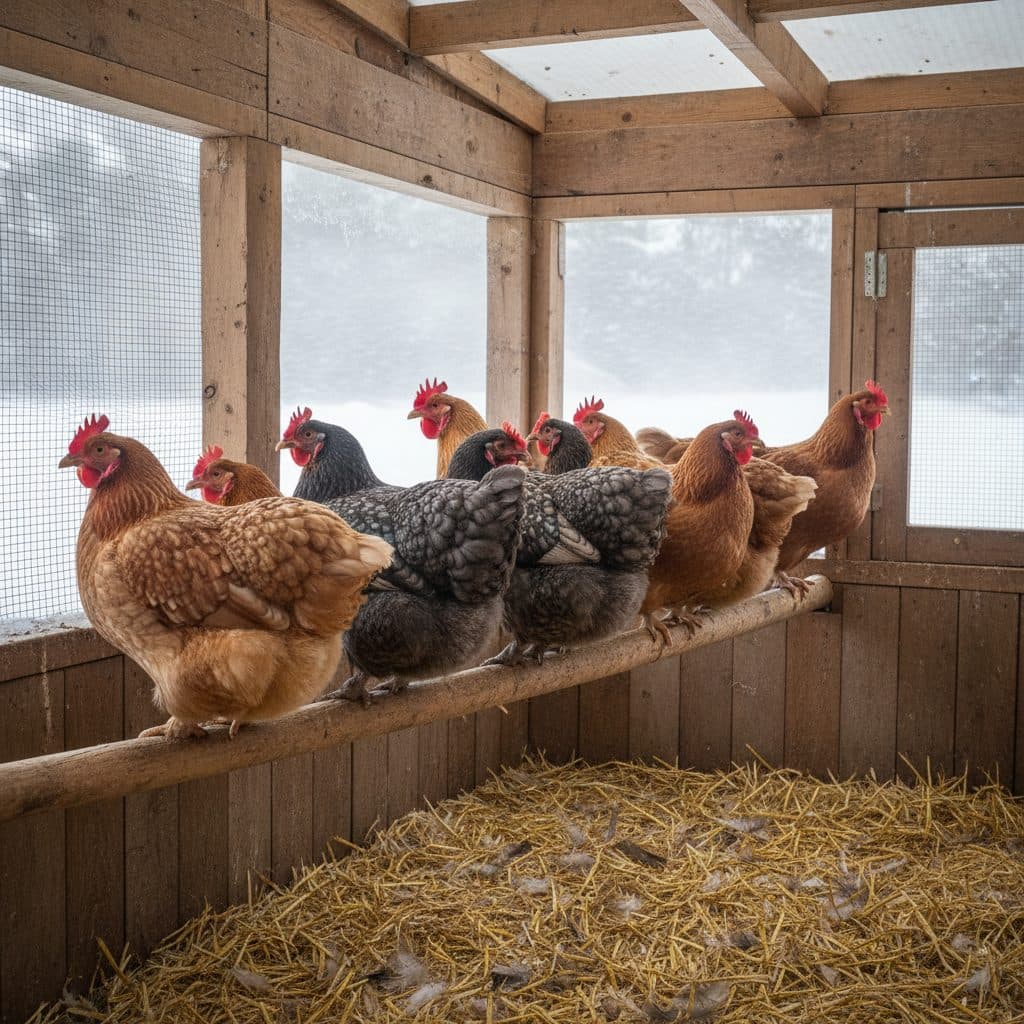
A healthy chicken stays warm by trapping air within its downy feathers. When temperatures drop, birds fluff their plumage, creating a thick barrier of dead air that retains body heat. Roosting chickens tuck their heads under their wings and settle their warm bodies over their bare legs and feet.
+-------------------------------------------------------------+
|               CHICKEN WINTER HEAT DYNAMICS                  |
|                                                             |
|   Body Core: ~41°C (Continuous metabolic heat engine)       |
|                                                             |
|   Insulation: Fluffed down feathers trap warm air layer     |
|                                                             |
|   Moisture Output: Each bird exhales ~100 ml water / day    |
|                                                             |
|   Vulnerable Areas: Large single combs, wattles, toes       |
|                                                             |
|   Key Defense: Dry air + wide roosts + high ventilation     |
+-------------------------------------------------------------+
Because chickens generate substantial metabolic heat, keeping them healthy is not about artificially heating the air. It is about maintaining a dry environment where their natural insulation functions efficiently.
The golden rule: draft-free ventilation versus drafts
The single most critical concept in winter coop management is the distinction between drafts and ventilation. Damp air combined with freezing temperatures is the primary cause of respiratory illness and frostbite in poultry.
- The hazard of drafts: Cold winter winds blowing directly across birds at roost level strip away the warm air barrier trapped in their feathers, forcing their bodies to burn excessive energy to stay warm.
- The necessity of ventilation: Each adult hen expels roughly 100 ml of moisture daily through respiration and droppings. In a sealed coop, this moisture evaporates into the air, condenses on cold walls, and settles onto combs and wattles. When temperatures drop overnight, this surface moisture freezes, causing severe frostbite.
Designing winter coop airflow:
- Place ventilation openings near the roofline, such as under eaves or in ridge gables, well above the highest roosting bar.
- Cover all vents with 1.25 cm (1/2 inch) welded wire hardware cloth to prevent predator entry while allowing humid air to rise and exit continuously.
- Seal cracks and holes located below roost level to block horizontal drafts. Insulating coop walls is rarely necessary for cold-hardy breeds in southern and coastal Canada, but it provides a thermal buffer in prairie and northern regions (Zones 1–3) — if adding insulation, cover it completely with plywood to prevent birds from pecking it. Consult our detailed guide on how to build a chicken coop for structural airflow specifications.
+-------------------------------------------------------------+
|                WINTER COOP AIRFLOW DIAGRAM                  |
|                                                             |
|            [ GABLE VENT: Warm, moist air exits ]            |
|                     ^               ^                       |
|                     |               |                       |
|   Roost Level:  ( Hen )           ( Hen )  <-- NO DRAFTS    |
|   =======================================================   |
|                                                             |
|   Floor: Deep Litter Bedding (15-20 cm shavings)            |
|          [ Intact walls block horizontal wind ]             |
+-------------------------------------------------------------+
The deep litter bedding method
The deep litter system is an effective way to insulate your coop floor while generating natural microbial heat during long Canadian winters.
- Base layer: In autumn, clean the coop floor and lay down a 10 cm layer of dry, dust-free pine shavings or chopped straw.
- Weekly additions: Do not remove droppings. Once a week, scatter a handful of scratch grains across the bedding. As the hens scratch for the grains, they turn and aerate the manure into the carbon material.
- Top up regularly: Add a fresh 5 cm layer of clean shavings every two to three weeks until the bedding depth reaches 15 cm to 20 cm by mid-winter.
- Beneficial decomposition: Beneficial microbes break down the manure within the carbon matrix, releasing gentle background heat and drying out droppings, which keeps ammonia levels low. If you smell ammonia at human height, ventilation or moisture is wrong — turn the pack, add dry carbon, and increase high vent openings; do not strip the whole bed unless it is saturated.
For wider flock housing strategies, see our comprehensive chicken coop guide.
Roost design and frostbite prevention
Roosting bar geometry directly influences how effectively hens protect their extremities during bitter sub-zero nights.
Flat 2x4 roosting bars
Standard round perches or thin branches force chickens to curl their toes around the wood, exposing the underside of their feet to freezing air. Replace narrow perches with untreated 2x4 dimensional lumber installed with the 10 cm (4 inch) wide flat side facing upward.
When a chicken settles onto a wide, flat surface, its breast feathers naturally drape completely over its feet and toes, shielding them with body heat throughout the night.
+-------------------------------------------------------------+
|                ROOSTING BAR PROFILE COMPARISON              |
|                                                             |
|       NARROW PERCH                    WIDE FLAT 2x4         |
|   (Exposed toes curl under)       (Feathers cover flat foot)|
|                                                             |
|           ( Hen )                         ( Hen )           |
|            /   \                         /~~~~~~~\          |
|           (  ** )                       ( *=====* )         |
|            \ _ /                         _**_**_/          |
|             (O)                           [=====]           |
|         Round Perch                    Wide Flat Timber     |
+-------------------------------------------------------------+
Protecting combs and wattles
Breeds with large, tall single combs are vulnerable to frostbite on freezing nights. You can apply a thin coating of pure petroleum jelly, coconut oil, or natural beeswax balm to comb tips and wattles during cold snaps. However, ensuring dry coop air via high ventilation remains the primary preventative measure.
Why heat lamps are dangerous in Canadian coops
Many beginner flock owners consider installing infrared heat lamps when winter temperatures plummet. In Canadian conditions, heat lamps introduce serious risks:
- Catastrophic fire hazard: Heat lamps operating in a dusty, straw-filled coop are a leading cause of barn fires. Flapping wings, dislodged cords, or airborne dust landing on the red-hot bulb can ignite bedding within seconds. Ceramic heat emitters (CHEs) also run intensely hot surface temperatures and carry similar fire hazards in dusty coop environments.
- Failure vulnerability: If a winter power outage occurs during a -25°C blizzard, birds conditioned to an artificially heated coop cannot cope with the sudden thermal plunge and can succumb to hypothermia rapidly.
- Acclimatization suppression: Supplemental heating prevents chickens from developing natural cold tolerance and thickening their plumage in autumn.
If supplemental heat is necessary during extreme cold snaps below -35°C, use radiant flat-panel heaters (such as a Sweeter Heater) mounted securely to walls or above roosts, which operate at low surface temperatures without incandescent fire hazards.
Selecting cold-hardy chicken breeds
Choosing breeds bred for harsh northern climates minimizes winter management challenges. Explore our full breakdown of the best chicken breeds for detailed breed comparisons.
Breed | Origin | Comb Type | Cold Hardiness | Winter Egg Laying |
|---|---|---|---|---|
Chantecler | Canada | Cushion / Small | Outstanding (-35°C) | Reliable |
Plymouth Rock | North America | Medium Single | High (-25°C) | Good |
Wyandotte | North America | Rose Comb | High (-25°C) | Good |
Orpington | United Kingdom | Medium Single | High (-25°C) | Moderate |
Ameraucana | North America | Pea Comb | High (-25°C) | Moderate |
The Canadian heritage Chantecler, developed in Quebec, features a tight cushion comb and nearly non-existent wattles, making it practically immune to frostbite.
Winter feeding, lighting, and hydration management
Winter nutrition requires higher caloric intake to fuel metabolic heat production.
- High-energy scratch feed: Offer a handful of cracked corn or whole grains per bird late in the afternoon, one hour before roosting. Digesting complex carbohydrates through the night acts as an internal heater.
- Protein support: Supply a complete 16% to 18% layer ration to support maintenance during the shorter days. Discover balanced nutrition options in what to feed chickens.
- Supplemental lighting nuance: Supplemental lighting is for egg production, not warmth; if you choose to light, use a timer to add light in the morning (not evening, so birds can roost naturally), but understand it overrides the flock's natural winter rest.
- Unfrozen water: Chickens cannot eat snow efficiently to meet their hydration needs. Dehydration halts egg production and causes kidney stress. Use electrically heated water bases, submersible birdbath heaters, or insulated font warmers to keep clean water liquid 24 hours a day.
With draft-free roofline ventilation, deep litter bedding, wide roosts, and reliable hydration, your flock will handle the toughest Canadian winter safely and comfortably. Learn more about year-round flock productivity in our guide on raising chickens for eggs.