Key takeaways
- Profitable homesteading relies on multiple complementary income streams instead of a single large-scale commodity crop.
- High-margin enterprises like backyard plant propagation, specialty cut flowers, and culinary herbs yield the highest returns per square foot.
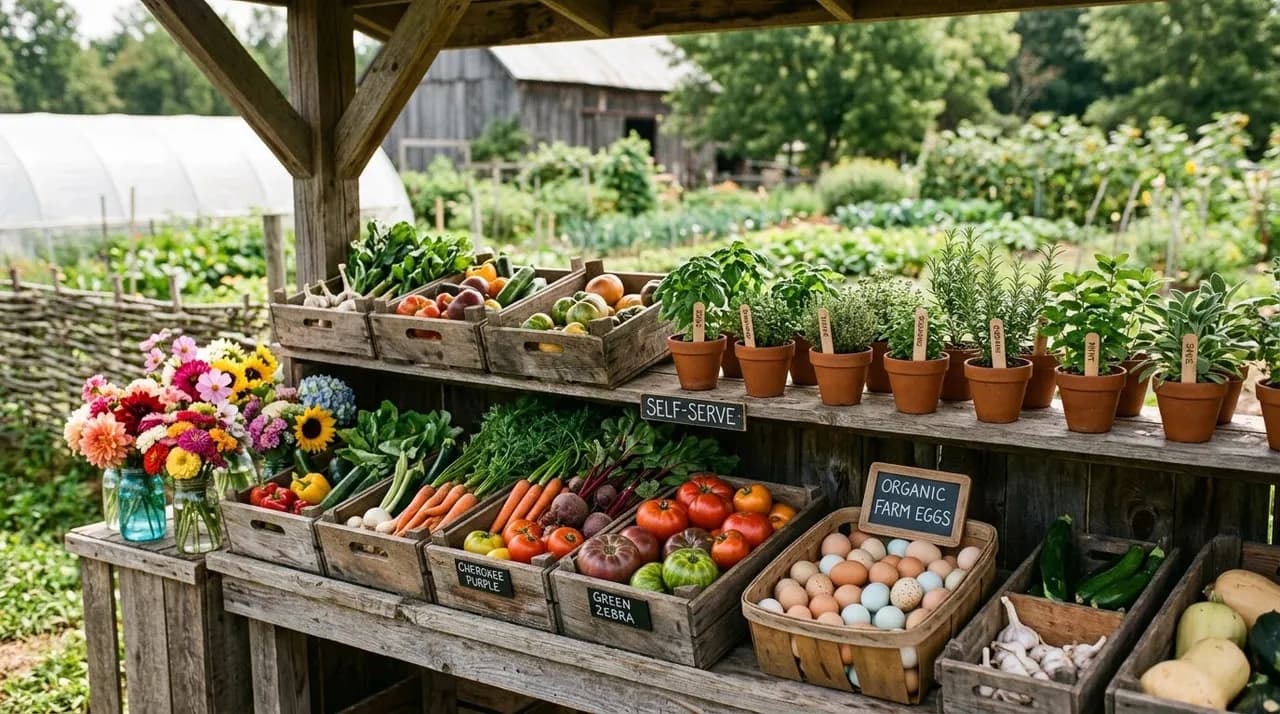
- Direct-to-consumer sales eliminate distributor markups and capture full retail value at farm stands and farmers markets.
- Cottage food laws allow homesteaders to sell value-added baked goods, jams, and herbal preparations with low startup costs.
- Tracking production costs and labor hours ensures each homestead side hustle generates genuine net profit.
Quick answer: To make money homesteading, build diversified revenue streams tailored to your available acreage and local market demand. High-return enterprises include propagating backyard nursery plants, growing high-value market garden crops and cut flowers, selling pasture-raised eggs, producing cottage food items, and offering rural educational workshops.
Transitioning a homestead from a money-draining hobby into a profitable, self-sustaining enterprise requires applying sound business principles to everyday farm routines. While broadscale commodity farming often struggles with tight margins, small-scale producers have a distinct advantage: the ability to sell premium, locally grown specialty products directly to nearby consumers.
Learning how to make money homesteading begins by identifying high-margin niches where small acreage outperforms industrial competition. By stacking multiple small-scale enterprises (such as seasonal plant sales, farm-gate egg sales, and value-added food processing), you create an insulated economic ecosystem that cushions against bad weather or market fluctuations.
Whether you operate a suburban micro-homestead or a multi-acre rural property, building profitable homesteading enterprises requires disciplined overhead management, realistic pricing, and an understanding of local regulatory frameworks.
What high-value plant enterprises generate steady homestead income?
Plant-based businesses provide some of the highest financial returns per square foot with modest initial capital requirements:
1. Backyard plant propagation and nursery sales
Selling potted fruit tree saplings, berry bushes, and perennial herbs is one of the most profitable homestead side hustles. Hardwood cuttings of elderberries, currants, fig trees, and comfrey cost almost nothing to produce from established mother plants and can be sold in 1-gallon pots during spring planting seasons.
2. Microgreens and specialty salad greens
Intensive salad greens and microgreens produce rapid turnaround times. Grown in shallow trays on vertical shelving or in small unheated high tunnels, crops like pea shoots, sunflower microgreens, spicy mustard, and arugula can be harvested weekly for local restaurant chefs and farmers market subscribers.
3. Specialty cut flowers
Growing heirloom annual and perennial flowers (such as dahlias, zinnias, ranunculus, and snapdragons) generates substantial revenue from small garden beds. Bouquets sold directly at weekend farmers markets or through local florists command premium prices compared to standard vegetable crops.
4. Culinary and medicinal herbs
Fresh culinary herbs (like basil, rosemary, cilantro, and mint) and dried medicinal herbs (such as calendula, chamomile, and echinacea) offer high value per pound. Dried herbs have a long shelf life, allowing you to generate year-round sales from seasonal garden gluts.
To build rich organic soil for intensive plant production, see our guide on sheet mulching for soil moisture.
How do you monetize small livestock and poultry?
Animal enterprises provide consistent cash flow, but require careful cost accounting to ensure animal feed costs do not exceed total revenue:
Pastured egg sales
Pasture-raised chicken and duck eggs are staple sellers with strong local consumer demand. To maximize profitability, market your eggs as pasture-raised, non-GMO, or heritage-breed, focusing on freshness and deep orange yolks. Ensure you understand state egg grading and small-flock exemption laws before selling at off-farm retail venues.
Breeding stock and day-old chicks
Selling fertile hatching eggs and day-old chicks of rare heritage poultry breeds (such as Marans, Ameraucanas, or Orpingtons) yields higher margins than selling eating eggs alone. A quality tabletop incubator allows you to convert low-cost feed into high-demand livestock starts.
Heritage meat rabbits and honeybees
Meat rabbits reproduce rapidly, consume garden forage alongside hay, and yield lean meat for direct-farm customers where custom-exempt slaughter laws permit. Similarly, maintaining honeybee hives yields raw honey, beeswax candles, and spring nucs (starter colonies) for fellow beekeepers.
How do value-added cottage foods increase profit margins?
Selling raw agricultural commodities often yields modest returns. Converting raw farm harvests into shelf-stable, value-added products under state cottage food regulations significantly expands your profit margins:
- Artisan preserves and jams: Processing seasonal berries and tree fruits into small-batch jams, fruit butters, and jellies captures value from cosmetically imperfect produce that might otherwise go to waste.
- Sourdough breads and baked goods: Baking artisan loaves, cookies, and pastries in a residential kitchen requires minimal extra equipment while generating dependable weekly customers at neighborhood pick-up points.
- Dehydrated teas and herbal seasonings: Blending farm-grown dried herbs, garlic flakes, and edible flower petals creates lightweight, shelf-stable gourmet seasonings that can be sold year-round at holiday craft fairs and farm stands.
Before launching a food enterprise, verify the cottage food requirements administered by your state department of agriculture or county health division.
What service and educational homestead business ideas work best?
Your physical homestead property can generate revenue beyond physical commodities by offering agricultural services and educational experiences:
On-farm workshops and skills classes
Many urban and suburban residents are eager to learn self-reliance skills firsthand. Hosting weekend workshops on topics like sourdough bread baking, hot-water bath canning, fruit tree pruning, chicken processing, or permaculture garden design turns your specialized knowledge into high-margin service revenue.
Agritourism and seasonal farm tours
If your county zoning allows rural agritourism, hosting seasonal events (such as spring seedling swaps, pumpkin patches, or honey harvest demonstrations) draws visitors who purchase farm products on-site.
Custom tool and equipment services
If you own specialized homestead equipment, such as a walk-behind tractor, wood chipper, log splitter, or poultry plucker, renting equipment or hiring out your labor to neighboring homesteaders creates secondary income during off-peak seasons.
How do you build a sustainable business model on a small farm?
Operating a profitable small farm requires avoiding common financial mistakes:
- Calculate true production costs: Factor in the cost of potting soil, seed packets, organic amendments, packaging, labels, and your personal labor time when setting prices. Underpricing products out of charity leads directly to farm burnout.
- Start with lean overhead: Do not finance expensive new farm machinery or custom structures before proving product demand. Use simple infrastructure, such as DIY cold frames and pallet potting benches, as described in cold frame gardening.
- Build direct customer relationships: Collect customer email addresses at markets and maintain a simple digital newsletter or social media presence to announce weekly harvest availability and pre-orders.
- Diversify across seasons: Balance spring seedling sales, summer produce and cut flowers, autumn fruit preserves, and winter baked goods to maintain steady cash flow throughout all twelve months.
Foundational growing methods are covered in guides on how to start homesteading, homesteading on an acre, and designing a high-yield backyard food forest.