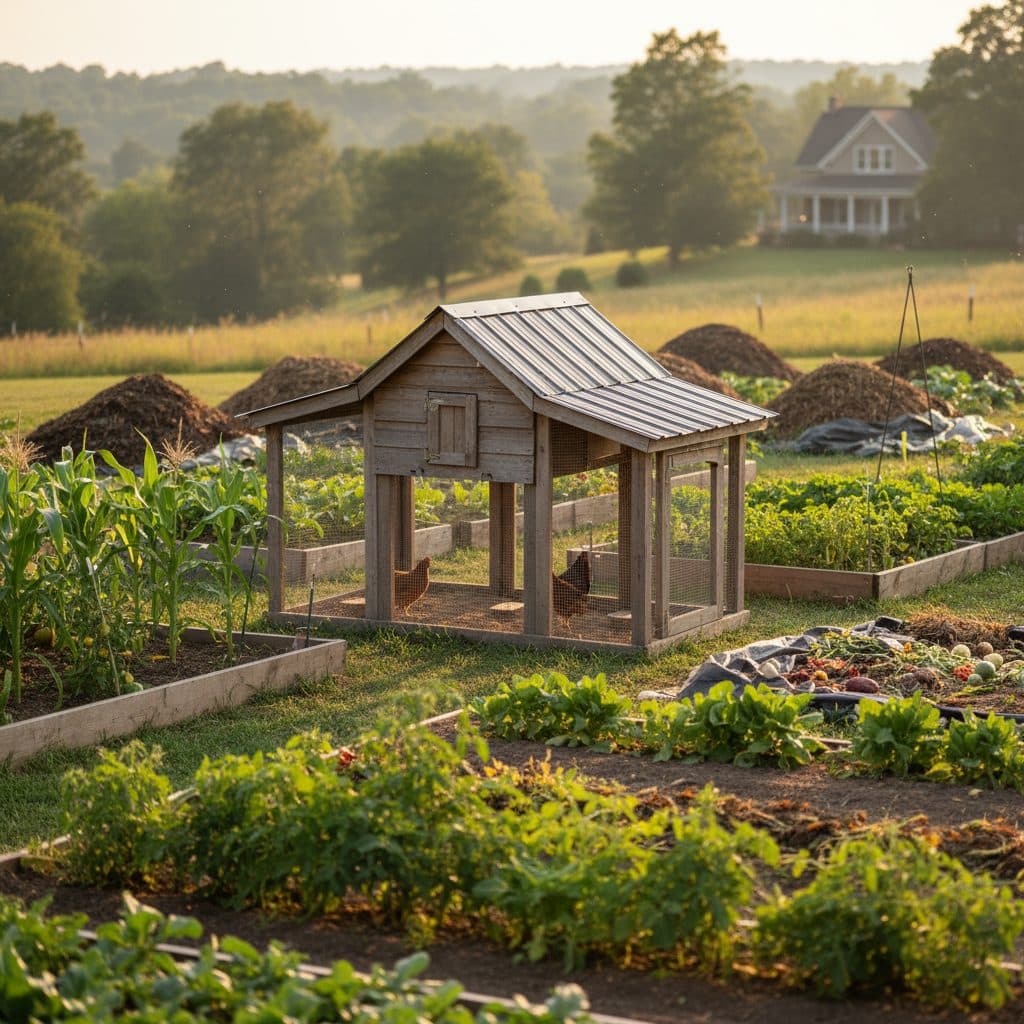
Key takeaways
- Integrate chickens into your garden design to manage pests and fertilize soil, potentially reducing external inputs.
- Select hardy, dual-purpose chicken breeds like Plymouth Rocks or Wyandottes suitable for your USDA zone, aiming for 150-250 eggs per year.
- Implement a deep litter system in the coop to compost manure, reducing odors and providing a rich soil amendment within 6-12 months.
- Design a secure, multi-functional chicken run that offers natural foraging opportunities and protection from predators like raccoons, which can decimate a flock in one night.
- Supplement your flock’s diet with kitchen scraps and garden excess, potentially cutting commercial feed costs by 10-30%.
Quick answer: Raising backyard chickens the permaculture way involves integrating them into your garden for pest control and fertilization, using deep litter systems for manure, and supplementing their diet with garden scraps to reduce external inputs and build soil health.
In the humid climate of USDA zone 7b, where summers are long and winters mild, many smallholders are looking for ways to produce more of their own food. Raising a backyard chicken flock gives a tangible step towards self-reliance, providing fresh eggs and meat, while also contributing to garden fertility. However, simply keeping chickens is one thing; integrating them into a productive, resilient system using permaculture principles is another entirely.
This approach moves beyond basic chicken care, aiming to create a symbiotic relationship between your flock, your garden, and your household waste streams. By thoughtfully designing their environment and routines, a small flock of 6-8 hens can provide over 1,200 eggs annually, significantly reducing your grocery bill and improving your soil health. This article will guide you through setting up a chicken system that works with, not against, your natural environment, drawing on methods proven effective for decades [2].
Designing the coop and run for resilience
A well-designed chicken coop and run are the foundation of a resilient flock, especially in varied climates like those across the US. In regions like the Pacific Northwest (USDA zone 8), where rainfall is abundant so proper drainage around the coop prevents disease. The coop itself should offer at least 4 square feet per bird, providing ample space for roosting, nesting, and avoiding stress [3]. For a flock of 6 hens, this means a minimum 24 square foot coop.
Predator protection and multi-functional spaces
Predator protection is paramount, as a single raccoon can decimate a flock in one night. This requires sturdy hardware cloth with openings no larger than 0.5 inches, buried 6-12 inches deep around the perimeter of the run to deter digging predators. The run should ideally be integrated into a larger system, perhaps surrounding an orchard or garden beds, allowing chickens to forage for pests and weeds in rotation. Consider a mobile chicken tractor for smaller spaces or specific garden areas, which can be moved daily to fertilize and cultivate up to 50 square feet of ground per day. For more on building effective structures, see our guide on how to build a chicken coop.
- Secure fencing: Use 0.5-inch hardware cloth, not chicken wire, for predator protection.
- Adequate space: Provide 4 square feet per bird inside the coop and 10 square feet per bird in the run.
- Ventilation: Ensure good airflow to prevent respiratory issues, especially in humid areas like Florida (USDA zone 9).
- Nesting boxes: Offer one nesting box for every 3-4 hens to encourage laying.
- Roosting bars: Provide at least 8 inches of roosting space per bird, positioned higher than nesting boxes.
Feeding your flock from the garden
Reducing reliance on external feed sources is a core permaculture principle. While commercial feed will likely remain a part of their diet, especially for laying hens needing consistent protein (around 16-18%), a significant portion can come from your garden and kitchen. In states like California, where year-round gardening is possible in USDA zones 9-10, chickens can forage for bugs, grubs, and fallen fruit for much of the year. This natural foraging can significantly reduce feed costs.
Integrating chickens into garden rotations
Consider a chicken moat around your garden beds, or allow supervised access to spent beds after harvest. They will scratch for insects, weed seeds, and turn over the soil, preparing it for the next planting. Chickens are particularly useful for clearing areas of slugs and snails, which can be a problem in damp climates like Oregon. Offer a variety of kitchen scraps, such as vegetable trimmings, fruit peels, and cooked grains, but avoid avocado, raw potato skins, and anything moldy. A flock of 5 hens can consume several pounds of kitchen scraps per week. This diverts food waste from landfills. For more general advice, consider our backyard chicken-keeping FAQs.
- Garden foraging: Allow chickens access to garden beds after harvest to clean up pests and weeds.
- Kitchen scraps: Supplement diet with vegetable trimmings, fruit, and cooked grains; avoid toxic items.
- Compost integration: Use chickens to turn and aerate compost piles, consuming insects and food waste.
- Fodder system: Grow sprouts or fodder crops like barley to provide fresh greens, especially in winter.
- Insect farming: Consider a black soldier fly larva bin to provide a high-protein, self-sustaining food source.
Managing waste and building soil
Chicken manure is a resource, not a waste product. It is rich in nitrogen, phosphorus, and potassium, making it an excellent fertilizer. In a permaculture system, this manure is intentionally used to build soil fertility. The deep litter method is a prime example: a 6-12 inch layer of carbon-rich material like wood shavings, straw, or leaves is maintained in the coop. The chickens scratch and turn this material, aerating it and mixing it with their droppings. This process, aided by beneficial microbes, slowly composts the material in place, which reduces odors and flies.
Deep litter and compost integration
Over 6-12 months, the deep litter transforms into a rich, dark compost that can be harvested and spread directly onto garden beds. This method can significantly reduce the need for external fertilizer inputs over time. In warmer climates like Texas (USDA zone 8-9), good ventilation prevents excessive moisture in the deep litter, which could lead to ammonia buildup. For larger operations, chicken manure can be directly added to compost piles, accelerating decomposition and enriching the final product. The USDA Natural Resources Conservation Service provides resources on composting animal manures [6].
- Deep litter method: Maintain a 6-12 inch layer of carbon material in the coop for in-situ composting.
- Compost piles: Add chicken manure directly to compost piles for faster decomposition and nutrient cycling.
- Chicken tractors: Use mobile coops to spread manure directly onto garden beds in a controlled manner.
- Nutrient cycling: Plant fruit trees or perennial shrubs in the chicken run to utilize manure nutrients directly.
- Worm farming: Establish a worm bin near the coop to process chicken manure into vermicompost.
Selecting the right birds for your climate
Choosing the right chicken breed matters, especially when aiming for self-reliance. For backyard flocks in the US, dual-purpose breeds that lay well and can provide meat are often preferred. Breeds like the Plymouth Rock, Wyandotte, or Orpington are known for their docile temperaments, hardiness, and consistent egg production, often laying 180-250 large brown eggs per year. In colder climates like Minnesota (USDA zone 4), breeds with smaller combs and wattles, such as Wyandottes or Chanteclers, are less prone to frostbite, which can occur at temperatures below 15°F.
Disease resistance and longevity
When sourcing chicks, look for reputable hatcheries that vaccinate against common diseases like Marek’s disease, which can cause paralysis and death in up to 30% of unvaccinated flocks. While permaculture stresses natural health, preventing common ailments is practical. Older breeds, often called heritage breeds, tend to have better natural disease resistance and longer productive lifespans—often 5-7 years for laying, compared to 2-3 years for commercial hybrids. This longevity contributes to a more stable and self-sustaining flock over time. For more on starting a flock, check out backyard chickens: how to start a small laying flock.
- Dual-purpose breeds: Choose breeds like Plymouth Rock, Wyandotte, or Orpington for eggs and meat.
- Climate suitability: Select cold-hardy breeds for northern states and heat-tolerant breeds for southern states.
- Disease resistance: Prioritize breeds known for natural immunity and source vaccinated chicks.
- Temperament: Opt for docile breeds that integrate well into a backyard setting and with other livestock.
- Egg production: Aim for breeds that lay 180-250 eggs annually for consistent supply.
Health and harmony in the flock
Maintaining a healthy flock with minimal intervention is a cornerstone of permaculture. This means focusing on prevention through good husbandry, rather than constant treatment. Providing a spacious, clean coop with adequate ventilation, especially in humid regions like the Southeast, helps prevent respiratory issues. A dust bath area, filled with fine sand or diatomaceous earth, allows chickens to self-clean and deter external parasites like mites and lice, which can negatively impact egg production if left unchecked. Regular observation of your birds, noticing changes in behavior, appetite, or droppings, is your first line of defense.
Natural remedies and observation
Integrating herbs into the chicken run, such as calendula or mint, can provide natural supplements and pest deterrents. Comfrey, for instance, can be grown nearby as a chop-and-drop mulch, but should not be fed to chickens due to its pyrrolizidine alkaloid content. Apple cider vinegar (1 tablespoon per gallon of water) can be added to drinking water a few times a week to support gut health and reduce bacterial load. While not a substitute for veterinary care in serious cases, these natural approaches can significantly reduce the incidence of minor ailments. Keep a close eye on new birds for 2-3 weeks before introducing them to the main flock to prevent the spread of potential diseases, like fowlpox, which can significantly affect a flock.
- Dust baths: Provide a dry area with sand and diatomaceous earth for parasite control.
- Herbal integration: Plant comfrey, calendula, or mint in or around the run for natural health benefits.
- Apple cider vinegar: Add 1 tablespoon per gallon of water to support gut health.
- Quarantine new birds: Isolate new additions for 2-3 weeks to prevent disease transmission.
- Daily observation: Regularly check for changes in behavior, appetite, or physical condition.
Comparison of Traditional vs. Permaculture Chicken Keeping (for 6 hens)
Feature | Traditional Approach | Permaculture Approach |
|---|---|---|
Feed Source | 100% commercial feed, ~1.5 lbs/day | 60-70% commercial feed, 30-40% forage/scraps, ~1 lb/day |
Manure Management | Weekly cleaning, disposal or direct composting | Deep litter system, in-situ composting for 6-12 months |
Pest Control | Pesticides, commercial traps | Chickens forage for slugs, insects, reducing pest populations |
Soil Fertility | External fertilizers | Manure compost, direct application, increasing soil organic matter |
Cost Savings (Annual) | Minimal beyond eggs | Significant feed and fertilizer savings |
Egg Production: A well-managed flock of 6 laying hens can produce over 1,200 eggs annually, providing a significant food source for a family.
Feed Cost Reduction: Integrating garden foraging and kitchen scraps can significantly reduce commercial feed costs for a small flock.