Key takeaways
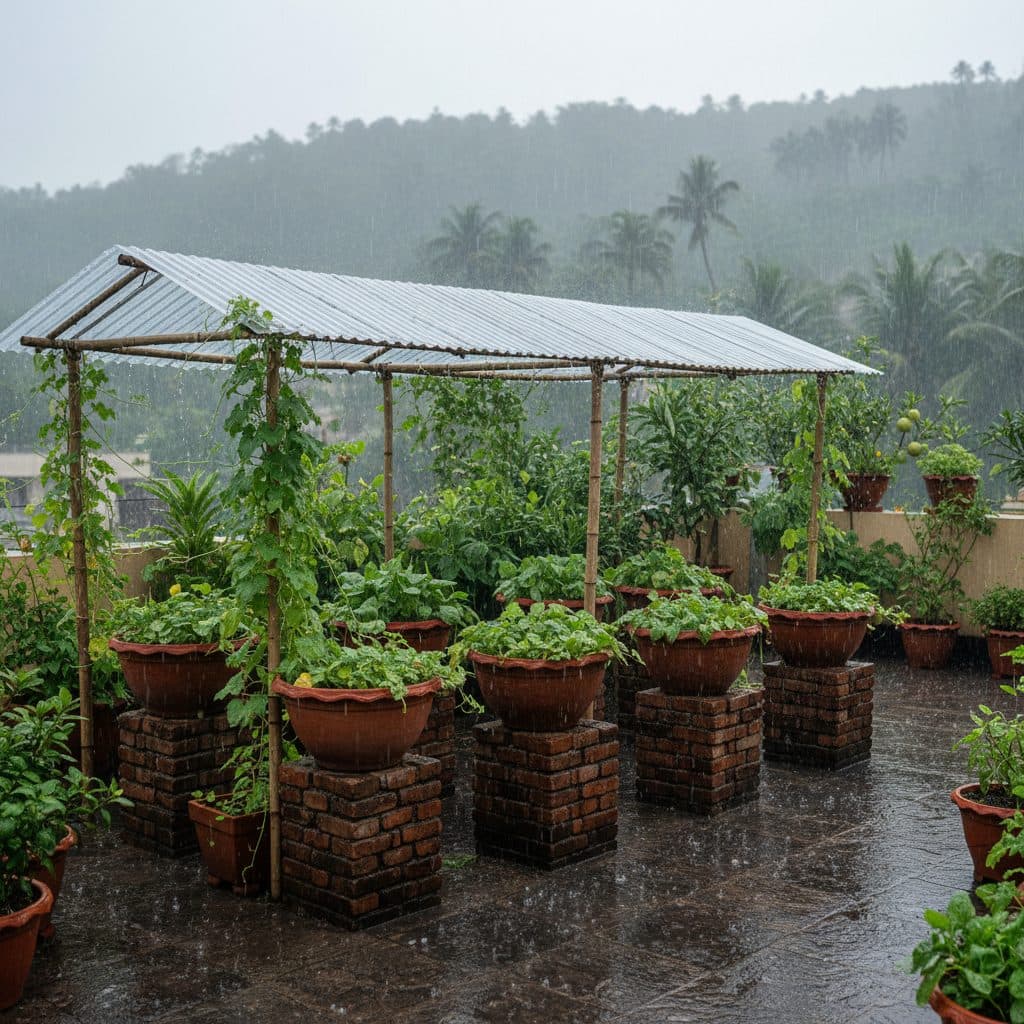
- Elevate all grow bags and pots on pot stands or bricks to keep drainage holes completely clear of standing water.
- Amend container growing media with coarse coco chips, perlite, and coarse river sand to prevent root zone waterlogging.
- Punch extra drainage holes along the lower sides of fabric grow bags and plastic containers before monsoon begins.
- Erect temporary transparent polythene or 30–35% agro-shade net covers to buffer torrential downpours.
- Apply prophylactic biological fungicides like Trichoderma viride to potting soil to prevent damp-off and collar rot.
Quick answer: Protecting plants from heavy rain during the Indian monsoon requires ensuring unobstructed drainage, amending potting mixes with porous aeration materials, and shielding delicate plants from physical downpour damage. Elevating pots on stands, adding side drainage slits in grow bags, and applying organic bio-fungicides prevents water stagnation, nutrient leaching, and root rot.
The arrival of the Indian monsoon (kharif season) brings welcome relief from scorching summer temperatures, bringing a burst of lush vegetative growth across home gardens. However, relentless torrential downpours present severe hazards for plants grown on urban rooftops, balconies, and kitchen gardens.
Learning how to protect plants from heavy rain is essential for every terrace gardener. Continuous, heavy rain rapidly compacts soil, flushes vital nutrients out of container media, creates standing water that suffocates root systems, and generates the humid, stagnant conditions in which soil-borne and foliar fungal pathogens thrive.
Whether you cultivate vegetables in HDPE grow bags or maintain ornamental balcony planters, implementing proactive drainage modifications, physical sheltering, and disease prevention will keep your garden thriving through the heaviest monsoon storms.
Elevating containers and ensuring unobstructed drainage
One of the most common causes of plant death during monsoon rains is drainage hole blockage. When a flat-bottomed pot or fabric grow bag rests directly on a smooth concrete terrace slab, pooling rainwater cannot escape. Water backs up into the container, creating an anaerobic sludge that rots roots within 48 to 72 hours.
To establish free-flowing drainage across your terrace garden:
- Use pot stands or bricks: Elevate every container at least 5 cm to 10 cm off the floor using metal pot stands, terracotta tiles, or pairs of standard construction bricks. This ensures excess water drains instantly away from the container base.
- Inspect drainage holes: Check plastic and terracotta pots before the monsoon arrives. Enlarge undersized holes using a drill, and place curved pieces of broken terracotta (crocks) over holes to prevent soil from washing through and sealing the opening.
- Add side drainage slits: For fabric grow bags and heavy plastic planters, use a sharp blade to cut three to four small horizontal slits 2 cm above the bottom rim. These side slits allow lateral drainage even if the bottom base becomes temporarily congested.
- Clear terrace scupper drains: Ensure rooftop drain outlets and drainpipes are clear of fallen leaves and debris so rainwater drains off the concrete roof immediately without creating standing pools around container bases.
For step-by-step techniques to revive plants suffering from waterlogged soil, review our guide on root rot overwatering rescue.
Formulating free-draining monsoon potting mixes
Standard garden soil containing high proportions of fine clay turns into dense, airless mud when saturated by daily monsoon rains. Container media for rainy conditions must prioritise porosity and structural aeration.
An ideal monsoon potting blend for Indian grow bags consists of:
- 20% composted cocopeat or leaf mould: Retains essential moisture while remaining significantly lighter than heavy native earth.
- 20% coarse organic vermicompost or aged cow dung manure: Delivers steady, slow-release nutrition to counter heavy nutrient leaching.
- 30% coarse river sand, perlite, or pumice: Creates permanent micro-channels that drain gravitational water rapidly away from roots.
- 30% coarse coco chips or composted rice husk: Prevents compaction and maintains vital oxygen pockets around delicate root hairs.
- Neem cake powder (50 g per 10-litre pot): Acts as a natural organic soil amendment, nematicide, and root pathogen deterrent.
Test the finished mix: soak a filled pot and it should stop draining freely within a few minutes. If it stays sodden, add more coarse material.
Fill the container with the same free-draining mix from top to bottom. Do not add a gravel or LECA layer at the base — a coarse layer under a finer mix raises the perched water table and keeps the root zone wetter, which is the opposite of what you want in monsoon. To stop mix washing out, cover the drainage holes with a square of shade cloth, fly mesh, or a single curved crock. For detailed testing methods to measure soil water movement, see our guide on soil drainage percolation testing.
Installing physical rain shelters and wind protection
Torrential downpours carry enormous kinetic energy. Large raindrops physically batter delicate foliage, bruise developing fruits, snap tender stems of tomatoes and brinjals, and splash soil-borne fungal spores onto lower leaves.
Practical rain protection setups:
- Transparent UV-stabilised polythene sheets: Build a simple frame over your growing beds using bamboo poles or PVC pipes, securing a 200-micron clear UV polythene sheet overhead. Angle the roof at a 20-degree slope so rainwater sheets off cleanly without collecting in heavy sagging pockets, while transmitting most of the available light. Build it as a roof only — leave all four sides completely open so hot, humid air escapes. A closed poly enclosure in monsoon heat raises canopy temperature and humidity and makes fungal disease worse.
- 30% to 35% agro-shade nets: A shade net takes some of the force out of heavy drops, though it will not stop a real downpour. Use 30–35% shade at most during the monsoon — light is already low under monsoon cloud, and 50% shade will make tomatoes, chillies and brinjals leggy and drop their flowers.
- Relocating vulnerable plants: Move delicate succulents, seedlings, cactus collections, and freshly potted cuttings under balcony eaves or covered verandas where they receive bright light without direct rain exposure.
- Staking and support frames: Drive sturdy bamboo stakes beside tall crops such as tomatoes, brinjals, and chillies, securing main stems with soft jute twine to prevent strong monsoon storm gusts from snapping branches.
To see how container setups differ in mild plateau regions, explore our guide to creating a terrace garden in Bangalore.
Managing nutrients and countering heavy leaching
Heavy monsoon rainfall continuously leaches dissolved nitrogen, potassium, and trace minerals out through container drainage holes. Gardeners often notice plants developing pale yellow leaves (chlorosis) and stalled growth after two to three weeks of continuous rain.
To maintain fertility without burning rain-stressed root systems:
- Avoid heavy synthetic chemical fertilisers: Soluble chemical fertilisers wash straight through the soil during heavy rain, wasting money and causing chemical runoff.
- Apply slow-release organic top-dressings: Top-dress grow bags every two weeks with a thin layer of rich vermicompost blended with neem cake, crushed mustard cake (sarson khali), and steamed bone meal. Rainwater gradually dissolves these organic nutrients, delivering a steady, gentle feed.
- Liquid foliar sprays: During brief breaks in the rain, spray leaves with diluted liquid seaweed extract or fermented mustard cake liquid fertiliser (diluted 1:20 in water). Leaves absorb foliar nutrients within hours, bypassing leached soil root zones.
- Microbial boosters: Apply diluted panchagavya or jeevamrutha around the root zone once a fortnight. These supply soluble nutrients and a mixed bacterial and yeast population. If you want mycorrhizal colonisation, use a proper VAM/AM inoculant applied to the root zone at potting time — it is not something these ferments provide.
Fungal disease prevention and organic care
Warm temperatures combined with 90%+ relative humidity create ideal conditions for pathogenic fungi. Preventative care is far more effective than trying to cure advanced fungal outbreaks.
Implement this organic monsoon protection routine:
- Soil inoculation with bio-fungicides: Mix Trichoderma viride or Pseudomonas fluorescens (5 g per litre of water) into the potting soil at the beginning of the rainy season. These beneficial microorganisms colonise the root zone, outcompeting harmful root pathogens like Pythium and Phytophthora (oomycete water moulds) and Rhizoctonia (a true fungus).
- Prophylactic neem oil foliar spray: Neem oil is mainly an insecticide and miticide, with mild suppression of powdery mildew — useful, but not a fungicide. Spray in a dry window and re-apply after rain, as it washes straight off.
- Prune lower foliage: Remove all leaves growing within 10 cm of the soil surface. This prevents soil-splash contamination and improves air circulation through the plant canopy.
- Traditional sour buttermilk spray: Mix 100 ml of well-fermented, sour buttermilk (chaas) in 1 litre of water and spray on cucurbits and tomato foliage. Traditionally used as a mild preventative against powdery mildew on cucurbits. Re-apply after rain, and do not rely on it for downy mildew.
For an in-depth diagnosis of specific leaf spots, blights, and mildews, consult our comprehensive guide on fungus on plants in rainy season.