Key takeaways
- Walipini offers passive thermal stability, reducing heating costs by up to 70% in cold climates like USDA zone 4.
- Above-ground greenhouses provide more light but demand active climate control, often requiring 15-30 kWh daily in winter.
- Initial Walipini construction costs can vary widely depending on excavation needs and basic materials, excluding labor.
- Traditional greenhouse costs vary widely, depending on materials and automation levels.
- Site drainage and soil stability are critical for Walipini success, preventing water issues that can damage crops.
- Solar power integration can offset 50% or more of the energy needs for both types of structures.
Quick answer: Walipinis offer passive thermal stability and lower operational costs due to the earth’s insulation, while above-ground greenhouses provide more light but require active climate control and higher heating expenses. The choice depends on balancing initial construction effort against long-term operational savings and specific site conditions.
In the high plains of Wyoming, where winter temperatures frequently dip below 0°F and the growing season is short, extending crop production year-round is a significant challenge for homesteaders. Many turn to greenhouses, but the choice between an above-ground structure and a subterranean Walipini can dramatically impact both initial investment and long-term operational costs. For a 200 square foot growing space, the material costs alone can vary by thousands of dollars, influencing everything from daily energy consumption to crop yields.
This article explores the practical considerations for US growers, comparing these two distinct approaches to controlled-environment agriculture. We’ll examine the financial implications, climate control advantages, and potential drawbacks, grounding our discussion in real-world numbers and regional specificities, from the humid Southeast to the arid Southwest, to help you make an informed decision for your homestead project.
Understanding the two approaches: Walipini and above-ground greenhouses
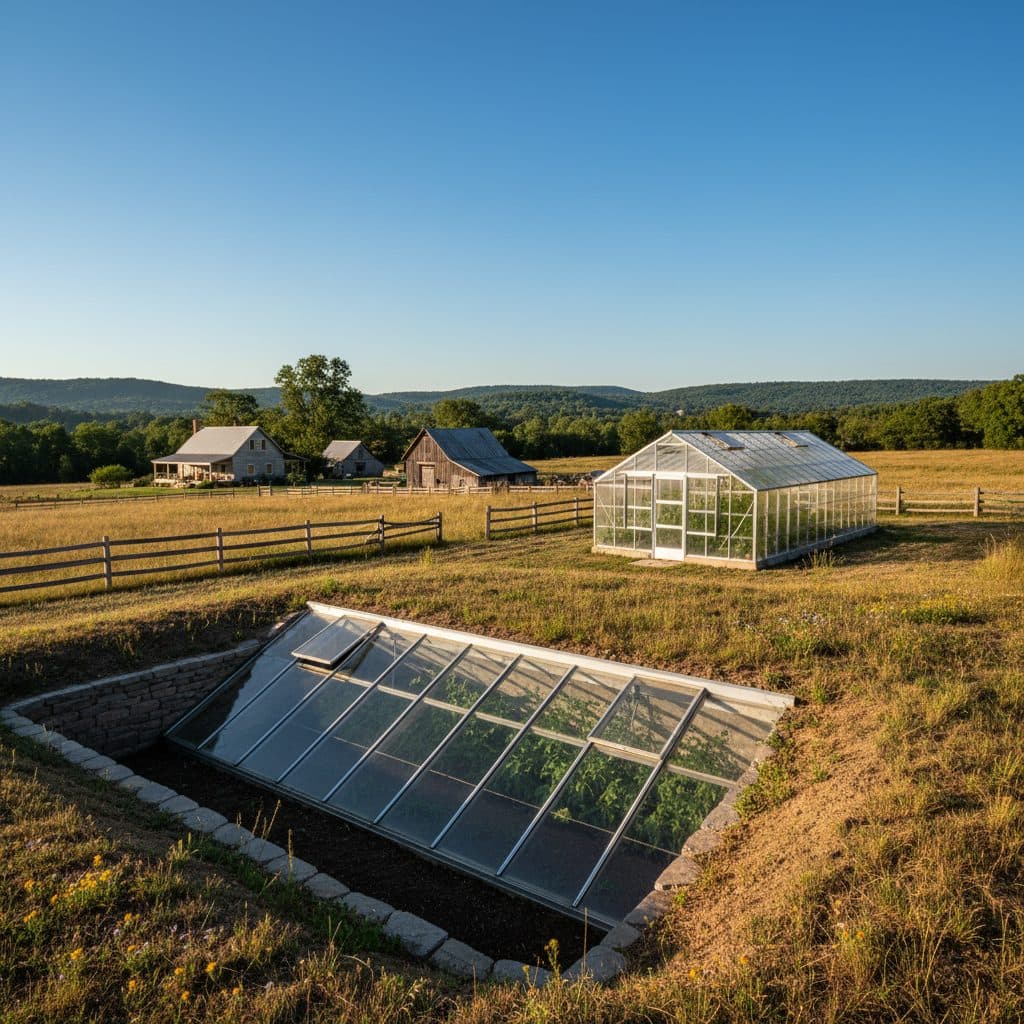
The Walipini, or pit greenhouse, is a growing structure built partially or entirely below ground level, harnessing the earth’s stable temperature to moderate internal climate. This design is particularly appealing in regions with extreme temperature swings, such as the Mountain West, where winter nights can drop to -20°F and summer days exceed 90°F. In contrast, an above-ground greenhouse sits entirely on the surface, relying on its glazing and active systems for climate regulation. A typical above-ground structure might be 8 ft tall at the eaves and 12 ft at the ridge, covering 300 square feet.
Basic design principles
A Walipini’s core principle is thermal mass, using the surrounding soil to absorb and release heat slowly. For instance, soil at 8 ft deep in USDA zone 5 keeps a relatively constant temperature of 50-55°F year-round, significantly warmer than ambient air in winter. Above-ground greenhouses, however, depend on materials like polycarbonate or glass to trap solar radiation, which can lead to rapid heat loss after sunset, especially in areas like northern Minnesota where winter nights can be long and cold. The choice between these two often comes down to balancing initial construction effort against long-term operational savings and specific site conditions.
- Walipini: Excavated pit, often 6-8 ft deep.
- Walipini: North wall insulated, south-facing glazing.
- Above-ground: Frame structure (wood, metal, PVC).
- Above-ground: Glazing materials (polycarbonate, glass, film).
- Above-ground: Requires more active ventilation.
Construction costs: digging deep versus building up
The initial outlay for a Walipini versus an above-ground greenhouse presents a clear trade-off between labor and material expenses. For a Walipini, the most significant cost is excavation. Digging a 20 ft by 40 ft pit to a depth of 8 ft can displace over 200 cubic yards of soil, potentially incurring significant costs for heavy equipment rental or professional excavation services in many parts of the US. Materials for the structure itself, such as lumber for the roof frame, polycarbonate panels for glazing, and insulation for the north wall, might add another $3,000-$7,000 for a 400 square foot structure.
Material and labor breakdown
An above-ground greenhouse of similar size, say 400 square feet, might incur $4,000-$16,000 for materials alone, depending on the quality of the frame (wood, steel, or aluminum) and glazing (single-layer film, double-wall polycarbonate, or glass). For example, a commercial-grade polycarbonate greenhouse can cost $10-$40 per square foot. While a Walipini requires substantial initial earthwork, much of the construction labor can be done by the homesteader, potentially saving 30-50% on overall project costs compared to hiring contractors for a complex above-ground build. This DIY approach is a significant factor for homesteaders operating on a budget of $5,000-$10,000 for a medium-sized structure.
- Walipini excavation: $2,000-$5,000 for 200 cubic yards.
- Walipini glazing/frame: $3,000-$7,000 for 400 sq ft.
- Above-ground frame/glazing: $4,000-$16,000 for 400 sq ft.
- DIY labor savings: Up to 50% of total project cost.
- Foundation costs: Minimal for Walipini, significant for above-ground.
Climate control and operational expenses: passive vs. active systems
Operational costs, primarily heating and cooling, are where the Walipini truly shines, especially in regions with cold winters like USDA zones 3-6. The earth’s thermal mass acts as a natural battery, stabilizing internal temperatures without external energy input. For example, a well-designed Walipini in Nebraska can maintain an internal temperature of 45-55°F even when outside temperatures drop to 10°F, potentially significantly reducing heating needs compared to an above-ground structure. This passive approach minimizes the need for expensive heaters or ventilation fans, which can consume 15-30 kWh daily in a 400 square foot above-ground greenhouse during winter months.
Energy savings and solar integration
Above-ground greenhouses, particularly those in northern climates, often require active heating systems (propane, natural gas, or electric) to maintain optimal growing temperatures, which can cost hundreds of dollars per month during peak winter. They also need active ventilation in summer to prevent overheating, especially in regions like Arizona where summer temperatures can reach 110°F. Integrating off-grid solar systems can significantly offset these energy demands. A 2 kW solar array with 10 kWh of solar battery storage could cover 50-75% of an above-ground greenhouse’s daily electrical needs, reducing reliance on grid power and lowering monthly bills by $50-$150. For a Walipini, solar might power small circulation fans or supplemental LED grow lights, requiring a much smaller system, 500 watts.
- Walipini heating reduction: 60-70% in cold climates.
- Above-ground winter energy use: 15-30 kWh daily.
- Solar array for above-ground: 2 kW system for 50-75% offset.
- Solar array for Walipini: 500 watts for supplemental lighting/fans.
- Monthly heating costs (above-ground): Hundreds of dollars in winter.
Growing environment and productivity: light, temperature, and yields
The growing environment within a Walipini differs significantly from an above-ground greenhouse, primarily in light availability and temperature stability. Because a Walipini is partially subterranean, it receives less direct sunlight, especially during winter months when the sun is low in the sky. This can reduce light intensity by 10-20% compared to a fully exposed above-ground structure, potentially impacting the growth of sun-loving crops like tomatoes or peppers. However, the stable temperatures, often holding between 50-65°F even when outside is below freezing, are ideal for cool-season crops such as lettuce, spinach, and root vegetables, allowing for consistent production in USDA zone 6 and colder.
Optimizing for specific crops and conditions
Above-ground greenhouses, with their abundant light, are better suited for a wider range of crops, including those requiring high light levels for optimal yield, like cucumbers and melons. However, they demand more sophisticated climate control systems to manage temperature fluctuations, which can swing by 30-40°F in a single day without proper ventilation and heating. Research on biomass production indicates that consistent temperatures can lead to more predictable yields [4]. For example, a Walipini might produce 5-7 pounds of leafy greens per square foot annually, while an above-ground greenhouse with active climate control can yield 8-10 pounds of tomatoes per square foot, but with higher energy input. Understanding the specific needs of your desired crops and your regional climate, such as the intense summer heat of Texas, matters for maximizing productivity.
- Walipini light reduction: 10-20% less direct sunlight.
- Walipini temperature stability: 50-65°F internal, even at 0°F outside.
- Above-ground temperature swings: 30-40°F daily without control.
- Walipini leafy green yield: Yields can vary based on conditions.
- Above-ground tomato yield: Yields can vary based on conditions.
Site selection and long-term maintenance considerations
Choosing the right site is paramount for both greenhouse types, but especially for a Walipini. A critical factor for Walipini success is excellent drainage to prevent water accumulation in the pit, which can lead to structural damage and root rot. Homesteaders in areas with high water tables, like parts of Florida or Louisiana, must conduct thorough soil tests to a depth of at least 10 ft to avoid issues [5]. A proper drainage system, potentially including French drains or a sump pump, can add $500-$2,000 to the initial cost. Above-ground greenhouses are less sensitive to water table issues but require a level, stable foundation that can cost $1,000-$3,000 for a 400 square foot concrete slab.
Durability and upkeep
Long-term maintenance also differs. Walipinis, with their sturdy earth-sheltered design, often require less structural repair over time, though glazing might need replacement every 10-15 years for polycarbonate or 20-30 years for glass. The primary maintenance concern is ensuring continued drainage and preventing soil erosion around the entrance. Above-ground greenhouses, particularly those with film glazing, may require film replacement every 3-5 years, costing $200-$500 per replacement for a 400 square foot structure. Metal or wood frames might need repainting or rust treatment every 5-10 years. Considering the lifespan of various components and the frequency of repairs is essential for accurate long-term budgeting, especially for homesteaders looking to power their operations with solar panels for off-grid living, where reliability is key.
- Walipini drainage: Critical, especially in high water table areas.
- Walipini glazing lifespan: 10-15 years for polycarbonate.
- Above-ground film replacement: Every 3-5 years, costing $200-$500.
- Above-ground foundation: $1,000-$3,000 for a 400 sq ft slab.
- Soil testing depth: At least 10 ft for Walipini sites.
Making your choice: balancing costs, climate, and effort
The decision between a Walipini and an above-ground greenhouse boils down to a careful assessment of your specific homesteading goals, local climate, available resources, and willingness to invest labor. If you’re in a region with significant winter cold, like Montana or North Dakota, and have the means for initial excavation, a Walipini reduces long-term heating costs, potentially by 70%, and provides a stable, forgiving environment for cool-season crops. The initial labor for excavation is considerable, but the passive benefits are compelling for those seeking off-grid living solutions.
Final considerations for homesteaders
Conversely, if you prioritize maximizing light for a diverse range of crops, have a higher budget for active climate control, and are in a milder climate like USDA zone 7 or 8, an above-ground greenhouse might be more suitable. It offers greater flexibility in design and easier expansion. Regardless of your choice, integrating solar power systems can dramatically reduce operational expenses, turning a significant cost center into a sustainable asset. A 1 kW solar system can generate 4-5 kWh daily, making a tangible difference in your energy footprint and monthly budget, allowing you to grow year-round with greater independence.
- Walipini: Ideal for cold climates, passive heating, lower operational costs.
- Above-ground: Better light, wider crop variety, higher operational costs.
- Consider local climate: USDA zone 4 benefits most from Walipini.
- Budget for active systems: Above-ground may need $1,000+ annually for heating.
- Solar integration: Offsets 50%+ of energy needs for both types.
Walipini vs. Above-Ground Greenhouse: A Side-by-Side Comparison
Feature | Walipini (Pit Greenhouse) | Above-Ground Greenhouse |
|---|---|---|
Initial Construction Cost (per sq ft) | $5 – $15 (excavation + materials) | $10 – $40 (materials + foundation) |
Heating Cost Reduction (vs. above-ground) | 60-70% in cold climates | 0% (requires active heating) |
Temperature Stability | High (50-65°F internal, even at 0°F outside) | Low (30-40°F daily swings without control) |
Light Availability | Lower (10-20% less direct sunlight) | Higher (full sun exposure) |
Ideal Climate | Cold winters (USDA zones 3-6) | Varied, but requires active control in extremes |
Drainage Requirement | Critical (test to 10 ft depth) | Standard (level foundation) |
Maintenance Focus | Drainage, structural integrity, glazing | Glazing replacement (every 3-15 years), frame upkeep |
Excavation Cost: Digging a 20 ft by 40 ft Walipini to 8 ft deep can displace over 200 cubic yards of soil, incurring significant costs for equipment or services.
Energy Savings: A Walipini can significantly reduce heating energy needs compared to an above-ground greenhouse in USDA zone 4.
Solar Offset: A 2 kW solar array can offset 50-75% of an above-ground greenhouse’s daily electrical needs, saving $50-$150 monthly.
References
- An Adaptive Optimization Method of the Multi-Objective Model for Greenhouse Above-Ground Environmental Factors (2024).
- Methods for Estimating Above-Ground Biomass (2008).
- Above-Ground Biomass and Greenhouse Gas Emissions Using Lidar Survey (2023).
- Excavation | Elevation: Above and Below Ground in Nairobi (2025).
- USDA Natural Resources Conservation Service (2024).