Key takeaways
- Understand the three primary legal models: Community Land Trusts (CLTs), fee-simple private lots with shared common land, and full income-sharing communes.
- Evaluate initial buy-in costs, which typically range from affordable leasehold stakes to substantial private parcel purchases plus infrastructure assessments.
- Inspect shared off-grid infrastructure including community micro-grids, centralized deep solar wells, road maintenance agreements, and communal workshops.
- Assess governance frameworks; successful ecovillages use sociocracy, consent-based decision making, or modified consensus with clear dispute resolution bylaws.
- Complete extended visitor trial periods (three to six months) before committing capital or purchasing equity in an intentional off-grid community.
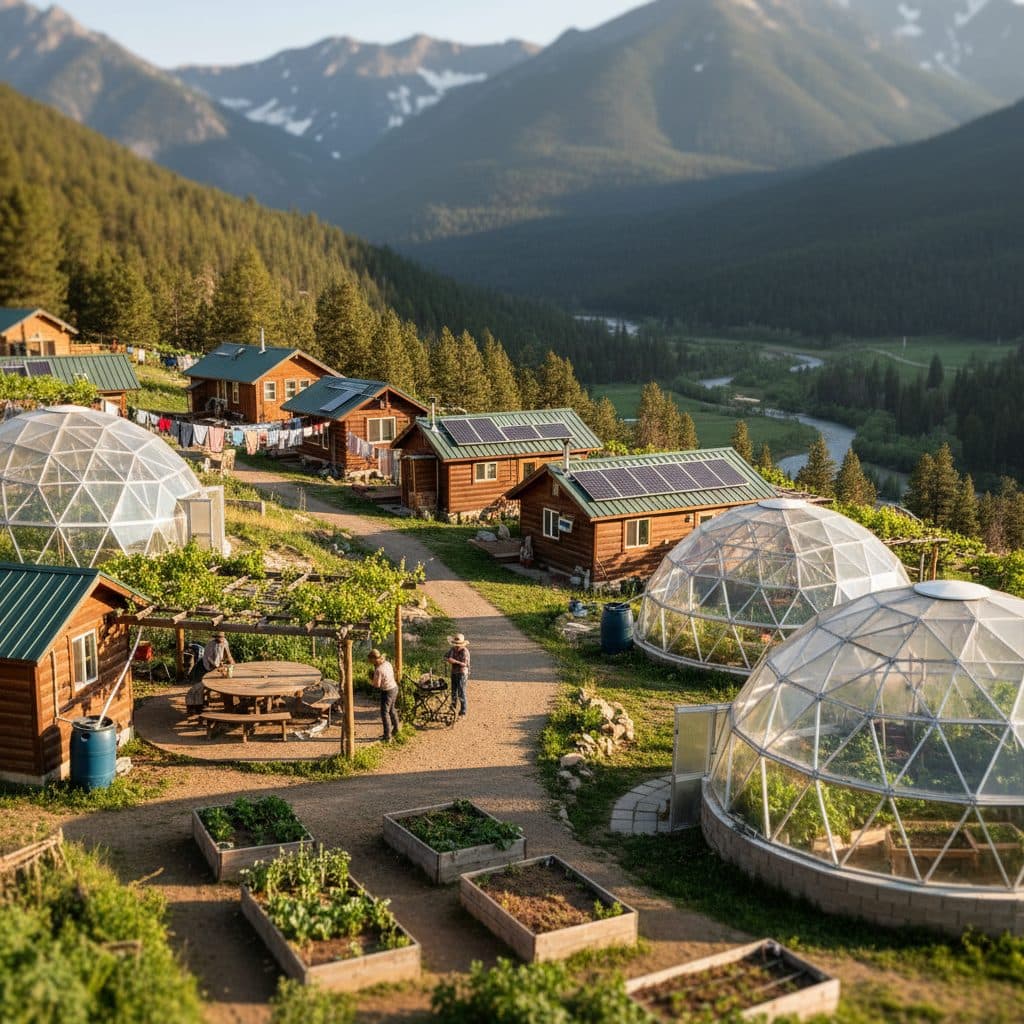
Quick answer: Off grid living communities (intentional communities and ecovillages) are organized settlements of individuals and families who collaborate to share land, renewable utilities, agricultural production, and civic responsibilities independent of municipal utility grids. Joining an off-grid community involves evaluating legal land structures (such as Community Land Trusts or private deed covenants), understanding buy-in fees, participating in trial residency programs, and aligning with community governance bylaws.
The dream of rural self-reliance often encounters steep financial and logistical hurdles when attempted in isolation. Purchasing land, developing off-grid solar arrays, drilling deep wells, and building access roads require substantial capital and labor.
Joining or founding an off-grid living community allows individuals and families to pool financial resources, share heavy equipment, divide agricultural tasks, and build mutual security.
However, community living introduces complex human and legal dynamics. Navigating governance structures, property equity models, zoning codes, and interpersonal dispute mechanisms is essential to long-term success.
Core legal and property ownership models
How an intentional community holds legal title to its real estate dictates member equity, inheritance rights, financing options, and long-term stability.
+-------------------------------------------------------------------+
|               COMMUNITY PROPERTY OWNERSHIP MODELS                 |
|                                                                   |
| [Community Land Trust (CLT)]  [Fee-Simple + Common HOA]           |
| Non-profit owns real estate   Individuals own deeded home lots    |
| Members own home structures   HOA/Trust owns shared common acreage|
| Long-term 99-year land leases Preserves private resale equity     |
| Prevents land speculation     Standard bank mortgage eligible     |
|                                                                   |
| [Housing Cooperative (Co-op)] [Income-Sharing Commune]            |
| Corporation holds land title  Community owns all assets & revenue |
| Members buy corporate shares  Stipend provided; no private equity |
+-------------------------------------------------------------------+
+------------------------+-----------------------------------+-------------------------+
| Legal Structure | Equity Ownership | Financing Complexity |
+------------------------+-----------------------------------+-------------------------+
| Community Land Trust | Equity in building only | Specialty CLT lenders |
| Fee-Simple + Common HOA| Deed to private lot + shared land | Standard land/home loan |
| Housing Cooperative | Proprietary share in corporation | Share loan financing |
| 501(d) Religious/Apostolic| Zero individual private equity | Internal community fund |
+------------------------+-----------------------------------+-------------------------+Under the Community Land Trust model, the trust holds the underlying land in perpetuity to ensure affordability and environmental stewardship, while individual members own their houses and equity improvements. This prevents gentrification and real estate speculation while providing personal property rights.
Review land purchasing criteria and zoning assessments in our foundational guide on land for homesteading.
Shared off-grid infrastructure systems
Pooling capital allows ecovillages to build robust, commercial-grade utility systems that would be cost-prohibitive for a single homestead.
+------------------------+-----------------------------------+-------------------------+
| Infrastructure System  | Community Implementation          | Shared Benefit          |
+------------------------+-----------------------------------+-------------------------+
| Potable Water          | High-volume solar well + cisterns | Redundant filtration    |
| Power Generation       | Central micro-grid or micro-hydro | Lower per-kWh solar cost|
| Access Roads           | Shared tractor + gravel equipment | Year-round access       |
| Agriculture            | Shared greenhouse + walk-in cooler| Bulk harvest storage    |
| Fabrication            | Woodworking shop + metal tools    | Heavy machinery access  |
| Waste Cycling          | Constructed wetland greywater     | Safe ecological cycling |
+------------------------+-----------------------------------+-------------------------+
+-------------------------------------------------------------------+
| COMMUNITY UTILITY NETWORK TOPOLOGY |
| |
| [Central Solar Array / Micro-Hydro] ---> [Main 48V Battery Bank]|
| | |
| +------------------------------------------------------+ |
| v v |
| [Shared Kitchen / Cold Storage] [Private Home Feeds]|
| [High-Draw Well Pumps & Workshop] (Sub-metered Power) |
+-------------------------------------------------------------------+Centralizing high-draw equipment (such as deep well pumps, heavy woodshop planers, and walk-in crop refrigeration) reduces the electrical peak demand required on individual residential home inverters. Shared heavy machinery, such as backhoes and tractors, allows roads and drainage ditches to be cleared quickly without paying outside contractor rates.
Compare off-grid energy planning with household self-reliance models in self-sufficient-living.
Geographic regions and climate considerations in the US
Intentional off-grid communities are distributed across several major geographic corridors in the United States, each offering distinct advantages and climatic challenges.
+--------------------+-------------------------+--------------------+------------------------+
| Geographic Region  | Example States          | Major Advantages   | Primary Challenges     |
+--------------------+-------------------------+--------------------+------------------------+
| Southwest Desert   | New Mexico, Arizona     | 300+ sunny days/yr | Extreme water scarcity |
| Pacific Northwest  | Oregon, Washington      | Abundant timber/H2O| Cloudy winter solar    |
| Ozark Plateau      | Missouri, Arkansas      | Lenient building/pH| Humid summer fungal    |
| Southern Appalachia| North Carolina, Virginia| High rainfall, soil| Mountain access, slopes|
| Great Lakes Basin  | Michigan, Wisconsin     | Cheap fertile land | Severe winter freezing |
+--------------------+-------------------------+--------------------+------------------------+
The Ozarks and parts of the Southwest (such as Taos County, New Mexico) have historically attracted off-grid builders due to relaxed county building codes and affordable acreage. In contrast, the Pacific Northwest provides abundant surface water and timber but requires micro-hydro or backup wood-gasification during overcast winter months.
+-------------------------------------------------------------------+
|            LEGAL WARNING: WESTERN US WATER RIGHTS DOCTRINE        |
+-------------------------------------------------------------------+
| In Western US states operating under the Prior Appropriation      |
| doctrine ("first in time, first in right"), owning land does NOT  |
| automatically grant rights to drill a well, dam a creek, or      |
| harvest large volumes of rainwater. Water rights are separate     |
| real property deeds. Always verify adjudicated water rights and   |
| domestic well permit availability with the State Water Engineer   |
| before purchasing rural or off-grid community land.               |
+-------------------------------------------------------------------+
Explore regional survival and farming dynamics in our regional guide on prairie homesteading.
Financial costs: buy-in fees and monthly dues
Joining an established off-grid community requires clear financial accounting. Costs generally split into initial capital buy-ins and ongoing operating assessments.
+-------------------------------------------------------------------+
|               TYPICAL COMMUNITY FINANCIAL STRUCTURE               |
+-------------------------------------------------------------------+
| 1. Membership Application Fee: $100 to $500 (covers background)   |
|2. Capital Buy-In Equity:      $25,000 to $120,000 (land/utilities)|
|  3. Monthly Common Dues:        $150 to $450 (roads, power, water)|
| 4. Labor Commitment:           10 to 20 hours monthly shared work |
|5. Home Construction:          Self-funded building per code/covenant|
+-------------------------------------------------------------------+
Navigating exit clauses and escrow
Before signing a community agreement, carefully review the legal exit clause. If you decide to leave the community after five years:
- How is your equity refunded?
- Does the community hold a right of first refusal on your dwelling?
- What is the resale approval process for incoming buyers?
Transparent, legally binding exit covenants protect both the departing individual's capital and the community's cultural continuity. Many mature communities place capital buy-in funds into protected escrow accounts to ensure funds are available when long-standing members transition away.
Governance, decision-making and social dynamics
Interpersonal conflicts and underspecified governance are the primary causes of intentional community collapse, far outpacing engineering or financial failures. Historic intentional community studies indicate that early-stage groups face failure rates exceeding 70 to 80 percent, largely driven by burnout, unclear financial agreements, and decision paralysis.
+------------------------+-----------------------------------+-------------------------+
| Governance Model       | Decision Mechanism                | Strengths & Weaknesses  |
+------------------------+-----------------------------------+-------------------------+
| Pure Consensus         | 100% agreement required           | High inclusion; slow    |
| Sociocracy / Dynamic   | Consent-based; no valid objections| Rapid policy; structured|
| Modified Consensus     | 80-90% supermajority threshold    | Prevents single vetoes  |
| Board of Directors     | Elected representative council    | Fast; less direct input |
+------------------------+-----------------------------------+-------------------------+
Sociocracy (consent-based governance through specialized circles) has largely replaced traditional 100% consensus in modern ecovillages. Circles manage specific operational domains (agriculture, water systems, finance, visitor intake) with autonomy, preventing community-wide meetings from gridlocking over minor maintenance decisions.
Step-by-step process for joining a community
Finding the right community requires patient research and hands-on trial periods.
+-------------------------------------------------------------------+
|               COMMUNITY INTEGRATION PROTOCOL                      |
|                                                                   |
| Step 1: Research Directories (FIC / Fellowship for Intentional    |
|         Community databases and published community mission vows) |
|                              |                                    |
| Step 2: Visitor Weekend (Initial tour, work day, member interview)|
|                              |                                    |
| Step 3: Extended Trial Residency (3 to 6-month seasonal internship|
|         to experience winter cold, summer mud, and real meetings) |
|                              |                                    |
| Step 4: Provisional Membership (Provisional voting, trial year)   |
|                              |                                    |
| Step 5: Full Equity Buy-In and Long-Term Leasehold Execution      |
+-------------------------------------------------------------------+
Never invest capital based solely on a weekend summer retreat. Living through a muddy spring or a sub-zero winter work cycle provides an honest assessment of community cohesion, infrastructure durability, and daily reality.
For broader lifestyle models and sustainable living approaches, see what is homesteading and modern homesteading.