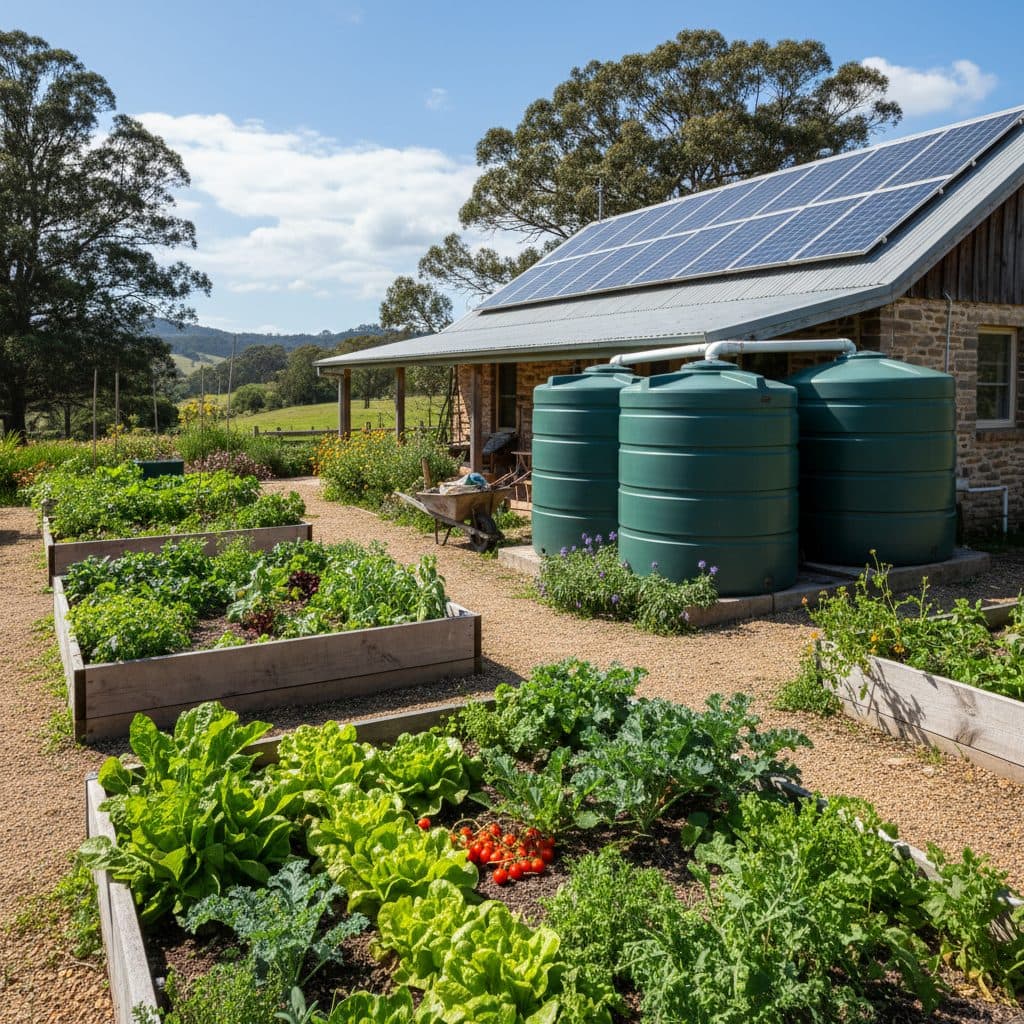
Key takeaways
- Transition toward self-reliance systematically across food production, water security, energy independence, waste cycling, and repair skills.
- Focus first on high-calorie, long-storing staple crops like winter squash, dry beans, potatoes, and garlic to displace commercial grocery needs.
- Establish redundant water catchment systems combining roof rainwater harvesting, gravity storage, and multi-stage ceramic filtration.
- Preserve seasonal food abundance through root cellaring, dehydration, lacto-fermentation, and pressure or water bath canning.
- Build localized community networks and barter relationships rather than pursuing total, isolated survivalism.
Quick answer: Self-sufficient living is the gradual, systematic transition from dependency on centralized commercial supply chains toward decentralized household and community production. Achieving self-sufficiency requires establishing core domestic competencies: cultivating calorie-dense and nutrient-rich food gardens, securing potable rainwater or well water, minimizing energy waste through wood or solar power, preserving food for winter, and developing mechanical maintenance and repair skills.
Modern supply chains deliver convenience but leave households vulnerable to economic inflation, weather disruptions, and resource shortages. Cultivating self-reliant household systems restores control over your food, water, and daily living security.
However, self-sufficient living is rarely an all-or-nothing, instantaneous leap to total off-grid isolation. True self-reliance is a phased, practical journey of developing specific domestic production skills and reducing household consumption debts.
Whether you live on a quarter-acre suburban lot or a multi-acre rural homestead, building resilience step by step transforms consumers into capable, self-directed producers.
The phased framework for household self-reliance
Attempting to implement every self-sufficiency skill simultaneously leads to burnout and financial strain. A phased progression ensures each system becomes stable before adding the next layer of complexity.
+-------------------------------------------------------------------+
|               THE FOUR-PHASE SELF-SUFFICIENCY ROADMAP             |
|                                                                   |
| [Phase 1: Basic Skills]  ---> Cooking from scratch, bulk pantry,  |
|                               container food, composting, budgeting|
|                                         |                         |
| [Phase 2: Food & Water]  ---> Raised bed gardens, rainwater tanks,|
|                               fermentation, small-batch canning   |
|                                         |                         |
| [Phase 3: Small Livestock] -> Backyard poultry, perennial orchard,|
|                               solar backup, root cellaring        |
|                                         |                         |
| [Phase 4: Full Systems]  ---> Timber lot management, dairy stock, |
|                               off-grid power, community barter    |
+-------------------------------------------------------------------+
+------------------------+-----------------------------------+-------------------------+
| Resilience Pillar | Beginner Homestead Goal | Advanced Homestead Goal |
+------------------------+-----------------------------------+-------------------------+
| Food Production | Fresh greens, herbs, 3-mo pantry | 50%+ annual family calories|
| Water Security | Rain barrel for garden irrigation | Off-grid potable system |
| Energy Independence | Portable power station + wood stove| Grid-tied or off-grid solar|
| Waste & Fertility | Kitchen compost + worm bin | Livestock manure cycling|
| Fabrication & Repair | Hand tool carpentry + sewing | Small engine maintenance|
+------------------------+-----------------------------------+-------------------------+Financial debt reduction is an essential prerequisite in Phase 1. Lowering fixed monthly overhead allows households to direct capital toward durable tools, soil amendments, and water storage infrastructure.
Review foundational definitions and principles in our guide on what is homesteading and explore small-acreage planning in homesteading on an acre.
Cultivating calorie-dense home food systems
Many beginners fill their gardens with low-calorie vegetables like lettuce, radishes, and cucumbers. While rich in vitamins, these crops do not supply the caloric density necessary to reduce grocery store dependence.
+--------------------+-------------------------+--------------------+------------------------+
| Crop Category      | High-Resilience Species | Storage Life       | Caloric Density        |
+--------------------+-------------------------+--------------------+------------------------+
| Storage Roots      | Potatoes, sweet potatoes| 4 to 8 Months      | High carbohydrates     |
| Winter Squash      | Butternut, Waltham, Kabocha| 5 to 7 Months   | Complex carbs & beta-car|
| Dry Legumes        | Pinto beans, black beans| 3 to 5 Years (dry) | High protein & fiber   |
| Alliums            | Storage onions, garlic  | 6 to 9 Months      | Essential seasoning    |
| Perennial Fruit    | Apples, pears, berries  | Dried or canned    | Vitamins & natural sugar|
+--------------------+-------------------------+--------------------+------------------------+
Designing the calorie core and acreage realities
Dedicate at least 60 percent of your growing area to storage crops that hold for months in cool pantries without electricity. Potatoes produce substantial carbohydrates per square foot, while dry beans and winter squash provide stable winter nourishment.
While a quarter-acre to one-acre homestead can supply fresh seasonal produce, culinary herbs, and eggs, achieving near-complete caloric self-sufficiency (producing all grain, dairy, meat, and winter livestock feed) realistically requires 2 to 5 acres of productive land for a family of four.
Calculate annual family consumption targets: a family of four typically consumes 300 to 400 pounds of storage potatoes, 40 to 60 winter squashes, and 50 pounds of dry beans over winter. Sizing garden plots to meet these calorie targets forms the bedrock of household food security.
Complement ground beds with intensive methods from apartment homesteading.
Establishing decentralized water security
Access to clean, reliable water is the primary limiting factor for both family survival and garden production during prolonged droughts.
+-------------------------------------------------------------------+
|               HOMESTEAD WATER HARVESTING HIERARCHY                |
|                                                                   |
|   [Roof Catchment] ---> [First-Flush Diverter] ---> [Storage Tank]|
|                                                          |        |
|   +------------------------------------------------------+        |
|   v                                                      v        |
| [Garden Drip Irrigation]                      [Potable Filtration]|
| (Gravity-fed lines)                           (Sediment + Carbon  |
|                                                - Ceramic Filter)  |
|                                                                   |
|   Check state water rights before installing large cistern arrays.|
+-------------------------------------------------------------------+
+------------------------+-----------------------------------+-------------------------+
| Catchment System | Best Use Case | Storage Method |
+------------------------+-----------------------------------+-------------------------+
| Rainwater Barrels | Direct garden hose / drip feeding | 55-gal to 275-gal IBCs |
| Cistern Storage | Whole-homestead seasonal reserves | 1,000 to 5,000-gal tanks|
| Swales & Earthworks | Passive groundwater recharge | In-ground contour mulch |
| Well with Hand Pump | Ground water backup during outages| Direct aquifer draw |
+------------------------+-----------------------------------+-------------------------+Calculate your roof runoff capacity: 1 inch of rainfall falling on a 1,000-square-foot roof yields approximately 600 gallons of harvestable water. Installing gutter screens and first-flush diverters keeps particulate sediment out of your storage vessels.
For drinking water security, pair raw rainwater storage with gravity-fed ceramic candle filters capable of removing bacteria and suspended protozoa without electrical power.
Long-term food preservation and storage
Growing surplus food is wasted effort without the equipment and knowledge to preserve it through winter safely.
+------------------------+-----------------------------------+-------------------------+
| Preservation Method    | Target Foods                      | Power Dependency        |
+------------------------+-----------------------------------+-------------------------+
| Root Cellaring         | Potatoes, carrots, apples, squash | Zero power (passive cold)|
| Water Bath Canning     | High-acid fruits, pickles, jams   | Heat source only (stove)|
| Pressure Canning       | Low-acid meats, broths, vegetables| Heat source only (stove)|
| Dehydrating            | Herbs, sliced fruit, beef jerky   | Low electric or solar   |
| Lacto-Fermentation     | Sauerkraut, kimchi, sour pickles  | Zero power (ambient temp)|
+------------------------+-----------------------------------+-------------------------+
Food Safety Imperative: Low-acid foods (such as green beans, corn, root vegetables, meats, and poultry broths) MUST be processed exclusively in a certified pressure canner at 10 to 15 psi following USDA tested guidelines to destroy lethal Clostridium botulinum spores. Boiling water bath canning is safe only for high-acid foods (pickles, jams, fruits, and acidified tomato products).
Root cellaring uses natural earth thermodynamics (high humidity and temperatures between 34°F and 40°F / 1°C and 4°C) to keep tubers and root crops crisp without electrical refrigeration.
Master passive cold storage through root cellaring and safe shelf-stable processing via water bath canning.
Heating, energy efficiency and waste cycling
Energy resilience begins by reducing household thermal demand before sizing alternative power systems.
+-------------------------------------------------------------------+
|               HOUSEHOLD ENERGY AND WASTE CYCLING                  |
+-------------------------------------------------------------------+
| 1. Passive Solar & Insulation: Thick insulation, south windows    |
| 2. Biomass Wood Heat:          EPA-certified wood stove / insert  |
|3. Solar Photovoltaics:        Off-grid battery bank for essentials|
| 4. Soil Fertility Loop:        Compost all kitchen/garden waste   |
| 5. Greywater Re-use:           Non-toxic laundry water to trees   |
+-------------------------------------------------------------------+
A well-insulated home heated with a high-efficiency wood stove reduces winter grid dependence entirely. Heating a home through cold northern winters typically requires 3 to 5 full cords (128 cubic feet per cord) of dry, seasoned hardwood per year, which sustainably requires 5 to 10 acres of managed, selectively thinned woodlot. Pair passive heating with a modest 48V solar-plus-storage array to keep refrigerators, water pumps, and communications operational during extended grid failures.
Managing a closed fertility cycle means cycling every scrap of organic matter back to the soil. Animal bedding, garden stalks, kitchen scraps, and wood ash replenish potassium and phosphorus in garden beds without relying on commercial synthetic bags.
Practical mechanical skills and community mutual aid
The most overlooked aspect of self-sufficient living is mechanical capability and community collaboration. No single homestead can produce everything it consumes.
+------------------------+-----------------------------------+-------------------------+
| Practical Skill Area   | Essential Capabilities            | Household Value         |
+------------------------+-----------------------------------+-------------------------+
| Carpentry & Framing    | Building sheds, raised beds, fences| Eliminates contractor fees|
| Plumbing & Pipework    | PVC/PEX connections, pump rebuilds| Water system repairs    |
| Small Engine Care      | Carburetor cleaning, oil changes  | Keeps tillers/saws running|
| Food Animal Care       | Basic husbandry, coop hygiene     | Flocks remain disease-free|
| Mutual Aid & Barter    | Trading surplus eggs for honey    | Community resilience    |
+------------------------+-----------------------------------+-------------------------+
Maintaining a well-stocked workshop with durable hand tools (crosscut saws, hand planes, chisels, augers) ensures projects continue even when power tools fail.
True resilience means deep participation in a resilient local economy of neighboring gardeners, craftspeople, and farmers who share equipment, labor, and heritage seed stocks, instead of solitary survivalism behind a locked gate.