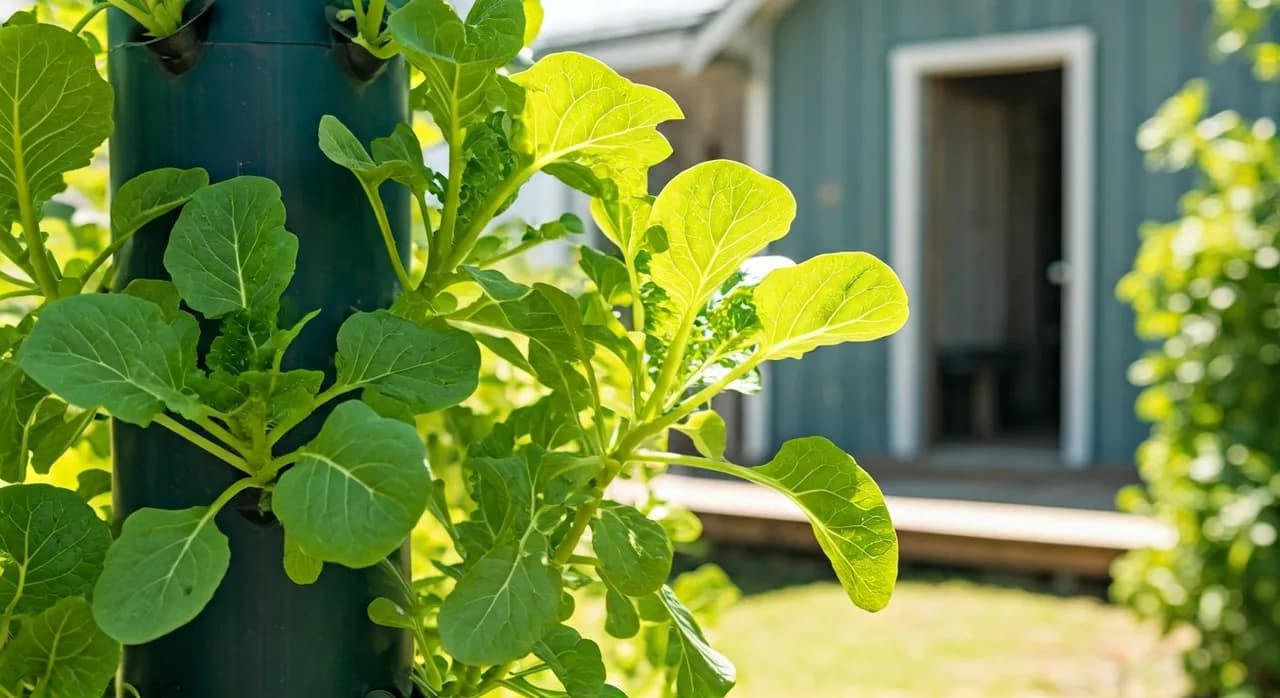
Key takeaways
- Implement short, frequent pump cycles (e.g., 15 minutes on, 45 minutes off) for optimal nutrient delivery and oxygenation.
- Use pressure-compensating emitters with a flow rate of 0.5 to 1 gallon per hour to ensure uniform drip distribution across all plant sites.
- Regularly inspect drip lines and emitters for clogs, especially in systems using nutrient solutions with high mineral content.
- Monitor plant health indicators like leaf turgor and growth rate to identify and address dry spots early, preventing significant yield reductions.
- Consider larger reservoir volumes (e.g., 20 gallons for a 4-foot tower) to buffer nutrient solution changes and reduce pump wear.
Quick answer: Optimize hydroponic tower irrigation by implementing short, frequent pump cycles and using pressure-compensating emitters for uniform nutrient delivery. Regularly inspect drip lines and monitor plant health to prevent dry spots.
In the arid landscapes of Arizona, where water conservation is paramount, or in the bustling urban centers of New York, vertical hydroponic towers offer a compelling solution for growing fresh produce with significantly less water than traditional farming. A well-managed hydroponic tower can produce more yield per square foot compared to horizontal systems, but achieving this efficiency hinges on precise irrigation. The core challenge lies in ensuring every plant, from the top tier to the bottom, receives a consistent and adequate supply of nutrient-rich water.
Many growers, especially those in USDA Zone 7 experimenting with year-round indoor cultivation, often face issues like uneven growth or wilting plants, which are frequently symptoms of inconsistent water delivery. Understanding how to properly set pump cycling, optimize drip distribution, and proactively prevent dry spots matters for getting the most from your tower. A system that delivers nutrients unevenly can reduce overall plant vigor and lead to significant crop losses if not addressed promptly.
Understanding pump cycling for tower systems
Proper pump cycling is the backbone of a successful hydroponic tower system, directly impacting nutrient uptake and oxygen availability to plant roots. Unlike deep water culture systems where roots are constantly submerged, tower systems rely on intermittent watering to allow roots to breathe between cycles. For most leafy greens and herbs, such as basil or lettuce grown in a reflective indoor grow tent, a cycle of 15 minutes on and 45 minutes off is a common starting point, especially in environments with average temperatures around 70°F. This frequency ensures roots remain moist without becoming waterlogged, promoting healthy growth and preventing root rot, which can devastate a crop quickly.
Optimizing cycle duration and frequency
The ideal pump cycle duration depends on several factors, including ambient temperature, humidity levels, plant size, and the type of growing medium used. In hotter climates, like those experienced in parts of California’s Central Valley where summer temperatures can exceed 90°F, shorter off-cycles or longer on-cycles might be necessary to prevent rapid drying of the root zone. Conversely, in cooler indoor settings, extending the off-cycle to 60 minutes or more can be beneficial. It’s important to observe your plants daily; wilting between cycles indicates insufficient watering, while stunted growth or yellowing leaves can signal overwatering or lack of oxygen. Adjustments should be made in small increments, perhaps by five to ten minutes at a time, to gauge plant response effectively. For instance, a 5-foot tower with 30 plant sites might require slightly longer ‘on’ times than a 3-foot tower with 18 sites to ensure water reaches all levels.
- Enhanced oxygenation: Intermittent cycles expose roots to air, crucial for respiration and nutrient absorption.
- Reduced waterlogging: Prevents roots from sitting in stagnant water, minimizing the risk of anaerobic conditions.
- Efficient nutrient delivery: Flushes the root zone with fresh nutrient solution multiple times a day.
- Energy conservation: Shorter pump run times can reduce electricity consumption over continuous operation.
- Temperature regulation: Helps prevent the nutrient solution from overheating, especially in warm environments above 80°F.
Drip distribution: the heart of even feeding
Even nutrient distribution is paramount for consistent plant growth across all levels of a hydroponic tower. Without it, some plants will thrive while others struggle, leading to uneven harvests and wasted resources. The primary mechanism for distributing water in most tower systems is a network of drip lines and emitters. A common issue is varying flow rates, where plants at the top receive more water than those at the bottom, or vice versa, especially in towers taller than 4 feet. This can result in a noticeable difference in growth rates between the top and bottom sections of a single tower if not managed.
Choosing and maintaining emitters
For vertical towers, pressure-compensating (PC) emitters are often the best choice. These emitters deliver a consistent flow rate, typically between 0.5 and 1 gallon per hour (GPH), regardless of pressure fluctuations within the drip line, which can be significant in a tall tower system. This consistency helps prevent 'dead spots' or dry zones where roots might not receive enough moisture, a common problem. Inspect these emitters regularly. In systems using hard water or nutrient solutions with high mineral content, emitters can clog over time, reducing flow significantly. A simple visual check during each nutrient reservoir top-off, typically every three to five days, can help catch clogs early. You might consider using a hand pump pressure sprayer to periodically flush lines with plain water. For optimal performance, replace emitters every one to two years, or sooner if you observe consistent clogging despite cleaning efforts.
- Pressure-compensating emitters: Deliver uniform flow rates (e.g., 0.5 GPH) across varying system pressures.
- Regular inspection: Check emitters weekly for blockages or reduced flow.
- Filter installation: Use a mesh filter (e.g., 120-mesh) at the pump to prevent particulate matter from entering drip lines.
- Acid flushing: Periodically flush lines with a mild acid solution (e.g., pH 4.0) to dissolve mineral buildup.
- Proper tubing size: Use appropriate diameter tubing (e.g., 1/2 inch main line, 1/4 inch feeder lines) to maintain adequate pressure.
Identifying and preventing dry spots
Dry spots are localized areas within the root zone that do not receive sufficient moisture or nutrients, leading to stressed plants and reduced yields. These ‘blind spots’ can develop unnoticed. In a hydroponic tower, dry spots often occur at lower plant sites due to insufficient pump pressure, or at specific sites where an emitter is clogged. For example, a tower with 36 plant sites might show signs of stress on five or six plants before the problem becomes widespread. Early detection is key to preventing significant crop losses,
Common causes and solutions
One of the most common causes of dry spots is a clogged drip emitter. Mineral buildup from nutrient salts or algae can restrict water flow, reducing it from 1 GPH to a mere trickle. Regularly checking each emitter for consistent dripping during a pump cycle, perhaps twice a week, can identify these issues. Another cause is insufficient pump power; a pump rated for 200 gallons per hour (GPH) might struggle to adequately supply a 6-foot tower with 40 plant sites, especially if there’s significant head pressure. Ensuring your pump is properly sized for your tower’s height and number of emitters is critical. A general rule of thumb is to select a pump that can deliver at least 1.5 times the total required flow rate at the maximum head height. For instance, a tower requiring 20 GPH total flow at a 6-foot lift needs a pump capable of at least 30 GPH at that height. Uneven nutrient distribution can be as detrimental as a complete lack of water, causing specific plants to underperform compared to their well-irrigated neighbors.
- Visual inspection: Look for wilting leaves, stunted growth, or discolored foliage on individual plants.
- Root zone check: Gently pull back growing media to visually inspect root moisture levels.
- Emitter flow test: Place a small container under each emitter during a cycle to verify consistent flow rates.
- Pressure gauge: Install a pressure gauge on the main drip line to monitor system pressure and detect drops.
- Thermal imaging: (Advanced) Use a thermal camera to identify cooler, well-watered areas versus warmer, dry spots, particularly useful in large setups or commercial operations.
System maintenance and monitoring for long-term success
Consistent maintenance and diligent monitoring are not optional; they are fundamental to the long-term success and productivity of your hydroponic tower. Neglecting these aspects can lead to a cascade of problems, from nutrient deficiencies to disease outbreaks, ultimately reducing yields significantly. Think of it like avoiding ‘straight-road hazards’ in a vehicle; routine checks prevent unexpected breakdowns. A well-maintained system, whether in a small backyard in Florida or a commercial greenhouse in Ohio, operates more efficiently and reliably.
Routine checks and adjustments
Clean your reservoir every two to four weeks to prevent algae growth and nutrient imbalances. When cleaning, completely drain the old nutrient solution, scrub the reservoir walls to remove any biofilm, and refill with fresh water and nutrients. Monitoring the pH and Electrical Conductivity (EC) of your nutrient solution daily is also vital; a pH drift outside the optimal range of 5.8 to 6.2 can lock out essential nutrients, while a fluctuating EC indicates inconsistent nutrient uptake. For example, if your EC drops rapidly, your plants are consuming nutrients quickly, and you may need to add more. If it rises, they are consuming water faster than nutrients, suggesting you might need to dilute the solution. In USDA Zone 6, where seasonal temperature swings can impact water evaporation rates, more frequent checks might be necessary. Consider a reservoir size of at least 15-20 gallons for a 4-foot tower with 20-30 plant sites to provide adequate buffer capacity and reduce the frequency of adjustments.
- Daily pH/EC checks: Monitor nutrient solution parameters and adjust as needed.
- Weekly plant inspection: Look for signs of stress, pests, or disease on all plants.
- Bi-weekly reservoir cleaning: Drain, clean, and refill the nutrient reservoir every 14 days.
- Monthly pump inspection: Check the pump for debris, wear, and proper function.
- Quarterly system flush: Run plain, pH-balanced water through the entire system for 24 hours to clear mineral buildup.
Comparison of two common pump cycling strategies for hydroponic towers
Strategy | On/Off Cycle | Benefits | Considerations |
|---|---|---|---|
Frequent Short Bursts | 15 minutes on / 45 minutes off | Maximizes root oxygenation, prevents waterlogging, suitable for most leafy greens and herbs, reduces pump wear over continuous operation. | Requires precise timer settings, may need adjustment in very hot (above 85°F) or very dry (below 40% RH) conditions. |
Longer, Less Frequent | 30 minutes on / 2 hours off | Can be more forgiving for less attentive growers, suitable for larger plants or denser media, potentially less energy use if off-cycle is significantly longer. | Higher risk of dry spots if off-cycle is too long, especially in warm conditions, less frequent nutrient delivery to roots, may lead to nutrient lockout if root zone dries too much. |
Optimal cycle: For most hydroponic towers, a pump cycle of 15 minutes on and 45 minutes off is a good starting point, ensuring roots receive adequate oxygen and nutrients.
Emitter flow: Pressure-compensating emitters delivering 0.5 to 1 gallon per hour are recommended to ensure uniform water distribution across all plant sites in a vertical tower.
Yield impact: Unaddressed dry spots can reduce hydroponic tower yields, significantly impacting overall productivity and resource efficiency.
Reservoir size: A 20-gallon reservoir for a 4-foot tower with 20-30 plant sites provides sufficient buffer for nutrient solution stability and reduces maintenance frequency.
Frequently asked questions
How often should I run my hydroponic tower pump?
For most hydroponic tower systems, running the pump for 15 minutes every hour is a good starting point. This means 15 minutes on, 45 minutes off. However, in hotter climates or with larger plants, you might need to increase the ‘on’ time by 5-10 minutes to prevent the root zone from drying out too quickly.
What causes dry spots in a hydroponic tower?
Dry spots in a hydroponic tower are typically caused by clogged drip emitters, insufficient pump pressure for the tower’s height, or kinks in the drip lines. Mineral buildup from nutrient solutions can reduce emitter flow by over 50% if not regularly cleaned, leading to localized drought for plants.
How can I ensure even water distribution to all plants?
To ensure even water distribution, use pressure-compensating (PC) drip emitters that deliver a consistent flow rate, such as 0.5 to 1 gallon per hour, regardless of pressure fluctuations. Regularly inspect all emitters for clogs and ensure your pump is adequately sized for your tower’s height and number of plant sites, typically providing 1.5 times the total required flow.
What are the signs of a dry spot on a plant?
Signs of a dry spot on a plant include wilting leaves, stunted growth, or yellowing foliage, particularly on individual plants or specific sections of the tower. If left unaddressed, these plants can show a noticeable reduction in growth compared to healthy plants within a week.
How often should I clean my hydroponic reservoir?
You should aim to completely drain, clean, and refill your hydroponic reservoir every two to four weeks. This prevents the buildup of algae, pathogens, and imbalanced nutrient salts, which can negatively impact plant health and system efficiency.
References
- The Criterion for Avoiding Hot Spots in Calorimeters (1980). The Criterion for Avoiding Hot Spots in Calorimeters.
- Avoiding Straight-Road Hazards (2012). Avoiding Straight-Road Hazards.
- Pressure Pulsation Characteristic Analysis of the Non-dead Spots Transition Zone between Flow Distribution Windows of Axial Piston Pump (2011). Pressure Pulsation Characteristic Analysis of the Non-dead Spots Transition Zone between Flow Distribution Windows of Axial Piston Pump.
- Avoiding Small Monochromatic Distances (2022). Avoiding Small Monochromatic Distances.
- Employing Lesser-Known Corporate Development Strategies While Avoiding Problematic Blind Spots (2022). Employing Lesser-Known Corporate Development Strategies While Avoiding Problematic Blind Spots.