Key takeaways
- Thoroughly clean all components with a 10% bleach solution or food-grade hydrogen peroxide to prevent pathogen carryover.
- Completely drain all water from pumps, lines, and reservoirs to avoid freeze damage in regions below 32°F.
- Store pumps and electrical components in a dry, temperature-stable environment, ideally above 40°F.
- Inspect and replace worn parts like O-rings and tubing before reassembly to ensure optimal performance.
- Consider a full system deep clean annually to remove accumulated mineral deposits and organic matter.
- Proper overwintering can extend the lifespan of your vertical tower system by five to ten years.
Quick answer: To maintain vertical tower systems and extend their lifespan, thoroughly clean all components, completely drain water from pumps and lines to prevent freeze damage, and store electrical parts in a stable environment. Regular inspection and replacement of worn parts are also crucial for optimal performance.
In many parts of the US, from the chilly winters of USDA zone 5 to the milder, but still distinct, seasons of zone 8, vertical tower systems offer a compelling way to grow produce in a small footprint. Growers in states like Michigan or Pennsylvania, for instance, can extend their harvest season significantly with controlled environments. As the growing season ends, seasonal maintenance prevents pump failure and component cracking that can shorten equipment lifespan by several years.
A vertical tower system, like the ones used by commercial operations in urban centers or hobbyists in their backyard, represents a significant investment, often ranging from several hundred to over a thousand dollars for a complete setup. Protecting this investment requires a systematic approach to cleaning, draining, and overwintering. Systematic maintenance prevents disease, maintains water flow, and keeps the equipment operational for subsequent seasons.
Initial breakdown and superficial cleaning
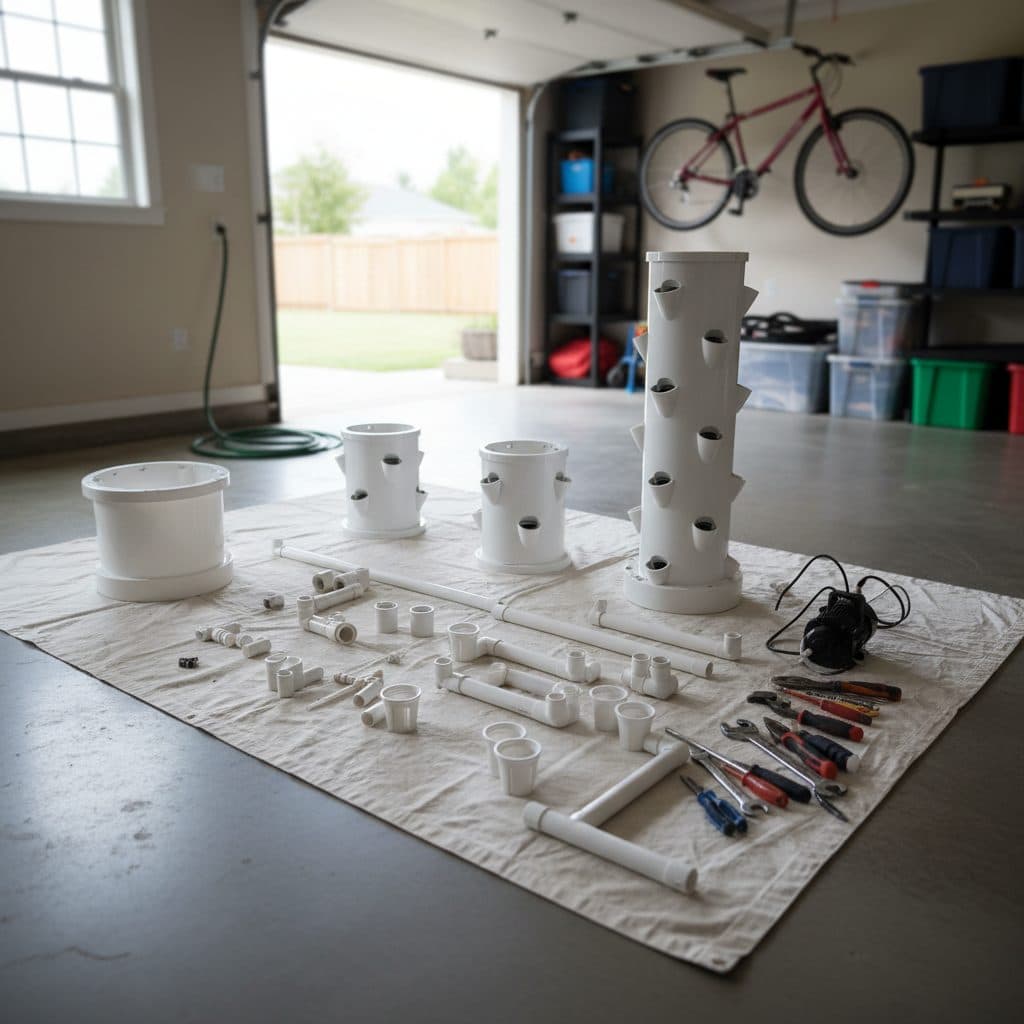
Once your final harvest is complete, typically in late fall for outdoor systems in USDA zone 7, or after a 12-month cycle for indoor setups, the first step is a thorough breakdown and initial cleaning. This involves removing all plant material, growing media, and any visible debris from the tower sections and reservoir. For instance, a 20-plant tower system might generate 10 to 15 pounds of spent root mass and growing medium after a season. Disassemble the tower into its individual sections, often 3 to 5 stackable tiers, and remove net pots and any remaining rockwool or coco coir. A simple rinse with a garden hose can remove much of the superficial grime, reducing the workload for deeper cleaning later.
Disassembling and rinsing components
Begin by disconnecting the pump from the reservoir and draining any remaining nutrient solution. For a typical 20-gallon reservoir, this might take five to ten minutes using a small utility pump or by hand. Remove the top cap and any internal plumbing, such as the central water distribution pipe. Carefully pull out each net pot, discarding the spent growing media and root systems. Systematic cleaning is important to maintain operational efficiency. Use a stiff brush to scrub away any large pieces of organic matter or algae from the surface of the tower sections. This initial effort can save hours during the sanitization phase, ensuring a cleaner outcome for the entire system.
- Disconnect pump and drain reservoir (e.g., 20 gallons of water).
- Remove all plant material and growing media (e.g., 20 net pots).
- Separate tower sections and internal plumbing (e.g., three 2-foot sections).
- Rinse all components with a strong spray from a garden hose (e.g., 50 PSI).
- Scrub away visible organic matter and algae (e.g., 15 minutes per tower).
Draining and protecting the plumbing
Proper draining is paramount, especially for outdoor systems in regions like the Midwest or Northeast where temperatures regularly drop below 32°F. Water left in pumps, tubing, or the central distribution pipe can freeze, expand, and cause irreparable damage, often cracking plastic components or seizing pump impellers. A typical 1/2-inch irrigation line can hold several ounces of water per foot, accumulating to a significant volume across a 10-foot run. After disconnecting the pump, ensure it is completely emptied of water. Many submersible pumps have small drain plugs or can be inverted to release residual water. For a detailed look at various hose types, you might consult resources like various hose types.
Winterizing pumps and lines
Once drained, store the pump indoors in a dry location where temperatures remain above 40°F. This protects the motor and seals from extreme cold and humidity. All irrigation tubing, including drip lines or distribution pipes, should also be drained and stored. Blowing compressed air through the lines at 20-30 PSI can effectively remove stubborn water droplets, particularly from smaller 1/4-inch tubing. For systems with complex plumbing, like those found in commercial aquaponics setups, ensuring every loop is dry is critical to prevent a 100-gallon reservoir from freezing solid and cracking. This attention to detail can extend the life of your plumbing by several years.
- Disconnect and drain the water pump (e.g., 300 GPH pump).
- Remove all tubing and irrigation lines (e.g., 10 feet of 1/2-inch hose).
- Use compressed air (e.g., 20 PSI) to clear residual water from lines.
- Store pumps and electrical components indoors, above 40°F.
- Inspect O-rings and seals for wear, noting any needing replacement (e.g., 3-4 seals).
Deep cleaning and sanitization
After the initial rinse and draining, a deep clean is essential to eliminate algae, biofilm, and potential plant pathogens that can harbor in crevices. A 10% bleach solution (one part household bleach to nine parts water) is a common and effective sanitizer. For a 20-gallon reservoir, this would mean 2 gallons of bleach. Alternatively, a food-grade hydrogen peroxide solution (35% concentration diluted to 3-5%) offers a less corrosive option, particularly for systems with sensitive components. Thorough cleaning is essential to prevent contamination. Allow all tower sections, net pots, and the reservoir to soak in the chosen solution for at least 30 minutes, ensuring all surfaces are submerged.
Sanitizing for pathogen prevention
Once soaked, scrub every surface with a brush, paying close attention to corners, seams, and the inside of the grow ports where algae often accumulates. For stubborn mineral deposits, especially in areas with hard water like parts of Arizona or Texas, a diluted acid solution (e.g., citric acid or vinegar at a 1:10 ratio with water) can be used, followed by another thorough rinse. After scrubbing, rinse all components meticulously with fresh water, ideally for five to ten minutes per piece, to remove all traces of the cleaning agents. Any residual bleach or peroxide can harm new plants, potentially causing root burn or stunted growth in the next cycle. This deep cleaning process can significantly reduce disease incidence in subsequent grow cycles.
- Prepare a 10% bleach or 3-5% hydrogen peroxide solution (e.g., 2 gallons of bleach for a 20-gallon reservoir).
- Soak all tower sections, net pots, and the reservoir for 30 minutes.
- Scrub all surfaces with a stiff brush to remove biofilm and algae.
- Rinse thoroughly with fresh water for at least five minutes per component.
- Allow all parts to air dry completely in a clean, dust-free area (e.g., 24-48 hours).
Overwintering and storage considerations
Once cleaned and dried, proper storage is key to extending the life of your vertical tower system. For outdoor systems in colder climates, such as USDA zone 4 in Minnesota, bringing all components indoors is non-negotiable. Store plastic tower sections, net pots, and the reservoir in a garage, shed, or basement where temperatures remain above freezing, ideally between 40°F and 70°F. Stacking tower sections can save significant space, with a typical 5-foot tower collapsing into a stack less than 2 feet tall. Protecting these components from UV degradation during storage is also important; prolonged exposure to sunlight, even during winter, can make plastics brittle over several years.
Preparing for next season’s use
Electrical components, including pumps, timers, and any grow lights, should be stored separately in a dry, temperature-stable environment. Consider placing smaller items like O-rings, spare net pots, and hardware in labeled bins or bags to prevent loss. A reflective indoor grow tent, like those found at a reflective indoor grow tent, can even serve as a clean, enclosed storage space for smaller systems. Before storing, inspect all components for wear and tear. Note any cracked net pots, brittle tubing, or frayed electrical cords. Replacing a 6-inch section of tubing now is far easier and cheaper than discovering a leak mid-season. This proactive approach can add several years to your system’s operational lifespan.
- Store all plastic components indoors, above 40°F, away from direct sunlight.
- Keep electrical components (pumps, timers) in a separate, dry, stable environment.
- Organize small parts like O-rings and hardware in labeled containers.
- Inspect for wear and tear, noting any parts needing replacement (e.g., 1-2 worn O-rings).
- Consider covering stacked tower sections with a tarp or sheet to prevent dust accumulation.
Pre-season inspection and reassembly
As spring approaches, typically in March or April for outdoor growers in USDA zone 6, it’s time to prepare your vertical tower system for another productive season. Before reassembly, conduct a thorough pre-season inspection. This is the moment to replace any worn or damaged components identified during overwintering. Check all tubing for kinks, cracks, or brittleness: a 1/2-inch main line that feels stiff might be prone to splitting. Examine the pump impeller for obstructions or signs of wear; a new impeller costs around 15 dollars and restores water flow. This inspection prevents mid-season pump failures.
Testing components and leak prevention
Reassemble the tower sections, ensuring all connections are snug and O-rings are properly seated. A light application of food-grade silicone grease on O-rings can improve their seal and extend their life by two to three years. Once assembled, fill the reservoir with plain water and run the pump for at least 30 minutes to check for leaks. Pay close attention to all connections and the base of each tower section. A small leak, even a drip every 10 seconds, can lead to a significant loss of 5 gallons or more over a week. For those interested in the broader context of water systems, understanding how aquaponics systems function can be beneficial, as detailed in how aquaponics systems function. Addressing any leaks before adding nutrients and plants saves time and resources, ensuring a smooth start to the growing season.
- Inspect all stored components for damage or wear (e.g., 2-3 connections).
- Replace worn O-rings, tubing, or pump impellers (e.g., 15-dollar impeller).
- Reassemble tower sections, ensuring secure connections.
- Fill reservoir with water and run pump for 30 minutes to check for leaks.
- Confirm even water distribution to all grow ports (e.g., 10-20 ports).
Cleaning agent comparison for vertical tower systems
Cleaning agent | Pros | Cons | Recommended use |
|---|---|---|---|
Household bleach (10%) | Highly effective disinfectant, inexpensive, widely available. | Corrosive to some plastics/metals, requires thorough rinsing, strong odor. | General sanitization, algae removal. |
Food-grade hydrogen peroxide (3-5%) | Less corrosive, breaks down into water/oxygen, effective against pathogens. | More expensive than bleach, shorter shelf life, requires careful handling of concentrated forms. | Regular sanitization, organic system cleaning. |
White vinegar (1:10 dilution) | Natural, non-toxic, good for mineral deposits, mild odor. | Less effective against tough pathogens, slower action, not a strong disinfectant. | Mineral scale removal, light cleaning. |
Citric acid (1:10 dilution) | Excellent for mineral scale, food-safe, biodegradable. | Less effective against pathogens than bleach/peroxide, can be irritating in concentrated form. | Heavy mineral deposit removal, descaling pumps. |
Lifespan extension: Proper cleaning and overwintering can extend the operational life of a vertical tower system by many years, protecting a significant investment.
Freeze damage: Water left in plumbing can cause irreparable damage below 32°F, potentially cracking a 20-gallon reservoir or seizing a 300 GPH pump.
Frequently asked questions
How often should I deep clean my vertical tower system?
For outdoor systems in USDA zones 5-8, a deep clean is recommended annually before overwintering. Indoor systems, especially those running continuously, benefit from a deep clean every 6 to 12 months to prevent algae and pathogen buildup, which can impact plant health and yield.
Can I use dish soap to clean my vertical tower components?
While dish soap can remove grease and grime, it is not recommended for deep cleaning vertical tower components. Soaps can leave residues that are difficult to rinse completely, potentially harming plants or affecting water pH in the next cycle. A 10% bleach solution or food-grade hydrogen peroxide is much more effective for sanitization.
What temperature should I store my pump and electrical components at during winter?
Pumps and electrical components should be stored in a dry, temperature-stable environment, ideally above 40°F. Temperatures below freezing (32°F) can cause seals to crack and motors to seize, leading to costly replacements that can be 50-100 dollars for a typical submersible pump.
How do I prevent algae from returning quickly after cleaning?
To prevent algae, ensure your system is light-tight, especially the reservoir and any exposed plumbing, blocking at least 95% of light. Using opaque materials for tower sections and reservoir covers, and maintaining a consistent nutrient solution temperature below 75°F, can significantly reduce algae growth in the next season.
Is it necessary to replace all the tubing every year?
It’s not usually necessary to replace all tubing annually, but a thorough inspection is crucial. Replace any tubing that appears brittle, cracked, or discolored, especially if it’s 1/2-inch or 3/4-inch diameter. High-quality PE irrigation hose can last five to ten years with proper care and storage, but a 10-foot section might cost 15-20 dollars to replace if damaged.
References
- Vertical parts cleaning system (1997). Vertical parts cleaning system.
- New Technology, Small Footprint, Vertical Circuit Washing System For PCBAs (2016). New Technology, Small Footprint, Vertical Circuit Washing System For PCBAs.