
Key takeaways
- Rain gardens are depressed landscape features designed to capture and filter stormwater from impervious surfaces.
- They can reduce runoff volume by 70% to 90%, significantly mitigating yard flooding [2].
- Proper sizing is often calculated as 5% to 10% of the impervious area it serves.
- Native plants with deep root systems are ideal for rain gardens because they improve water infiltration and pollutant removal.
- Integrating rain gardens with other water harvesting techniques like ollas or wicking beds can maximize water use efficiency.
- Maintenance involves weeding, mulching, and checking for proper drainage, especially in the first two years.
Quick answer: Rain gardens are depressed landscape features planted with native vegetation, designed to capture and filter stormwater from impervious surfaces like roofs and driveways. They temporarily hold water, allowing it to slowly soak into the ground, reducing runoff and improving water quality.
In many parts of the United States, from the humid subtropics of Florida to the Pacific Northwest, heavy rainfall can overwhelm urban and suburban landscapes. A single 1-inch rain event on a 1,500 square foot roof can generate nearly 940 gallons of runoff, often directed straight into storm drains or, worse, pooling in your yard. This excess water isn’t just a nuisance; it erodes soil, washes away nutrients, and can even contribute to localized flooding, impacting homes and water quality downstream.
For growers and homeowners looking for a practical, effective solution, rain gardens offer a powerful answer. These thoughtfully designed depressions in the landscape capture stormwater from roofs, driveways, and other hard surfaces, allowing it to slowly soak into the ground rather than rushing away. They are a form of passive irrigation earthwork, working with nature to manage water where it falls, and they can significantly reduce runoff volume by 70% to 90% [2].
What is a rain garden and how does it work?
A rain garden is essentially a shallow depression planted with native vegetation, designed to intercept and filter stormwater runoff. Instead of allowing water from your roof or driveway to rush into storm drains, a rain garden temporarily holds it, allowing it to slowly percolate into the ground. This process mimics natural hydrological cycles, recharging groundwater and reducing the burden on municipal stormwater systems. In New York City, for instance, rain gardens have demonstrated their capacity to reduce stormwater runoff volume by 70% to 90%, proving their effectiveness in urban environments [2].
the natural filtration process
When rain falls on impervious surfaces, it picks up pollutants like oil, grease, fertilizers, and pesticides. A rain garden acts as a natural biofilter. As water enters the garden, it first slows down, allowing heavier sediments to settle. Then, the water soaks through a specialized soil mix and the root systems of the plants. These roots help break down pollutants, absorb excess nutrients, and improve soil structure, which improves infiltration rates. For example, studies in Coastal California have shown rain gardens effectively remove 65% of total suspended solids and 50% of total phosphorus from stormwater [2, 5]. The ponding area of a typical rain garden is designed to hold water for no more than 24 to 48 hours, preventing mosquito breeding.
- Reduced stormwater runoff: Prevents localized flooding and erosion.
- Improved water quality: Filters out pollutants before they reach waterways.
- Groundwater recharge: Replenishes local aquifers.
- Habitat creation: Attracts beneficial insects and birds.
- Enhanced landscape aesthetics: Adds beauty and biodiversity to your property.
Planning your rain garden: site selection and sizing
Careful planning is the foundation of a successful rain garden. First, identify the source of your runoff – typically downspouts from your roof or a sloped driveway. The garden should be located in a naturally low spot or a place where water tends to collect, but always at least 10 feet away from your home’s foundation to prevent moisture issues. Avoid areas with utility lines or septic systems. A simple percolation test, digging a 6-inch deep hole and timing how long it takes for water to drain, can tell you if your soil has adequate drainage, ideally draining 1 inch of water per hour.
calculating the right size
The size of your rain garden depends on the area of impervious surface it will capture water from, your soil type, and the average rainfall in your region. A common guideline suggests sizing the rain garden to be 5% to 10% of the impervious area it serves [4]. For example, a 1,000 square foot roof would require a rain garden between 50 and 100 square feet. In USDA zone 7 with clay soils, you might lean towards the larger end of that range, while sandy soils in USDA zone 9 might allow for a smaller footprint. The depth of the ponding area is typically between 6 and 12 inches.
- Identify runoff source: Downspouts, driveways, compacted lawn areas.
- Locate at least 10 ft from structures: Prevents foundation damage.
- Perform a percolation test: Ensure adequate drainage for your soil type.
- Consider sun exposure: Match plants to light conditions.
- Avoid septic fields and utility lines: Prevents damage and safety hazards.

Designing and building your rain garden: excavation and layers
Once you’ve selected your site and determined the size, the physical construction begins. Start by outlining the shape of your garden. An irregular, kidney-bean shape often looks more natural than a perfect circle or rectangle. Excavate the area to create a shallow basin with gently sloping sides. The bottom of the garden should be level, and the ponding depth, as mentioned, typically ranges from 6 to 12 inches. Use the excavated soil to create a small berm on the downhill side of the garden; this berm, about 2 feet wide, helps contain the water and ensures it infiltrates rather than flowing out.
creating the optimal soil mix
The success of your rain garden largely depends on its soil. Most native soils, especially heavy clays, don’t drain quickly enough. You’ll need to amend or replace the existing soil with a specialized rain garden mix. A common blend consists of 50-60% sand, 20-30% topsoil, and 20-30% compost. This mixture provides excellent drainage, retains some moisture for plants, and offers nutrients. For instance, in a 100 square foot garden with a 9-inch ponding depth, you might need about 75 cubic feet of this custom soil blend. After adding the soil mix, gently compact it and ensure the bottom is still level before planting.
- Excavate a shallow basin: Aim for a 6 to 12 inch ponding depth.
- Create a berm: Use excavated soil on the downhill side to contain water.
- Amend or replace soil: Use a mix of sand, topsoil, and compost for drainage.
- Ensure level bottom: Promotes even water distribution and infiltration.
- Install an overflow outlet: A small rock-lined swale or pipe for extreme rain events.
Planting your rain garden: native species and water zones
Choosing the right plants is not just about aesthetics; it’s about function. Native plants are highly recommended because they are adapted to local climate conditions, require less maintenance, and have deep root systems that improve soil structure and water infiltration. They also provide habitat for local wildlife. When selecting plants, consider your USDA hardiness zone – for example, in USDA zone 6, you’ll have a different palette than in zone 9. The key is to select plants that can tolerate both wet and dry conditions, as a rain garden experiences fluctuating moisture levels.
zoning for plant success
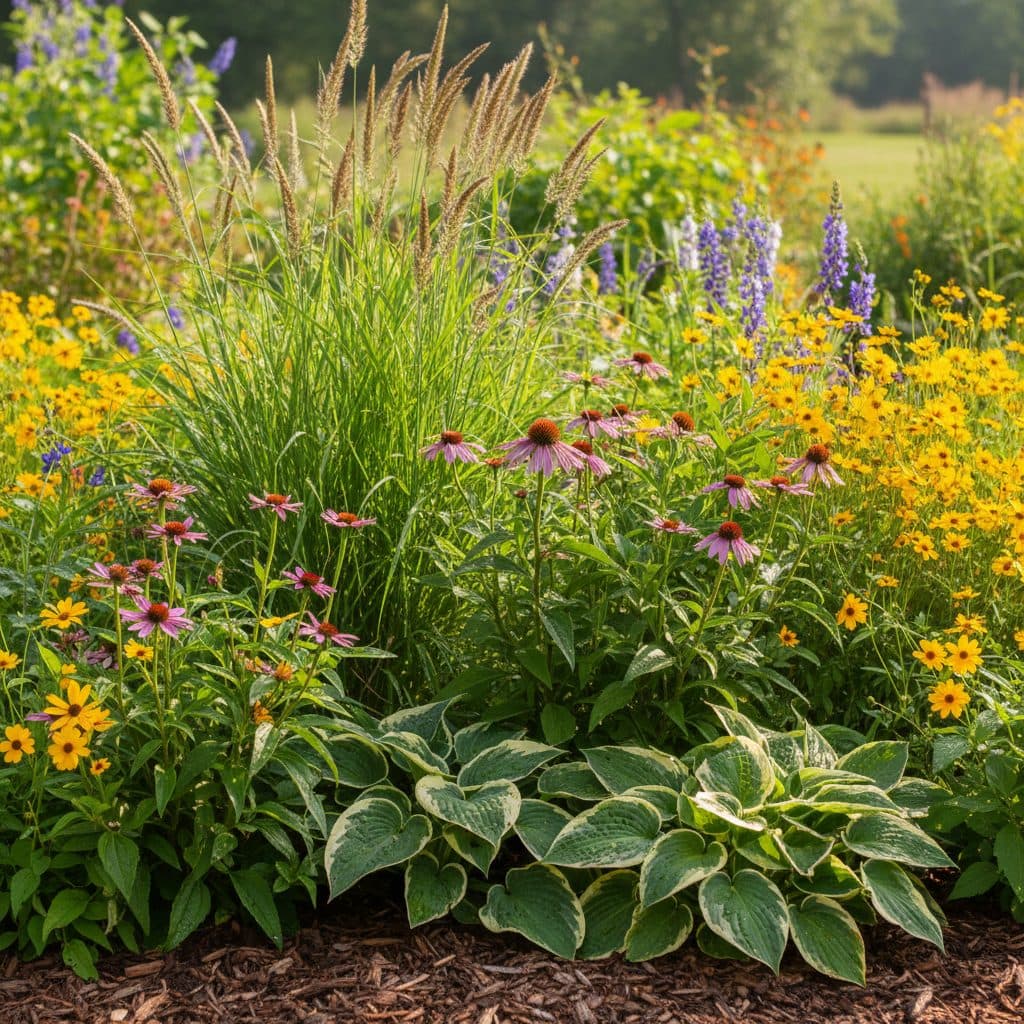
Rain gardens typically have three distinct planting zones based on moisture levels: the wet zone, the transition zone, and the upland zone. The wet zone is at the bottom, where water collects most frequently, and requires plants that can tolerate saturated soil for short periods. Examples include Cardinal Flower (Lobelia cardinalis) or Blue Flag Iris (Iris versicolor). The transition zone is on the slopes, experiencing intermittent wetness, suitable for plants like Coneflower (Echinacea purpurea) or Switchgrass (Panicum virgatum). The upland zone is along the outer edges, which are rarely wet, and can host plants like Butterfly Milkweed (Asclepias tuberosa) or Little Bluestem (Schizachyrium scoparium). Consider exploring plants like Chinese Water Chestnut or Water Hyssop for the wetter areas, depending on your climate and specific needs.
- Wet Zone: Plants tolerant of standing water (e.g., Blue Flag Iris, Cardinal Flower).
- Transition Zone: Plants for intermittent moisture (e.g., Coneflower, Switchgrass).
- Upland Zone: Plants for drier edges (e.g., Butterfly Milkweed, Little Bluestem).
- Native species: Chosen for drought tolerance, deep roots, and local adaptation.
- Avoid invasive species: Research local regulations to ensure your choices are beneficial.
Integrating with other water harvesting and passive irrigation systems
While rain gardens are powerful on their own, integrating them with other water harvesting and passive irrigation systems can significantly improve how your property manages water. For instance, directing runoff from a rain barrel into a rain garden creates a multi-stage system. A typical 50-gallon rain barrel can capture significant roof runoff, reducing the initial surge into the garden and providing a ready source of water for other uses. You can learn more about this by visiting Rainwater harvesting: catch the free water on your roof.
complementary irrigation techniques
Consider how other passive irrigation methods can work in conjunction with your rain garden. Ollas, for example, are unglazed clay pots buried in the soil that slowly release water directly to plant roots. While a rain garden manages surface runoff, ollas can provide consistent subsurface irrigation for specific plants within or near the garden during dry spells. Similarly, wicking beds, which have a water reservoir at the bottom, can be used for intensive vegetable production adjacent to a rain garden, benefiting from its groundwater recharge. For larger scale operations, consider solar water pumps for wells and irrigation to move captured water to storage or other parts of your property, perhaps through a Garden PE Irrigation Hose.
- Rain barrels: Capture initial roof runoff, reducing garden load and providing stored water.
- Ollas: Provide targeted, slow-release irrigation to specific plants during dry periods.
- Wicking beds: Offer efficient water use for adjacent intensive growing areas.
- Swales and berms: Direct water flow and create additional infiltration areas.
- Permeable paving: Reduces runoff from other hard surfaces like patios or walkways.
Maintenance and long-term care
A rain garden is not a plant-it-and-forget-it system, but its maintenance requirements are generally low once established. The first one to two years are the most critical for establishment. During this period, consistent watering during dry spells will help plants develop strong root systems. You’ll also need to regularly weed the garden to prevent aggressive species from outcompeting your native plants. Applying a 2-inch layer of shredded hardwood mulch can help suppress weeds, retain soil moisture, and regulate soil temperature.
ongoing care and inspection
After the initial establishment phase, maintenance shifts to annual or bi-annual checks. Inspect the inflow and overflow points to ensure they are clear of debris and functioning correctly. Over time, sediment can accumulate, potentially reducing the garden’s capacity; this might require periodic removal, perhaps every five to ten years depending on the runoff load. Check for any signs of erosion, especially along the berms or slopes, and repair them promptly. In USDA zone 5, for example, a fall cleanup of dead plant material can help prepare the garden for winter and prevent disease. The goal is to keep the garden healthy and functioning as an efficient water filter for many years.
- Weeding: Regularly remove unwanted plants, especially in the first two years.
- Mulching: Apply 2 inches of shredded hardwood mulch to suppress weeds and retain moisture.
- Watering: Provide supplemental water during dry periods, particularly for new plants.
- Inflow/overflow inspection: Ensure clear paths for water entry and exit.
- Sediment removal: Periodically clear accumulated sediment to maintain capacity.
Comparing passive irrigation techniques
Technique | Primary Function | Water Source | Maintenance Level |
|---|---|---|---|
Rain Garden | Capture & filter surface runoff | Roof, driveway, lawn runoff | Low to Moderate (after establishment) |
Olla | Subsurface plant irrigation | Manually filled, stored rainwater | Low (refilling) |
Wicking Bed | Consistent plant watering | Rainwater, manually filled reservoir | Moderate (refilling, planting) |
Rain Barrel | Store roof runoff | Roof downspouts | Low (emptying, cleaning) |
Runoff Reduction: Rain gardens in New York City have been shown to reduce stormwater runoff volume by 70% to 90% [2].
Pollutant Removal: A rain garden can remove 65% of total suspended solids and 50% of total phosphorus from stormwater runoff, as observed in Coastal California [5, 2].
Frequently asked questions
How big does a rain garden need to be?
A rain garden should typically be sized to be 5% to 10% of the impervious area (like a roof or driveway) it collects water from. For example, a 1,000 square foot roof might require a rain garden between 50 and 100 square feet [4].
What kind of plants should I use in a rain garden?
Native plants are best because they tolerate both wet and dry conditions and have deep roots for filtration. Choose species appropriate for your USDA hardiness zone and the specific moisture zones within your garden, such as Cardinal Flower for wet areas or Butterfly Milkweed for drier edges.
How much maintenance do rain gardens require?
Initial maintenance is higher during the first one to two years, involving regular watering and weeding. Once established, maintenance is low, typically requiring annual inspections, occasional weeding, and clearing of inlets/outlets to ensure proper function for up to 10 years or more.
Can a rain garden attract mosquitoes?
No, a properly designed rain garden should not attract mosquitoes. The ponding area is engineered to drain completely within 24 to 48 hours, which is not enough time for mosquito larvae to develop. Ensure your garden drains within this timeframe.
How deep should a rain garden be?
The ideal depth for a rain garden’s ponding area, where water temporarily collects, is typically between 6 and 12 inches. This depth allows for sufficient water storage and infiltration without creating prolonged standing water.
Can I build a rain garden myself?
Yes, many homeowners successfully build rain gardens. The process involves site selection, sizing calculations, excavation, creating a specialized soil mix (50-60% sand, 20-30% topsoil, 20-30% compost), and planting. Resources from local extension offices can provide specific guidance for your region.
References
- Woven Gardens (1975). Woven Gardens.
- NYC Rain Gardens’ Effectiveness (2022). NYC Rain Gardens’ Effectiveness.
- Coastal California Rain Gardens (2015). Coastal California Rain Gardens.
- Exploring the Relationship between Prior Knowledge on Rain Gardens and Supports for Adopting Rain Gardens Using a Structural Equation Model (2018). Exploring the Relationship between Prior Knowledge on Rain Gardens and Supports for Adopting Rain Gardens Using a Structural Equation Model.
- Efficacy of Rain Barrels and Rain Gardens to Reduce Urban Pluvial Flooding (2023). Efficacy of Rain Barrels and Rain Gardens to Reduce Urban Pluvial Flooding.
- A Field Evaluation of Rain Garden Flow and Pollutant Treatment (2005). A Field Evaluation of Rain Garden Flow and Pollutant Treatment.