Key takeaways
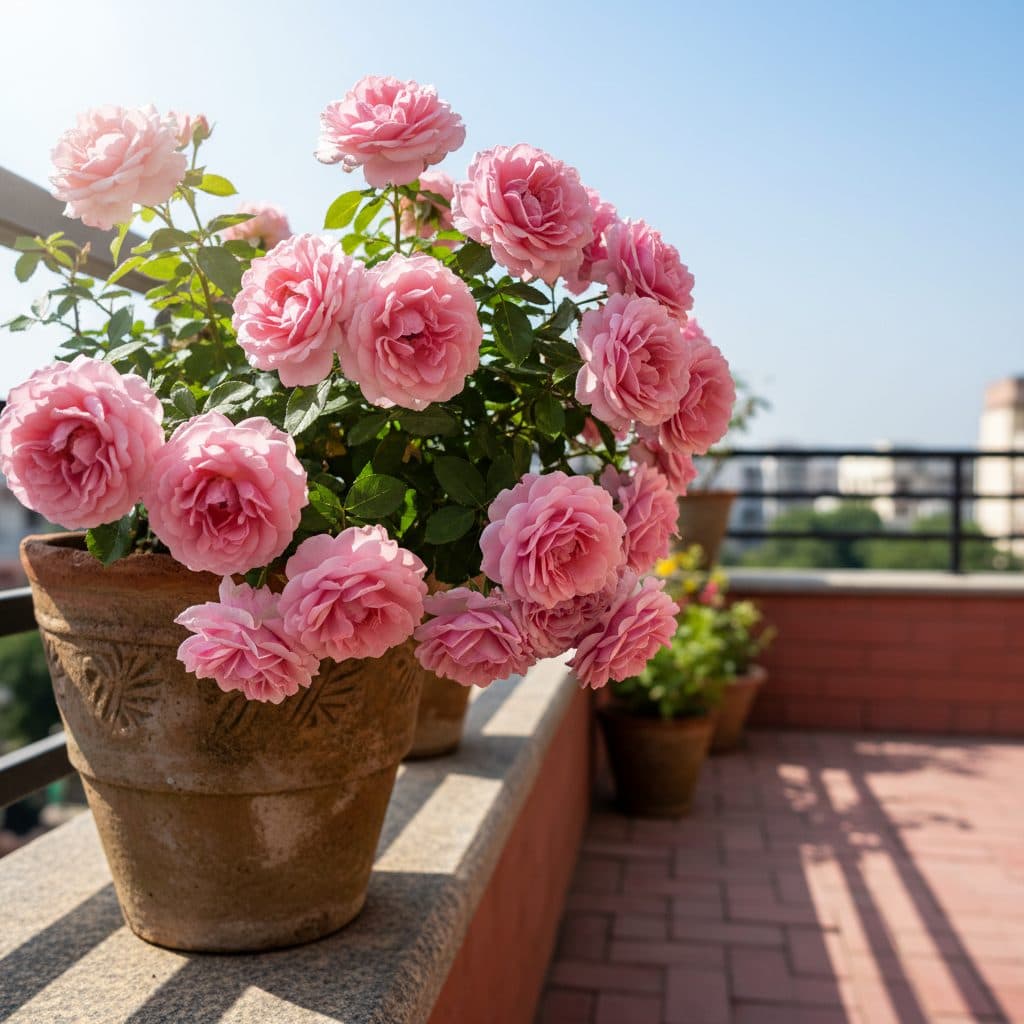
- Potted roses (Gulab) require at least five to six hours of direct sunlight daily and loose, nutrient-dense soil to flower continuously.
- Porous terracotta or ceramic pots measuring 30 to 40 cm across protect delicate root balls from overheating during intense summer heat.
- In the northern plains the main pruning is mid to late October, once the monsoon has passed, while southern and peninsular growers prune when local monsoon conditions ease.
- Remedy non-flowering plants by deadheading spent flowers, aerating surface soil with a shallow hand tool, and applying organic potassium and phosphorus fertilizers.
- Seal every cut with copper oxychloride paste, the standard recommendation against rose dieback (Lasiodiplodia theobromae).
Quick answer: For healthy potted roses in India, plant in a 30 to 40 cm terracotta pot using a 40:30:20 mix of garden loam, vermicompost, and sand, plus a handful of neem cake and bone meal. Place the pot in at least six hours of direct sun, prune stems post-monsoon, deadhead spent flowers, and feed monthly with fermented mustard cake liquid.
Growing roses (Gulab) in containers is common in Indian gardens, whether on balconies, courtyards, or terraces. Whether you grow hardier, highly fragrant Desi roses (*Rosa damascena / *Rosa chinensis) or grafted English and Hybrid Tea cultivars, container cultivation offers complete control over soil nutrition.
However, caring for potted roses requires adapting to regional climate conditions. The intense heat of northern and central summers (often exceeding 42°C to 45°C) can bake root systems inside thin plastic pots, while heavy monsoon rains create ideal breeding conditions for black spot fungus and fatal stem dieback.
By selecting breathable containers, applying targeted organic feeds, and following an orderly seasonal pruning schedule, you can maintain healthy foliage and continuous blooms throughout the year.
+-------------------------------------------------------------+
|              POTTED ROSE ANNUAL CARE CYCLE (INDIA)          |
|                                                             |
|   SEASON         MONTHS         PRIMARY CARE FOCUS          |
|   ------         ------         ------------------          |
|   Post-Monsoon   October        Main annual pruning & feed  |
|   Winter Bloom   Nov - Feb      Peak flowering, liquid tea  |
|   Spring Flush   Feb - March    Light pruning, deadheading  |
|   Summer Care    April - June   50% green shade net & water |
|   Monsoon        July - Sept    Fungus prevention, drainage |
+-------------------------------------------------------------+
What is the difference between Desi roses and hybrid varieties?
Understanding your rose variety dictates its maintenance requirements and flowering behavior:
+-----------------------------------------------------------------+
|              DESI VS HYBRID ROSE COMPARISON                     |
|                                                                 |
|   FEATURE          DESI ROSE (*R. damascena/chinensis*) HYBRID TEA / FLORIBUNDA|
|   -------          ------------------------------------ ---------------------|
|   Fragrance        Intense, sweet perfume               Mild to moderate     |
|   Flowering Habit  Spring flush (damask) or repeat      Large solitary blooms|
|   Heat Tolerance   Exceptional (40°C+)                  Sensitive to heat    |
|   Root System      Own roots (easy cuttings)            Grafted on rootstock |
|   Disease Res      High natural resilience              Prone to black spot  |
+-----------------------------------------------------------------+- Desi Rose (Rosa damascena / Rosa chinensis, syn. R. indica): Naturally adapted to Indian conditions for centuries. R. damascena is the intensely fragrant, once-flowering attar rose of spring, while R. chinensis (the 'Edward' rose) is the continuous-flowering desi garden rose used for traditional gulkand, rose water, and religious offerings. They grow on their own root systems, propagate easily from simple branch cuttings, and tolerate extreme summer heat.
- Hybrid Tea and Floribunda Roses: Modern ornamental cultivars prized for huge, perfectly sculpted blooms in diverse shades (yellow, orange, bi-colour, deep velvet red). These varieties are almost always grafted onto wild rootstocks. They are heavy feeders and require strict disease management during monsoon humidity.
What pot type and soil mix do container roses require?
Rose roots require abundant oxygen and steady moisture, but cannot tolerate waterlogged conditions or extreme heat stress.
1. Choosing the right container
- Material: Always choose breathable, unglazed terracotta or ceramic pots. Porous clay walls lose water by evaporation, which keeps the root zone noticeably cooler than plastic in full sun. Avoid thin black plastic nursery pots, which absorb heat and effectively boil root hairs.
- Size: Use pots measuring at least 30 to 40 cm (12 to 16 inches) in diameter and 35 cm deep for mature plants. Ensure the drainage hole is covered with a curved potsherd to prevent soil from clogging the outlet.
2. Formulating the nutrient-dense potting mix
- 40% Garden loam or red earth: Provides mineral structure and anchors the root system.
- 30% Well-aged vermicompost or cow dung manure (gobar khad): Delivers rich organic matter and active soil biology.
- 20% Coarse river sand or rice hulls: Ensures rapid gravitational drainage.
- Handful of crushed neem cake (neem khali) and bone meal: A handful of neem cake (about 50-100 g) plus about 50 g of bone meal per 30-40 cm pot, mixed through (roughly 1-2% of the mix). Neem cake deters soil grubs and fungal spores, while bone meal delivers slow-release phosphorus for root strength and flower bud initiation.
To coordinate layout and watering systems with other container edibles, review our balcony garden ideas for India.
+-------------------------------------------------------------+
|              ROSE POTTING MIX FORMULATION                   |
|                                                             |
|   [ 40% Rich Garden Loam (Mineral Structure)              ] |
|   [ 30% Aged Vermicompost / Cow Manure (Humus & Nitrogen) ] |
|   [ 20% Coarse River Sand (Drainage Aeration)             ] |
|   [ Handful Neem Cake + Bone Meal (Grub Shield & Phos)    ] |
+-------------------------------------------------------------+
Why is your potted rose not flowering, and how do you fix it?
The question of why a rose plant stops flowering is one of the most frequent dilemmas for home gardeners. Repeat-flowering roses bloom on new shoots, so they need a steady supply of them; a hard, woody, unpruned plant stops producing them. Once-flowering types flower on last season's wood and must not be cut back hard.
+-----------------------------------------------------------------+
|              DIAGNOSTIC GUIDE FOR NON-FLOWERING ROSES           |
|                                                                 |
|   SYMPTOM                  ROOT CAUSE      CORRECTIVE ACTION    |
|   -------                  ----------      -----------------    |
|   Healthy leaves, no buds  Low sunlight    Move to 6h direct sun|
|   Tall leggy stems, no budsNo pruning      Cut stems back       |
|   Old spent flowers remain Energy into hipsDeadhead spent blooms|
|   Hard compacted topsoil   Root stress     Shallow khurpi aerate|
|   Pale yellowing leaves    Nutrient hungry Feed mustard cake tea|
+-----------------------------------------------------------------+
1. Inadequate direct sunlight
Roses are sun-worshippers. If your container receives only bright indirect light or less than 4 hours of sun, stems become weak and leggy. Move containers to an open south or east-facing location receiving at least five to six hours of unfiltered sunshine.
2. Regular deadheading
When a rose flower finishes blooming, petals fall away and the plant begins directing all its energy into forming seeds (rosehips). Use clean hand pruners to cut spent flower stems back to the first set of healthy five-leaflet leaves below the bloom. This triggers the dormant bud below to push out a brand new flowering stem.
3. Shallow surface soil aeration (khurpi weeding)
Over time, regular watering compacts container soil. Once every two weeks, use a small hand tool (khurpi) to gently loosen the top 2 to 3 cm of soil around the outer edge of the pot, taking care not to sever main structural roots. Aerating the surface allows oxygen to reach roots and aids nutrient absorption.
4. Organic flowering nutrition recipes
- Mustard cake liquid fertilizer (Sarson ki Khali): Soak 100 grams of mustard cake powder in 2 litres of water for three to four days in a shaded spot, stirring daily to ferment. Dilute one cup of this dark, pungent liquid with ten parts fresh water and pour it around the root zone every 15 days during the winter flowering season.
- Banana peel potassium tea: Soak chopped fresh banana peels in water for 48 hours. Potassium supports water regulation and flowering. Banana-peel water supplies only a small amount, so treat it as a top-up alongside a balanced feed, not a substitute for one. For broader organic feeding principles, review organic fertilizers for hot weather vegetables.
+-------------------------------------------------------------+
|              MUSTARD CAKE FERMENTATION RECIPE               |
|                                                             |
|   1. Mix 100g mustard cake powder in 2L water               |
|   2. Ferment in shade for 3-4 days (stir daily)             |
|   3. Dilute 1 part fermented tea with 10 parts clean water  |
|   4. Apply 200-300 ml per pot every 15 days during winter   |
+-------------------------------------------------------------+
How and when do you prune potted roses in India?
Pruning maintains plant shape, removes diseased wood, and stimulates new flowering shoots.
The major post-monsoon pruning window
In the northern plains the main pruning is mid to late October, once the monsoon has passed. In southern and peninsular India growers prune at other times, commonly June-July or December-January. Prune when your local monsoon ends and cooler flowering weather is ahead:
- Sanitize pruners: Wipe bypass pruner blades with rubbing alcohol to prevent transferring fungal spores.
- Remove dead and diseased wood: Cut all blackened, dry, crossing, or spindly branches down to the base.
- Prune structural stems: For Hybrid Tea and Floribunda roses, cut healthy green canes back by roughly one-third to one-half of their height. Always cut at a 45-degree angle, 0.5 cm above an outward-facing eye (bud node). Sloping cuts prevent irrigation water from pooling on the freshly cut surface.
- Prevent dieback disease: Fungal dieback (Lasiodiplodia theobromae) enters freshly pruned stems, turning them black from the tip downward until the entire branch dies. Seal every cut with copper oxychloride paste, the standard recommendation against rose dieback. Turmeric paste is a traditional substitute with no established efficacy.
+-------------------------------------------------------------+
|              PRECISION PRUNING CUT TECHNIQUE                |
|                                                             |
|                    \ (45-degree angled cut)                 |
|                     ___                                    |
|                         |                                   |
|                      ( * ) <- Outward-Facing Bud Node       |
|                         |                                   |
|                         | (Apply Copper Oxychloride)        |
+-------------------------------------------------------------+
How do you propagate roses from cuttings?
October and November, as well as the humid monsoon months (July and August), are ideal for propagating Desi roses and hardy rootstocks from semi-hardwood cuttings:
- Select a healthy, pencil-thick green stem that recently finished flowering.
- Cut a 15 to 20 cm stem section just below a leaf node at a 45-degree angle.
- Strip all lower leaves, leaving only two sets of top leaves.
- Honey and aloe are traditional dips with an antimicrobial effect only. For reliable strike rates use an IBA rooting powder, or take the cutting with no dip at all.
- Insert the cutting 5 cm deep into a pot filled with pure coarse river sand or washed coco peat.
- Keep the medium consistently damp in bright partial shade. Cuttings will form new root systems within four to six weeks.
To explore complementary container crops, read our step-by-step guides on how to grow ginger at home and how to grow papaya at home.