Key takeaways
- Elderberry (Sambucus canadensis) thrives in USDA zones 3-9, tolerating moist to wet soils with a pH between 5.5 and 7.0.
- Cranberries (Vaccinium macrocarpon) require consistently acidic, wet conditions, needing 1 to 2 inches of water weekly in USDA zones 2-7.
- Watercress (Nasturtium officinale) needs constant flowing water at cool temperatures for optimal growth and can be harvested in 10-14 days.
- Taro (Colocasia esculenta) prefers warm, humid climates (USDA zones 8-11) and consistently moist to standing water for its corm development.
- Proper site selection and soil amendment, like adding compost, are critical for success with wet-tolerant plants, even in challenging areas.
- Consider plant-specific disease resistance, as elderberry can be affected by viruses like Elderberry Carlavirus, identified in 2023.
Quick answer: To select edibles for wet soils in US growing zones 3-9, consider plants like elderberry, cranberry, watercress, and taro, which are adapted to consistently moist or boggy conditions. These plants can transform challenging wet areas into productive food sources.
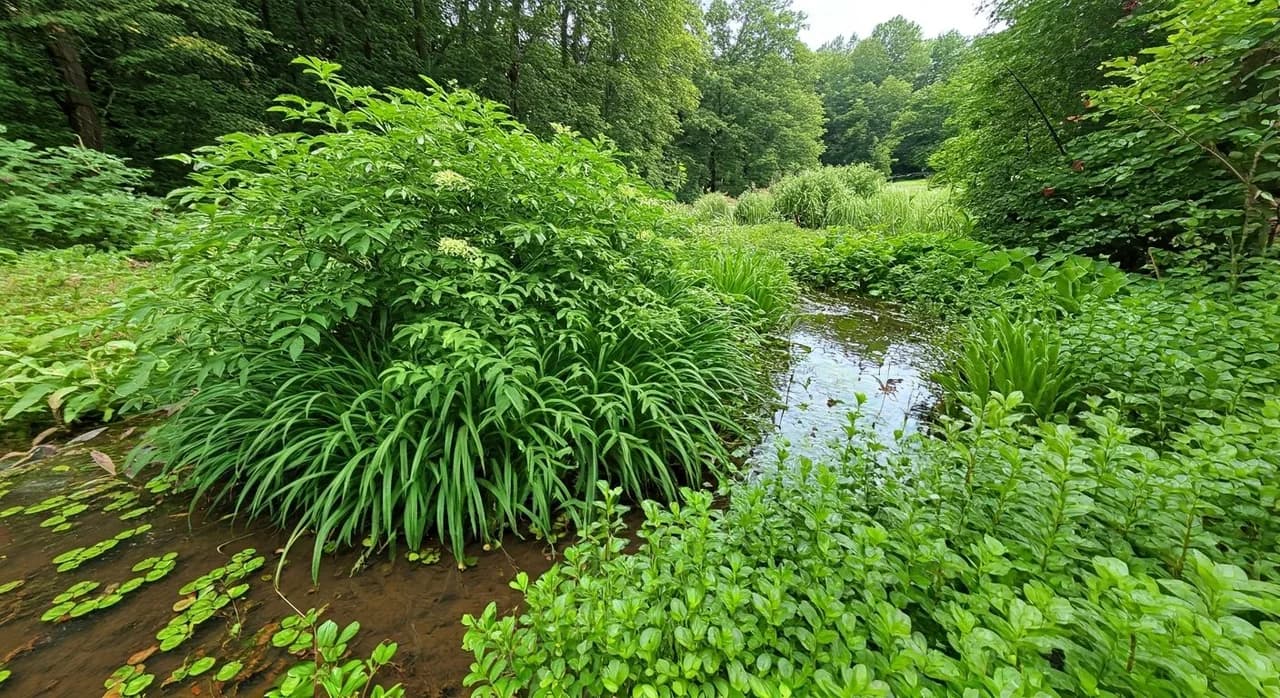
In many regions across the United States, growers contend with areas of their property that remain consistently wet, sometimes even boggy. From the low-lying coastal plains of the Southeast to the rain-soaked Pacific Northwest, managing excess soil moisture is a common challenge. These wet spots can support specific edible plants that thrive in saturated conditions. With careful selection, you can turn a persistently damp corner of your yard into a productive food source, yielding berries, greens, or starchy tubers.
Choosing plants adapted to these conditions can reduce maintenance and increase yields, particularly in areas receiving over 40 inches of annual rainfall. This article will examine four such edibles—elderberry, cranberry, watercress, and taro—detailing their specific needs, ideal growing zones, and potential yields, providing practical guidance for growers looking to make the most of their wet landscapes. We will focus on species that have demonstrated vigor in these environments, offering a functional approach to plant selection for challenging sites.
Elderberry: a resilient shrub for moist sites
Elderberry, particularly the American elderberry (Sambucus canadensis), is a sturdy deciduous shrub well-suited for moist to wet soil conditions found across USDA zones 3 to 9. While the ripe, cooked berries are edible, all other parts of the plant, including leaves, stems, roots, and uncooked berries, are toxic. These plants can reach heights of 5 to 12 feet and widths of 6 to 10 feet, producing clusters of small, dark purple berries in late summer. They prefer a soil pH between 5.5 and 7.0 and can tolerate temporary flooding, making them an excellent choice for stream banks or low-lying areas that collect water after heavy rains, which can exceed 50 inches annually in some regions.
Cultivating elderberry for fruit production
For optimal fruit production, elderberries benefit from full sun exposure, meaning at least six hours of direct sunlight daily. While they tolerate wet feet, good drainage is still important to prevent root rot in prolonged standing water. Planting multiple varieties, such as ‘Adams’ or ‘York’, can improve pollination and increase berry yields, often reaching 10 to 15 pounds per mature bush. Pruning in late winter, removing about 25% of older canes, encourages new growth and better fruit set. Be aware that elderberry plants can be affected by viruses like Elderberry Carlavirus, identified in 2023, so selecting disease-resistant cultivars is a prudent step [1].
- Choose a sunny location with at least six hours of direct light.
- Maintain soil pH between 5.5 and 7.0 for best growth.
- Prune annually in late winter, removing older canes.
- Consider planting two or more varieties for improved pollination.
- Monitor for signs of disease, especially in humid conditions.
Cranberry: a bog plant for acidic, wet environments
Cranberries (Vaccinium macrocarpon) are low-growing, evergreen shrubs native to North America, thriving in USDA zones 2 to 7. These plants are synonymous with bogs and require consistently wet, highly acidic soils, ideally with a pH range of 4.0 to 5.5. They need about 1 to 2 inches of water per week, either from rainfall or irrigation, and can tolerate periods of standing water up to 6 inches deep, especially during winter dormancy for frost protection. A mature cranberry bed can produce a good amount of fruit per square foot.
Establishing a cranberry bed
To successfully grow cranberries, you’ll need to replicate bog-like conditions. This often involves digging a bed to a suitable depth, lining it with plastic to retain moisture, and filling it with a mixture of sand, peat moss, and compost to achieve the desired acidity and drainage. Plants should be spaced 12 to 18 inches apart. They require full sun, meaning at least eight hours of direct light daily, to produce a good crop. Regular monitoring of soil moisture, perhaps with a soil moisture meter, is essential to ensure consistent hydration.
- Prepare a bed with a plastic liner to maintain consistent moisture.
- Ensure soil pH is between 4.0 and 5.5, using peat moss as needed.
- Provide 1 to 2 inches of water weekly, especially during dry spells.
- Plant in full sun for at least eight hours a day.
- Consider winter flooding for frost protection in colder zones.
Watercress: a fast-growing aquatic green
Watercress (Nasturtium officinale) is a semi-aquatic perennial plant that thrives in cool, clear, flowing water, making it distinct from typical garden vegetables. Note that it can be invasive in some regions. When cultivating, ensure a clean water source, as watercress can accumulate contaminants from its environment. It can be grown in USDA zones 5 to 11, but its ideal water temperature is between 50 and 60°F. This leafy green is known for its peppery flavor and rapid growth, often ready for harvest within 10 to 14 days of planting. A small patch can yield several pounds of greens over a growing season if conditions are met.
Cultivating watercress in controlled environments
Growing watercress at home usually calls for a dedicated water feature or a hydroponic system. A shallow stream, a large container with a pump for circulation, or even a reflective indoor grow tent with a recirculating system can work. Seeds can be sown directly into gravel or a soilless medium submerged in water, or cuttings can be rooted in water. Ensure the water is clean and consistently moving to prevent stagnation and disease. Watercress requires partial shade in warmer climates to prevent bolting, but can tolerate full sun in cooler regions, such as the Pacific Northwest where summer temperatures rarely exceed 80°F. More information on this plant is available at agripure.org/plants/nasturtium-officinale.
- Provide clean, cool, flowing water, ideally 50-60°F.
- Plant seeds or cuttings in submerged gravel or soilless media.
- Ensure consistent water circulation to prevent stagnation.
- Offer partial shade in hot climates; full sun in cooler zones.
- Harvest regularly by pinching off stems to encourage new growth.
Taro: a tropical tuber for flooded fields
Taro (Colocasia esculenta) is a tropical perennial grown primarily for its starchy corms, which are a staple food in many parts of the world. Note that taro corms and leaves contain calcium oxalate crystals and must be cooked thoroughly before consumption to remove irritants. It thrives in warm, humid climates, typically USDA zones 8 to 11, and requires consistently moist to standing water conditions for optimal growth. In its natural habitat, taro is often cultivated in flooded fields, similar to rice paddies, with water levels maintained at a suitable depth. A single plant can produce a main corm weighing 1 to 2 pounds, plus several smaller cormels.
Growing taro in temperate regions
While taro prefers tropical conditions, it can be grown as an annual in cooler USDA zones, provided it has a long, warm growing season of at least 150 frost-free days and receives consistent moisture. For successful cultivation outside of its native range, planting in full sun in a bog garden or a large container submerged in a pond is ideal. The soil should be rich in organic matter, such as fermented soybean meal organic fertilizer, to support the heavy nutrient demands of corm development. Maintaining a water temperature above 65°F is critical for vigorous growth. The giant taro, Alocasia macrorrhizos, is another related species that tolerates similar conditions, though its corms require specific preparation due to oxalic acid content. More details can be found at agripure.org/plants/colocasia-esculenta.
- Plant in full sun in USDA zones 8-11, or as an annual in cooler regions.
- Maintain consistent water levels, ideally 4-6 inches deep for optimal corm development.
- Ensure soil is rich in organic matter and nutrients.
- Provide a long, warm growing season of at least 150 frost-free days.
- Harvest corms when leaves begin to yellow, typically 6-10 months after planting.
Comparison of wet-tolerant edible plants
plant | USDA zones | water preference | soil pH | sun exposure | typical yield |
|---|---|---|---|---|---|
elderberry | 3-9 | moist to wet, tolerates temporary flooding | 5.5-7.0 | full sun | 10-15 lbs per bush |
cranberry | 2-7 | consistently wet, standing water up to 6 in | 4.0-5.5 | full sun | 1-2 lbs per sq ft |
watercress | 5-11 | cool, clear, flowing water (50-60°F) | 6.5-7.5 | partial shade to full sun | multiple harvests of greens |
taro | 8-11 (as perennial), 7 (as annual) | consistently moist to standing water (4-6 in deep) | 5.5-6.5 | full sun | 1-2 lb main corm + cormels |
elderberry yield: A single mature elderberry bush can produce a good amount of berries in a good growing season, typically from late summer.
cranberry acidity: Cranberries require a highly acidic soil pH between 4.0 and 5.5, needing 1 to 2 inches of water per week for optimal growth.
watercress harvest: Watercress can be harvested as quickly as 10 to 14 days after planting, offering continuous yields if stems are pinched regularly.
References
- Elderberry Disease = Elderberry Carlavirus, Elderberry Latent CarmovirusDisease = Elderberry Carlavirus, Elderberry Latent Carmovirus (2023).
- Operation: packaging and labeling of edibles (2020).
- Operation: manufacturing of edibles (2020).
- Why Tolerate Religion? (2014).
- USDA Natural Resources Conservation Service (2024).