Key takeaways
- Build soil organic matter to 3-5% for improved water retention and nutrient cycling in hot climates, supporting plants through 90°F+ days.
- Compost and aged manures are foundational, providing a broad spectrum of nutrients and beneficial microbes, essential for soil health.
- Specific amendments like fermented soybean meal offer slow-release nitrogen, needed for fruiting vegetables like tomatoes and peppers.
- Rock phosphate and bone meal supply phosphorus, vital for root development and fruit set in warm soils, improving yields by up to 20%.
- Mulching with organic materials can reduce soil temperatures by 10-15°F and conserve up to 30% more moisture, reducing irrigation needs.
- Cover cropping in off-seasons prevents erosion and adds biomass, improving soil structure and nutrient availability for subsequent crops.
Quick answer: To support hot-weather vegetables in US gardens facing 90°F+ summers, build soil organic matter to 3-5% using compost and aged manures, and apply targeted organic fertilizers like rock phosphate and bone meal for nutrient boosts. Mulching also significantly conserves moisture and reduces soil temperatures.
Gardening in the US Southwest, where summer temperatures regularly climb above 100°F, presents unique challenges for vegetable growers. The intense heat, coupled with often sandy or clay-heavy soils, can quickly deplete organic matter and stress plants, leading to reduced yields and poor fruit quality. In regions like USDA zone 9b in Arizona, maintaining soil health is paramount for successful harvests of heat-loving crops such as okra, sweet potatoes, and certain pepper varieties.
Using the right organic fertilizers and amendments feeds plants while building a resilient soil ecosystem that can withstand extreme conditions. A healthy soil, rich in organic matter, can hold more water, buffer against temperature swings, and provide a steady supply of nutrients, helping your garden thrive even when the mercury hits 95°F or higher. This approach supports long-term productivity and reduces the need for constant intervention, making your gardening efforts more sustainable and rewarding.
Building a resilient soil foundation in hot climates
In hot US climates, like those found in USDA zones 7 through 10 across the Southeast and Southwest, soil organic matter is the bedrock of garden resilience. Soils with low organic matter, often below 1%, struggle to retain moisture and nutrients, making plants vulnerable to heat stress when temperatures exceed 90°F. Research indicates that increasing soil organic matter to 3-5% can significantly improve soil structure, enhancing both water retention and drainage [6]. For instance, a 1% increase in organic matter can boost the soil’s water holding capacity by approximately 20,000 gallons per acre, a critical advantage during extended dry spells in states like Texas or California.
the role of soil organic matter and microbial activity
Beyond water, organic matter fuels microbial activity, which is essential for breaking down organic materials and making nutrients available to plants. In warm soils, microbial populations can be highly active, but they also consume organic matter more quickly. Regular additions of organic amendments are necessary to maintain these levels. These microbes also help create stable soil aggregates, improving aeration and root penetration, which is particularly important for deep-rooted vegetables like sweet potatoes growing in compacted soils. Maintaining a healthy soil food web ensures consistent nutrient availability for your plants, even when air temperatures are consistently above 90°F for weeks on end.
- Improves soil structure and aeration for root health.
- Increases water infiltration and retention by up to 25% in sandy soils.
- Buffers soil pH, maintaining optimal conditions for nutrient uptake.
- Provides a slow-release reservoir of essential plant nutrients like nitrogen and phosphorus.
- Supports beneficial microbial populations, plant immunity, and growth.
The foundational power of compost and aged manures
For any US gardener aiming for resilient hot-weather vegetable production, finished compost and aged animal manures are indispensable. These materials provide macro and micronutrients while building soil structure and supporting a thriving community of beneficial microorganisms [2]. Applying a 1-2 inch layer of compost annually can significantly improve soil structure, increasing its ability to hold moisture and nutrients, which is vital when summer temperatures reach 90°F or more. In a study from 2023, the addition of organic amendments was shown to increase soil organic matter percentage, directly impacting soil health [3].
selecting and applying compost and manure
When choosing compost, look for a dark, crumbly material with an earthy smell, indicating a mature product with a carbon-to-nitrogen ratio around 30:1. For manures, aged animal manures from chickens, cows, or horses are excellent sources of nitrogen, phosphorus, and potassium, typically containing 0.5-1.5% nitrogen. Fresh manures can be too strong and may burn plants due to high ammonia content, so ensure they are aged for at least three to six months. Incorporating 10-20 pounds of aged manure per 100 square feet into your garden beds can provide a substantial nutrient boost, promoting robust growth in vegetables like tomatoes and peppers, even in the hottest parts of USDA zone 8.
- Compost improves soil aggregation, reducing compaction.
- Aged manures add diverse microbial life, improving nutrient cycling.
- Both buffer soil pH, making nutrients more accessible across a range of conditions.
- They provide a slow, steady release of nutrients, minimizing nutrient leaching.
- Regular application helps maintain soil organic carbon levels above 3% for optimal plant health.
Targeted organic amendments for nutrient boosts
While compost and manure lay the groundwork, specific organic amendments can provide targeted nutrient boosts, especially for nutrient-hungry hot-weather vegetables like tomatoes, corn, and squash. **Fermented soybean meal** is an excellent slow-release nitrogen source, typically containing 7% nitrogen, 2% phosphorus, and 1% potassium. Applying 5-10 pounds per 100 square feet before planting, or as a side-dressing during the growing season, can support vigorous vegetative growth without causing nutrient burn, even in 90°F heat. You can find high-quality fermented soybean meal for your garden needs at agripure.org/shop/fermented-soybean-meal-organic-fertilizer-plant-nutrient-booster-for-soil-enrichment-and-growth-promotion-slowrelease-fertilizer.
phosphorus and potassium sources for fruit and root development
For phosphorus, essential for root development and fruit set, rock phosphate (2-3% P) and bone meal (up to 15% P) are reliable choices. These are slow-release options, best applied in the fall or early spring at rates of 5-10 pounds per 100 square feet, allowing soil microbes time to make the phosphorus available. For potassium, essential for overall plant health and heat tolerance, kelp meal (1% K) or greensand (2-3% K) are good options. Kelp meal also provides a wide array of trace minerals and growth hormones, helping plants cope with temperatures exceeding 95°F. Studies have shown that appropriate organic amendments can significantly increase biological yield, with maize yields increasing by over 15% in some cases [5].
- Fermented soybean meal provides steady nitrogen for leafy growth and fruit development.
- Rock phosphate and bone meal support strong root systems and fruit production.
- Kelp meal supplies potassium and trace minerals, improving heat and drought tolerance.
- Alfalfa meal offers a balanced nutrient profile and stimulates microbial activity.
- Gypsum can improve soil structure in clay soils, increasing drainage and aeration by 15-20%.
Mulching and cover cropping for soil protection
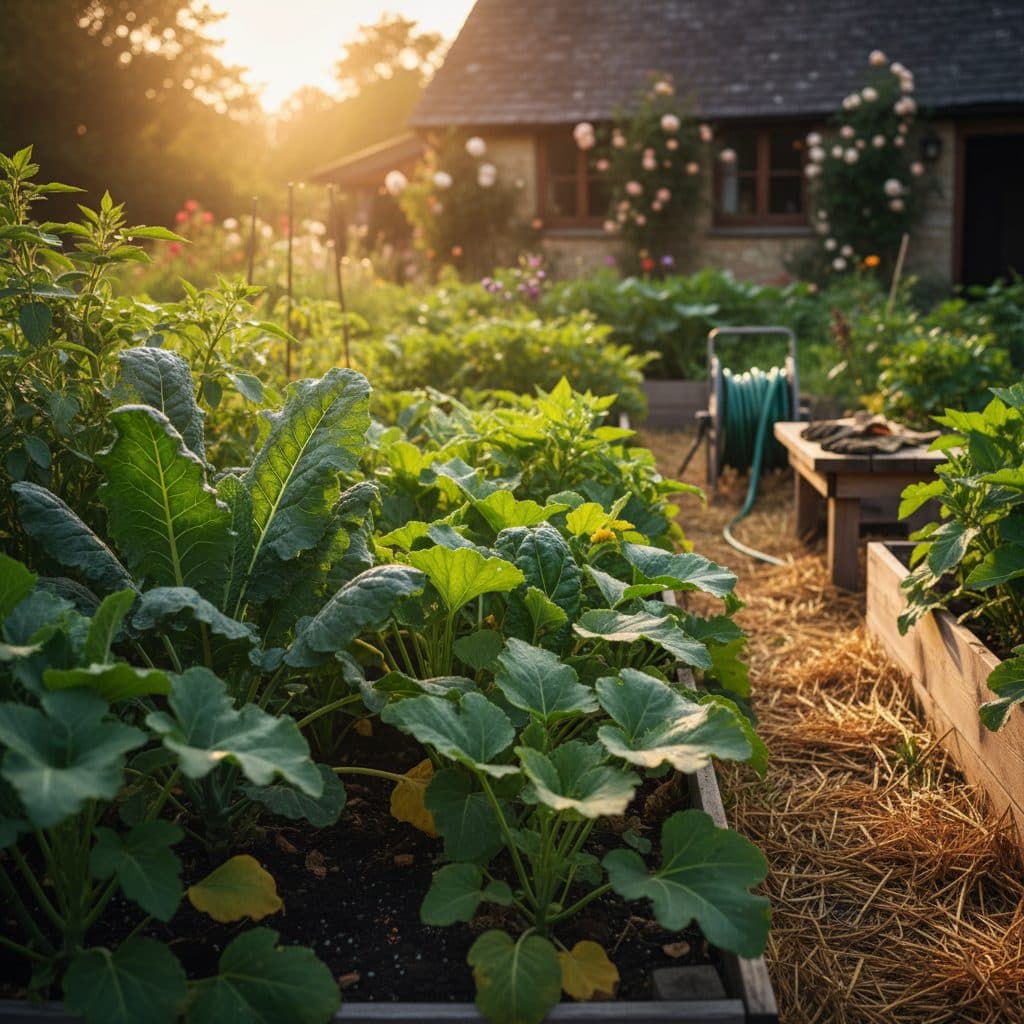
In hot US climates, protecting the soil surface is just as important as amending it. Organic mulch acts as a protective blanket, significantly reducing soil temperature and moisture evaporation. A 4-6 inch layer of straw, wood chips, or shredded leaves can lower soil temperatures by 10-15°F during peak summer heat, which can be the difference between thriving and struggling plants when air temperatures hit 100°F. This layer also conserves up to 30% more moisture, drastically cutting down on irrigation needs, especially critical in regions experiencing extended droughts, such as California’s Central Valley. More information on selecting the right mulch can be found at agripure.org/articles/mulch-for-organic-gardening.
the long-term benefits of cover crops
Beyond mulching, cover crops are a long-term strategy for building soil health and resilience. Planting cover crops like cowpeas, sunn hemp, or buckwheat in fallow beds during the off-season, or even between rows of established plants in larger gardens, helps prevent soil erosion, suppresses weeds, and adds substantial organic matter when tilled under. For example, a legume cover crop can fix 2-3 pounds of nitrogen per 1000 square feet, reducing the need for external nitrogen fertilizers. This practice improves soil structure and nutrient cycling, helping future crops withstand the stresses of a 90°F+ growing season.
- Straw mulch is lightweight and reflects sunlight, ideal for sensitive plants.
- Wood chips break down slowly, providing long-term soil improvement.
- Shredded leaves offer a balanced nutrient profile as they decompose.
- Cover crops like buckwheat suppress weeds and attract beneficial insects.
- Leguminous cover crops like crimson clover fix atmospheric nitrogen, enriching the soil by 1-2 lbs per 100 sq ft.
Water management and nutrient delivery for hot-weather crops
Effective water management is critical for hot-weather vegetables, especially when temperatures soar above 90°F. Even with abundant organic matter, plants still need consistent moisture. Drip irrigation systems can deliver water directly to the root zone, reducing water waste by up to 50% compared to overhead sprinklers and minimizing fungal diseases. Using a soil moisture meter can help you determine exactly when to water, preventing both over- and under-watering, which can stress plants and reduce yields by 20% or more. For example, in arid regions like Southern Nevada, precise watering is essential to conserve every gallon.
liquid organic feeds and foliar applications
In addition to dry amendments, liquid organic feeds can provide quick nutrient boosts, particularly during periods of rapid growth or stress. Fish emulsion (2-4% N) and liquid kelp (1% K, plus trace minerals) can be diluted and applied as a drench every two to four weeks. Foliar feeding, spraying diluted liquid fertilizers directly onto plant leaves, can be effective for delivering micronutrients or a rapid pick-me-up, especially when soil uptake is compromised by extreme heat or drought. However, foliar feeding should be done in the early morning or late evening to prevent leaf burn, as water droplets can magnify sunlight at temperatures above 85°F. This method can provide up to 10% faster nutrient absorption than soil applications.
- Drip irrigation conserves water and reduces disease incidence by 25-30%.
- Soil moisture meters prevent overwatering, saving up to 15% on water bills.
- Fish emulsion provides readily available nitrogen for quick growth spurts.
- Liquid kelp improves plant resilience to heat and drought stress.
- Compost tea boosts microbial activity and delivers soluble nutrients directly to roots.
Comparison of common organic amendments for hot-weather gardens
Amendment | Primary Nutrients | Release Rate | Typical Application Rate (per 100 sq ft) | Primary benefit for hot climates |
|---|---|---|---|---|
Finished Compost | N, P, K, Micronutrients | Slow | 1-2 inches layer | Improves water retention by 20%, buffers soil temperature. |
Aged Manure | N (0.5-1.5%), P, K | Slow | 10-20 lbs | Adds organic matter and beneficial microbes, boosts N. |
Fermented Soybean Meal | N (7%), P, K | Slow-Moderate | 5-10 lbs | Steady nitrogen for fruiting vegetables without burn. |
Rock Phosphate | P (2-3%), Ca | Very Slow | 5-10 lbs | Improves root development and fruit set over time. |
Kelp Meal | K (1%), Micronutrients | Moderate | 2-5 lbs | Increases heat and drought tolerance, provides trace minerals. |
Alfalfa Meal | N (2-3%), P, K | Moderate | 5-10 lbs | Balanced nutrients, stimulates microbial activity. |
Soil Organic Matter: Increasing soil organic matter by just 1% can boost water holding capacity by 20,000 gallons per acre, crucial for hot, dry regions [6].
Mulch Benefits: A 4-inch layer of organic mulch can reduce soil temperatures by 10-15°F during peak summer heat, protecting root systems from 100°F+ surface temperatures.
Frequently asked questions
How much compost should I add to my hot-weather garden annually?
For most hot-weather gardens, an annual application of 1-2 inches of finished compost, thoroughly incorporated into the top 6 inches of soil, is recommended. This can increase soil organic matter by 0.5-1% over a few years, significantly improving water retention and nutrient availability.
Can I use fresh manure in my vegetable garden in hot climates?
No, fresh manure should not be used directly in vegetable gardens, especially in hot climates. It can burn plants due to high ammonia content and may contain pathogens. Always use aged manure that has composted for at least three to six months, reducing its potency and ensuring safety for your crops.
What’s the best organic fertilizer for nitrogen in hot weather?
For a slow and steady release of nitrogen in hot weather, fermented soybean meal is an excellent choice. It typically contains 7% nitrogen and breaks down gradually, providing consistent nutrients without overwhelming plants, even when soil temperatures exceed 90°F.
How does mulch help in hot-weather gardening?
Organic mulch, applied 4-6 inches deep, significantly benefits hot-weather gardens by reducing soil temperatures by 10-15°F, conserving up to 30% more soil moisture, and suppressing weeds. This helps plant roots stay cooler and hydrated, leading to better growth and yields in 90°F+ conditions.
When should I apply rock phosphate for phosphorus?
Rock phosphate is a very slow-release amendment, so it’s best applied in the fall or early spring, before planting, at a rate of 5-10 pounds per 100 square feet. This allows soil microbes ample time to break it down and make the phosphorus available to plants throughout the growing season, enhancing root development by 10-15%.
Are liquid organic fertilizers beneficial in hot climates?
Yes, liquid organic fertilizers like fish emulsion or liquid kelp can provide quick nutrient boosts, especially during periods of rapid growth or stress from 95°F+ temperatures. They are absorbed faster than dry amendments, offering a rapid pick-me-up, but should be applied in the early morning or late evening to prevent leaf burn.
References
- Smart Fertilizers and Effective Organic Amendments for Sustainable Agricultural Systems (2022). Smart Fertilizers and Effective Organic Amendments for Sustainable Agricultural Systems.
- Soil Amendments for Agricultural Production (2016). Soil Amendments for Agricultural Production.
- Table 5: Soil organic matter (%) of harvested soil as affected by various sources of P fertilizers applied alone or in combination with different organic amendm (2023). Table 5: Soil organic matter (%) of harvested soil as affected by various sources of P fertilizers applied alone or in combination with different organic amendm.
- Table 4: Cost benefit ratio as affected by various sources of P fertilizers applied alone or in combination with different organic amendments. (2023). Table 4: Cost benefit ratio as affected by various sources of P fertilizers applied alone or in combination with different organic amendments..
- Table 1: Biological yield of maize as affected by various sources of P fertilizers applied alone or in combination with different organic amendments. (2023). Table 1: Biological yield of maize as affected by various sources of P fertilizers applied alone or in combination with different organic amendments..
- USDA Natural Resources Conservation Service (2024). USDA Natural Resources Conservation Service.