Key takeaways
- Verify water rights, well permits, and reliable year-round water sources before buying remote land or building permanent structures.
- Construct well-insulated, compact timber shelters with heavy metal roofing designed to shed heavy northern snow loads.
- Size off-grid solar photovoltaic systems with LiFePO4 battery banks (kept above freezing when charging) and backup generator power.
- Maintain a minimum six-month inventory of non-perishable pantry staples, medical supplies, fuel, and mechanical spare parts.
- Plan defensible wildfire space in zones: an ember-resistant strip (0-5 ft), a cleared Zone 1 (to 30 ft), and a thinned Zone 2 (to 100 ft).
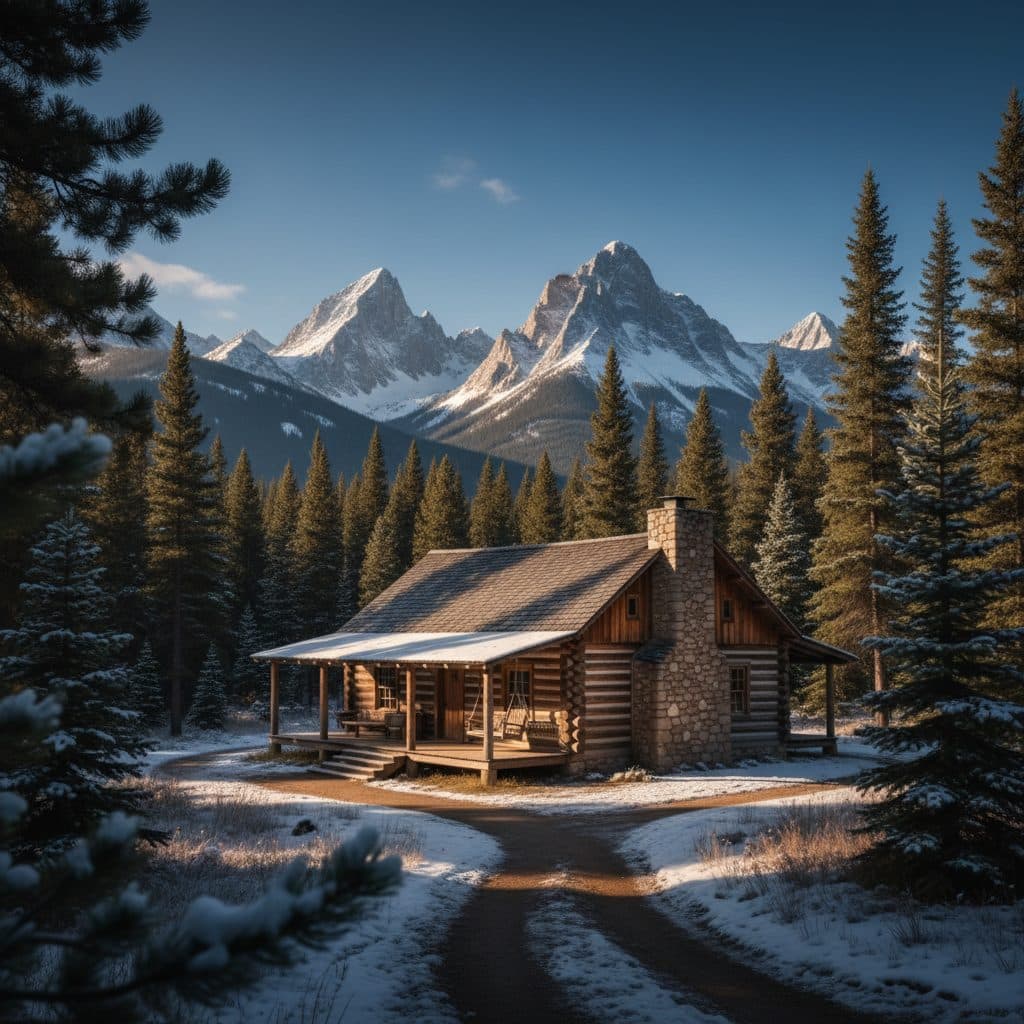
Quick answer: Wilderness homesteading involves establishing a self-reliant, off-grid residence on remote land far removed from municipal utilities and services. Success requires mastering fundamental survival and infrastructure skills: securing reliable gravity-fed or well water, constructing well-insulated cabins with local timber, installing standalone solar power systems, producing and preserving homegrown food, and maintaining year-round heating using seasoned firewood.
Moving beyond suburban or rural homesteading into remote wilderness environments requires total self-sufficiency. In remote backcountry areas, municipal water mains, electrical grids, road maintenance crews, and emergency medical services do not exist.
A wilderness homestead demands physical stamina, practical mechanical skills, and careful advance planning. A single overlooked infrastructure failure—such as a frozen water pipe or depleted battery bank in midwinter—presents serious challenges when town access is blocked by heavy snow.
By establishing reliable water systems, constructing durable shelters, harvesting off-grid renewable power, and managing food and firewood supplies, remote homesteaders build resilient, independent lives in wild landscapes.
Securing potable water: springs, wells and harvesting
Water is the primary determinant of whether a remote land parcel can sustain human habitation. Before you buy or develop, check with the state water resources agency on water rights and well permits, and with the county on building and septic requirements. These vary enormously by state and county and owning land does not automatically give you the right to develop the water on it.
+------------------------+-----------------------------------+-----------------------------------+
| Water Source           | Delivery Mechanism                | Reliability & Cold Performance    |
+------------------------+-----------------------------------+-----------------------------------+
| Gravity-Fed Spring     | Buried HDPE poly pipe             | Excellent; operates without power |
| Drilled Deep Well      | Submersible solar/generator pump  | High volume; requires power backup|
| Rainwater Catchment    | Metal roof gutters to tanks       | Seasonal; requires freeze storage |
| Surface River/Creek    | Ram pump or surface siphon        | Requires filtration and treatment |
+------------------------+-----------------------------------+-----------------------------------+
Gravity-fed spring capture
A developed hillside spring is the ideal wilderness water source. By capturing clean groundwater in an enclosed concrete or food-grade poly spring box and running black polyethylene pipe downhill, you generate natural water pressure (roughly 0.43 psi per vertical foot of drop) without electric pumps. Ensure supply lines are trenched below the local frost line (often 4 to 6 feet deep in northern zones) to prevent winter freeze-up.
For well-based setups, design independent pump systems following our guide on solar water pumps wells irrigation.
+-------------------------------------------------------------------+
|               REMOTE GRAVITY WATER SYSTEM PROFILE                 |
+-------------------------------------------------------------------+
| [Protected Spring Source on Hillside]                             |
|      |                                                            |
| [Buried Spring Collection Box with Sediment Screen]               |
|      |                                                            |
| [2-Inch Buried HDPE Main Line (Below Frost Depth: 4 to 6 ft)]     |
|      |                                                            |
| [500-Gallon Insulated Storage Reservoir Tank]                     |
|      |                                                            |
| [Gravity Pressure Inflow to Homestead Cabin (30 to 45 psi)]       |
+-------------------------------------------------------------------+
Untreated surface or spring water can harbor Giardia, Cryptosporidium, or bacterial pathogens. Use multi-stage filtration (sediment pre-filters and 0.5-micron ceramic or carbon blocks) paired with UV disinfection or a certified sub-micron purifier to ensure drinking water is microbiologically safe.
Wilderness shelter: cabin construction and heating
Shelter in the backcountry must withstand severe weather, heavy snow loads, and extreme thermal swings. Footings must bear below the local frost line (often 4 to 6 feet in northern zones) or utilize an engineered frost-protected shallow foundation to prevent frost heave; permanent dwelling foundations in deep-frost or seismic zones should be verified by a local engineer or building official. Keeping cabin square footage modest (400 to 800 sq ft) minimizes heating requirements and construction materials.
+------------------------+-----------------------------------+-----------------------------------+
| Structural Component   | Recommended Material              | Purpose & Performance             |
+------------------------+-----------------------------------+-----------------------------------+
| Foundation             | Piers/helical piles below frost line| Prevents frost heave & damp rot   |
| Framing                | Heavy timber / milled log framing | High structural strength          |
| Roof                   | 26-gauge standing-seam metal      | Sheds snow; wildfire ember safe   |
| Primary Heating        | Cast iron airtight woodstove      | High radiant thermal output       |
| Backup Heating         | Direct-vent propane heater        | Thermostatic freeze protection    |
+------------------------+-----------------------------------+-----------------------------------+
Building for deep snow and wildfire
In northern and mountain zones, roof pitch should be at least 8/12 to 12/12 so heavy snow slides off smoothly before building excessive weight on rafters. Install continuous 26-gauge standing-seam metal roofing, which eliminates exposed fasteners and resists embers during regional wildfire seasons.
Plan defensible space in zones: an ember-resistant strip of 0 to 5 ft with nothing combustible against the walls, a lean and cleared Zone 1 out to 30 ft (9 m), and a thinned Zone 2 from 30 to 100 ft (9 to 30 m). One hundred feet is the working minimum in forested country and is what California and several other states require by law — check your state and county rules, which govern.
Firewood harvesting and seasoning
In cold wilderness zones, heating a 1,000 sq ft cabin requires four to eight full cords of hardwood firewood annually. Fell, buck, split, and stack firewood at least one full year in advance. Burning unseasoned green wood produces high creosote buildup inside chimney flues, significantly increasing the risk of chimney fires. Clean stovepipes every autumn and maintain a secondary cleanout access door for midwinter inspections.
Standalone off-grid power systems
Modern wilderness homesteads rely on robust solar photovoltaic arrays paired with modern battery storage to power lights, refrigeration, communications, and power tools.
+-------------------------------------------------------------------+
|                 OFF-GRID POWER SYSTEM ARCHITECTURE                |
+-------------------------------------------------------------------+
| [Roof / Ground-Mount Solar Array: 3kW to 6kW Photovoltaic Panels]  |
|      |                                                            |
| [MPPT Charge Controller (Maximizes Solar Conversion Efficiency)]  |
|      |                                                            |
| [48V Lithium Iron Phosphate (LiFePO4) Battery Bank: 15 to 30 kWh] |
|      |                                                            |
| [Pure Sine Wave Inverter/Charger: Converts 48V DC to 120V/240V AC]|
|      |                                      |                     |
| [Homestead Electrical Panel]          [Backup Diesel Generator]   |
+-------------------------------------------------------------------+
Size your solar array and battery storage to accommodate low-sun winter conditions as explained in solar panels for off grid living. LiFePO4 cells must not be charged below freezing (0°C / 32°F); charging frozen lithium cells plates metallic lithium on the anode, permanently destroying capacity and causing fire risks. Site the bank inside heated living space, or specify cells with integral heating pads and a BMS that blocks sub-zero charging.
Run backup generators outdoors, or in a purpose-built generator shed with through-ventilation and the exhaust piped outside and away from doors, windows and air intakes — never in a closed outbuilding, garage or crawlspace. Fit a battery-backed carbon monoxide alarm in the cabin. Store fuel in approved containers, away from the cabin.
Ground-mounted solar arrays are generally superior to roof mounts in heavy snow country, as they allow you to easily rake snow from panel surfaces after winter storms.
Food security, storage and wild foraging
Producing and preserving calories in short-season wilderness zones requires multiple overlapping strategies:
- Root Cellaring: Excavate an earth-sheltered subterranean cellar to store potatoes, carrots, winter squash, and apples through winter without electricity, as detailed in root cellaring no power storage.
- Cold-Climate Greenhouses: Build an unheated hoop house or timber cold frame to extend the growing season for brassicas, root vegetables, and leafy greens.
- Pantry Buffer: Maintain a minimum six-month base supply of bulk grains, dried beans, rolled oats, iodized salt, and canned proteins to buffer against seasonal road closures.
- Wildlife Protection: Enclose vegetable gardens with 8-foot (2.4 m) woven game fencing to exclude moose, elk, and deer. Store all animal feed, livestock grains, and food waste in sealed steel drums inside bear-resistant outbuildings.
- Wild Foraging and Preservation: Dry, smoke or freeze wild harvests. Anything low-acid (greens, mushrooms, meat, most vegetables) must be pressure-canned at 240°F (116°C), with pressure adjusted for your altitude, since a boiling-water bath will not kill Clostridium botulinum spores in low-acid food. Follow a tested USDA or Extension canning schedule rather than improvising. Never eat a wild mushroom you have not had confirmed by an experienced local identifier: the deadly species resemble edible ones, and no amount of drying, cooking or canning makes them safe.
Emergency communications, tool maintenance and medical preparedness
Living miles past municipal road maintenance requires independent emergency infrastructure and maintenance protocols.
- Satellite Communication: Install a two-way satellite messenger or satellite internet terminal to ensure you can reach emergency services even when local cell towers lose power during winter storms.
- Hand and Power Tool Redundancy: Maintain manual hand tools—such as two-man crosscut saws, broadaxes, draw knives, and brace drills—alongside chainsaws and power equipment in case small engine parts fail.
- Trauma and Medical Supplies: Stock a comprehensive wilderness first aid kit with tourniquets and pressure bandages, plus the training to use them (take a Wilderness First Responder course), wound irrigation supplies and closure strips rather than sutures, burn care, and as long a supply of critical prescriptions as your prescriber and insurer will authorise.
- Mechanical Maintenance: Keep spare spark plugs, fuel filters, drive belts, hydraulic fluids, and tire repair kits for snowmobiles, ATVs, and tractors.
Review foundational homesteading principles in what is homesteading and urban homesteading to build resilience across every phase of your wilderness journey.