Key takeaways
- Root cellars maintain cool, humid conditions, typically 35-40°F and 90-95% humidity, extending crop freshness for up to 10 months.
- Simple root cellars can be built using readily available materials, costing as little as $500 for a basic design.
- Specific crops like potatoes, carrots, and apples require tailored storage conditions to prevent spoilage.
- Dehydrating, fermenting, and curing offer versatile, no-power alternatives for preserving diverse produce.
- Proper ventilation, temperature monitoring, and pest control are essential for successful long-term storage in any climate, from USDA zone 4 to 9.
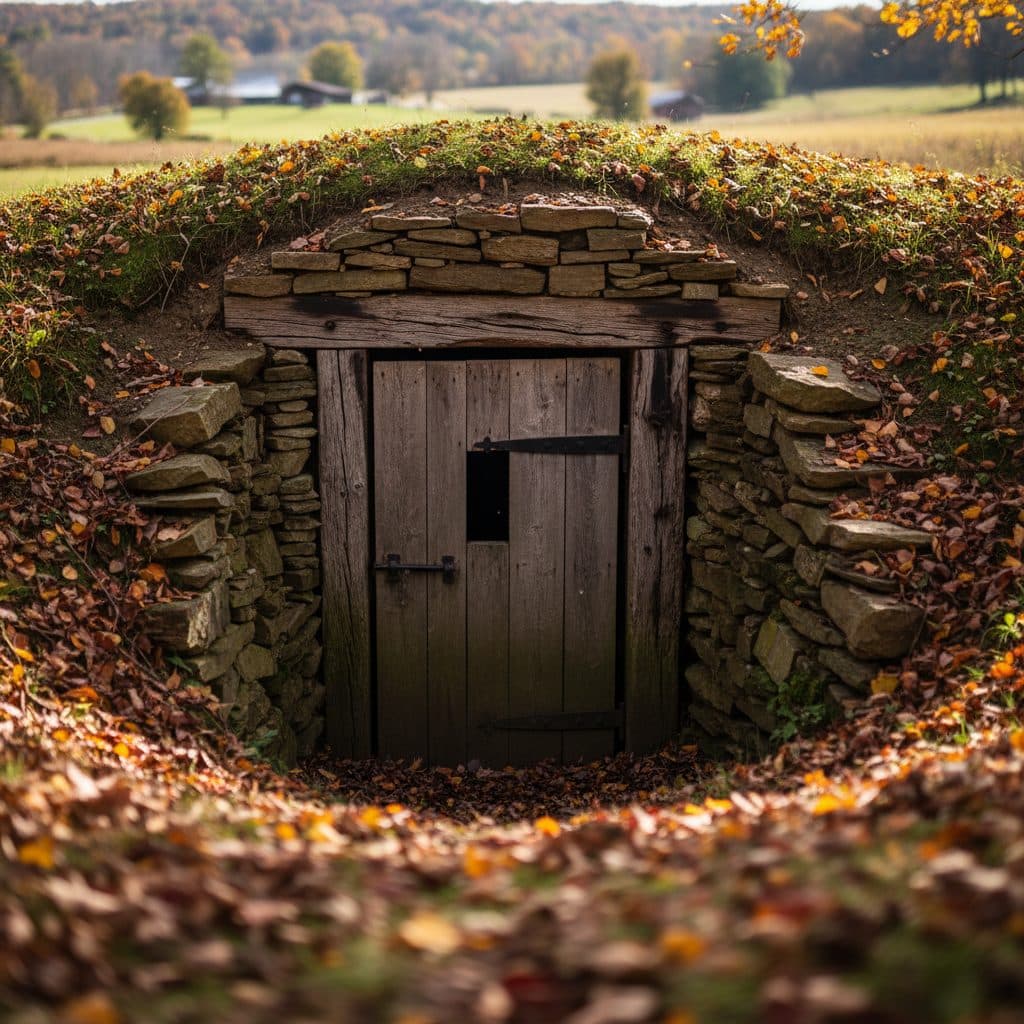
Quick answer: Root cellars preserve harvested produce by maintaining cool, humid conditions, typically 35-40°F and 90-95% humidity, which slows respiration and moisture loss, extending freshness for many months without electricity.
In the northern reaches of Vermont, where winter temperatures regularly drop below 0°F for weeks, growers have long relied on passive storage methods to extend their harvest. The practice of root cellaring, documented as early as the 13th century, allows us to keep vegetables and fruits fresh for many months without electricity [1]. For a small homestead in USDA zone 5, this means enjoying homegrown potatoes in March that were dug in October, providing a consistent food supply through the colder seasons.
Modern growing operations, from a half-acre market garden in Oregon to a 20-acre farm in Iowa, can benefit from these traditional techniques. While large-scale energy storage for nuclear power plants is a complex engineering challenge [2], preserving a bushel of apples or 50 pounds of carrots for your family relies on understanding simple physics: stable temperature and controlled humidity. Building and managing no-power storage solutions keeps garden produce fresh long after the first frost.
The enduring principles of root cellaring
Root cellaring mimics the stable, cool, and humid conditions found underground. For most root vegetables and certain fruits, this means maintaining temperatures between 35°F and 40°F and relative humidity levels around 90-95% [3]. These specific conditions slow down respiration and moisture loss, which are the primary causes of spoilage. In a typical underground cellar, the surrounding soil acts as a natural insulator, keeping internal temperatures relatively constant even when outside air fluctuates by 30°F or more. This passive temperature regulation is why root cellars remain a viable option for long-term storage, even in areas like USDA zone 7 where winters are milder but still require consistent cool conditions. For more detailed guidance on building and managing these structures, visit agripure.org/articles/root-cellaring.
Achieving these conditions requires careful planning, whether you are building a new structure or adapting an existing space. A cellar needs adequate ventilation to prevent the buildup of ethylene gas, which can accelerate ripening in some produce, and to circulate fresh air. For example, a 100-square-foot cellar might require two 6-inch diameter vents: one low to draw in cool air, and one high to expel warmer air. Proper air exchange, such as one air change per hour, maintains the quality of stored crops like apples and pears, which release significant amounts of ethylene. Understanding these basic requirements can extend the shelf life of your harvest by several months, often from October until May.
Key considerations for successful cellaring
- Maintaining consistent temperatures between 35°F and 40°F.
- Ensuring high humidity, typically 90-95%, to prevent drying.
- Providing adequate ventilation to manage air quality and ethylene.
- Protecting against pests like rodents and insects with secure construction.
- Monitoring conditions regularly, perhaps weekly, with a reliable thermometer and hygrometer.
Constructing your own no-power storage
Building a functional root cellar does not require extensive construction experience or a large budget. Many successful cellars are simply modified basements or buried containers, offering a cost-effective solution for growers in regions like USDA zone 6, where ground temperatures remain relatively stable below the frost line. A basic pit cellar, for instance, can be dug 4-5 feet deep and lined with concrete blocks or treated wood, costing as little as $500 for materials if you do the labor yourself. Insulation from external temperature swings and proper drainage prevent water accumulation, which can ruin an entire season’s worth of produce.
For those without a basement, an outdoor root cellar can be constructed by burying an old chest freezer or a large plastic barrel. This method, often used in colder climates like Minnesota, involves digging a hole 3-4 feet deep, placing the container, and then insulating it with a 12-inch layer of straw or sawdust before backfilling with soil. A simple wooden hatch, insulated with 2 inches of rigid foam, provides access and helps maintain stable internal conditions. These low-cost solutions can effectively store 100-200 pounds of vegetables for up to six months, significantly reducing food waste and grocery bills.
Steps for building a simple outdoor root cellar
- Select a well-drained site, preferably on a north-facing slope, to minimize sun exposure.
- Excavate a pit at least 3 feet deep and wide enough for your chosen container, plus insulation.
- Install a drainage layer of 6 inches of gravel at the bottom of the pit.
- Place your container level in the pit, then add intake and exhaust ventilation pipes, typically 4-inch PVC.
- Insulate the container with 12 inches of straw, sawdust, or rigid foam, then backfill with soil and construct an insulated access hatch.
Crops for cellaring and specific needs
Not all crops are suited for root cellaring, and those that are often have specific requirements for optimal storage. Potatoes, a staple for many US households, store best at 40-45°F with high humidity, ideally 85-90%, and in total darkness to prevent greening and sprouting. A 50-pound sack of potatoes can last 6-8 months under these conditions. Carrots, beets, and parsnips, on the other hand, prefer slightly colder temperatures, around 32-35°F, and very high humidity, 90-95%, often stored in damp sand or sawdust to prevent shriveling. In a well-managed cellar in USDA zone 5, these can last up to 8 months.
Apples and pears, while also benefiting from cool, humid conditions (32-40°F, 85-90% humidity), release ethylene gas, which can accelerate the ripening and spoilage of other produce. Store them separately or ensure thorough ventilation if kept in the same space as root vegetables. A bushel of apples, approximately 40 pounds, can last 3-5 months if stored properly. Onions and garlic are exceptions, preferring cool, dry conditions (50-55°F and 60-70% humidity), and should be stored in a separate, drier area, perhaps a cool pantry or shed, to avoid moisture-related spoilage. These can last 6-9 months.
Ideal storage conditions for common crops
- Potatoes: 40-45°F, 85-90% humidity, dark.
- Carrots, Beets, Parsnips: 32-35°F, 90-95% humidity, in damp sand.
- Apples, Pears: 32-40°F, 85-90% humidity, separate from other produce due to ethylene.
- Cabbage, Celery: 32-35°F, 90-95% humidity, wrapped or in moist sand.
- Onions, Garlic: 50-55°F, 60-70% humidity, dry and well-ventilated.
Beyond the cellar: other no-power methods
While root cellaring is excellent for many crops, it is just one of several no-power preservation techniques that can extend your harvest. Dehydrating, for example, removes moisture from food, inhibiting microbial growth and enzyme activity. This method is particularly effective for fruits like apples and berries, herbs, and even some vegetables like tomatoes and peppers. A simple solar dehydrator can reach temperatures of 100-140°F, reducing moisture content to below 15% in 1-3 days, depending on the climate in your region, such as the dry summers of Arizona. Dehydrated foods are lightweight and compact, ideal for long-term storage in airtight containers for 12 months or more. You can learn more about this process at agripure.org/articles/dehydrating-food.
Fermentation and pickling are ancient methods that use beneficial microorganisms or acidic brines to preserve food. Sauerkraut, made from cabbage, and various pickled vegetables involve creating an anaerobic environment where lactic acid bacteria thrive, producing acids that inhibit spoilage. A 5-gallon crock of sauerkraut, requiring about 20 pounds of cabbage, can be ready in 3-4 weeks and stored for 6 months or longer in a cool pantry. These methods preserve food while adding flavor and nutritional value. For detailed recipes and techniques, refer to agripure.org/articles/fermenting-and-pickling-vegetables. Curing meats, a process involving salt and sometimes smoke, is another traditional technique, though it requires careful attention to food safety. A country ham, for instance, might be cured for 6-12 months in a controlled environment, a practice common in the humid climate of the American South.
No-power preservation techniques include
- Dehydrating: Removes water content to below 15% for fruits, vegetables, and herbs.
- Fermenting: Uses beneficial bacteria to produce lactic acid, preserving vegetables like cabbage and cucumbers.
- Pickling: Submerges food in an acidic brine, typically vinegar-based, for long-term storage.
- Curing: Employs salt, sugar, and sometimes smoke to preserve meats, often over several months.
- Oil Packing: Submerging herbs or vegetables in oil to create an anaerobic environment, though this requires refrigeration for safety.
Maintaining your storage and avoiding pitfalls
Regular monitoring and maintenance keep a no-power storage system functioning over the winter. Even the best-designed root cellar can fail if not properly managed. Weekly checks of temperature and humidity levels with accurate instruments are essential; a digital thermometer-hygrometer combo can cost as little as $15. Adjust ventilation as needed, opening vents more on cooler nights in USDA zone 8 to bring down cellar temperatures, or partially closing them to retain humidity during dry spells. Inspect stored produce regularly, perhaps every two weeks, and remove any items showing signs of spoilage, as one rotten apple can indeed spoil the whole barrel, affecting 30-50 pounds of neighboring produce rapidly.
Pest control is another significant concern. Rodents, insects, and even slugs can quickly infest a storage area, destroying crops and introducing pathogens. Ensure your cellar is constructed with fine mesh screens over all vents (e.g., 1/4-inch hardware cloth) and that all access points are sealed tightly. For outdoor cellars, burying the structure deeply (at least 3 feet below ground level) can also deter many burrowing pests. In Fiji, where root crops are a dietary staple, proper storage facilities are designed to minimize pest access and maintain ideal conditions for crops like taro and cassava, which can last 1-3 months [3]. Implementing these preventative measures can save a significant portion of your stored harvest, potentially 20-30% of your total yield.
Common root cellaring pitfalls to avoid
- Inconsistent temperature or humidity, leading to premature spoilage or drying.
- Poor ventilation, causing ethylene buildup or stale air.
- Lack of pest control, resulting in significant crop loss to rodents or insects.
- Storing incompatible crops together, such as apples with potatoes.
- Failing to inspect and remove spoiled produce regularly, allowing rot to spread.
Comparison of No-Power Food Preservation Methods
Method | Best For | Typical Shelf Life | Key Requirements |
|---|---|---|---|
Root Cellaring | Root vegetables, apples, pears | 3-10 months | Cool (35-40°F), humid (90-95%), dark |
Dehydrating | Fruits, herbs, some vegetables | 6-12+ months | Low humidity (below 15% moisture), airtight storage |
Fermenting | Cabbage, cucumbers, other vegetables | 3-6+ months | Anaerobic conditions, cool storage (below 60°F) |
Pickling | Cucumbers, beans, peppers | 6-12+ months | Acidic brine (e.g., 5% vinegar), sealed jars |
Curing (Salt) | Meats, some fish | 6-12+ months | Salt, cool temperatures, controlled humidity |
Cellar Temperature: Maintaining a stable temperature between 35°F and 40°F can extend the storage life of root crops by up to 10 months [1].
Humidity Control: High humidity, around 90-95%, prevents moisture loss in stored vegetables, reducing shriveling by over 70% [3].
Frequently asked questions
What is the ideal temperature and humidity for a root cellar?
For most root vegetables and fruits, aim for temperatures between 35°F and 40°F. Humidity should be very high, around 90-95%, to prevent crops from drying out and shriveling. These conditions significantly extend storage life by several months.
Can I use my basement as a root cellar?
Yes, many basements can be adapted. Look for the coolest, dampest corner, often away from heat sources and exterior walls. You might need to partition off an area with insulated walls and add a pan of water to increase humidity to 85-90%.
Which crops store best in a root cellar?
Potatoes, carrots, beets, parsnips, and apples are excellent candidates. Potatoes prefer 40-45°F, while carrots and beets do best at 32-35°F. Onions and garlic, however, need a drier, cooler pantry-like environment, typically 50-55°F.
How do I prevent pests in my root cellar?
Ensure all vents are covered with 1/4-inch hardware cloth to block rodents and insects. Seal any cracks or openings in the cellar structure. Regularly inspect stored produce and remove any damaged items, which can attract pests and spread disease quickly, potentially spoiling 20% of your harvest.
How often should I check my root cellar?
Weekly checks of temperature and humidity are recommended to ensure conditions remain stable. Inspect stored produce every two weeks to remove any items showing signs of spoilage, which can quickly affect neighboring crops and reduce overall yield by 10-15%.
What is the average cost to build a simple root cellar?
A basic outdoor pit cellar, using materials like concrete blocks or a buried container, can cost as little as $500 if you perform the labor yourself. More elaborate designs or professional installation can range from $2,000 to $10,000, depending on size and materials.
References
- cellaring, n. (2023). cellaring, n..
- Comparison of Energy Storage and Arbitrage Options for Nuclear Power (2023). Comparison of Energy Storage and Arbitrage Options for Nuclear Power.
- Handling, Storage, and Processing of Root Crops in Fiji (2019). Handling, Storage, and Processing of Root Crops in Fiji.
- Storage and Processing of Some Nigerian Root Crops (2019). Storage and Processing of Some Nigerian Root Crops.
- Cellaring Wine: Managing Your Wine Collection……to Perfection (2004). Cellaring Wine: Managing Your Wine Collection……to Perfection.
- USDA Natural Resources Conservation Service (2024). USDA Natural Resources Conservation Service.