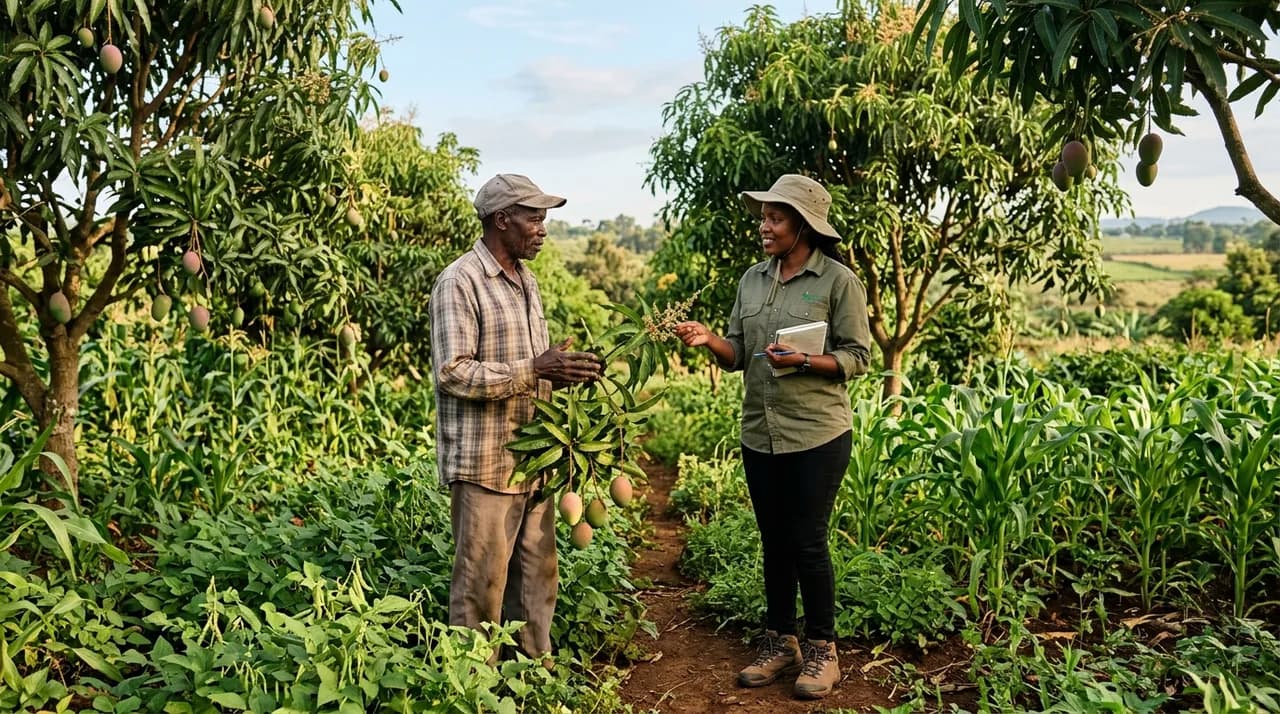
While agroforestry systems offer well-documented ecological advantages, their widespread adoption by agricultural producers remains constrained by structural economic and institutional barriers. Transitioning annual cropland or open pasture to integrated tree-based systems demands substantial upfront capital investment, exposes producers to multi-year revenue deficits before woody components mature, and introduces severe tenure risks for tenant farmers. Overcoming this adoption gap requires policy frameworks that address liquidity constraints, tenure security, and the valuation of unmonetized ecosystem services.
For students and policy researchers, examining the economics of agroforestry requires moving beyond theoretical yields to evaluate the real-world financial balance sheets of operating farms. Understanding the capital mechanisms governing perennial land management illuminates why producers who recognize the ecological benefits of trees may still rationally decide against planting them.
The disconnect between ecology and economics
Academic literature has extensively documented the environmental benefits of integrating trees into agricultural landscapes: increased soil organic matter, reduced erosion, improved water infiltration, and microclimate buffering against temperature extremes. From an agronomic perspective, polycultures often produce greater total biomass per unit area than monocultures.
However, commercial adoption remains a small fraction of total agricultural land area across most agricultural regions. This divergence stems from the fundamental difference between annual and perennial production economics. In an annual cropping system, input decisions are evaluated and repaid within a single twelve-month production cycle. If a producer chooses a new seed variety or fertilizer regime, financial returns are realized at harvest, and management strategies can be altered immediately the following spring.
Agroforestry, by contrast, transforms an operating farm into a long-term capital enterprise. Establishing woody perennials locks land into a fixed physical configuration for decades. Because tree canopies and root zones expand progressively over years, they alter operational logistics for machinery, labor, and input delivery. For farm enterprises operating under tight annual margins, the promise of long-term ecological resilience often fails to overcome immediate financial vulnerability.
Capital horizons and the establishment deficit
The financial profile of an agroforestry conversion is characterized by an extended period of net negative cash flow, commonly referred to as the establishment valley:
``` Net Annual Cash Flow ^ | Mature Productive Phase | (Break-Even Achieved) +-------------------------------------\-------------------> Time (Years) | | Young Growth | Year 1 Year 2-3 Phase | | | | | v v v | [=== Establishment Valley ===] v (High costs, zero tree yield) ```
The establishment phase introduces three distinct financial pressures:
1. Direct upfront capital expenditure
Establishing woody perennials requires capital outlays that far exceed the annual costs of sowing field crops. Expenses include:
- Nursery Stock Procurement: Sourcing high-quality, disease-resistant tree and shrub seedlings or grafted cultivars.
- Site Preparation: Specialized ground preparation, including deep ripping to break hardpans, precision contour marking, and pre-planting weed suppression.
- Physical Protection Infrastructure: In silvopasture and orchard systems, young trees must be protected from browsing livestock, rodents, and wild herbivores using individual tree shelters, specialized fencing, or temporary paddock exclusions.
- Specialized Management Equipment: Pruning gear, specialized mowers suited for narrow alleys, or modified spray equipment compatible with mixed canopies.
2. Multi-year yield lags
Unlike field crops, woody perennials yield no commercial harvest during their initial developmental years. Fast-growing fruit and nut species typically require several seasons before producing marketable yields, while high-value timber species require decades of biological growth before harvest. Throughout this juvenile period, trees demand ongoing operational expenditures for pruning, weed control, pest management, and training without providing offsetting revenue.
3. Opportunity costs and cropping displacement
When trees are introduced into productive cropland or pasture, they occupy physical ground previously dedicated to annual cash crops or forage. In practices like alley cropping, tree rows reduce the arable acreage available for immediate grain harvest. As trees mature and cast broader shade, understory yields may decline before tree crops reach full bearing capacity, creating a temporary dip in total farm gross revenue.
Land tenure, leasing, and intergenerational horizons
A primary structural obstacle to agroforestry adoption is the fundamental mismatch between the multi-decade biological lifespan of trees and the short-term contractual nature of agricultural land tenure.
A large proportion of agricultural land worldwide is operated by tenant farmers under short-term, annual or multi-year cash leases. Under typical tenancy agreements, investing in perennial woody crops is financially irrational for the operator:
- Payback Horizon Mismatch: If an agroforestry system requires seven to ten years to achieve net positive returns, a tenant holding a three-year lease bears the full establishment cost while the landowner captures the long-term asset appreciation after the lease expires.
- Tenure Insecurity and Customary Rights: In many tenure frameworks, planting permanent trees legally conveys ownership rights to the land. Landlords aware of these customary norms often explicitly prohibit tenants from planting woody perennials to prevent future ownership disputes.
- Intergenerational Transition Risks: Because timber and mature tree crops mature across generational timeframes, farm families without confirmed successors or clear estate plans hesitate to lock land into immobile perennial assets that complicate future land sales or division.
Agricultural policy asymmetry and institutional barriers
Agricultural policy frameworks historically evolved around the logistics of single-species commodity crops. Consequently, current regulatory systems frequently penalize diverse types of agroforestry:
Commodity program structures
National agricultural support programs, price guarantees, and subsidized crop insurance are overwhelmingly structured around uniform monocultures of staple grains and oilseeds. In many jurisdictions, planting rows of trees within a grain field can disqualify the entire acreage from standard farm support payments, or lower the parcel's baseline crop acreage for future subsidies.
Crop insurance incompatibilities
Actuarial models used by agricultural insurers rely on vast historical data from single-species plantings. When crops are integrated into multi-tiered polycultures, standard risk models fail to price the system accurately. Insurers may refuse coverage for crops grown beneath tree canopies, citing unquantified shade risks, even when tree shelterbelts demonstrably reduce wind damage and evapotranspirative stress during severe weather events.
Regulatory and tax classification ambiguities
Land taxation codes often maintain rigid statutory definitions separating agricultural land from forested land. Planting commercial timber trees on agricultural parcels can trigger municipal or national reclassifications from agricultural assessment rates to forestry zoning, imposing substantial tax penalties, restricting future land-use options, or complicating access to commercial agricultural credit.
Policy mechanisms and economic interventions
Addressing the structural constraints of agroforestry requires targeted policy interventions designed to derisk adoption across the early establishment phase:
Policy Intervention Category | Target Constraint | Operational Mechanism |
|---|---|---|
Cost-Share Programs | High upfront establishment costs | Offsetting nursery stock and planting expenses through non-repayable capital grants |
Bridge Payments / Annual Rentals | Establishment cash-flow deficit | Providing transitional annual stipends during early non-bearing years |
Technical Assistance Networks | Knowledge deficit and management complexity | Funding trained extension advisors to assist with species selection and layout |
Ecosystem Service Markets | Unmonetized public benefits | Crediting measurable soil carbon sequestration and watershed filtration |
Model Tenancy Agreements | Short-term lease horizons | Institutionalizing long-term lease templates with mandatory tenant compensation clauses |
Payment for ecosystem services
Public policy increasingly recognizes that agroforestry generates substantial positive externalities that benefit downstream communities, including water purification, flood mitigation, carbon storage, and biodiversity support. When public agencies or regulated markets compensate farmers for these services through annual payments, the revenue helps bridge the cash-flow deficit during the tree establishment phase.
Tenancy and lease reform
Encouraging agroforestry on rented farmland requires standardizing long-term conservation leases. These contracts specify that if a lease is terminated early, the landowner must compensate the outgoing tenant for the appraised unamortized value of established tree crops, aligning economic incentives between owner and operator.
Research priorities in agroforestry economics
To support sound policy design, agroforestry students and agricultural economists must expand empirical research beyond simple gross margin comparisons. Key research priorities include:
- Enterprise Budgets for Mixed Systems: Constructing transparent, publicly accessible financial models that account for multi-species establishment, maintenance, and harvesting expenses across variable time horizons.
- Portfolio Risk Analysis: Quantifying how crop and income diversification buffers whole-farm revenue against climate shocks and single-commodity market collapses.
- Valuation of Microclimate Benefits: Measuring the indirect economic value of wind reduction and shade in reducing irrigation requirements and stabilizing livestock weight gains during heat extremes.
At agripure, economic evaluation remains grounded in operational reality: ecological designs can achieve widespread regional impact only when policy frameworks and financial structures support the landholder through the multi-year transition to mature perennial production.