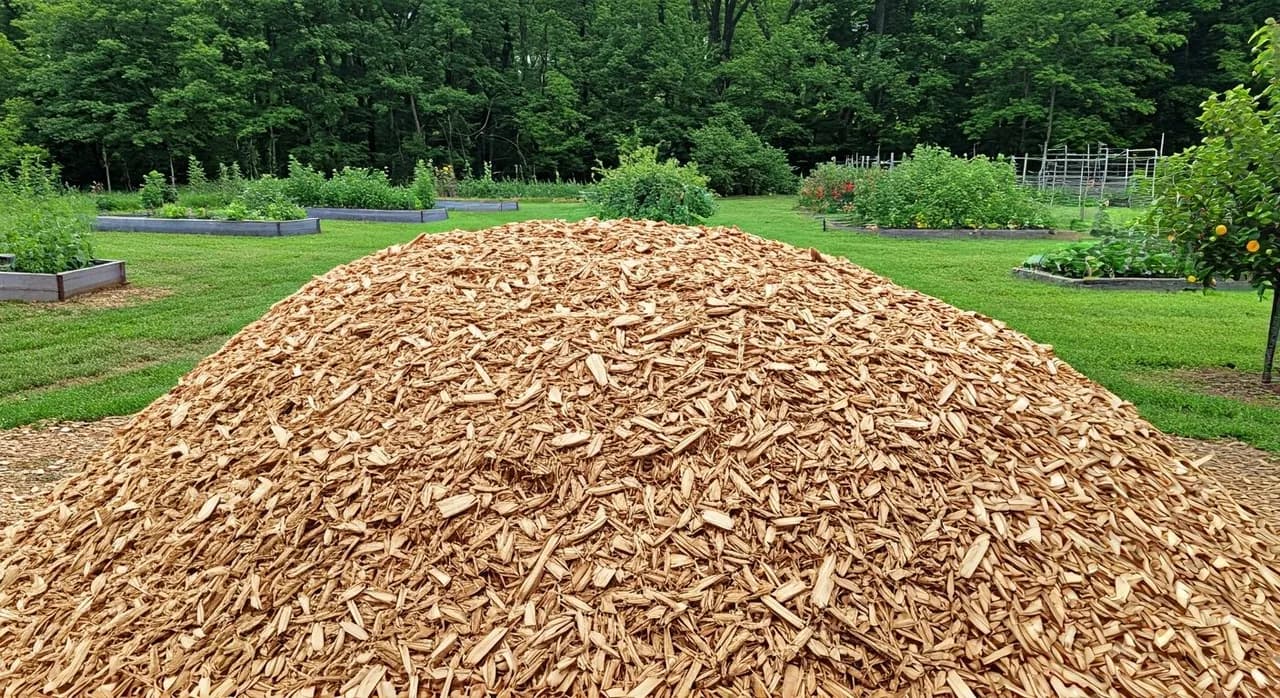
Key takeaways
- ChipDrop connects growers with local arborists for free wood chips, often delivering 10-20 cubic yards per request.
- Persistent herbicides like aminopyralid can remain active in compost and wood chips for over 3 years, harming sensitive broadleaf plants.
- Test wood chips for herbicide contamination using a simple bioassay with pea or bean seeds before applying them to food gardens.
- Wood chips significantly improve soil structure, hold soil moisture through dry spells, and suppress most weed germination, benefiting food forests and plant guilds.
- Apply wood chips 3-6 inches deep in established permaculture systems, keeping them a few inches away from plant stems.
- Consider the source: chips from roadside or pasture areas have a higher risk of herbicide contamination than those from private, untreated yards.
Quick answer: Using free wood chips for permaculture offers significant soil benefits and weed suppression, but it’s essential to test them for persistent herbicide contamination, especially in USDA Zone 6. A simple bioassay with pea or bean seeds can detect harmful chemicals before application.
For a grower in USDA zone 6, like many across the Midwest, sourcing enough organic matter to build healthy soil is a constant effort. Wood chips offer a compelling solution, often available for free in large quantities, sometimes 10 to 20 cubic yards at a time, through services like ChipDrop. These chips can transform garden beds, food forests, and perennial guilds, providing a host of benefits from moisture retention to weed suppression. However, the promise of free mulch comes with a significant caveat: the risk of persistent herbicide contamination.
This article will guide you through safely acquiring and utilizing wood chips within a permaculture framework and emphasizing the critical steps to avoid introducing harmful chemicals into your growing system. We’ll cover how to identify potential risks, conduct a simple bioassay test, and integrate wood chips effectively to build resilient, productive landscapes, so your efforts build long-term soil health and plant vitality instead of causing setbacks.
The appeal of free wood chips for permaculture
Wood chips are a cornerstone of many permaculture designs, especially in establishing food forests and perennial plant guilds. They offer a wealth of benefits, from improving soil structure to conserving water. In regions like the humid Southeast, a 4-inch layer of wood chips significantly reduces evaporation from the soil surface, which is essential during dry spells. They also suppress most weed germination, cutting down on labor and competition for your desired plants. The USDA Natural Resources Conservation Service highlights how organic mulches like wood chips improve soil health and water infiltration.
sourcing free chips with chipdrop
One of the most accessible ways to acquire large volumes of wood chips is through services like ChipDrop. This platform connects arborists with local property owners who want free wood chips. Deliveries often range from 10 to 20 cubic yards, enough to mulch a substantial area, such as a 1,000 square foot food forest. While the service is free, you accept the entire load, which can be a mix of wood, leaves, and sometimes even small branches. Understanding how to integrate these materials effectively matters for permaculture design.
- Soil health improvement: Wood chips break down, adding organic matter.
- Moisture retention: Slows evaporation from the soil surface, cutting how often you need to water.
- Weed suppression: A 3-6 inch layer blocks light and stops most weed seeds from germinating.
- Temperature moderation: Insulates soil, protecting roots from extreme heat or cold.
- Nutrient cycling: Supports beneficial soil microbes and fungi.
Understanding persistent herbicide contamination
The primary concern with free wood chips, especially those from unknown sources, is contamination by persistent herbicides. These chemicals, such as aminopyralid, clopyralid, and picloram, are designed to control broadleaf weeds in pastures, hayfields, and lawns. They can remain active in plant material, compost, and even soil for extended periods, often over 3 years, even after composting or chipping. This persistence makes them a significant threat to sensitive food crops like peas, beans, tomatoes, potatoes, and many members of the nightshade family.
how herbicides enter the chip supply
Arborists often chip trees and shrubs removed from residential properties, roadsides, or commercial landscapes. If these areas were treated with persistent herbicides, the chemicals can be present in the wood chips. For example, in agricultural regions of the Midwest, chips from trees bordering treated pastures have a higher risk. Even small concentrations, as low as parts per billion, can cause severe damage, leading to stunted growth, distorted leaves, and significantly reduced yields in sensitive plants. The Sustainable Agriculture Research & Education (SARE) program has extensively documented these risks.
- Aminopyralid: Common in pasture and hayfield herbicides.
- Clopyralid: Used on lawns, golf courses, and some agricultural crops.
- Picloram: A highly persistent herbicide for brush and broadleaf weed control.
Conducting a bioassay to detect herbicides
Before applying a large volume of wood chips to your food-producing areas, especially in a new permaculture system in USDA zone 6, a simple bioassay is a non-negotiable step.
step-by-step bioassay for wood chips
You will need three small containers, such as 6-inch pots or plastic cups. Fill the first container with clean, untreated potting mix as your control. Fill the second container with 50% clean potting mix and 50% of the suspect wood chips. Skip a pure-chip pot: seedlings fail in 100% wood chips for reasons that have nothing to do with herbicide, so it cannot tell you anything. Instead run a second blend at roughly one part potting mix to two parts suspect chips. Plant 5 to 10 sensitive seeds, such as peas or beans, in each container. Water consistently and observe growth over the next few weeks. Look for stunted growth, cupped or distorted leaves, or yellowing in the plants grown with the suspect chips compared to your control. Bioassays of this kind are the standard way growers screen suspect mulch, compost and manure before committing it to a bed.
- Control pot: 100% clean potting mix.
- Test pot 1: 50% potting mix, 50% suspect wood chips.
- Test pot 2: one part potting mix, two parts suspect wood chips.
- Sensitive seeds: Peas, beans, tomatoes, or sunflowers.
- Observation period: 2-3 weeks for clear results.
Integrating safe wood chips into permaculture systems
Once you’ve confirmed your wood chips are free of persistent herbicides, they become an invaluable resource for building resilient permaculture systems. For instance, in a developing food forest in USDA zone 5, a 4-6 inch layer of wood chips around established fruit trees like apples or pears can significantly improve soil health. This deep mulch layer helps retain soil moisture, cutting how often young trees need watering through a dry spell. It also provides a slow-release source of nutrients as it breaks down, feeding the soil food web.
strategic application in zones and guilds
In permaculture, we organize our landscapes into zones and create plant guilds. Wood chips are best applied in Zone 2 and beyond, around perennial plants, shrubs, and trees. For example, in a guild featuring a peach tree, comfrey, and daffodils, a 5-inch layer of chips will suppress weeds, conserve moisture, and regulate soil temperature. For the comfrey, use only the sterile cultivar Symphytum × uplandicum ‘Bocking 14’: seed-setting common comfrey (Symphytum officinale) sows itself across the garden and regrows from any root fragment left in the ground. Comfrey belongs in the guild as chop-and-drop mulch, not as food or fodder: its pyrrolizidine alkaloids are hepatotoxic to people and livestock. Avoid incorporating large quantities of fresh chips directly into annual vegetable beds (Zone 1), as their very high carbon-to-nitrogen ratio can tie up nitrogen for a season or more, though this effect is minimal with surface application. For detailed planning, consider our guide on a permaculture garden plan.
- Food forests: Mulch heavily around established trees and shrubs.
- Plant guilds: Support perennial companions with a 4-6 inch chip layer.
- Swales and berms: Use chips on berms to retain moisture and build soil.
- Pathways: Create durable, weed-free paths with 6-8 inches of chips.
- Zone 2+ applications: Prioritize perennial systems over annual vegetable beds.
Alternative wood chip sources and ongoing vigilance
While ChipDrop is a convenient option, it’s not the only source for wood chips, and exploring alternatives can sometimes offer more control over the material’s origin. Many local arborists or tree service companies might deliver chips directly if you contact them. Sawmills are another excellent source for clean wood chips, often from untreated lumber, though these might be more uniform and lack the leafy material found in arborist chips. Always ask detailed questions about the source of the wood, especially if you’re in a region like Texas where pasture management with herbicides is common.
questions to ask and ongoing monitoring
When sourcing chips, inquire if the trees came from residential yards, roadsides, or agricultural land. Chips from private, untreated yards or forested areas generally carry a lower risk than those from public rights-of-way or pastures. Even if a source seems reliable, conducting a bioassay with each new batch of chips is a prudent practice, especially for your food-producing zones. The USDA National Agroforestry Center emphasizes the importance of knowing your inputs for healthy agroforestry systems. Remember that staying alert helps prevent persistent herbicide contamination from affecting your permaculture efforts for years.
- Direct arborist contact: Ask about their service area and tree sources.
- Local sawmills: Often provide clean, untreated wood byproducts.
- Self-chipping: Use a portable chipper for your own branches and prunings.
- Community composting sites: Verify their input material and testing protocols.
- Neighbor’s prunings: Confirm they don’t use lawn chemicals on their trees.
Wood Chip Sources: Risk vs. Availability
Source Type | Herbicide Risk | Availability (US Region) |
|---|---|---|
ChipDrop (mixed) | Low-Medium (variable) | High (urban/suburban) |
Arborist (direct) | Variable (ask questions) | Medium (local) |
Sawmill byproducts | Low (untreated wood) | Medium (rural/industrial) |
Self-chipped material | Very Low (known source) | Low (personal yard) |
Community compost | Variable (check inputs) | Medium (municipal) |
Moisture Retention: A deep layer of wood chips sharply reduces evaporation from the soil surface, cutting irrigation needs.
Herbicide Persistence: Persistent herbicides like aminopyralid can remain active in soil and compost for over 3 years, causing severe damage to sensitive crops like tomatoes and beans.
Frequently asked questions
How deep should I apply wood chips in a food forest?
Apply a layer 3-6 inches deep around established perennial plants and trees in your food forest. This depth suppresses most weed germination and conserves soil moisture, reducing irrigation needs.
What are the common persistent herbicides to watch out for?
The main persistent herbicides to watch for include aminopyralid, clopyralid, and picloram. These compounds can persist in organic matter for over 3 years, causing significant damage to sensitive broadleaf plants like tomatoes and beans, even at low concentrations.
Can wood chips ‘steal’ nitrogen from my plants?
When fresh wood chips are incorporated into the top few inches of soil, microbes can temporarily tie up nitrogen, leading to a temporary nitrogen deficit. However, when applied as a surface mulch 3-6 inches deep, this effect is minimal, and over time, the chips break down to release nutrients, benefiting soil health for years.
How long does a wood chip bioassay take?
A reliable wood chip bioassay typically takes 2-3 weeks to show clear results. Plant 5-10 sensitive seeds, like peas or beans, in both suspect chips and a control soil, then observe their growth for any signs of stunting or distortion.
Are all wood chips safe for vegetable gardens?
No, not all wood chips are safe for vegetable gardens, especially annual beds. Chips from treated lawns or pastures may contain persistent herbicides. Always conduct a bioassay or source chips from known untreated areas to protect your crops and ensure a healthy harvest for 3+ years.
What is the ideal carbon-to-nitrogen ratio for wood chips?
Wood chips are a very high-carbon material, far above the roughly 30:1 ratio that suits an active compost pile, which is why they break down slowly and last two to three years as a mulch. Applied on the surface rather than dug in, that slow breakdown does not cause meaningful nitrogen drawdown for established plants.