Key takeaways
- Insulation is crucial for outdoor aquaponics systems in USDA zones 4-7, aiming for an R-value of 10 or higher.
- Moving aquaponics indoors requires careful planning for space, lighting, and ventilation, often needing 100 square feet for a modest setup.
- Selecting cold-tolerant fish like trout (50-65°F) can simplify winter management compared to tilapia (70-85°F).
- Maintaining stable water parameters—pH 6.0-7.0, low ammonia, and nitrites—is paramount for fish and plant health in any season.
- Energy costs for heating and lighting can be substantial, potentially adding hundreds of dollars to monthly expenses in colder regions.
- Proper system design and maintenance can extend your growing season by several months, even in harsh climates like USDA zone 3.
Quick answer: To achieve year-round aquaponics in cold USDA zones, either insulate outdoor systems with an R-value of 10+ and add heating, or move systems indoors, planning for adequate space, lighting, and ventilation. Selecting cold-tolerant fish like trout simplifies winter management.
In USDA zone 5, where winter temperatures can drop to -20°F, maintaining a thriving aquaponics system presents a unique set of challenges. The lush growth of summer often gives way to concerns about freezing pipes, plummeting water temperatures, and the survival of fish and plants. For many growers across the northern United States, from the Great Lakes region to the mountains of Colorado, the question isn’t if winter will arrive, but how to prepare their aquaponics setup for its inevitable grip.
This article explores the practicalities of either winterizing an outdoor aquaponics system or transitioning it indoors, focusing on strategies that ensure continued productivity and fish health through the coldest months. We’ll examine the specific requirements and considerations for each approach, providing concrete steps and data-driven insights to help you make informed decisions for your system, whether it’s a 100-gallon backyard setup or a larger commercial operation.
Deciding whether to winterize or move indoors
The first step in preparing your aquaponics system for cold weather is to evaluate your specific situation, considering both your climate and your resources. For growers in USDA zones 7 and warmer, winterizing might involve minimal effort, perhaps just covering tanks or adding a small heater to maintain water temperatures above 50°F. However, in colder regions like USDA zones 4-6, where ground freezes can extend several feet deep, stronger measures are necessary. Your decision hinges on factors like the size of your system, the species of fish you’re raising, and the available indoor space.
system size and fish species considerations
A small, 50-gallon system is far easier to move indoors than a 500-gallon setup. If you’re raising warm-water fish like Tilapia, which thrive in water temperatures between 70-85°F, moving indoors is almost a necessity in zones colder than 9. Conversely, cold-water species such as Trout or Perch can tolerate water temperatures down to 50°F, making outdoor winterization a more viable option. Consider the energy cost of heating a large volume of water outdoors versus the space and lighting requirements for an indoor setup. A 1,000-watt heater running continuously in an uninsulated outdoor tank in USDA zone 5 could add substantially to your monthly electricity bill.
- System volume in gallons
- Average winter air temperature (°F)
- Minimum water temperature tolerance of fish species
- Available indoor space for relocation
- Budget for heating and lighting
Insulating and protecting outdoor aquaponics systems
For those committed to keeping their aquaponics system outdoors through winter, particularly in USDA zones 4-7, insulation becomes your most important ally. The goal is to minimize heat loss from your fish tank and grow beds, maintaining water temperatures above the critical survival threshold for your chosen fish species. This often means aiming for an R-value of 10 or higher for tank walls and covers. In regions like Minnesota or North Dakota, where ambient temperatures can consistently remain below 0°F for weeks, insulation alone may not be enough.
effective insulation and heating strategies
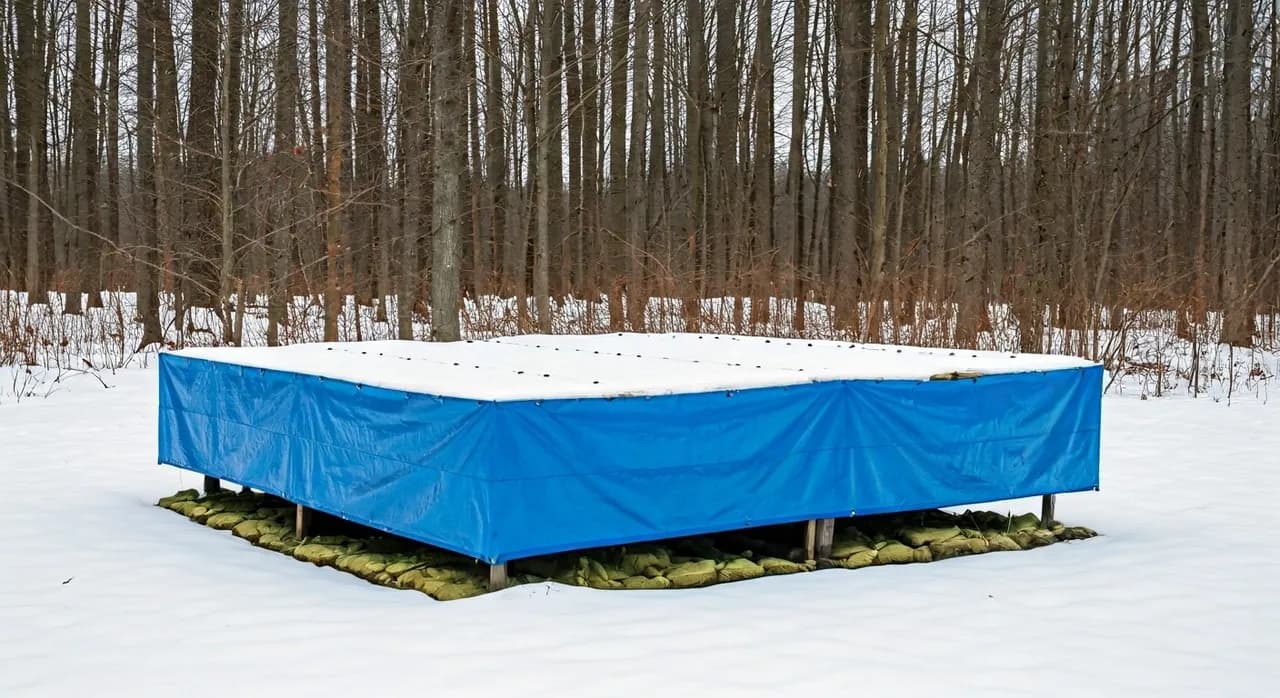
Start by insulating your fish tank with materials like extruded polystyrene (XPS) foam board, which typically offers an R-value of 5 per inch of thickness. A minimum of 2 inches (R-10) is recommended for tank walls, and 4 inches (R-20) for the bottom, especially if the tank is directly on cold ground. Covering the top of the tank with an insulated lid, leaving only a small opening for aeration, can significantly reduce heat loss. Submersible heaters, rated at 5-10 watts per gallon for insulated tanks, are often necessary to maintain target temperatures. For grow beds, consider draining them and covering them with tarps or even a layer of straw, similar to how you might protect cold-hardy fruit trees in winter. Reducing water flow to grow beds can also help prevent freezing in colder sections of the system.
- Extruded polystyrene (XPS) foam board
- Reflective insulation blankets
- Insulated tank covers
- Submersible water heaters (5-10 watts per gallon)
- Thermostats for temperature control
Preparing for an indoor aquaponics setup
Moving your aquaponics system indoors for winter, especially in USDA zones 3-6, offers precise control over environmental factors but demands careful planning. The primary considerations are space, lighting, and environmental control. You’ll need a dedicated area that can accommodate your fish tank, grow beds, and filtration components, ideally with access to plumbing and electricity. A small 50-gallon system might fit into a corner of a basement, while a 200-gallon setup could require a significant amount of space, such as a dedicated room or a large grow tent.
lighting and environmental control for indoor systems
Indoor aquaponics relies heavily on artificial lighting to replicate the sun’s intensity and duration. LED grow lights are highly energy-efficient, providing the full spectrum of light needed for plant growth. Plants typically require 14-18 hours of light per day, which can be managed with simple timers. Ventilation is also critical to prevent excessive humidity, which can lead to mold and mildew issues, and to ensure adequate air exchange for both plants and fish. A small exhaust fan can effectively manage humidity in a 4 ft x 4 ft grow tent, maintaining relative humidity between 40-60%. Consider the acoustic and visual impact of an indoor system.
- Dedicated indoor space (e.g., basement, spare room)
- High-efficiency LED grow lights (full spectrum)
- Timers for light cycles (14-18 hours on)
- Ventilation fans and carbon filters (for odor control)
- Humidity monitor and dehumidifier (if needed)
Managing water parameters and fish care in a closed indoor system
Whether your aquaponics system is winterized outdoors or moved indoors, maintaining stable water parameters is paramount for the health of your fish and plants. In a closed indoor environment, water quality can fluctuate more rapidly due to smaller water volumes and less natural buffering. Regular testing is not just recommended—it’s essential. Aim to test your water at least three times a week, especially when the system is new or undergoing changes. For example, a 50-gallon system will react much faster to nutrient imbalances than a 500-gallon system, requiring more frequent monitoring.
critical water quality metrics and fish feeding
The ideal pH range for most aquaponics systems is between 6.0 and 7.0, balancing the needs of nitrifying bacteria, fish, and plants. Ammonia and nitrite levels should always be at 0 ppm (parts per million), while nitrates, the beneficial plant food, can range from 10-150 ppm. Water temperature is also vital; for Tilapia, maintain 72-85°F, and for Trout, 50-65°F. Overfeeding is a common mistake that can quickly degrade water quality, leading to spikes in ammonia. Feed your fish 1-2 times daily, only what they can consume in 5 minutes, adjusting quantities based on their growth and the system’s ability to process waste. Consider how other indoor growing, like growing gourmet mushrooms, also relies on precise environmental control.
- pH (6.0-7.0)
- Ammonia (0 ppm)
- Nitrite (0 ppm)
- Nitrate (10-150 ppm)
- Dissolved Oxygen (5 ppm or higher)
Energy efficiency and cost management for winter aquaponics
One of the most significant challenges of winter aquaponics, especially in colder USDA zones like 3 or 4, is managing energy consumption and associated costs. Heating water and providing artificial light can quickly become the largest operational expense. A 100-gallon aquaponics system heated in a basement in a cold climate will consume significant electricity for heating, plus more for grow lights, which can add substantially to a monthly electricity bill.
strategies for reducing energy consumption
To mitigate these costs, focus on maximizing insulation and optimizing lighting schedules. For outdoor systems, burying tanks partially or fully underground can use geothermal heat, which stabilizes temperatures and reduces how often the heater needs to run. Indoors, ensure your grow space is well-sealed and insulated. Use smart power strips and timers to control lights and pumps, ensuring they operate only when necessary. Consider using a heat pump water heater if your system is large enough to justify the initial investment, as they are significantly more efficient than traditional electric resistance heaters. For example, heat pump water heaters are significantly more efficient than traditional electric resistance heaters. This is similar to how careful planning for a permaculture garden plan focuses on efficiency and resource stacking.
- Insulate tanks and grow beds thoroughly
- Utilize energy-efficient LED grow lights
- Implement timers for lights and pumps
- Consider passive solar heating for greenhouses
- Optimize fish density to reduce heating needs
Comparing Winterizing Outdoor vs. Moving Aquaponics Indoors
Feature | Winterizing Outdoor System | Moving System Indoors |
|---|---|---|
Initial Cost | Moderate (insulation, heaters, covers) | High (grow tent, lights, ventilation, possibly new tank) |
Ongoing Energy Cost | High (heating large volume in cold air, especially in zones 3-6) | Moderate (lighting, heating smaller volume, controlled environment) |
Space Requirement | Existing outdoor footprint | Dedicated indoor space (e.g., 50-200 sq ft) |
Environmental Control | Limited (subject to external weather, harder to maintain 70°F+) | High (precise control over temperature, humidity, light) |
Fish Species Viability | Best for cold-tolerant fish (Trout, Perch, 50-65°F) | Suitable for all species (Tilapia, Catfish, 70-85°F) |
Maintenance Effort | High (checking for freezes, heater failures, snow load) | Moderate (water testing, light adjustments, ventilation checks) |
Harvest Consistency | Potentially reduced or paused during coldest months | Year-round consistent production possible |
Insulation R-Value: For outdoor aquaponics in USDA zone 5, aim for an R-value of 10 or higher for tank insulation to maintain water temperatures above 50°F.
Indoor Space Needs: A modest indoor aquaponics system, supporting 20-30 plants and a few fish, typically requires about 50-100 square feet of dedicated space.
Heating Costs: A 1000-watt submersible heater running continuously in an uninsulated outdoor tank in a cold climate can add over $100 to monthly electricity costs.
Frequently asked questions
What is the minimum temperature an aquaponics system can tolerate?
The minimum temperature depends on your fish species. Cold-tolerant fish like Trout can survive in water as low as 50°F, while warm-water species like Tilapia require temperatures above 70°F to thrive and grow, making species selection critical for winter success.
How much electricity does it cost to heat an aquaponics system in winter?
The electricity cost varies significantly based on insulation, ambient temperature, and system size. A 500-watt heater in a well-insulated 100-gallon tank in USDA zone 5 might add $30-$50 to your monthly bill, while an uninsulated tank would cost substantially more.
What kind of lights are best for indoor aquaponics?
Full-spectrum LED grow lights are generally considered the best for indoor aquaponics due to their energy efficiency and ability to provide the specific wavelengths of light plants need. They typically run for 14-18 hours per day.
Can I keep my fish in an outdoor system during winter in USDA zone 6?
Keeping fish outdoors in USDA zone 6 is challenging but possible with extensive insulation and reliable heating. You would need to maintain water temperatures above 50°F for cold-tolerant fish, which requires significant energy and monitoring to prevent freezing.
How often should I test water parameters in an indoor aquaponics system?
In a new or transitioning indoor aquaponics system, you should test water parameters like pH, ammonia, and nitrites at least three times a week. Once stable, weekly testing is often sufficient to ensure optimal conditions for fish and plants, especially maintaining pH between 6.0 and 7.0.
References
- Acoustic and visual practices indoors (2014). Acoustic and visual practices indoors.
- To glisten in a playhouse: cosmetic beauty indoors (2014). To glisten in a playhouse: cosmetic beauty indoors.
- Bibliography (2014). Bibliography.
- Plate Section (2023). Plate Section.
- Femtocell deployment plan: Moving indoors (2017). Femtocell deployment plan: Moving indoors.
- USDA Natural Resources Conservation Service (2024). USDA Natural Resources Conservation Service.