Key takeaways
- Winter daylight hours can drop below nine hours in northern US states, requiring supplemental light for most indoor plants.
- LED grow lights offer high efficiency, consuming 60-70% less energy than HID lights, with customizable spectrums.
- Reflective surfaces like Mylar can increase light intensity by 20-30%, maximizing the effectiveness of your lights.
- Most plants thrive on a 12-16 hour light cycle, but some require specific dark periods for flowering or dormancy.
- Monitor light intensity with a lux meter, aiming for 2,000-5,000 lux for low-light plants and 10,000-20,000 lux for high-light plants.
- Consider environmental factors like temperature (65-75°F) and humidity (40-60%) alongside light for overall plant health.
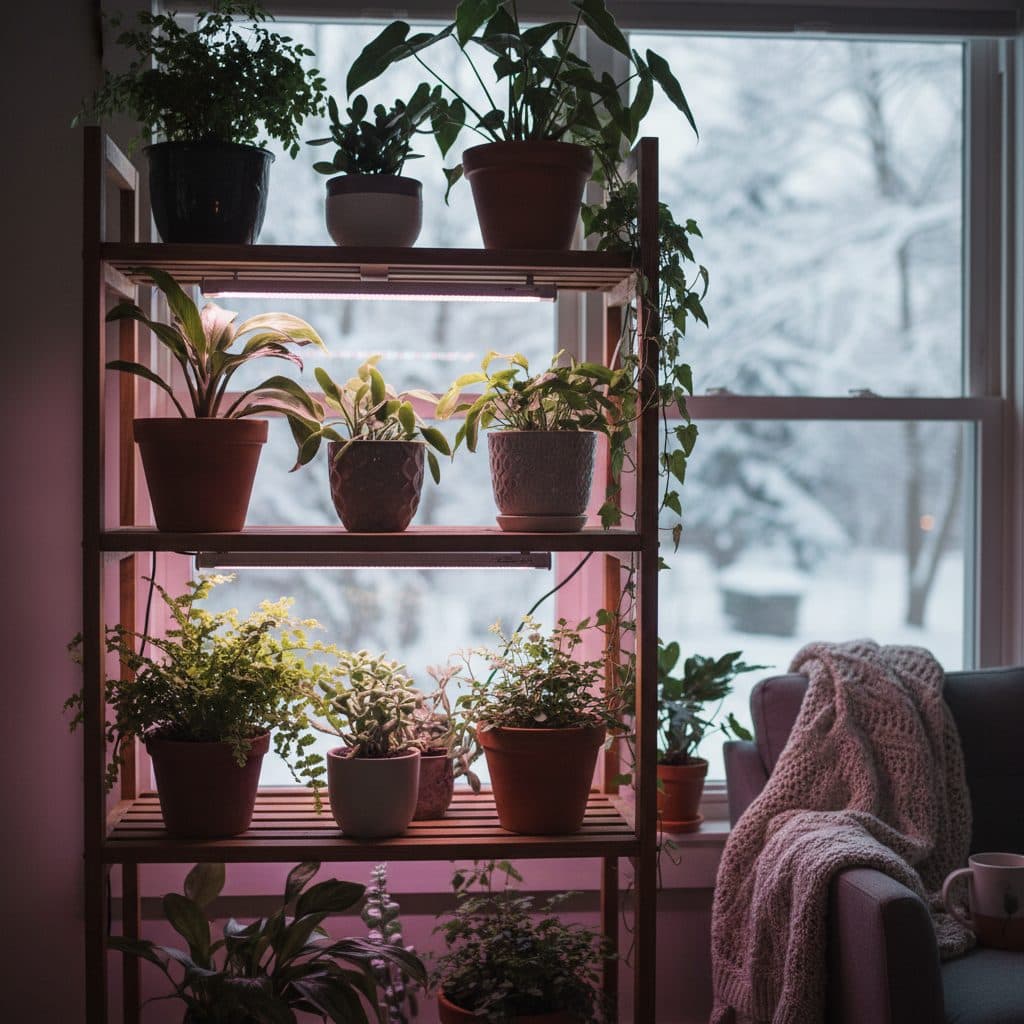
Quick answer: Supplemental lighting, especially LED grow lights, can significantly boost winter growth for indoor plants in northern US homes by compensating for reduced daylight hours and intensity. Proper setup, including reflective surfaces and optimal light cycles, further enhances plant health and yield.
For many growers in northern US states, like those in USDA zone 4 or 5, winter brings a dramatic reduction in available sunlight. Days can shrink to less than nine hours of daylight, and the sun’s angle means even south-facing windows offer significantly less intensity. This scarcity of light is a major hurdle for indoor plants, often leading to leggy growth, pale leaves, and a general decline in vigor. Without intervention, many plants struggle to survive, let alone thrive, during the months from November through March.
Understanding how to rotate and supplement light helps maintain healthy indoor gardens through these dark periods. By employing the right strategies and equipment, you can provide your plants with the necessary spectrum and duration of light so they continue to grow and flower even when outdoor conditions are cold. Practical lighting setups help maintain healthy growth for apartment herbs and larger houseplant collections alike.
Understanding the winter light challenge
As winter approaches across the US, the amount and quality of natural light available to indoor plants diminish significantly. In regions like Minnesota or Maine, located in USDA zone 4, daylight hours can drop to just eight hours and 40 minutes around the winter solstice. This is a stark contrast to the 15 or 16 hours of daylight experienced during summer. Beyond duration, the sun’s lower angle in winter means light intensity is greatly reduced, often by 50% or more compared to summer levels, even in a bright, south-facing window. This reduction affects photosynthesis, the process plants use to convert light into energy.
The impact of insufficient light on plant health
Plants respond to low light by stretching towards the nearest light source, a phenomenon known as etiolation. This results in weak, leggy stems and sparse foliage. For example, a tomato seedling grown with insufficient light might stretch to 6 in tall with only two true leaves, whereas one with adequate light would be a stockier 3 in. Additionally, chlorophyll production can decrease, leading to pale green or yellow leaves. Many houseplants, like Pothos or Philodendron, prefer at least ten hours of bright, indirect light daily, a requirement often unmet during the darker months. Research from 2014 indicates that both the duration and intensity of light affect plant development [1].
- Daylight hours decrease by 30-50% in northern US winters.
- Light intensity can drop by 50% or more indoors during winter.
- Plants may exhibit leggy growth, stretching 2-3 times their normal height.
- Chlorophyll production can be reduced, causing pale leaves.
- Flowering plants may fail to bloom without adequate light duration.
Choosing the right supplemental lights
Selecting the appropriate supplemental lighting is an important step for successful indoor gardening through winter. Not all lights are created equal, and understanding the differences in spectrum, wattage, and efficiency can significantly impact plant health and your electricity bill. Light quality, specifically the spectrum of light, is as important as quantity. Plants primarily use red and blue light for photosynthesis, with blue light promoting vegetative growth and red light encouraging flowering and fruiting. A full-spectrum light, mimicking natural sunlight, is often the best choice for general houseplant care and year-round growth.
Types of grow lights and their applications
LED grow lights are a popular choice due to their energy efficiency and long lifespan, often lasting 50,000 hours or more. They can consume 60-70% less energy than older HID (High-Intensity Discharge) lights while producing comparable light output. For example, a lower-wattage LED grow light can often replace a higher-wattage HID light for similar plant growth. Fluorescent lights, particularly T5 or T8 bulbs, are another option, providing good light for seedlings and low-light plants. A 4-foot T5 fixture can provide sufficient light for a 2 ft by 4 ft growing area. For more detailed information on light requirements, consider consulting resources like Plants for full sun: a zone-by-zone guide to what thrives in 6+ hours of direct light.
- LED grow lights offer high efficiency and a customizable spectrum for various plant stages.
- Fluorescent T5 or T8 bulbs are cost-effective for seedlings and leafy greens.
- High-pressure sodium (HPS) lights are effective for flowering but produce significant heat.
- Metal halide (MH) lights are good for vegetative growth but less efficient than LEDs.
- Choose lights with a color temperature between 2,700K (warm) and 6,500K (cool) for balanced growth.
Setting up your grow space for optimal light
Once you have chosen your supplemental lights, proper setup of your grow space is essential to maximize their effectiveness. Light intensity diminishes rapidly with distance, so positioning your lights correctly is essential. For most LED grow lights, a distance of 12-24 in above the plant canopy is a good starting point, though this can vary based on the light’s wattage and the plant’s specific needs. Reflective materials can dramatically improve light distribution and intensity. Lining your grow area with Mylar or a similar highly reflective material can increase the usable light, ensuring more light reaches the lower leaves of your plants. A dedicated Reflective Indoor Grow Tent is an excellent option for creating an enclosed, controlled environment.
Maximizing light efficiency and coverage
Consider the dimensions of your growing area when selecting and positioning lights. A 2 ft by 2 ft area might require a 100W LED panel, while a 4 ft by 4 ft area could need a 300W or 400W light. Use a light meter, such as a 3-in-1 soil pH, moisture & light meter, to measure lux levels at the plant canopy. For example, leafy greens typically need 2,000-5,000 lux, while fruiting plants like peppers might require 10,000-20,000 lux. Rotating plants regularly (perhaps once a week) helps ensure even light exposure to all sides, preventing uneven growth and promoting a bushier habit. This is especially important for larger plants that might cast shadows on themselves.
- Position lights 12-24 in from the plant canopy for optimal intensity.
- Use Mylar or white paint to reflect 20-30% more light onto plants.
- Measure light levels with a lux meter to ensure plants receive adequate light.
- Rotate plants weekly to ensure even light exposure on all sides.
- Consider a grow tent for enhanced light control and environmental stability.
Light schedules and plant needs
The duration of light, or photoperiod, is just as important as its intensity and spectrum. Most indoor plants, especially those grown for foliage or general houseplant aesthetics, benefit from a consistent light cycle of 12-16 hours of light followed by 8-12 hours of darkness. This mimics the longer days of spring and summer, encouraging active growth. However, some plants have specific photoperiod requirements. Short-day plants, like poinsettias or chrysanthemums, require longer periods of darkness (12-14 hours) to initiate flowering. Conversely, long-day plants, such as spinach or lettuce, need 14-16 hours of light to prevent bolting.
Daily light integral (DLI) and dark periods
Beyond simple duration, the Daily Light Integral (DLI) measures the total amount of photosynthetically active radiation (PAR) a plant receives over a 24-hour period. For example, a plant requiring a DLI of 10-12 mol/m²/day might need a 14-hour light cycle under a 200W LED light. A consistent dark period is necessary for plant health. During darkness, plants undergo essential processes like respiration, nutrient transport, and flower initiation. A lack of darkness can stress plants, leading to stunted growth or a failure to flower. Research from 2014 emphasizes the importance of both light and dark periods for optimal plant physiology [1]. Even a short light pulse during the dark period can inhibit critical regeneration processes in some plants, as noted in a 1984 study [4].
- Provide 12-16 hours of light for most foliage plants and general houseplants.
- Ensure 8-12 hours of uninterrupted darkness for essential plant processes.
- Adjust photoperiod for specific plants: 10-12 hours for short-day, 14-16 hours for long-day.
- Monitor Daily Light Integral (DLI) for optimal energy accumulation.
- Use an automatic timer for consistent light and dark cycles, preventing errors.
Integrating light with other indoor conditions
Light is just one component of a plant’s environment. For winter growth, integrate supplemental lighting with other environmental factors, including temperature, humidity, and air circulation. Most houseplants thrive in temperatures between 65-75°F (18-24°C) during the day, with a slight drop of 5-10°F at night. Maintaining these temperatures is especially important when using grow lights, as some lights can generate heat. For instance, an older 400W HPS light can significantly raise the ambient temperature of a small grow tent by 10-15°F, requiring additional ventilation.
Humidity, air flow, and nutrient management
Winter air can be particularly dry, especially in heated homes. Many houseplants, originating from tropical regions, prefer humidity levels between 40-60%. Running a humidifier near your plants can help maintain these levels. For example, a small humidifier can raise humidity in a 100 sq ft room. Good air circulation, provided by a small oscillating fan, prevents stagnant air, which can lead to fungal issues, and helps strengthen plant stems. Finally, even with supplemental light, plants still require proper nutrition. Reduce fertilizer application by 25-50% during winter months for most plants, as their growth rate slows, but ensure they still receive essential micronutrients. Regular monitoring with a 3-in-1 Soil pH, Moisture & Light Meter can help manage soil conditions effectively.
- Maintain daytime temperatures between 65-75°F (18-24°C) for most plants.
- Aim for 40-60% relative humidity, supplementing with a humidifier if needed.
- Ensure good air circulation with a small fan to prevent fungal diseases.
- Reduce fertilizer by 25-50% during winter’s slower growth period.
- Monitor soil moisture and pH regularly to prevent overwatering or nutrient lockouts.
Practical tips for northern growers
For growers in colder, darker US regions, like those in USDA zones 3-6, winter presents a unique set of challenges and opportunities. While the lack of natural light is a primary concern, careful planning can lead to steady indoor growth. Consider growing plants that naturally tolerate lower light conditions or have shorter growing seasons. For example, many herbs like mint and parsley can thrive under moderate supplemental light, yielding fresh harvests throughout winter. For more ambitious projects, growing crops like celery from seed indoors can provide a continuous supply, as detailed in How to grow celery: from indoor seed to a long, tender harvest.
Seasonal adjustments and species selection
In regions like Alaska, where winter days can be as short as five hours, supplemental lighting becomes less of an option and more of a necessity for any indoor plant growth. Even for homesteading, understanding light requirements is essential, as discussed in Homesteading in Alaska: short seasons, long days, hard winters. For plants that typically go dormant, such as some succulents or deciduous trees, reducing light duration to 8-10 hours and lowering temperatures to 50-60°F (10-15°C) can encourage a natural rest period. This can be beneficial for their long-term health and vigor. Always research the specific needs of each plant species you intend to grow. A little planning in autumn can save significant frustration (and plant loss) during the winter months, helping indoor plants remain productive through the season.
- Prioritize low-light tolerant plants or those with short growth cycles for winter.
- Consider growing herbs like basil or cilantro, which yield well under supplemental light.
- Implement dormancy periods for specific plants by reducing light and temperature.
- Plan your winter garden in autumn, selecting species appropriate for indoor conditions.
- Invest in quality timers and light meters for consistent and effective light management.
Comparison of common grow light types for indoor plants
Light Type | Efficiency (W/sq ft) | Lifespan (hours) | Heat Output | Best Use Case |
|---|---|---|---|---|
LED Grow Lights | 20-40 | 50,000+ | Low | All stages, customizable spectrum |
T5 Fluorescent | 25-35 | 20,000+ | Low | Seedlings, leafy greens, propagation |
CFL (Compact Fluorescent) | 30-45 | 10,000+ | Low | Small spaces, supplemental light |
HPS (High-Pressure Sodium) | 40-70 | 24,000+ | High | Flowering, fruiting stages |
MH (Metal Halide) | 40-70 | 10,000+ | Medium-High | Vegetative growth |
Light Intensity Boost: Reflective materials like Mylar can increase light intensity reaching plants by 20-30%, significantly improving growth in dimly lit areas.
Energy Savings: Modern LED grow lights consume less energy than traditional HID lights, translating to substantial savings over a winter growing season.
Frequently asked questions
How many hours of supplemental light do my plants need in winter?
Most indoor plants, including common houseplants and leafy greens, benefit from 12-16 hours of supplemental light daily during winter. This duration mimics the longer days of spring and summer, promoting active growth and preventing leggy stems. Ensure they also receive 8-12 hours of uninterrupted darkness for essential physiological processes.
What type of light is best for winter plant growth?
Full-spectrum LED grow lights are generally considered the best option for winter plant growth due to their high energy efficiency, long lifespan of over 50,000 hours, and customizable light spectrum. They provide the necessary red and blue wavelengths for photosynthesis while producing minimal heat, making them suitable for enclosed indoor spaces.
How far should grow lights be from my plants?
The ideal distance for grow lights depends on the light’s intensity and the plant’s needs, but a common starting point for LED grow lights is 12-24 inches above the plant canopy. For seedlings or low-light plants, lights might be 24-36 inches away, while high-light plants could tolerate lights as close as 6-12 inches. Always monitor plant response for signs of stress.
Can I use regular household lights as grow lights?
While some household lights, like fluorescent tubes, can offer minimal supplemental light for low-light plants or seedlings, they are generally not sufficient for vigorous plant growth. Most household bulbs lack the full spectrum and intensity required for photosynthesis, often resulting in weak, stretched plants. Dedicated grow lights provide the specific wavelengths and intensity needed for healthy plant development, potentially increasing yields.
How does humidity affect indoor plants in winter?
Winter heating often dries out indoor air, which can stress many houseplants that prefer higher humidity levels. Aim for a relative humidity of 40-60% for most tropical plants. Using a humidifier can help raise humidity in a typical 150 sq ft room, preventing crispy leaf edges and promoting overall plant vigor.
Do plants need a dark period?
Yes, plants absolutely need a consistent dark period, typically 8-12 hours, for essential physiological processes. During darkness, plants perform respiration, transport nutrients, and initiate flowering in some species. Interrupting this dark period, even with a short light pulse, can interrupt these processes and negatively impact plant health and development, as shown in studies from 1984 [4].
References
- Light and dark (2014). Light and dark.
- Light (2022). Light.
- Exploring perfect fluid dark matter with EHT results of Sgr A* through rotating 4D-EGB black holes (2024). Exploring perfect fluid dark matter with EHT results of Sgr A* through rotating 4D-EGB black holes.
- The initial inhibition of protochlorophyll regeneration in dark‐grown leaves of barley after a short light pulse, and in greening leaves subjected to dark perio (1984). The initial inhibition of protochlorophyll regeneration in dark‐grown leaves of barley after a short light pulse, and in greening leaves subjected to dark perio.
- introduction: (2023). introduction:.
- USDA Natural Resources Conservation Service (2024). USDA Natural Resources Conservation Service.