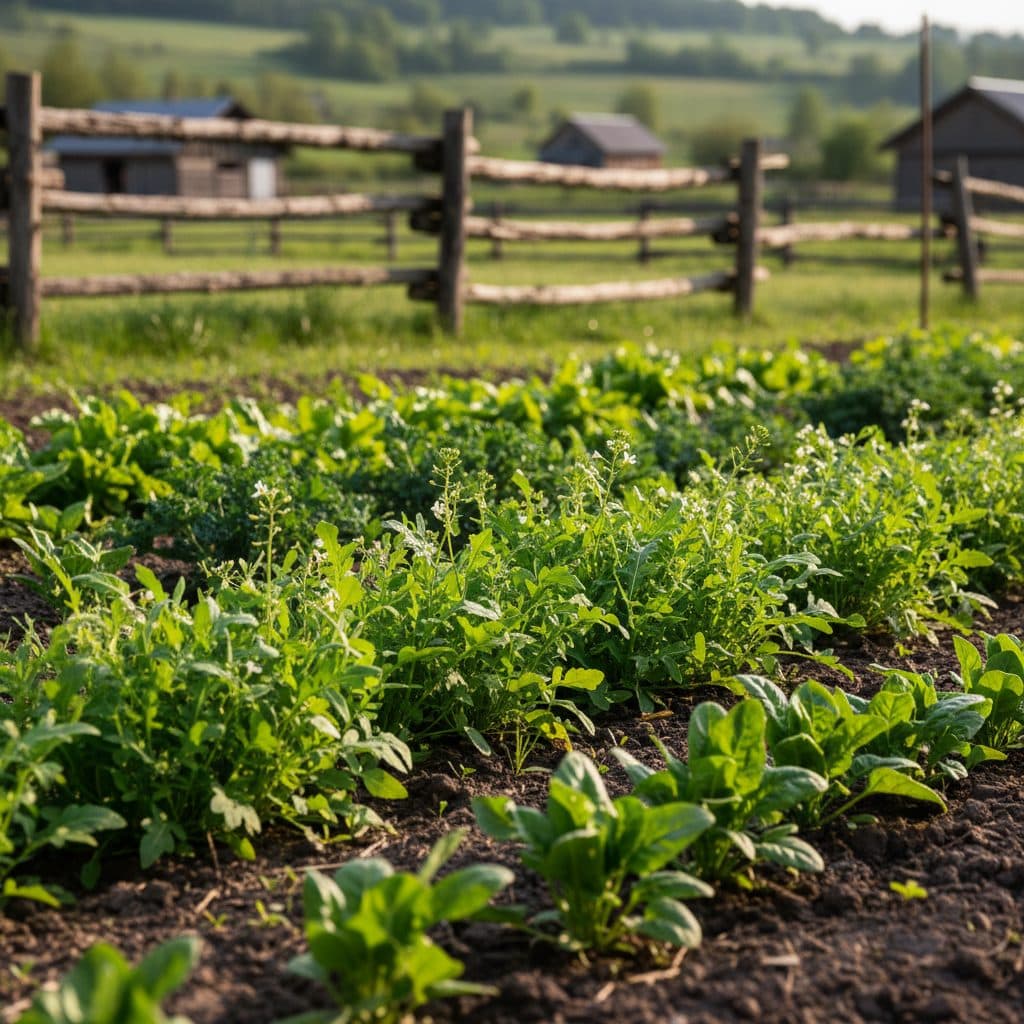
Key takeaways
- Plant small batches of fast greens every one to three weeks to ensure continuous harvest and prevent bolting.
- Select heat-tolerant varieties of arugula, mustard greens, and lettuce for summer production in warmer zones.
- Monitor soil temperatures; aim for 45-75°F for optimal germination and growth of most brassica greens.
- Utilize shade cloth during summer months to reduce heat stress and extend the harvest window by several weeks.
- Harvest greens using the cut-and-come-again method to encourage new growth and prolong plant productivity.
- Consider starting seeds indoors in 24-cell trays for earlier harvests and better control over germination rates.
Quick answer: To avoid bolting in fast salad greens like arugula, practice succession sowing by planting small batches every 1-3 weeks. This ensures a continuous harvest of young, tender leaves, especially in warmer USDA Zones 6-9.
For growers across the southern United States, from USDA zone 7b in North Carolina to zone 9a in central Florida, the warm season brings both abundance and challenges. Fast-growing salad greens like arugula, often called ‘rocket’ in other parts of the world, can quickly transition from tender leaves to bitter, bolted stalks once temperatures consistently climb above 75°F. This rapid shift, known as bolting, is a common frustration, cutting short the harvest window and leaving gardeners with a gap in their fresh salad supply. However, with a strategic approach called succession sowing, it is entirely possible to maintain a steady, delicious harvest of these quick-to-mature crops throughout much of the growing season.
Succession sowing involves planting small quantities of seeds at regular intervals, typically every one to three weeks, rather than planting an entire bed all at once. This method ensures that as one batch of plants reaches maturity and begins to decline or bolt, another younger batch is ready to take its place. This article will guide you through the practical steps of implementing succession sowing for arugula and other fast salad greens, providing a continuous yield of fresh, tender leaves. We will cover everything from selecting the right varieties to precise planting schedules and season-extending techniques, helping you maximize your garden’s productivity.
Understanding bolting and the role of succession sowing
Bolting is the plant’s natural response to environmental stress, primarily high temperatures and increasing day length, signaling it’s time to produce flowers and seeds. For many fast-growing brassicas and leafy greens, this process can occur rapidly, often within 20-40 days of germination, especially when daytime temperatures consistently exceed 75°F. Once a plant bolts, its energy shifts from leaf production to seed production, leading to a significant decrease in leaf quality, often becoming tough and bitter. For example, arugula, a popular salad green, will develop a much stronger, peppery taste when stressed by heat, and its leaves will become smaller and less palatable.
Succession sowing directly addresses this challenge by ensuring that you always have young, vegetative plants that are less prone to bolting. Instead of planting 100% of your arugula seeds at once in early spring, you might plant 25% every two weeks over an eight-week period. This strategy prevents a single large harvest followed by a long period of no production. In regions like USDA zone 6, where spring transitions quickly into summer heat, this method is especially useful for extending the harvest of cool-season crops. It is a proven technique for maintaining a consistent supply, as demonstrated by research on timing of sowing to prevent supply discontinuity in salad crops.
key bolting triggers and prevention
- High temperatures: Most cool-season greens prefer temperatures between 50-70°F; consistently above 75°F triggers bolting.
- Longer day length: As days extend past 14 hours in early summer, many plants perceive this as a signal to flower.
- Water stress: Inconsistent watering, especially during dry spells, can induce premature bolting.
- Nutrient deficiency: Lack of essential nutrients can stress plants, leading them to bolt early.
- Root disturbance: Transplanting can sometimes shock seedlings, causing them to bolt if not handled carefully.
Selecting the right fast greens for continuous harvest
While arugula is an excellent candidate for succession sowing, it is not the only option. Many other fast-growing salad greens can be incorporated into your planting schedule to ensure a diverse and continuous supply. When selecting varieties, consider their days to maturity, heat tolerance, and flavor profile. For instance, wild arugula (‘Sylvetta’, Diplotaxis tenuifolia) is slower to bolt than standard salad arugula, extending the harvest window in warmer climates like those in USDA zone 8. These varieties might still bolt, but they will do so a bit later.
Mustard greens (Brassica juncea) are another excellent choice, offering a range of flavors from mild to spicy. Varieties like ‘Red Giant’ or ‘Green Wave’ mature quickly, often in 30-40 days, and can tolerate slightly warmer conditions than some lettuces. Spinach, while a classic cool-season crop, also has heat-tolerant varieties like ‘Tyee’ or ‘Bloomsdale Long Standing’ that can perform better into early summer in regions like the Pacific Northwest. For lettuce, loose-leaf varieties such as ‘Black Seeded Simpson’ or ‘Red Salad Bowl’ are generally more forgiving of heat and can be harvested using a cut-and-come-again method, yielding multiple harvests over a 3-4 week period.
characteristics of ideal succession crops
- Rapid maturity: Look for crops that mature in 20-45 days, allowing for quick turnover.
- Cut-and-come-again potential: Varieties that regrow after harvesting outer leaves are ideal for extended yields.
- Heat tolerance: Choose specific varieties bred to withstand warmer temperatures for summer plantings.
- Compact growth habit: Plants that don’t take up much space can be easily tucked into small succession plots.
- Disease resistance: Selecting resistant varieties reduces crop loss and ensures consistent production.
Designing your succession plan for consistent yields
The core of succession sowing is a well-thought-out planting schedule. For most fast salad greens, sowing a small batch every one to three weeks is effective in maintaining a continuous supply. The exact interval depends on your climate, the specific crop’s growth rate, and your family’s consumption habits. For a family of four in a temperate climate like USDA zone 7, planting a 2-foot by 4-foot section of arugula every two weeks might provide enough fresh greens for regular salads. In hotter climates, increasing the frequency to weekly plantings might be necessary to account for faster bolting.
Start by identifying your average last frost date in spring and your average first frost date in fall. Plan your first succession planting about two to four weeks before the last frost for early spring greens. Continue planting until about four to six weeks before the first fall frost, allowing enough time for the last batch to mature. Consider using a tool like a garden planner or even a simple spreadsheet to track your planting dates and projected harvest windows. Adjusting the interval to your own climate, crop and household consumption is what actually closes supply gaps. For example, in a region like central California, with a long growing season, you might have 10-12 succession plantings of arugula between March and October.
key planning considerations
- Consumption rate: Estimate how much you eat per week to determine batch size.
- Crop maturity: Shorter maturity times (20 days) allow for more frequent plantings.
- Climate zone: Adjust intervals based on local temperatures and day length in your USDA zone.
- Garden space: Allocate small, dedicated areas for each succession batch.
- Seed availability: Ensure you have enough seeds for multiple plantings throughout the season.
Sowing techniques and early care for optimal growth
Proper sowing and early care matter for healthy, productive plants that resist bolting. Most fast salad greens prefer well-drained soil rich in organic matter, with a pH between 6.0 and 7.0. Before planting, amend your soil with 1-2 inches of compost to improve fertility and moisture retention. For direct sowing, create shallow furrows about one-quarter to one-half inch deep, and sow seeds thinly. For arugula, aim for seeds spaced about 1 inch apart, later thinning to 2-4 inches for optimal leaf development. This spacing ensures good air circulation, reducing disease risk.
Alternatively, especially for early spring plantings or when garden space is limited, starting seeds indoors can provide a head start. Using a 24-cell seedling propagation tray allows you to control environmental conditions, leading to higher germination rates. Transplant seedlings when they have two to three true leaves, being careful not to disturb the roots. Consistent moisture is vital; aim for about 1 inch of water per week, either from rainfall or irrigation. In hot, dry periods, this might mean watering every other day. Protecting young seedlings from pests like flea beetles, which can chew small holes in leaves, is also important for maintaining plant vigor.
essential sowing and care steps
- Soil preparation: Ensure well-drained, fertile soil with a pH of 6.0-7.0.
- Seed depth: Plant seeds one-quarter to one-half inch deep for best germination.
- Spacing: Thin seedlings to 2-6 inches apart, depending on the crop, for optimal growth.
- Consistent watering: Provide 1 inch of water per week, especially during dry spells.
- Pest monitoring: Regularly inspect for pests and address issues promptly to prevent stress.
Harvesting for longevity and extending the season
These sowing techniques and lessons apply to the steps below, too.
The way you harvest your fast salad greens can significantly impact their productivity and how long they remain in your garden. The ‘cut-and-come-again’ method is highly effective for crops like arugula, loose-leaf lettuce, and mustard greens. Instead of pulling the entire plant, simply snip off the outer leaves, leaving the central growing point intact. This encourages the plant to produce more leaves, extending its harvest life by several weeks. For arugula, you can often get two to three harvests from a single plant over a 30-day period before it eventually bolts. Aim to harvest when leaves are young and tender, typically 4-6 inches long.
To push your harvest window even further into the warmer months, consider using season extension techniques. In regions like the Southeastern US, where summer heat can be intense, providing partial shade helps. Erecting a simple structure with 30-50% shade cloth over your greens lowers leaf temperature, delaying bolting and preventing sunburn. For fall plantings, using row covers or a low tunnel can protect against early frosts, allowing you to enjoy fresh greens well into late autumn. Consistent harvesting also prevents plants from setting seed prematurely, which is a key factor in extending the productive life of crops like lettuce (How to grow lettuce: continuous salad from spring to frost).
season extension strategies
- Shade cloth: Use 30-50% shade cloth during hot summer months to lower ambient temperatures.
- Row covers: Protect fall plantings from early frosts and extend the harvest into colder weather.
- Cold frames: Provide a microclimate for winter harvesting in milder climates (USDA zone 7 and above).
- Watering: Maintain consistent soil moisture to reduce heat stress and delay bolting.
- Mulching: Apply a 2-inch layer of organic mulch to keep soil temperatures cooler and conserve moisture.
Comparison of Fast Salad Greens for Succession Sowing
Crop | Days to Maturity | Heat Tolerance | Flavor Profile |
|---|---|---|---|
Arugula | 20-30 days | Low to Medium | Peppery, slightly nutty |
Mustard Greens | 30-40 days | Medium | Spicy, pungent |
Loose-leaf Lettuce | 30-45 days | Medium | Mild, slightly sweet |
Spinach (Heat-tolerant var.) | 35-45 days | Medium | Mild, earthy |
Radish (Leaf) | 20-30 days | Medium | Spicy, peppery |
Optimal Temperature: Most fast salad greens thrive in temperatures between 50-70°F, with bolting often triggered above 75°F.
Sowing Interval: Planting small batches every one to three weeks is recommended to ensure a continuous harvest of fresh greens.
Shade Cloth Benefit: Using 30-50% shade cloth lowers leaf temperature and can extend the harvest season in hot climates.
Frequently asked questions
What is bolting and why does it happen to salad greens?
Bolting is when a plant prematurely produces a flower stalk and seeds, often caused by environmental stress like high temperatures (above 75°F) or increasing day length. This shifts the plant’s energy from leaf production, making the leaves bitter and tough, and reducing their culinary value.
How often should I succession sow fast salad greens?
For most fast salad greens like arugula and loose-leaf lettuce, sowing a small batch every one to three weeks is effective. This frequency ensures that as older plants begin to decline or bolt, new, younger plants are ready for harvest, maintaining a continuous supply for about 20-30 days per batch.
Can I succession sow in containers?
Yes, succession sowing works very well in containers. Use pots at least 6-8 inches deep and wide for greens. You can have several containers, planting a new one every 10-14 days, and moving older ones to partial shade as temperatures rise to extend their productivity.
What are some good heat-tolerant varieties for summer succession?
For arugula, ‘Sylvetta’ is known for better heat tolerance. For lettuce, ‘Black Seeded Simpson’ and ‘Red Salad Bowl’ are good loose-leaf options. Some spinach varieties like ‘Tyee’ also perform better in warmer conditions, extending their harvest by a few weeks compared to standard types.
How can I prevent my arugula from becoming too spicy or bitter?
Arugula becomes spicier and more bitter when stressed by heat, lack of water, or when it’s about to bolt. To prevent this, ensure consistent watering (1 inch per week), provide partial shade during hot afternoons (above 80°F), and harvest leaves when they are young and tender, typically 4-6 inches long.
References
- Sowing Intelligence: Advancements in Crop Yield Prediction Through Machine Learning and Deep Learning Approaches (2024). Sowing Intelligence: Advancements in Crop Yield Prediction Through Machine Learning and Deep Learning Approaches.
- SALAD CROPS | Other Types of Salad Crops (2003). SALAD CROPS | Other Types of Salad Crops.
- PREVENTION OF SUPPLY DISCONTINUITY BY TIMING OF SOWING WITH SOME SALAD CROPS (1973). PREVENTION OF SUPPLY DISCONTINUITY BY TIMING OF SOWING WITH SOME SALAD CROPS.