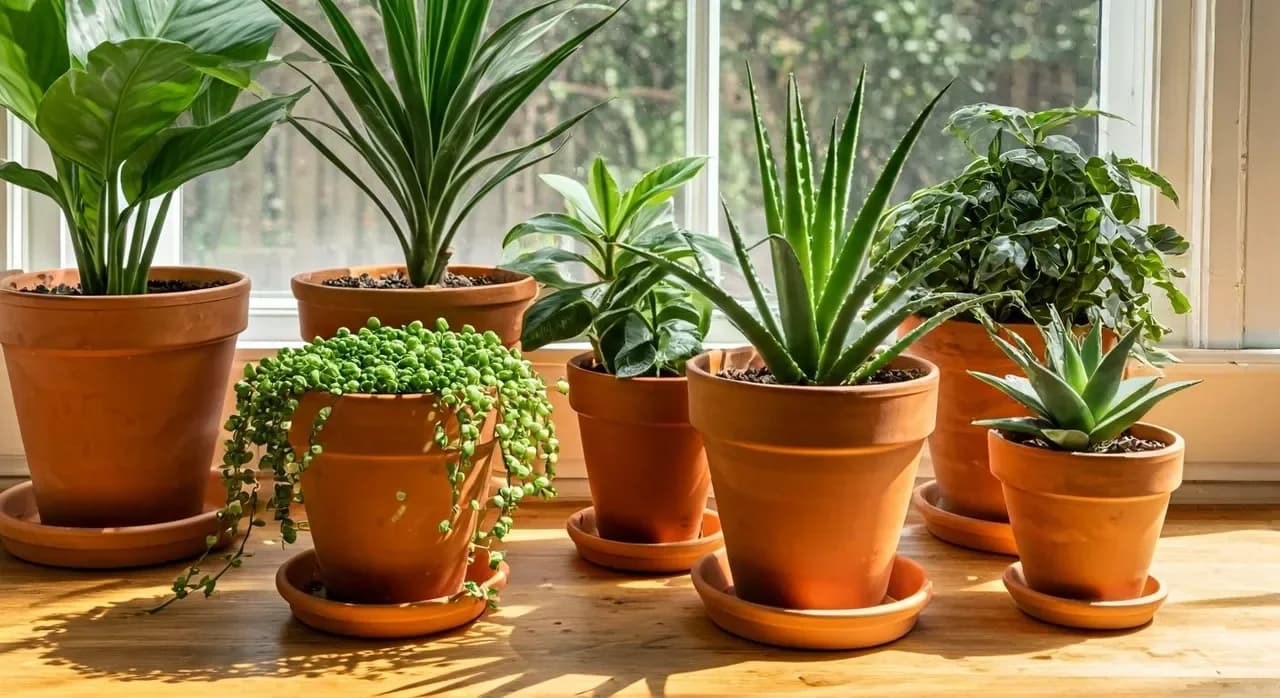
Key takeaways
- Spring is the best time for repotting over 90% of houseplants in the US, matching their natural growth cycles.
- Repotting provides fresh nutrients, prevents root binding, and improves drainage for healthier plants.
- Look for signs like roots circling the pot, stunted growth, or frequent watering needs to determine if repotting is due.
- Choose a pot one to two inches larger in diameter than the current one for most species.
- Use a high-quality potting mix specific to your plant’s needs so good aeration and drainage.
- Some plants, like winter-blooming cacti or very slow growers, may have different repotting schedules.
Quick answer: Spring is the best time to repot over 90% of houseplants in the US because it matches their natural active growth cycle, minimizing stress and maximizing recovery. This timing provides fresh nutrients and improves drainage for healthier plants.
Across the diverse climates of the United States, from USDA zone 3 in northern Minnesota to zone 11 in southern Florida, houseplant enthusiasts often wonder about the optimal timing for repotting their cherished indoor greenery. While some might consider repotting an annual chore, its success hinges significantly on timing. For the vast majority of common houseplants, spring stands out as the unequivocally best season for this essential task.
This isn’t merely a tradition; it’s rooted in plant physiology. As the days lengthen and temperatures rise, houseplants emerge from their winter dormancy, signaling a period of active growth. Repotting during this phase minimizes stress and maximizes the plant’s ability to recover and thrive in its new environment, leading to more sturdy growth and better overall health throughout the growing season. We’ll explore the ‘why’ behind spring’s dominance, practical steps, and a few exceptions to this important rule.
Understanding the houseplant growth cycle
Houseplants, despite their indoor setting, largely follow the seasonal rhythms of their outdoor counterparts. In most parts of the US, from the Pacific Northwest to the Mid-Atlantic, plants experience a distinct period of active growth, typically from early spring through late summer, and a period of reduced activity or dormancy during the cooler, shorter days of fall and winter. During active growth, plants dedicate significant energy to producing new leaves, stems, and roots, often increasing their biomass over several months. This is when they are most resilient and best equipped to handle the stress of repotting.
The rhythm of dormancy and active growth
Dormancy is not a state of death, but rather a strategic pause where metabolic processes slow down. For example, a fiddle leaf fig (Ficus lyrata) in a USDA zone 7 apartment will show minimal new leaf production from November to February, conserving energy. Repotting during this dormant phase can be detrimental, as the plant lacks the vigor to establish new roots in fresh soil, potentially leading to root rot or prolonged stress. Observing your plant’s growth — new shoots, larger leaves, or increased water consumption — can indicate its readiness for a change. You might notice a plant like a pothos (Epipremnum aureum) growing 6 to 12 inches of new vine in a single spring month, clearly indicating active growth.
- Roots circling the pot’s interior, often visible through drainage holes.
- Water draining straight through the pot, indicating compacted soil or a dense root ball.
- Stunted growth or leaves smaller than previous seasons.
- Frequent wilting, even with consistent watering, suggesting inadequate water retention.
- A noticeable layer of mineral salts or fertilizer buildup on the soil surface.
Why spring is the prime repotting season
Spring gives a confluence of ideal environmental conditions that make it the optimal time for houseplant repotting across the US. Spring often brings a renewed sense of vigor, and plants are no different. The increasing daylight hours, often exceeding 12 hours by late March in many US states, stimulate plants to produce growth hormones, accelerating root and shoot development. This natural surge in growth means a repotted plant will quickly recover from transplant shock, establishing itself firmly in its new container within two to four weeks. Also, indoor humidity levels often begin to rise from their winter lows, providing a more forgiving environment for stressed roots.
Optimal light, temperature, and humidity for recovery
From a practical standpoint, warmer indoor temperatures in spring provide a consistently warm environment that encourages rapid root regeneration. This warmth, combined with higher ambient light, allows plants to efficiently photosynthesize and direct energy towards healing any root damage incurred during repotting. A well-timed repotting in spring can lead to increased new growth compared to a plant repotted in fall or winter. For example, a spring onion, though an outdoor plant, demonstrates this principle with its rapid spring growth.
- Improved root establishment due to active growth.
- Faster recovery from transplant shock, often within 14 to 28 days.
- Abundant natural light supports sturdy photosynthesis.
- Warmer ambient temperatures promote cellular repair and growth.
- Higher humidity levels reduce water stress on newly disturbed roots.
Identifying when your plant needs a new home
Knowing when to repot matters as much as knowing how. While spring is the season, not every plant needs repotting every year. A good rule of thumb is to check your plants annually, typically in early spring, for specific indicators. One of the most common signs is when roots begin to circle the inside of the pot, forming a dense, matted ball. This condition, known as being root-bound, restricts nutrient and water uptake, often leading to stunted growth or yellowing leaves. You might notice your plant’s growth rate has slowed compared to previous seasons.
Signs of root binding and nutrient depletion
Another clear indicator is when water runs straight through the pot without soaking into the soil. This suggests that the potting mix has either become severely compacted or that the root mass has displaced most of the soil, reducing its ability to retain moisture. Plants in this state might require watering two to three times more frequently than usual. Also, if you observe a significant buildup of mineral salts on the soil surface or around the pot’s rim, it’s often a sign that the existing soil is depleted and no longer providing adequate nutrients, even with regular fertilization. A plant that has been in the same pot for two or three years, for instance, has likely exhausted the soil’s initial nutrient supply, which typically lasts for a limited time in most commercial potting mixes. Consider using a reflective indoor grow tent for optimal light if natural light is insufficient.
- Roots emerging from the drainage holes or visible on the soil surface.
- Soil pulling away from the pot’s edges, indicating a dense root ball.
- Plant growth has visibly slowed or stopped for several months.
- Leaves appear pale, yellow, or smaller than expected.
- The plant requires watering much more frequently than in the past.
The repotting process: steps for success
Once you’ve determined your houseplant is ready for a new home, executing the repotting process correctly is vital to its immediate and long-term health. Begin by selecting a new pot that is only one to two inches larger in diameter than the current one for most plants. For example, if your plant is in a 6-inch pot, move it to an 8-inch pot. A pot that is too large holds excess moisture, which can lead to root rot, especially for plants that prefer drier conditions. Ensure the new pot has adequate drainage holes; a single 0.5-inch hole is often sufficient for a 6-inch pot, but multiple smaller holes are better.
Choosing the right soil and pot size
Prepare your new pot by adding a layer of fresh, high-quality potting mix. Avoid using garden soil, as it’s too dense for containers and can introduce pests. A good commercial potting mix will provide the right balance of aeration and moisture retention, critical for healthy root development. Gently remove your plant from its old pot, carefully loosening any circling roots at the bottom and sides. You might need to prune a portion of the outer, matted roots if they are severely root-bound. Place the plant in the new pot so the soil line is about one inch below the rim, leaving space for watering. Water thoroughly after repotting, allowing excess water to drain freely. A seven-function spray nozzle can help with gentle watering. Avoid fertilizing for at least four to six weeks, as the fresh soil provides ample nutrients.
- Select a new pot 1-2 inches larger in diameter with good drainage.
- Use a high-quality, appropriate potting mix for your specific plant.
- Gently remove the plant and loosen root ball, pruning up to 25% if needed.
- Position the plant so the soil line is 1 inch below the pot rim.
- Water thoroughly immediately after repotting to settle the soil.
Exceptions to the spring rule
While spring is the general rule for repotting, there are specific situations and plant types that warrant a different approach. An emergency repotting, for instance, might be necessary if a plant develops severe root rot, a pest infestation in the soil, or if its pot breaks. In these cases, immediate action, regardless of the season, is required to save the plant. For example, if you discover extensive root rot on a peace lily (Spathiphyllum) in December, you must act at once, even though it’s typically dormant. You’ll need to remove all affected roots, repot in fresh, sterile soil, and adjust watering to prevent recurrence.
When to repot outside of spring
Certain plants also have unique growth cycles that deviate from the spring-summer norm. Winter-blooming plants, such as Christmas cacti (Schlumbergera) or African violets (Saintpaulia), are often best repotted shortly after their flowering period concludes, typically in late winter or early spring, before they enter their next growth phase. These plants might show signs of active growth or stress even in the cooler months. Very slow-growing species, like many succulents or cacti, may only need repotting every three to five years, or even less frequently, as they do not quickly outgrow their containers. Some large, established plants that are difficult to move might benefit from ‘top-dressing’ – replacing the top two to three inches of soil with fresh potting mix annually – rather than full repotting. This can be done in early summer for plants like a mature Dracaena fragrans that might be 5 to 6 feet tall.
- Emergency repotting due to disease, pests, or physical damage.
- Winter-blooming plants, repot after flowering, e.g., Christmas cactus in late winter.
- Very slow-growing succulents or cacti, repot every 3-5 years or as needed.
- Large, established plants, consider top-dressing annually instead of full repotting.
- Plants specifically purchased in active growth during other seasons may be repotted.
Seasonal considerations for houseplant repotting in the US
Season | Suitability | Key Considerations |
|---|---|---|
Spring (March-May) | Excellent (90% of plants) | Active growth, increasing light, moderate temperatures. Fastest recovery. |
Summer (June-August) | Good (some plants) | High light, warm temperatures. Can be stressful; ensure consistent watering. |
Fall (September-November) | Poor (most plants) | Decreasing light, cooling temperatures. Plants slow down, poor recovery. |
Winter (December-February) | Very Poor (most plants) | Dormancy, low light, cold. High risk of root rot and transplant shock. |
Optimal Pot Size: For most houseplants, choose a new pot only one to two inches larger in diameter than the old one to prevent excess moisture and root rot.
Nutrient Depletion: Standard potting mixes typically provide sufficient nutrients for only six to twelve months before depletion, necessitating fresh soil.
References
- Spring resolutions: why it’s the best time of year to make healthy changes (2025).
- Fiscal year repot to members (1985).
- Effectiveness of Houseplants in Reducing the Indoor Air Pollutant Ozone (2009).
- A guide to the best hardy plants : spring 1932, 29th year / (1932).
- USDA Natural Resources Conservation Service (2024).