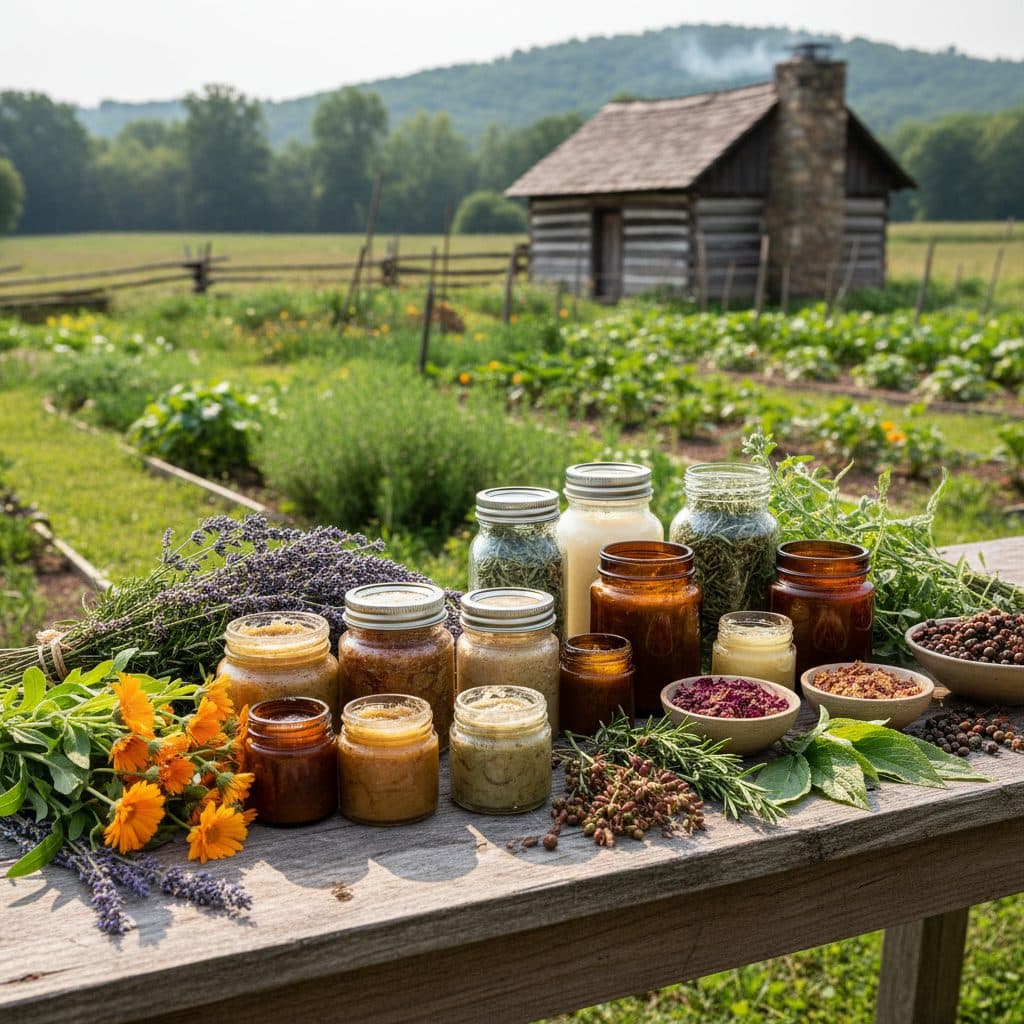
Key takeaways
- Cultivating your own medicinal herbs, such as calendula and lavender, provides control over ingredient quality and reduces exposure to synthetic additives.
- A basic herbal salve involves infusing dried herbs in oil, straining, and then combining with beeswax at a typical 1:5 beeswax-to-oil ratio for firmness.
- Many commercial body care products contain potential irritants, with up to 20% of ingredients being synthetic compounds, which can be avoided with homemade alternatives.
- Proper storage in cool, dark conditions can extend the shelf life of homemade salves and balms to 6-12 months.
- Beyond salves, your garden can supply ingredients for lip balms, body butters, and even natural household cleaners.
- Always perform a small patch test on skin before widespread use of any new homemade product to check for sensitivities over a 24-hour period.
Quick answer: To craft herbal salves and balms from your garden in USDA Zone 6, cultivate medicinal herbs like calendula and lavender, infuse them in oil, and combine with beeswax. This allows for control over ingredients and avoids synthetic additives.
Even in Midwest USDA zones 5 to 7, where winter drops below 0°F and summers pass 90°F, a small backyard herb bed can supply the raw botanicals for salves, balms, and household cleaners. Growing those herbs yourself lets you control what goes onto your skin, often keeping a finished recipe to five or fewer ingredients.
For decades, commercial body care items have dominated the market, with some analyses showing that some ingredients in certain balms and oils can be synthetic or potential sensitizers [2]. By contrast, making your own products allows for complete transparency, using herbs you’ve grown yourself, often at a fraction of the cost. A well-managed plot dedicated to medicinal herbs can yield a substantial supply of dried plant material annually, providing a supply for personal and gifting needs.
Growing your own ingredients for personal care
Starting an herb garden specifically for body care means selecting plants known for their therapeutic properties. In regions like the Pacific Northwest or the Southeast, where rainfall averages 40-60 inches annually, many herbs flourish with minimal intervention. For instance, calendula, known for its skin-soothing qualities, can produce blooms for up to six months in temperate climates, yielding a good supply of dried petals from a 100 square foot bed. This direct cultivation ensures you know exactly how your ingredients were grown, free from commercial pesticides or unknown additives.
Planning your medicinal herb patch
When planning your herb patch, consider the specific needs of each plant. Most medicinal herbs prefer at least six hours of direct sunlight daily and well-drained soil. A soil test, easily performed with a a calibrated soil pH or moisture test, can help determine if your soil’s pH is between 6.0 and 7.0, which is ideal for a wide range of herbs. For growers in USDA zone 6, planting in early spring after the last frost yields the best results. A 4 ft by 8 ft raised bed can comfortably house several different herb varieties, providing ample material for a year’s supply of products.
- Choose suitable herbs: Select plants like calendula, lavender, and plantain that thrive in your local USDA zone.
- Ensure proper drainage: Herbs dislike wet feet; amend heavy clay soils with 2-3 inches of compost.
- Provide adequate sunlight: Most medicinal herbs require a minimum of six hours of direct sun daily for optimal growth.
- Consider companion planting: Marigolds can deter pests from herb beds, protecting your useful plants.
- Harvest at peak potency: Collect leaves and flowers when they are fully open and dry, typically in the morning after dew has evaporated.
Key herbs to cultivate for salves and balms
Certain herbs stand out for their efficacy in skin care products, offering properties from soothing irritation to promoting healing. Calendula (Calendula officinalis) is a powerhouse, thriving in USDA zones 2 to 11 and producing orange and yellow flowers that are rich in anti-inflammatory compounds [1]. A single plant can yield dozens of flower heads over a growing season, providing ample material for oil infusions. Its gentle nature makes it suitable for sensitive skin, and it’s a staple in many homemade salves for minor cuts and abrasions.
Harvesting and drying for potency
Proper harvesting and drying matter for preserving the medicinal qualities of your herbs. For flowers like calendula and lavender, pick them when they are fully open on a dry morning, after the dew has evaporated. Leaves, such as those from plantain (Plantago major) or garden sage (Salvia officinalis), should be harvested before the plant flowers, when their essential oil content is highest. Hang bundles of herbs upside down in a warm, dark, and well-ventilated area, maintaining temperatures between 70-80°F, until they are completely dry, which typically takes 1-2 weeks. Dried herbs can retain their potency for over a year when stored in airtight containers away from direct light.
- Calendula (Calendula officinalis): Known for anti-inflammatory and wound-healing properties, thriving in zones 2-11.
- Lavender (Lavandula angustifolia): Offers calming and antiseptic qualities, growing well in zones 5-9.
- Plantain (Plantago major): A common “weed” with drawing and soothing effects, found in most US zones.
- Comfrey (Symphytum x uplandicum 'Bocking 14'): Promotes cell regeneration, but use with caution and only externally due to pyrrolizidine alkaloids. This sterile cultivar is preferred as it will not spread by seed.
- Rosemary (Rosmarinus officinalis): Provides antioxidant and antimicrobial benefits, suitable for zones 7-10.
Crafting your first herbal salve
Making a basic herbal salve is a straightforward process that involves infusing herbs into oil, then solidifying the mixture with beeswax. The infusion process extracts the beneficial compounds from the dried herbs into a carrier oil, such as olive oil or sweet almond oil. A common ratio for infusion is 1 part dried herb to 5 parts oil by weight, allowing for an extraction over several weeks. For example, 2 ounces of dried calendula flowers would be infused in 10 ounces of olive oil. This oil forms the base of your salve, carrying the therapeutic properties directly to the skin.
The infusion and solidification process
There are two primary methods for infusing oils: the solar method and the heat method. The solar method involves placing dried herbs and oil in a clear jar, sealing it, and letting it sit in a sunny window for 4-6 weeks, shaking daily. The heat method, quicker but requiring more attention, uses a double boiler to gently heat the herbs and oil for 2-4 hours at a low temperature, around 100-120°F, to prevent degradation of delicate compounds. Once infused, strain the oil thoroughly through cheesecloth so no plant material remains. For every 1 cup of infused oil, start with 1 ounce of beeswax pellets. Melt the beeswax in a double boiler, then stir in the infused oil. Pour the mixture into clean, sterilized tins or jars while still warm. As it cools, the salve will solidify, typically within 30-60 minutes, yielding several small 1-ounce tins from a 1-cup oil batch.
- Infuse herbs in oil: Combine 1 part dried herb with 5 parts carrier oil (e.g., olive, almond) in a jar.
- Choose infusion method: Solar infusion for 4-6 weeks or gentle heat for 2-4 hours.
- Strain thoroughly: Remove all plant material using cheesecloth to prevent spoilage.
- Melt beeswax: Use 1 ounce of beeswax pellets per 1 cup of infused oil for a firm consistency.
- Combine and pour: Mix melted beeswax with infused oil and pour into sterilized containers, yielding approximately 8-10 small tins.
Diversifying your garden-based body care products
Once you’ve mastered basic salves, the possibilities for garden-based body care expand significantly. Lip balms, for instance, are a popular and simple variation. By adjusting the beeswax-to-oil ratio, you can achieve a softer consistency suitable for lips. A typical lip balm might use 1 part beeswax to 3-4 parts oil, often incorporating a small amount of shea butter (around 10-15% of the total oil volume) for extra richness [3]. Adding a few drops of peppermint essential oil (about 5-10 drops per ounce of finished product) can provide a refreshing tingle. These small adjustments transform a general-purpose salve into a specialized product, offering targeted relief and nourishment.
Beyond balms: lotions and cleaners
Your garden can also contribute to more complex formulations like lotions and even household cleaners. For a simple body butter, combine infused oils with a higher percentage of solid butters like cocoa butter or mango butter, typically at a 50:50 ratio with liquid oils. Whip the mixture for 5-10 minutes with an electric mixer until light and fluffy. For natural cleaners, herbs like rosemary and thyme, known for their antimicrobial properties, can be infused into white vinegar (a 1:1 herb-to-vinegar ratio for 2 weeks) to create an all-purpose spray. This vinegar-based cleaner is effective on many surfaces and leaves a fresh, herbaceous scent, reducing the need for some chemical products in your home.
- Lip balms: Adjust beeswax to oil ratio (1:3 or 1:4) for a softer texture, adding shea butter for moisture.
- Body butters: Combine infused oils with solid butters (cocoa, shea) at a 50:50 ratio and whip for a fluffy consistency.
- Herbal lotions: Incorporate an emulsifier (like emulsifying wax, 5-10% of total ingredients) to blend oil and water phases.
- Natural cleaners: Infuse rosemary or thyme in white vinegar for 2 weeks to create an effective, scented all-purpose spray.
- Herbal soaps: Use infused oils as the fat component in cold-process soap making, adding botanicals for exfoliation or color.
Homemade vs. Commercial Body Balms
Feature | Homemade Herbal Balm | Commercial Body Balm |
|---|---|---|
Ingredient Control | 100% control over natural, often organic, ingredients from your garden. | Limited control; ingredients may include synthetic compounds and preservatives. |
Cost per Ounce | Typically $0.50 – $2.00, depending on herb and oil cost. | Often $5.00 – $20.00+, due to branding, manufacturing, and marketing. |
Potential Irritants | Minimal, primarily from individual herb sensitivities; no synthetic fragrances. | Up to 20% of ingredients can be sensitizers or irritants for some individuals [2]. |
Shelf Life | 6-12 months when stored properly in cool, dark conditions. | 12-36 months, often due to synthetic preservatives. |
Environmental Impact | Reduced packaging waste, local sourcing, minimal processing. | Significant packaging, long-distance transport, industrial manufacturing processes. |
Shelf Life Tip: Store homemade salves and balms in cool, dark places, ideally below 70°F, to extend their shelf life to 6-12 months.
Patch Test Essential: Before widespread use, apply a small amount of any new homemade product to a 1-inch skin area and wait 24 hours to check for adverse reactions.
References
- HERBAL BALMS (2022).
- The analysis of the composition of body balms, milks and oils for skin care with the focus on known sensitizers and irritants (2015).
- Comparative Evaluation of Herbal Lip Balms Formulated Using Various Natural Bases (2024).
- Senfls Salves (2013).
- Cybersecurity Policy: Sore Spots and Salves (2023).
- USDA Natural Resources Conservation Service (2024).