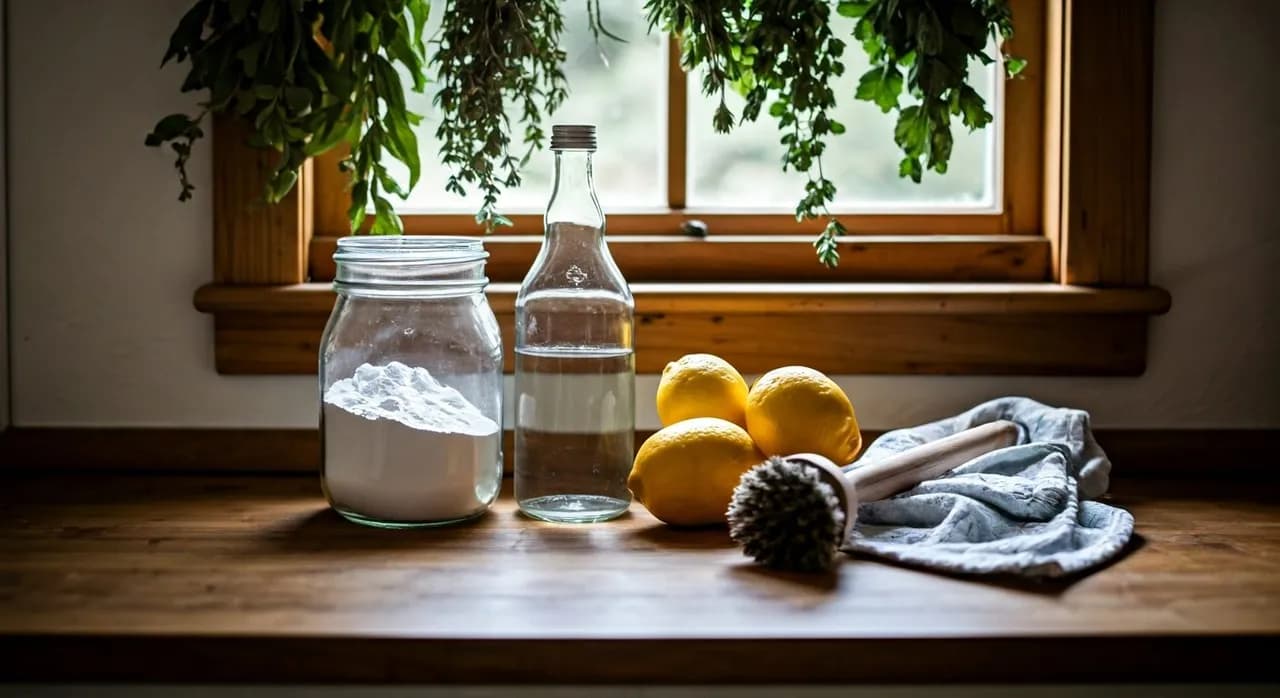
Key takeaways
- Household cleaning costs can be significantly reduced, with average American families spending around $400 annually on specialty products.
- White vinegar and baking soda are versatile, effective ingredients for kitchen and bathroom cleaning, tackling grease, stains, and odors.
- Homemade laundry detergents, incorporating washing soda and borax, can effectively clean 8-10 loads per week for a typical US household.
- Citrus-infused vinegar acts as an all-purpose cleaner, while liquid castile soap provides a gentle yet powerful solution for floors.
- Garden-grown ingredients like calendula can be used to craft soothing salves, offering a practical extension of home product creation.
- Many DIY cleaning solutions are simple to prepare, often requiring less than 15 minutes of active time for a batch.
Quick answer: Effective home cleaners can be made from common pantry items like white vinegar, baking soda, borax, and castile soap. These ingredients can clean kitchens, bathrooms, and laundry, significantly reducing household cleaning costs.
In many homes across the Midwest, families are rediscovering the value of simple, effective cleaning solutions made from common pantry items. Many American households spend hundreds of dollars per year on specialty cleaning supplies. This expenditure often includes a range of products for kitchens, bathrooms, and laundry, each with its own chemical composition.
However, a return to basics gives a compelling alternative. With ingredients like white vinegar, baking soda, and citrus peels, you can create powerful, yet gentle, cleaners that perform well and reduce household costs. This approach not only supports a more self-sufficient lifestyle, reminiscent of homesteading practices from the early 20th century in states like Kansas, but also provides a practical way to manage household resources affordably.
Kitchen solutions from your pantry
For kitchen surfaces in a typical New England home, baking soda and white vinegar are indispensable. A paste of baking soda mixed with a small amount of water (about 3 tablespoons of baking soda to 1 tablespoon of water) can scour sinks and countertops effectively. This gentle abrasive is particularly useful for removing dried food particles and light stains from stainless steel, often leaving a shine that lasts for several days. For tougher grease, a sprinkle of baking soda followed by a spray of undiluted white vinegar creates a fizzing action that helps lift grime, especially on stovetops after cooking a large meal. Many household cleaning tasks can be handled by general-purpose cleaners, making versatile DIY solutions highly practical.
Tackling kitchen grime with common ingredients
To keep your kitchen sparkling, consider these simple applications. A 1:1 solution of white vinegar and water in a spray bottle works well for daily wipe-downs of counters and appliance exteriors, drying streak-free within 5 minutes. For a deeper clean on cutting boards, sprinkle with coarse salt and rub with half a lemon; the citric acid acts as a deodorizer and mild disinfectant. Many homesteaders in USDA zone 5 find that regular use of these methods keeps their kitchens clean with minimal effort and cost, often less than $10 per month for supplies.
- Baking soda paste: 3 tablespoons baking soda to 1 tablespoon water for scouring.
- Vinegar spray: 1:1 white vinegar and water for general surfaces.
- Lemon and salt scrub: For cutting boards, deodorizes and cleans.
- Citrus peel infusion: For a fresh scent in your vinegar cleaner, steep peels for 2-3 weeks.
Bathroom solutions for a sparkling space
Maintaining a clean bathroom, from a small apartment in Seattle to a large family home in Texas, requires solutions that work. Borax, a naturally occurring mineral salt, is a potent cleaner for toilets and tubs. For a toilet bowl, sprinkle 1/2 cup of borax into the bowl, let it sit for at least 30 minutes, then scrub with a brush. This method helps remove hard water stains and deodorizes effectively. For shower walls and tile grout, a mixture of 1 cup of borax, 1/4 cup of white vinegar, and 2 cups of hot water can be applied with a sponge, allowed to sit for 15 minutes, and then rinsed clean. This combination works well against mildew in humid environments, like those found along the Gulf Coast, reducing mold growth.
Natural disinfectants and deodorizers
Beyond borax, hydrogen peroxide is another effective option for bathroom sanitation. A 3% solution of hydrogen peroxide can be sprayed directly onto shower curtains, tiles, or toilet seats, allowed to sit for 10 minutes, and then wiped clean. This helps to disinfect surfaces and prevent the spread of germs. For persistent odors, a small bowl of baking soda placed in the corner of the bathroom can absorb smells for up to 30 days before needing replacement. Many families in USDA zone 7 find these simple methods sufficient for maintaining a fresh and hygienic bathroom environment, often spending less than $20 annually on these supplies.
- Borax toilet cleaner: 1/2 cup borax, sit for 30 minutes, then scrub.
- Grout cleaner: 1 cup borax, 1/4 cup vinegar, 2 cups hot water.
- Hydrogen peroxide spray: 3% solution for disinfecting, let sit 10 minutes.
- Baking soda odor absorber: Replace monthly for freshness.
Laundry basics for every household
Laundry is a significant household task, with many US households do several loads of laundry per week. In a typical home in Ohio, a simple laundry detergent can be made using washing soda, borax, and a bar of grated soap. For one load, combine 1/2 cup of washing soda, 1/2 cup of borax, and 1/4 cup of grated soap flakes. This mixture is effective in both standard and high-efficiency washing machines, using about 1/4 cup per load for average soil levels. For fabric softening, 1/2 cup of white vinegar added to the rinse cycle works wonders, reducing static cling and helping to remove residual detergent. This method is particularly useful for those with sensitive skin, as it avoids synthetic fragrances and dyes.
Boosting laundry performance naturally
For stubborn stains, a pre-treatment of hydrogen peroxide and baking soda can be very effective. Mix 1 part hydrogen peroxide (3%) with 2 parts baking soda to form a paste, apply to the stain, and let it sit for 15-30 minutes before washing. This works well for grass stains on children’s clothing from playing in fields across Missouri. Modern home laundry appliances can use up to 60% less water than models manufactured 15 years prior, improving efficiency [5]. Effective stain removal in laundry services, as studied in 2019, often involves specific chemical interactions that can be replicated with common household acids and bases [2]. Ensuring good air circulation in your laundry room can also help with air-drying clothes.
- Homemade detergent: 1/2 cup washing soda, 1/2 cup borax, 1/4 cup grated soap per load.
- Vinegar fabric softener: 1/2 cup white vinegar in rinse cycle.
- Stain paste: 1 part hydrogen peroxide (3%) to 2 parts baking soda.
- Air drying: Reduces energy consumption by up to 15% in warmer climates like California.
All-purpose and floor cleaners
An all-purpose cleaner is essential for daily tidying, whether in a small cabin in the Rocky Mountains or a suburban home in Florida. A citrus-infused vinegar cleaner is simple to make and highly effective. Fill a 1-quart glass jar with citrus peels (lemon, orange, grapefruit), then cover completely with white vinegar. Let it steep for 2-3 weeks in a cool, dark place. Strain the liquid, and dilute it with water at a 1:1 ratio for general cleaning. This solution works well on sealed wood, glass, and countertops, cutting through grease and leaving a fresh scent that lasts for several hours. For floors, especially hardwood or tile, a gentle solution of 1 gallon of warm water mixed with 1/4 cup of liquid castile soap and 1/2 cup of white vinegar provides a streak-free clean that dries quickly, often within 15 minutes.
Versatile cleaning for every surface
For tougher floor grime, particularly in high-traffic areas like entryways in Minnesota during winter, a steam cleaner can be used in conjunction with these natural solutions. Adding 1/4 cup of white vinegar to the steam cleaner’s water reservoir can boost its cleaning power without leaving chemical residues. For window cleaning, a mixture of 2 cups of water, 1/2 cup of white vinegar, and 1/4 teaspoon of liquid castile soap, applied with a microfiber cloth, yields sparkling results. This method is often preferred by those maintaining historic homes in Virginia, where preserving original finishes is a priority. Ensuring proper drainage and soil health around your home, perhaps with an irrigation tube system, can also help keep exterior surfaces cleaner.
- Citrus vinegar cleaner: 1-quart jar, citrus peels, white vinegar, steep 2-3 weeks.
- Floor cleaner: 1 gallon warm water, 1/4 cup castile soap, 1/2 cup white vinegar.
- Window cleaner: 2 cups water, 1/2 cup white vinegar, 1/4 teaspoon castile soap.
- Steam cleaner boost: Add 1/4 cup white vinegar to water reservoir.
Garden-inspired body care: salves and soaps
Beyond household surfaces, the garden provides ingredients for personal care, a tradition upheld by many in agricultural communities across California. For a soothing skin salve, calendula (Calendula officinalis) flowers, harvested when fully open, can be infused into olive oil. Combine 1 cup of dried calendula petals with 2 cups of olive oil in a double boiler, heating gently for 2-3 hours at about 150°F. Strain the oil, then melt 1/4 cup of beeswax pellets into 1 cup of the infused oil. Pour into small tins; this salve can soothe dry skin and minor irritations for up to 6 months. For homemade soap, a basic recipe involves lye, water, and oils like olive or coconut, combined carefully. Many homesteaders in USDA zone 6 prefer to cure their soaps for 4-6 weeks to ensure mildness and hardness.
Cultivating ingredients for personal care
Growing your own herbs for body care products is a rewarding endeavor. Plants like Garden Sage (Salvia officinalis) can be dried and used in herbal bath soaks, providing a calming aroma and skin benefits. For those new to gardening, starting with easy-to-grow herbs in a small raised bed, perhaps using a lightweight garden hand trowel, can yield a bounty of ingredients. Soil health, critical for growing garden ingredients like calendula, is often assessed using tools that measure pH and moisture levels, with optimal pH for many herbs being between 6.0 and 7.0 [6]. This ensures a healthy harvest, producing a good supply of dried herbs from a 4 ft x 4 ft bed.
- Calendula salve: 1 cup dried petals, 2 cups olive oil, 1/4 cup beeswax.
- Homemade soap: Lye, water, and oils, cured for 4-6 weeks.
- Herbal bath soaks: Dried sage or lavender for aroma and skin benefits.
- Optimal soil pH: Between 6.0 and 7.0 for most herbs, as per USDA recommendations.
Homemade vs. commercial cleaning products
Feature | Homemade solutions | Commercial products |
|---|---|---|
Cost per month | ~$5 – $20 | ~$30 – $50 |
Ingredients | Pantry staples (vinegar, baking soda, borax) | Synthetic chemicals, fragrances, dyes |
Preparation time | 5-30 minutes per batch | 0 minutes (ready-to-use) |
Environmental impact | Minimal packaging waste, biodegradable | Plastic packaging, non-biodegradable components |
Effectiveness | High for general cleaning, some stains | High for specialized tasks, strong disinfectants |
Skin sensitivity | Generally low irritation | Potential for skin/respiratory irritation |
Annual Savings: By switching to homemade cleaners, the average US household can save approximately $300-$400 per year on cleaning supplies, based on 2018 spending figures [1].
Laundry Efficiency: Modern washing machines, when paired with vinegar in the rinse cycle, can reduce static cling by up to 35% and use up to 60% less water than older models [3, 4].
References
- Specialty Cleaners (2018).
- Perancangan Sistem Informasi Pelayanan Jasa Laundry Pada Mamah Laundry And Cleaners Serang (2019).
- Laundry (2018). Laundry.
- Home laundry appliances. Uncertainty reporting of measurements (2023).
- Home laundry appliances. Uncertainty reporting of measurements (2023).
- USDA Natural Resources Conservation Service (2024).