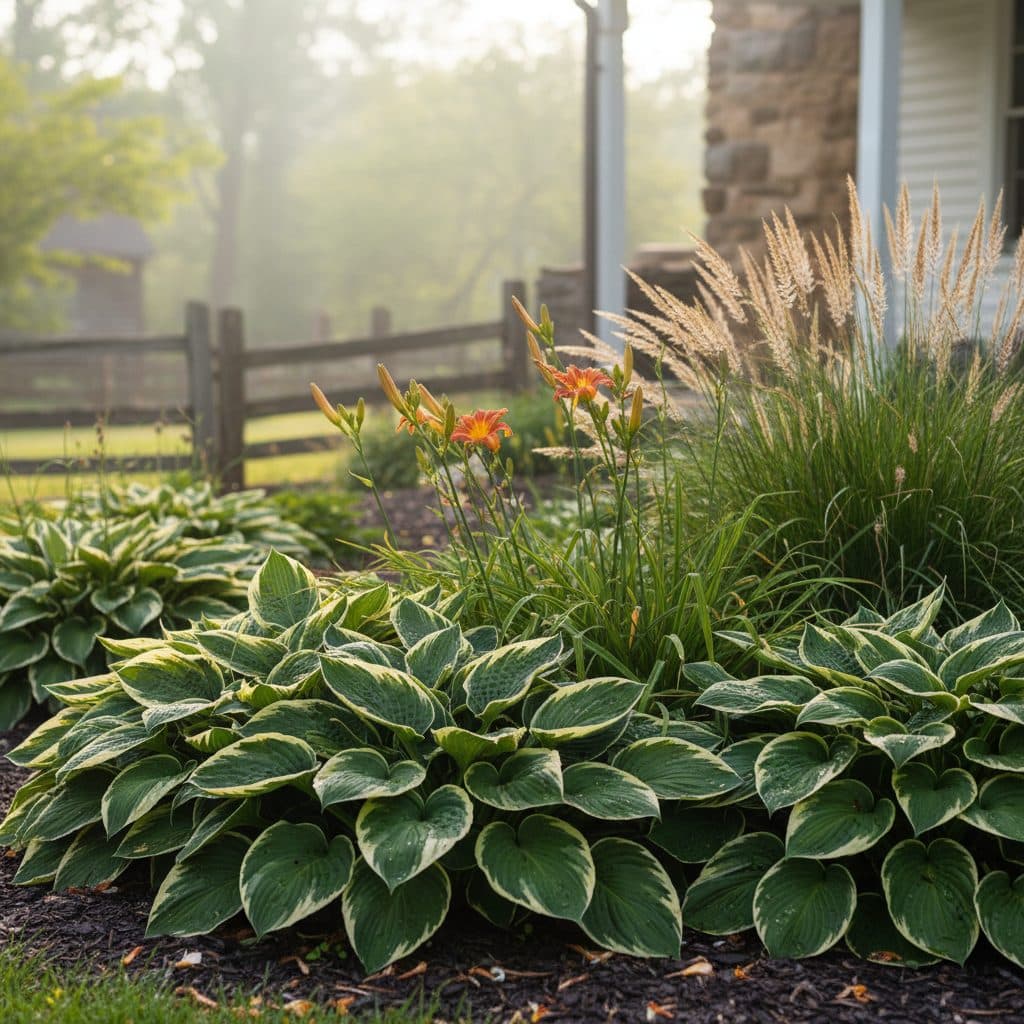
Key takeaways
- Divide overgrown perennials every three to five years to maintain vigor and increase plant stock.
- The best time to divide most perennials is early spring or late fall, when plants are dormant or semi-dormant.
- Hostas benefit from division when their centers thin out, typically every four to five years in zones 3-9.
- Daylilies, known for their adaptability, can be divided successfully in spring or fall, especially when bloom production declines after three to five years.
- Irises require division every three to four years after flowering in summer to prevent overcrowding and disease.
- Ornamental grasses should be divided in early spring, before new growth emerges, using sharp tools to handle their dense root systems.
Quick answer: Dividing perennials like hostas, daylilies, irises, and ornamental grasses rejuvenates plants and multiplies stock. Divide them every 3-5 years in early spring or late fall when plants are dormant so each division has healthy roots and growing points.
Across the American Midwest, from USDA zone 5 to 7, gardeners grow hostas for foliage, daylilies for flowers, irises for form, and ornamental grasses for texture. These perennials are reliable garden staples, often thriving for years with minimal intervention. After three to five years, dense clumps can become overcrowded, leading to reduced flowering, smaller leaves, or center die-back. Dividing these plants rejuvenates older specimens and produces new divisions for other garden beds.
Understanding the timing and technique for each plant type improves results. Proper division restores vigor, increases bloom production, and provides new divisions to expand garden beds. A single mature hosta clump, for example, yields three to five new divisions.
General principles for dividing perennials
Dividing perennials is a fundamental practice for maintaining plant health and increasing your garden stock. The primary reason to divide is when a plant becomes too large for its space, or when its vigor declines, often signaled by fewer flowers or a thinning center. Most perennials benefit from division every three to five years, though some, like certain ornamental grasses, might go longer, up to ten years, before needing attention. The timing is critical, usually in the spring or fall when the plant is not actively growing or flowering, to minimize stress and allow roots to establish before extreme temperatures arrive. For instance, in USDA zone 6, early spring, just as new growth emerges, or late fall, after the first hard frost, are ideal windows.
Why and when to divide
Division prevents overcrowding, improves air circulation, reduces disease risk, and encourages stronger growth and flowering. Over time, a plant’s root system can become so dense that it struggles to absorb enough water and nutrients, leading to a decline in performance. A crowded hosta clump loses the leaf size and substance it is grown for, and dividing it gives each section room to recover. When you observe a significant reduction in flower size or quantity, or a noticeable decline in foliage quality, it’s likely time to divide. Aim for soil temperatures above 50°F in spring for optimal root establishment, or before the ground freezes solid in fall.
- Rejuvenate overgrown plants, restoring bloom on tired clumps.
- Increase plant numbers without purchasing new stock, potentially yielding three to five new plants from one mature specimen.
- Prevent disease by improving air circulation within dense clumps.
- Control plant size and spread in garden beds, maintaining design aesthetics.
- Remove dead or woody centers, promoting healthier new growth.
Dividing hostas
Hostas are prized for their diverse foliage and shade tolerance, making them a cornerstone of many US gardens, especially in zones 3 through 9. While they are relatively low-maintenance, hostas eventually benefit from division, typically every four to five years, or when their centers begin to thin, and leaf size diminishes. The ideal time for dividing hostas is in early spring, just as the ‘pips’ (new shoots) are emerging from the ground, usually when temperatures consistently stay above 40°F. This timing allows the divisions to establish their root systems before the heat of summer and the demands of full foliage growth. Dividing in fall is also possible, after the leaves have died back, but spring is often preferred for better establishment.
Hosta division techniques
To divide a hosta, dig up the entire clump with a spade, lifting as much of the root ball as possible. Shake off excess soil to expose the crown and roots. For smaller clumps, you might be able to gently pull apart sections by hand. For larger, denser clumps, a sharp knife or even a small hand saw might be necessary to cut through the crown. Each division should have at least three to five healthy ‘eyes’ or growing points and a good portion of roots. Replant these divisions promptly, ensuring they are set at the same depth as the original plant. Give each plant 1 gallon of water immediately after replanting. Consider enriching the soil with 1-2 inches of compost before replanting to provide additional nutrients. For smaller divisions, consider starting them in 24-Cell Seedling Propagation Trays before moving them to the garden.
- Choose early spring, as pips emerge, for best results.
- Ensure each new division has three to five ‘eyes’ and a healthy root system.
- Replant at the original depth, spacing to the cultivar’s mature spread (roughly 12-18 inches for small hostas, 2-4 feet for large ones).
- Water immediately and consistently for the first two to three weeks.
- Avoid dividing in mid-summer heat, which can stress the plants significantly.
Dividing daylilies
Daylilies (Hemerocallis) produce trumpet-shaped flowers and adapt readily to a wide range of conditions across USDA zones 3 to 9. While individual blooms last only a day, a well-established clump can produce flowers continuously for several weeks. However, after three to five years, daylily clumps can become quite dense, leading to fewer and smaller flowers. This is a clear signal that division is needed. The best time to divide daylilies is in early spring, just as new foliage begins to emerge, or in late summer to early fall, after the main flush of bloom has passed but at least six weeks before the first hard frost. Fall division allows roots to establish before winter.
Daylily division methods
To divide daylilies, begin by digging up the entire clump with a garden fork, being careful not to damage the fleshy roots. Once lifted, shake off excess soil. You can often pull apart smaller clumps by hand, separating them into fans, each with a healthy root system. For larger, more stubborn clumps, use two garden forks inserted back-to-back into the center of the clump, then pry them apart. Alternatively, a sharp knife or spade can cut through the crown. Each division should have at least one fan of leaves and a good portion of roots. Trim the foliage back to about 6-8 inches before replanting to reduce water loss and transplant shock. Replant divisions at the original depth with the crown positioned right at the soil surface, then water thoroughly with 1-2 gallons of water per plant. For gardeners interested in expanding their collection, seed starting for beginners might be a complementary skill to learn for other plant varieties.
- Divide when bloom production declines, typically every three to five years.
- Choose early spring or late summer/early fall for optimal establishment.
- Ensure each division has at least one fan of leaves and a strong root system.
- Trim foliage to 6-8 inches before replanting to minimize stress.
- Replant with the crown at the soil surface, not buried too deep.
Dividing irises
Irises, particularly bearded irises, are striking garden additions, known for their unique flower forms and wide color palette. They are popular in many US regions, from drier areas like parts of California (USDA zone 9) to cold northern gardens in USDA zones 3-4, where they show good winter hardiness. However, irises are heavy feeders and can quickly deplete soil nutrients, leading to reduced flowering if left undivided. They typically require division every three to four years, or when the rhizomes become severely overcrowded, forming dense mats. The best time to divide bearded irises is about four to six weeks after they have finished flowering, usually from July to September, depending on your specific USDA zone. This timing allows the newly planted rhizomes to establish before winter dormancy.
Iris division specifics
To divide irises, carefully dig up the entire clump of rhizomes. Shake off the soil to expose the individual rhizomes. Using a sharp, clean knife, cut the rhizomes into sections. Each section should be 2-4 inches long and have at least one fan of leaves and healthy roots. Discard any old, soft, or diseased sections, especially the woody center, which is often unproductive. Trim the leaves of each division into a fan shape, about 6-8 inches tall, to reduce water loss. When replanting, create a small mound of soil in the center of the planting hole. Place the rhizome on top of the mound, spreading the roots down the sides. The top of the rhizome should be partially exposed to the sun, not buried deep, as this can lead to rot. Space new divisions 12-18 inches apart. Water immediately after planting with 0.5-1 gallon of water per plant, and then sparingly until new growth appears.
- Divide four to six weeks after flowering, typically July to September.
- Ensure each division has a 2-4 inch rhizome section with one leaf fan.
- Discard old, soft, or diseased rhizome portions to prevent spread.
- Trim foliage to 6-8 inches to reduce transplant shock.
- Plant rhizomes partially exposed to the sun, not buried, for optimal health.
Dividing ornamental grasses
Ornamental grasses add texture, movement, and year-round interest to gardens across the US, from the humid Southeast (USDA zone 8) to the dry plains (USDA zone 4). Many varieties, such as ‘Karl Foerster’ feather reed grass or switchgrass (Panicum virgatum), form dense clumps that can become less vigorous over time, with centers dying out after five to ten years. Division rejuvenates these plants, promoting new growth and maintaining their attractive form. The best time to divide most ornamental grasses is in early spring, just before new growth begins, when the plant is still dormant. This usually means March or April in USDA zone 6, when soil temperatures are consistently above 45°F. Dividing in fall is generally not recommended for grasses, as they need ample time to establish roots before winter.
Grass division techniques
Dividing ornamental grasses can be a physically demanding task due to their dense, fibrous root systems. You will need a very sharp spade, a garden fork, or even a specialized dividing tool. First, cut back the previous year’s foliage to about 6-12 inches tall. Then, dig around the entire clump, creating a wide circle to capture as much of the root ball as possible. Once the clump is loosened, you may need to use the spade or two garden forks to pry it apart. For very large or tough grasses, you might even need to use an ax or a saw. Each division should have a healthy section of roots and several viable shoots. Replant these divisions at the same depth as the original plant. Ensure new divisions are watered thoroughly with 2-3 gallons of water per plant immediately after planting, and continue consistent watering for the first three to four weeks. Learn more about plant care, including pest management, by reading about neem oil for plants.
- Divide in early spring, before new growth starts, for best establishment.
- Cut back old foliage to 6-12 inches before digging.
- Use sharp, heavy-duty tools like a spade or garden fork for dense roots.
- Ensure each division has a good root system and several new shoots.
- Water deeply after replanting to encourage root development.
Comparison of Perennial Division Practices
Plant Type | Optimal Division Time | Frequency (Years) | Key Tool | Division Size (Min.) |
|---|---|---|---|---|
Hosta | Early Spring (pips) | 4-5 | Sharp Knife/Spade | 3-5 ‘eyes’ + roots |
Daylily | Early Spring / Late Summer-Fall | 3-5 | Garden Fork | 1-3 leaf fans + roots |
Iris (Bearded) | Post-Bloom (July-Sept) | 3-4 | Sharp Knife | 2-4 in rhizome + 1 leaf fan |
Ornamental Grass | Early Spring (dormant) | 5-10 | Heavy Spade/Ax | Multiple shoots + roots |
Hostas thrive: Hostas are valued for their decorative leaves in urban landscaping, and division keeps a thinning clump looking full.
Daylily resilience: Daylilies adapt readily to varied growing conditions, tolerating division well in USDA zones 3-9.
Iris vigor: Dwarf bearded irises establish reliably when divided and replanted with correct spacing.
Frequently asked questions
How often should I divide my hostas?
Hostas generally benefit from division every four to five years, or when you notice their centers thinning out and leaf size decreasing. Early spring, as new shoots emerge, is the optimal time for this task in most USDA zones, typically when temperatures are above 40°F.
What is the best time of year to divide daylilies?
Daylilies can be divided in early spring, just as new growth begins, or in late summer to early fall, after their main blooming period has concluded. For fall division, ensure there are at least six weeks before the first hard frost to allow the roots to establish, especially in colder zones like USDA zone 5.
Why do my irises need to be divided?
Irises, particularly bearded varieties, need division every three to four years because their rhizomes can become overcrowded, leading to reduced flowering and increased susceptibility to rot. Dividing them after flowering, from July to September, rejuvenates the plant and restores bloom production.
Can I divide ornamental grasses in the fall?
While some perennials tolerate fall division, it is generally not recommended for ornamental grasses. They establish best when divided in early spring, before new growth starts, usually in March or April in USDA zone 6. Fall division leaves them vulnerable to winter heaving and cold damage before their root systems are fully established.
How small can I make my divisions?
For most of these perennials, aim for divisions with well-developed roots and at least three to five ‘eyes’ (for hostas), one to three leaf fans (for daylilies), or a 2-4 inch rhizome section with one leaf fan (for irises). Smaller divisions can be potted up into 1-gallon containers for a season to grow larger before planting in the garden.
What tools do I need for dividing plants?
Basic tools include a sharp spade or garden fork for digging and lifting, and a clean, sharp knife or pruners for separating sections. For dense clumps like mature ornamental grasses, a heavy-duty spade, two garden forks, or even an ax might be necessary to cut through the fibrous root ball, which can be 12-18 inches in diameter.