Key takeaways
- Identify the root cause of bare spots, such as compaction, disease, or nutrient deficiencies, before attempting repairs.
- Proper soil preparation, including aeration and pH adjustment to a 6.0-7.0 range, is critical for successful turf establishment.
- Select the correct grass seed type (cool-season varieties for northern states and warm-season for southern regions) for optimal growth.
- Apply seed at recommended rates, typically 3-5 pounds per 1,000 square feet, and ensure good seed-to-soil contact.
- Maintain consistent moisture, providing about one inch of water weekly, especially during the critical establishment phase.
- Regular soil testing every three to five years helps maintain ideal conditions and prevent future lawn issues.
Quick answer: To repair bare patches and thinning lawns, first identify the root cause like compaction or disease. Then, prepare the soil with aeration and pH adjustment, select the correct grass seed, apply it at recommended rates, and maintain consistent moisture for establishment.
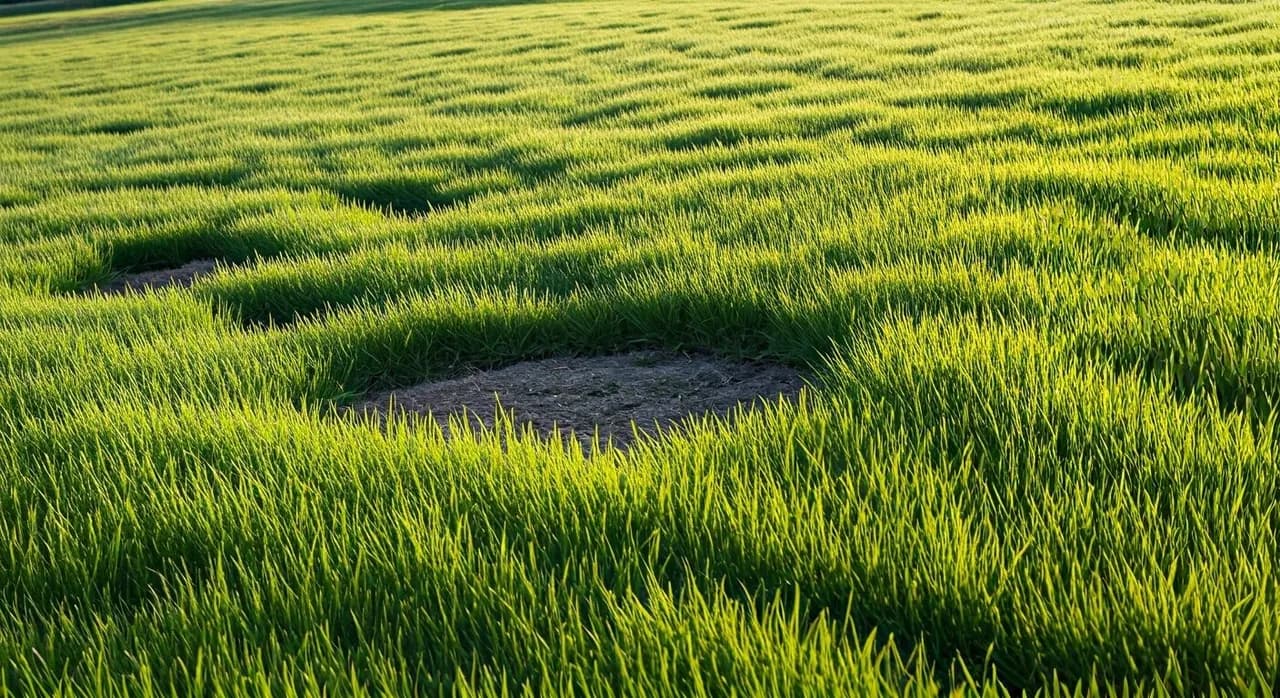
Across the United States, from the humid summers of USDA zone 7 in the Southeast to the cold winters of USDA zone 4 in the Upper Midwest, homeowners frequently encounter bare patches, dead spots, and thinning areas in their lawns. Bare patches detract from lawn appearance and often signal underlying issues with soil health, pest activity, or improper watering. Bare patches, often appearing as areas of dead or missing turf, can reduce overall lawn health if left untreated, making the lawn more susceptible to weeds and erosion.
Addressing these problems effectively requires a systematic approach, starting with diagnosis and moving through preparation, seeding, and ongoing maintenance. Whether you are managing a cool-season turf like Kentucky bluegrass in Pennsylvania or a warm-season variety such as Bermuda grass in Texas, understanding the specific needs of your lawn and local climate is essential for successful turf establishment.
Diagnosing the problem: understanding why your lawn is struggling
Before you can effectively repair bare patches or thinning areas, you must identify the underlying cause. Simply throwing down more seed without addressing the root issue often leads to repeated failures. In many regions, bare patches can expand without intervention, indicating a need for careful assessment. Common culprits include soil compaction, nutrient deficiencies, disease, insect pests, or even improper watering practices.
Inspecting your soil and turf
Start by examining the affected areas closely. Is the soil hard and compacted? Compacted soil restricts root growth and water penetration, often leading to thinning turf, especially in high-traffic areas like pathways. Using a garden fork to check for soil density can reveal issues below the surface. Are there signs of fungal disease, such as brown spots or discolored blades? Diseases like brown patch can devastate large areas of fescue in humid climates, particularly in USDA zone 7. Insect pests, such as grubs, can cause irregular dead patches by feeding on grass roots, often leading to turf that can be easily pulled back like a rug. Consider a soil test every three to five years to identify specific nutrient deficiencies or pH imbalances that might be contributing to poor growth. Most turfgrasses thrive in a soil pH range of 6.0 to 7.0, a condition often supported by USDA Natural Resources Conservation Service guidelines for optimal nutrient availability.
- Soil compaction: Restricts root growth and water absorption.
- Nutrient deficiency: Yellowing or stunted growth due to lack of essential elements.
- Fungal diseases: Brown patch, dollar spot, or rust causing discolored or dead areas.
- Insect pests: Grubs, chinch bugs, or sod webworms damaging roots or foliage.
- Improper watering: Too much or too little water stressing the turf.
Preparing the ground: soil amendment and aeration
Once you have diagnosed the problem, proper soil preparation is the next critical step toward successful lawn repair. This involves creating an optimal environment for new grass seed to germinate and establish strong roots. For areas with significant compaction, aeration is essential. A core aerator will remove small plugs of soil, typically 2-3 inches deep, allowing air, water, and nutrients to penetrate more effectively. This is particularly beneficial in clay soils found throughout the Northeast, which can become very dense.
Amending soil for optimal growth
After aeration, consider amending the soil. If your soil test indicated a pH imbalance, apply lime to raise pH or sulfur to lower it, according to the test recommendations. For example, if your soil pH is 5.5, adding agricultural lime can gradually bring it into the ideal 6.0 to 7.0 range for most turfgrasses. Incorporating a 1-2 inch layer of organic matter, such as compost, into the top 4-6 inches of soil can significantly improve soil structure, drainage, and nutrient retention. This is especially important in areas with poor soil quality, like the heavily disturbed soils often found in new construction sites. For small bare patches, you can use a hand trowel to loosen the top 2-3 inches of soil so good seed-to-soil contact. Regular soil testing every three to five years helps identify nutrient deficiencies and pH imbalances. The use of a 3-in-1 soil pH, moisture, and light meter can provide quick, on-site readings to guide these amendments.
- Aeration: Relieves soil compaction, improving air and water flow.
- pH adjustment: Creates an ideal environment for nutrient uptake, typically 6.0-7.0.
- Organic matter: Improves soil structure, water retention, and fertility.
- Weed removal: Eliminates competition for new grass seedlings.
- Leveling: Creates an even surface for consistent growth and mowing.
Seeding and patching: selecting and applying new turf
With the soil properly prepared, the next step is selecting the right grass seed and applying it correctly. The choice of grass seed depends heavily on your region and climate. For instance, cool-season grasses like Kentucky bluegrass, perennial ryegrass, and fescue thrive in northern states (USDA zones 3-7), with optimal seeding times in late summer to early fall or early spring. Warm-season grasses such as Bermuda grass, zoysia, and St. Augustine grass are best suited for southern climates (USDA zones 7-10), typically seeded in late spring or early summer when soil temperatures consistently reach 65-75°F.
Applying seed for uniform coverage
For bare patches, lightly rake the prepared soil to create shallow furrows, which helps with seed-to-soil contact. Broadcast the seed evenly over the area, aiming for a consistent application rate, typically 3-5 pounds of seed per 1,000 square feet for overseeding, or slightly higher for bare spots. Proper seed density prevents overcrowding and promotes healthy turf development. After applying the seed, lightly rake it into the top 0.25-0.5 inch of soil. You can then cover the seeded area with a thin layer of peat moss or straw to help retain moisture and protect the seeds from birds. For larger thinning areas, a broadcast spreader ensures uniform coverage. Remember that successful establishment requires consistent moisture, similar to the careful timing needed for growing spinach or broccoli in cool seasons, where consistent moisture is key to germination.
- Seed selection: Choose varieties suited to your USDA zone and sunlight conditions.
- Timing: Seed cool-season grasses in fall or early spring; warm-season in late spring/early summer.
- Application rate: Use 3-5 pounds of seed per 1,000 square feet for overseeding.
- Seed-to-soil contact: Lightly rake seed into the top 0.25-0.5 inch of soil.
- Covering: Apply a thin layer of peat moss or straw to protect seeds and retain moisture.
Watering and ongoing care: nurturing new growth
Once new grass seed is in place, consistent watering is the single most critical factor for successful germination and establishment. New seedlings require constant moisture in the top 1-2 inches of soil. This means light watering two to three times a day for 5-10 minutes, switching to deep watering only after seedlings establish. In hotter climates, such as Arizona’s USDA zone 9, you might need to water even more frequently to prevent the seedbed from drying out completely. An automated irrigation hose system can help maintain this delicate balance.
Long-term maintenance for a healthy lawn
After the seeds have germinated and the new grass reaches about 2-3 inches tall, you can gradually transition to less frequent but deeper watering, aiming for about one inch of water per week. This encourages deeper root growth, making the turf more drought-tolerant. Deep, infrequent watering is generally more effective for established lawns than shallow, frequent watering. For fertilization, wait until the new grass has been mowed at least two to three times. Apply a starter fertilizer with a higher phosphorus content, such as a 1-2-1 or 1-3-2 NPK ratio, to promote strong root development. Avoid applying weed killers to newly seeded areas for at least six to eight weeks, as they can harm young seedlings. Mow new grass when it reaches 3-4 inches tall, setting your mower to its highest setting to avoid stressing the young plants. Circular bare patches, sometimes observed in grasslands across the Midwest, are often caused by fungal activity or soil compaction.
- Initial watering: Lightly water 2-3 times daily for 5-10 minutes to keep the seedbed moist.
- Transition watering: Once established, switch to one inch of water per week, applied deeply.
- First fertilization: Apply starter fertilizer after 2-3 mowings, focusing on phosphorus.
- Mowing height: Mow new grass at 3-4 inches, using the highest mower setting.
- Weed control: Avoid herbicides for 6-8 weeks post-seeding to protect seedlings.
Cool-season vs. warm-season grasses for repair
Characteristic | Cool-Season Grasses | Warm-Season Grasses |
|---|---|---|
USDA Zones | 3-7 | 7-10 |
Optimal Seeding | Late summer/early fall, early spring | Late spring/early summer |
Examples | Kentucky bluegrass, fescue, perennial ryegrass | Bermuda grass, zoysia, St. Augustine |
Dormancy | Winter (browns) | Winter (browns) |
Mowing Height | 2.5-3.5 inches | 1-2.5 inches |
Drought Tolerance | Moderate to good | Good to excellent |
Soil pH range: Most turfgrasses thrive in a soil pH range of 6.0 to 7.0, which is critical for nutrient availability and healthy growth.
Watering new seed: New grass seed requires light watering two to three times a day for 5-10 minutes to keep the top 1-2 inches of soil consistently moist.
Seed application rate: For overseeding or patching, aim for an application rate of 3-5 pounds of grass seed per 1,000 square feet to ensure adequate coverage.
References
- Effects of Thinning Seed Spots on Growth of Three Conifers in the Inland Empire (1961).
- Supplemental Information 3: Coral colonies with patches of dead or missing tissue (2023).
- Dynamic changes in the landscape of bare sand patches in sandy grasslands (2025).
- Why do circular bare patches form in fertile grasslands? (2013).
- Contact Demamination of Composite Patches Repairing Metal Structures (2003).
- USDA Natural Resources Conservation Service (2024).