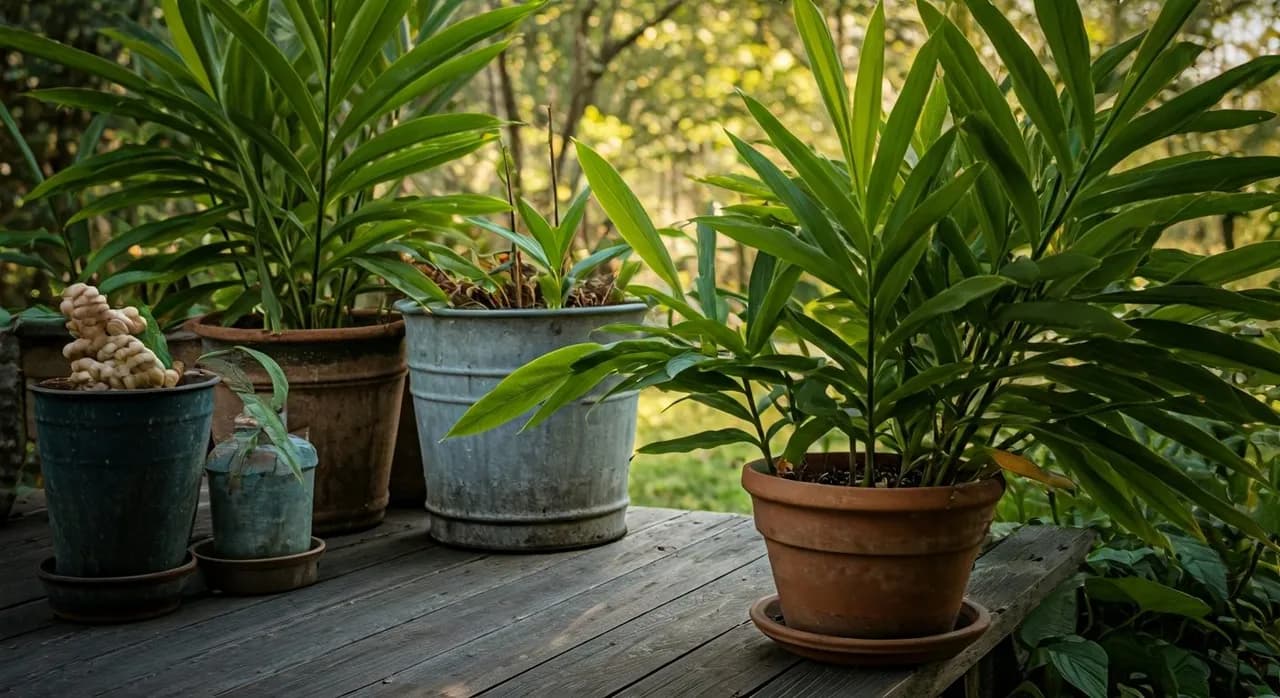
Key takeaways
- Ginger thrives in warm, humid conditions; it overwinters in the ground only in USDA zones 9-11, and is grown as an annual or in containers further north.
- Start with rhizomes from a reputable source, planting them 6 to 8 inches apart and 2 inches deep.
- Containers offer flexibility for northern growers, allowing plants to be moved indoors when temperatures drop below 50°F.
- Consistent moisture and rich, well-draining soil are important for root development and a good harvest.
- Harvest ginger after 8 to 10 months, once leaves begin to yellow and die back.
- A healthy plant produces roughly 1 to 2 pounds of fresh rhizome; total bed yield depends on spacing and season length.
Quick answer: To grow ginger in the US, plant rhizomes in rich, well-draining soil in USDA zones 7-11, or use containers in cooler regions. Provide consistent moisture and harvest after 8-10 months for optimal yields.
In the humid lowlands of central Florida, and even as far north as USDA zone 6 with careful planning, growing fresh ginger (Zingiber officinale) is a rewarding endeavor for many US gardeners. Though it is native to tropical climates, this versatile spice can thrive in various settings, from expansive garden beds to compact containers, yielding a substantial harvest of 10 to 20 pounds per 10 square feet under optimal conditions. This guide will walk you through the specifics of cultivating ginger, whether you’re in a warm southern state or managing a patio garden in a cooler region.
Ginger requires a long, warm growing season—typically 8 to 10 months—and consistent moisture to develop its pungent rhizomes. We’ll cover everything from selecting the right rhizomes and preparing your soil to managing common issues and harvesting your homegrown spice. By following these practical steps, you can enjoy fresh ginger root directly from your garden, a practice that has been refined over decades, with container growing techniques documented since at least 1969 [1].
understanding ginger’s climate and soil needs
Ginger is a tropical plant, native to regions with high humidity and consistent warmth. For outdoor cultivation in the United States, it performs best in USDA zones 9 through 11, where winters are mild enough for the rhizomes to overwinter in the ground. In these warmer zones, like coastal California or the Gulf Coast states, ginger can often be grown as a perennial. However, gardeners in cooler zones, such as USDA zone 6 in the Mid-Atlantic, can successfully grow ginger as an annual if they start it indoors or provide adequate protection.
The ideal temperature range for ginger growth is between 70°F and 85°F. Below 50°F, growth slows significantly, and the plant can suffer damage. Soil is another critical factor; ginger prefers a rich, well-draining, loamy soil with a pH between 6.0 and 6.8. Heavy clay soils that retain too much water will lead to rot, while sandy soils may not hold enough moisture or nutrients. Amending your soil with 2 to 4 inches of organic matter, such as compost or aged manure, can significantly improve its structure and fertility, a standard soil-improvement practice.
soil preparation for optimal ginger growth
Before planting, ensure your garden bed or container offers the necessary drainage. If planting in a bed, consider building a raised bed 8 to 12 inches high to improve drainage, especially in areas with naturally dense soil. For containers, select pots with multiple drainage holes. A good soil mix for ginger will contain a balanced blend of compost, coco coir or peat moss, and perlite or coarse sand to ensure both moisture retention and proper aeration. Aim for a mix that drains within 30 seconds of watering, preventing waterlogged conditions that can harm rhizomes.
- Warmth: Maintain soil temperatures between 70°F and 85°F for vigorous growth.
- Humidity: Provide relative humidity above 60% if possible, especially in dry climates.
- Drainage: Ensure excellent drainage to prevent rhizome rot, important for a healthy harvest.
- pH level: Target a soil pH between 6.0 and 6.8 for optimal nutrient uptake.
- Organic matter: Incorporate 2 to 4 inches of rich compost into your planting area.
sourcing and preparing ginger rhizomes for planting
The journey to a successful ginger harvest begins with selecting the right “seed” ginger, which is actually a piece of the rhizome. You can purchase seed ginger from reputable online suppliers or local nurseries. Alternatively, many gardeners find success using organic ginger roots from grocery stores, provided they are firm, plump, and show no signs of shriveling or mold. Avoid conventional ginger, as it may be treated with growth inhibitors to prevent sprouting. Look for pieces that are 1 to 2 inches long and have at least one or two visible “eyes” or growth buds, which look like small bumps or nubs.
Before planting, it’s beneficial to pre-sprout your ginger. Place the rhizome pieces in a warm, humid spot—such as a plastic bag with a damp paper towel—for a few days to a week. You should see the eyes begin to swell and perhaps even tiny green shoots emerge. This step can give your ginger a head start, especially if you’re in a region with a shorter growing season, like USDA zone 5. Once sprouted, plant the rhizome pieces 2 inches deep with the eyes facing upwards. Space them 6 to 8 inches apart in beds or one piece per 15-gallon container to allow ample room for root development, as detailed further in our ginger plant guide.
pre-sprouting for a head start
Pre-sprouting is not strictly necessary but can significantly reduce the time it takes for your ginger to emerge from the soil, which can be 2 to 4 weeks. After cutting larger rhizomes into smaller pieces, allow the cut surfaces to “cure” or dry for 24 to 48 hours. This helps prevent rot once planted. For example, in a humid climate like Louisiana, curing is especially important to avoid fungal issues. Once cured, the pieces are ready for their warm, damp environment to encourage sprouting before being placed into the soil.
- Source organic: Choose firm, plump organic ginger rhizomes from grocery stores or seed suppliers.
- Look for eyes: Ensure each 1 to 2-inch piece has at least one or two visible growth buds.
- Pre-sprout: Place rhizomes in a damp, warm environment for 3 to 7 days to encourage sprouting.
- Cure cuts: Allow cut surfaces to dry for 24 to 48 hours to prevent rot after dividing.
- Plant shallowly: Position rhizomes 2 inches deep with eyes pointing up for best emergence.
container cultivation for northern growers
For gardeners in cooler climates, particularly those in USDA zones 4 through 6, container cultivation is often the most practical and successful method for growing ginger. Containers offer the advantage of mobility, allowing you to move plants indoors when temperatures drop below 50°F in early spring or late fall. This extends the growing season significantly, making a harvest possible even in regions like upstate New York or Michigan. A minimum 15-gallon container, or one with an 18-inch diameter and 12 inches deep, is recommended for a single ginger plant to ensure adequate root development and a yield of 1 to 2 pounds per plant.
When selecting containers, prioritize those with excellent drainage holes. Terra cotta pots can work, but they dry out quickly, requiring more frequent watering. Plastic or glazed ceramic pots retain moisture better. The potting mix should be light, airy, and rich in organic matter. A blend of 50% high-quality potting soil, 25% compost, and 25% perlite or vermiculite provides an ideal environment. This mix ensures both good drainage and sufficient moisture retention, preventing the waterlogging that can lead to rhizome rot. Container growing allows for precise control over soil conditions [1].
moving containers indoors for winter
As autumn approaches and nighttime temperatures consistently fall below 55°F, it’s time to bring your potted ginger indoors. A sunny window or a spot under grow lights will suffice. Maintain consistent moisture, but reduce watering frequency compared to the active outdoor growing season. If you lack sufficient indoor light, consider using a reflective indoor grow tent to provide the necessary light spectrum and intensity. This protection ensures the plant continues to mature, allowing for a full 8 to 10 months of growth before harvest, even in colder regions.
- Container size: Use at least a 15-gallon pot (18 in diameter, 12 in deep) per plant.
- Drainage: Ensure containers have multiple, adequate drainage holes to prevent water accumulation.
- Potting mix: Use a light, well-draining mix with 25% compost and 25% perlite.
- Mobility: Plan to move plants indoors when temperatures drop below 50°F.
- Indoor light: Provide a sunny window or supplemental grow lights during indoor periods.
establishing ginger in garden beds in warmer climates
For gardeners in USDA zones 7 and warmer, such as central Florida or coastal Texas, growing ginger directly in garden beds is a viable option. The key is selecting a site that provides partial shade in the hottest parts of the day, particularly in regions where summer temperatures consistently exceed 90°F. In cooler parts of zone 7, like parts of North Carolina, full sun might be acceptable, but always observe how your plants respond. A location that receives 4 to 6 hours of morning sun and afternoon shade is often ideal. Good air circulation is also important to prevent fungal diseases, especially in humid environments.
Prepare your garden bed by incorporating a generous amount of organic matter—at least 4 inches of well-rotted compost or aged manure—into the top 8 to 10 inches of soil. This improves soil structure, fertility, and drainage. If your soil is heavy clay, consider building a raised bed 12 to 18 inches high to ensure proper drainage. Once planted, apply a 2 to 4-inch layer of organic mulch, such as straw or wood chips, around your ginger plants. This mulch helps retain soil moisture, suppresses weeds (a critical factor for crop yields, as seen in weed control guides for regions like Texas [2]), and regulates soil temperature. Maintaining soil moisture without waterlogging is critical, especially during the 6 to 8 weeks after planting.
mulching for moisture and weed control
Mulching is a simple yet effective strategy for garden bed cultivation. Beyond moisture retention and weed suppression, it also helps to keep the soil temperature stable, which is beneficial for ginger’s root development. In regions with intense summer sun, a light-colored mulch can reflect some heat, preventing the soil from becoming too hot. Replenish the mulch layer as it breaks down, typically every 2 to 3 months, to maintain its 2 to 4-inch thickness. This continuous organic input also slowly enriches the soil over the 8 to 10-month growing season.
- Site selection: Choose a spot with partial shade in hot zones (e.g., Florida) or full sun in cooler zones (e.g., North Carolina).
- Soil amendment: Incorporate 4 inches of compost into the top 8 to 10 inches of soil.
- Raised beds: Consider 12 to 18-inch high raised beds for improved drainage in heavy soils.
- Mulch deeply: Apply a 2 to 4-inch layer of organic mulch to conserve moisture and suppress weeds.
- Air circulation: Ensure good airflow around plants to prevent fungal issues in humid areas.
watering, feeding, and managing common issues
Consistent moisture is paramount for healthy ginger growth, especially during the active growing season. The soil should be kept evenly moist but never waterlogged. Overwatering is a common mistake that can lead to rhizome rot, particularly in dense soils or containers without adequate drainage. During hot, dry periods, you may need to water daily, especially container-grown plants. A good rule of thumb is to check the top 1 inch of soil; if it feels dry, it’s time to water. Reduce watering frequency as the weather cools in late summer and fall, typically by 25% to 50%.
Ginger is a heavy feeder, so regular fertilization is important for robust rhizome development. Begin fertilizing once the plants are about 6 inches tall, typically 6 to 8 weeks after planting. Use a balanced liquid fertilizer (e.g., 5-5-5 or 10-10-10) diluted to half strength, applying it every 3 to 4 weeks. Alternatively, you can use an organic fertilizer like fish emulsion or compost tea. Stop fertilizing about 2 months before your anticipated harvest date to allow the plant to focus its energy on rhizome maturation rather than leaf growth.
common pests and diseases
Ginger is relatively pest-free, especially when grown outdoors. However, occasional issues can arise. Spider mites and mealybugs can sometimes affect container-grown plants, particularly when moved indoors. Inspect plants regularly, perhaps once a week, and treat any infestations with insecticidal soap or neem oil. Fungal diseases, primarily rhizome rot, are usually a result of overwatering or poor drainage. Ensuring proper soil conditions and avoiding excessive moisture is the best preventative measure. Rot can destroy a large share of the crop before it is lifted. Good air circulation, especially in humid environments, also helps deter fungal problems.
- Consistent moisture: Keep soil evenly moist, but avoid waterlogging to prevent rot.
- Fertilize regularly: Apply a balanced liquid fertilizer (e.g., 5-5-5) every 3 to 4 weeks after 6 to 8 weeks of growth.
- Stop fertilizing: Cease fertilization 2 months before harvest to encourage rhizome development.
- Monitor for pests: Check plants weekly for spider mites or mealybugs, especially indoors.
- Prevent rot: Ensure excellent drainage and avoid overwatering to prevent rhizome rot.
harvesting your ginger crop
Ginger typically takes a long growing season—8 to 10 months—to fully mature and produce substantial rhizomes. You’ll know it’s time to harvest when the plant’s leaves begin to yellow and die back, usually in late fall before the first hard frost in cooler zones (e.g., USDA zone 7) or after 8 to 10 months of growth in warmer, frost-free regions (e.g., USDA zone 10). While you can “snitch” small pieces of ginger from the edges of the plant earlier in the season, waiting for full maturity results in larger, more pungent rhizomes with better storage qualities.
To harvest, carefully dig up the entire plant using a garden fork or shovel, being mindful not to damage the rhizomes. Gently brush off excess soil. You’ll likely find a dense cluster of ginger roots beneath the soil surface. Separate the desired rhizomes from the main plant, leaving a few pieces with “eyes” intact if you plan to replant for the next season. A single healthy plant can yield 1 to 2 pounds of fresh ginger, and a 10 square foot bed can produce 10 to 20 pounds in optimal conditions. After harvesting, wash the ginger thoroughly and allow it to air dry in a cool, well-ventilated area for a few days to “cure.” This curing process helps toughen the skin and improves storage life, extending it from a few weeks to several months.
storing your fresh ginger
Once cured, fresh ginger can be stored in a variety of ways. For short-term storage (3 to 4 weeks), place unpeeled ginger in a paper bag or loosely wrapped in a paper towel in the crisper drawer of your refrigerator. For longer storage, up to 6 months, ginger freezes exceptionally well. You can freeze whole unpeeled pieces, or peel and grate it first and store it in small portions. Another option is to preserve ginger in alcohol, like vodka or sherry, which can extend its shelf life for up to 12 months. This ensures you have a steady supply of homegrown ginger for cooking and medicinal uses throughout the year.
- Harvest timing: Wait 8 to 10 months, until leaves yellow and die back, typically in late fall.
- Dig carefully: Use a garden fork to gently lift the entire plant, avoiding rhizome damage.
- Expect good yields: A single plant can yield 1 to 2 pounds; 10 to 20 pounds per 10 square feet is achievable.
- Cure ginger: Air dry harvested rhizomes for a few days in a cool, ventilated space.
- Store properly: Refrigerate for 3 to 4 weeks, or freeze for up to 6 months for long-term preservation.
Comparison of Growing Ginger in Garden Beds vs. Containers
Feature | Garden Beds | Containers |
|---|---|---|
Climate Flexibility | Best for USDA zones 7-11 (warmer climates). | Excellent for all USDA zones (4-11), allowing indoor movement. |
Yield Potential | Potentially higher yields per plant if space allows, 10-20 lbs per 10 sq ft. | Good yields (1-2 lbs per plant) with precise control, limited by container size. |
Soil Control | Requires significant amendment of existing soil (4+ inches of compost). | Full control over potting mix, easier to achieve ideal pH (6.0-6.8) and drainage. |
Space Requirement | Needs dedicated garden space, minimum 10 sq ft for good harvest. | Flexible for patios, balconies, or small yards; minimum 15-gallon pot per plant. |
Pest/Disease Management | Generally fewer pest issues; drainage is key for rot prevention. | Slightly higher risk of indoor pests (spider mites); precise watering prevents rot. |
Watering Frequency | Less frequent watering once established, especially with mulch. | More frequent watering, especially in hot weather (daily in summer). |
Optimal Yield: Under ideal conditions, a 10 square foot garden bed can yield 10 to 20 pounds of fresh ginger after 8 to 10 months of growth.
Container Size: For successful container ginger, use a minimum 15-gallon pot, roughly 18 inches in diameter and 12 inches deep, to accommodate rhizome expansion.
Frequently asked questions
Can I grow ginger from grocery store roots?
Yes, you can. Choose organic ginger roots that are firm, plump, and show visible ‘eyes’ or growth buds. Conventional ginger may be treated with a sprout inhibitor, which can stop it sprouting altogether.
How long does it take for ginger to grow?
Ginger requires a long growing season, typically 8 to 10 months, to produce mature rhizomes ready for harvest. You can expect to see sprouts emerge from the soil within 2 to 4 weeks after planting.
What is the best soil for ginger?
Ginger thrives in rich, well-draining, loamy soil with a pH between 6.0 and 6.8. Amending your soil with 2 to 4 inches of organic matter like compost is important for optimal growth and a good harvest.
How often should I water ginger plants?
Keep the soil consistently moist but never waterlogged. In hot, dry weather, container plants may need daily watering, while garden beds might need water every 2 to 3 days. Reduce watering by 25% to 50% as harvest approaches.
When should I harvest my ginger?
Harvest ginger when the leaves begin to yellow and die back, usually 8 to 10 months after planting, typically in late fall. This indicates the rhizomes underground have fully matured, yielding 1 to 2 pounds per plant.
Can ginger survive winter outdoors in cold climates?
No, ginger is a tropical plant and cannot survive freezing temperatures below 32°F. In USDA zones below 7, it must be grown in containers and moved indoors when temperatures consistently drop below 50°F to ensure survival and a full harvest.
References
- HOW TO GROW PLANTS IN CONTAINERS (1969). HOW TO GROW PLANTS IN CONTAINERS.
- Weed Control Across Texas (2018). Weed Control Across Texas.